- Home
- 4K Ultra HD | Podcast
- Technical test
- The Bazaar of 4K Ultra HD, volu ...
Welcome to The 4K Ultra HD Bazaarvo monthly appointment to find out all about the latest 4K releases and the visual and audio experience they offer. Born of his author's passion for physical media and his desire to share with you the pleasures of cinema at home in his most accomplished form, each issue is the opportunity for the celest wolf to test and evaluate the audio/video performances of many discs released in France and internationally, guiding you through the subtleties of the HDR, the nuances of the WCG and the immersion of 3D soundtracks.
Whether you're a seasoned cinephile looking for the best editions of the market or an amateur wishing to maximize its home-cinema installation, follow the recommendations of our expert and prepare to be amazed by a quality image and sound you thought so far reserved for cinemas. Good reading and enjoy every issue to come! #WeLovePhysicalMedia 📀✨
It is brought to the attention of our dear readers that, in addition to the specified and used viewing equipment, the rendering may differ from one installation to another, whether or not it is calibrated, as well as personal preferences and expectations may influence notation.
QD-OLED Television : Sony Bravia XR-65A95L
Universal reader : Oppo UDP-203 Audiocom Reference
Multimedia player : R_volution PlayerPro 8K Signature Edition
Modular home cinema pack (11.1.4): JBL BAR 1300 MK2
Image Modes : Professional (SDR or HDR) | Dolby Dark Vision | IMAX Enhanced
Listening modes : Dolby Atmos | DTS:X | Dolby Surround (Dolby TrueHD, Dolby Digital) | DTS Neural:X (DTS-HD, DTS) | LPCM
Contents
Made in France
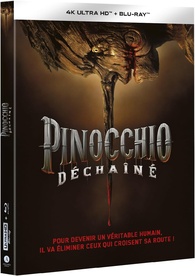
Pinocchio: Unchained
Source France | Publisher : Arcadès editions | Release date : 06 October 2026
Video format
2160p24 | Ratio 2.39
CSD | BT2 BT2 NT2 NT2 NT2 NT2 NT2 NT2 NT2 NT2 NT2 NT2 NT2 NT2 NT2 NT2 NT2 NT2 NT2 NT2 NT2 NT2 NT2 NT2 NT2 NT2 NT2 NT2 NT2 NT2 NT2 NT2 NT2 NT2 NT2 NT2 NT2 NT2 NT2 NT2 NT2 NT2 NT2 NT2 NT2 NT2 NT2 NT2 NT2 NT2 NT2 NT2 NT2 NT2 NT2 NT2 NT2 NT2 NT2 NT2 NT2 NT2 NT2 NT2 NT2 NT2 NT2 NT2 NT2 NT2 NT2 NT2 NT2 NT2 NT2 NT2 NT2 NT2 NT2 NT2 NT2 NT2 NT2 NT2 NT2 NT2 NT2 NT2 NT2 NT2 NT2 NT2 NT2 NT2 NT2 NT2 NT2 NT2 NT2 NT2 NT2 NT2 NT2 NT2 NT2 NT2 NT2 NT2 NT2 NT2 NT2 NT2 NT2 NT2 NT2 NT2 NT2 NT2 NT2 NT2 NT2 NT2 NT2 NT2 NT2 NT2 NT2 NT2
HEVC encoding | DI 4K
Soundtrack
English DTS-HD MA 5.1
Subtitles
French
Artistic : 5.5 | Video : 8.5 | Audio : 7.5
WORK – That bloody slasher of Poohniverse (Winnie-the-Pooh: BH, Peter Pans NN, Bambi: Vengeance) shoot skillfully at strings like this! The puppet shows from which wood it heats, multiplying the blinks of eye to Massacre with chainsaw, Chucky, Final destination or Shining. But if you want to make an arrow of all the wood, the script soon sounds hollow. Despite a rejoicing visual carnage, the realization remains bogged down. Fair entertainment that lacks bark.
IMAGE – Anchored in real life and craftsmanship, Vince Knight's photography highlights the work of the workshops MastersFX. Natively 4K, the master brings an immediate gain in pique, carefully cutting the texture of wood and prostheses. Presented in SDR (Dolby Vision Over-Rhin), the image delivers a well saturated colorimetry (earthy tints, gore shrapnel, bluish nights) and a good level of legibility in the dark. The encoding is held without any apparent string.
SON – The VO is full of dynamism and delivers dense basses and powerful cracks of wood, although surround spatialization, too artificial, prefers to swing sudden effects rather than create a truly enveloping atmosphere. Unfortunately, the VF is completely disarticulated: between a distressing dubbing and an excessive display of voices that stifles the rest of the frontal scene, it sounds false. To avoid being led by the tip of the nose, prefer the VO.
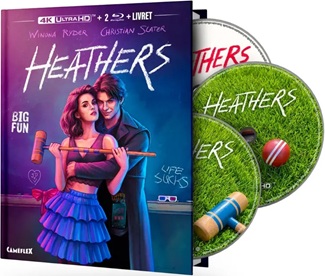
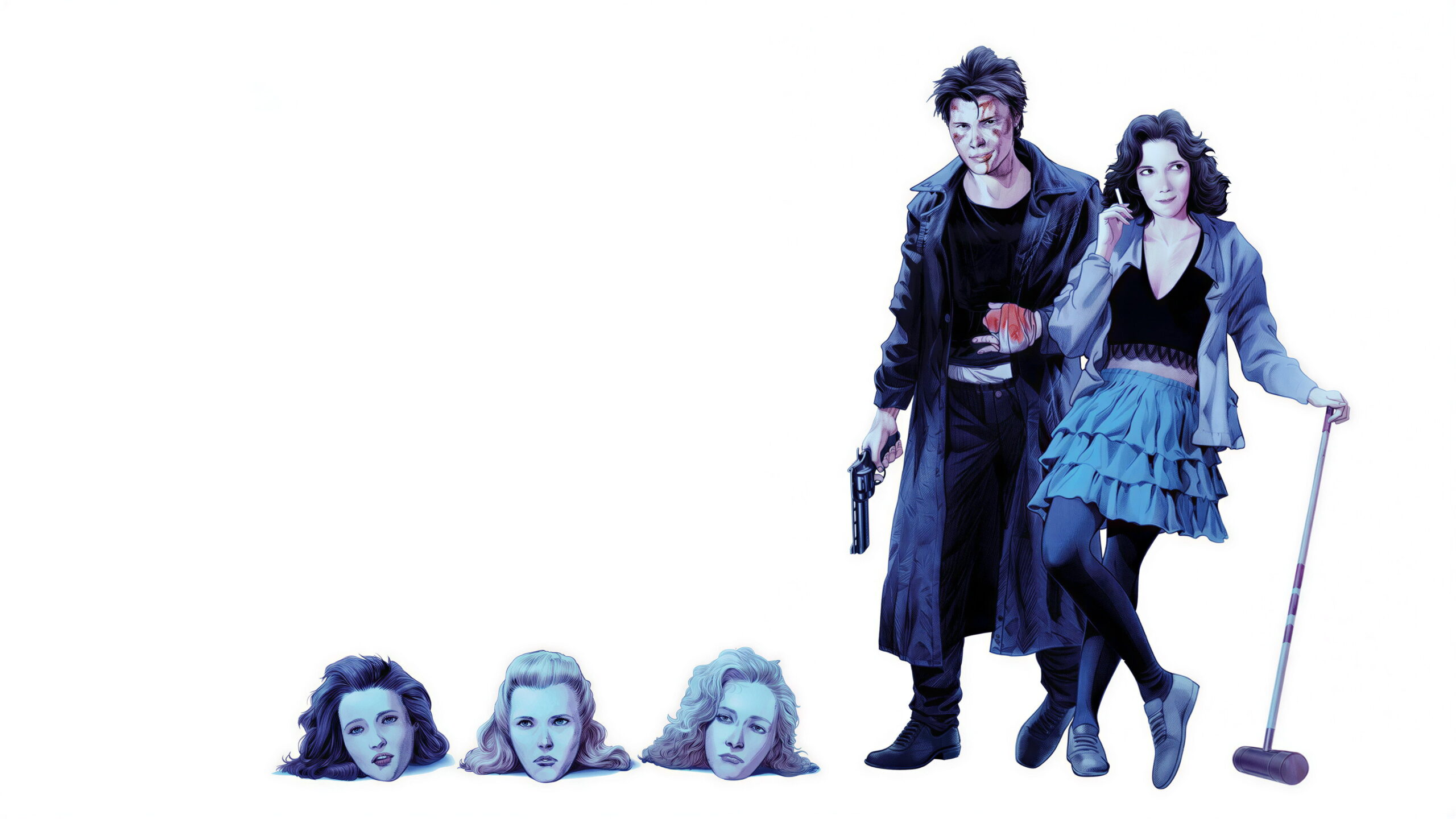
Heathers (Fatal Games)
Source France | Publisher : Cameflex | Release date : 23 September 2026
Video format
2160p24 | Ratio 1.85
HDR10 | BT.2020
HEVC encoding | DI 4K
Soundtrack
English DTS-HD MA 5.1
English LPCM 2.0
English LPCM 1.0
French LPCM 2.0
Subtitles
French
Artistic : 8 | Video : 9 | Audio : 8
WORK – Pioneer of high school black comedy, this teen movie iconoclast telescope codes The Breakfast Club with nihilism ofOrange Mechanical. The story atomizes the tyranny of school popularity by fiercely corrosive humor and chiseled replicas, while his duo of main actors (W. Ryder, C. Slater) magnetizes the screen not without venous complicity. Between absolute cynicism and stylistic elegance, this jubilatory satire did not become cult for nothing.
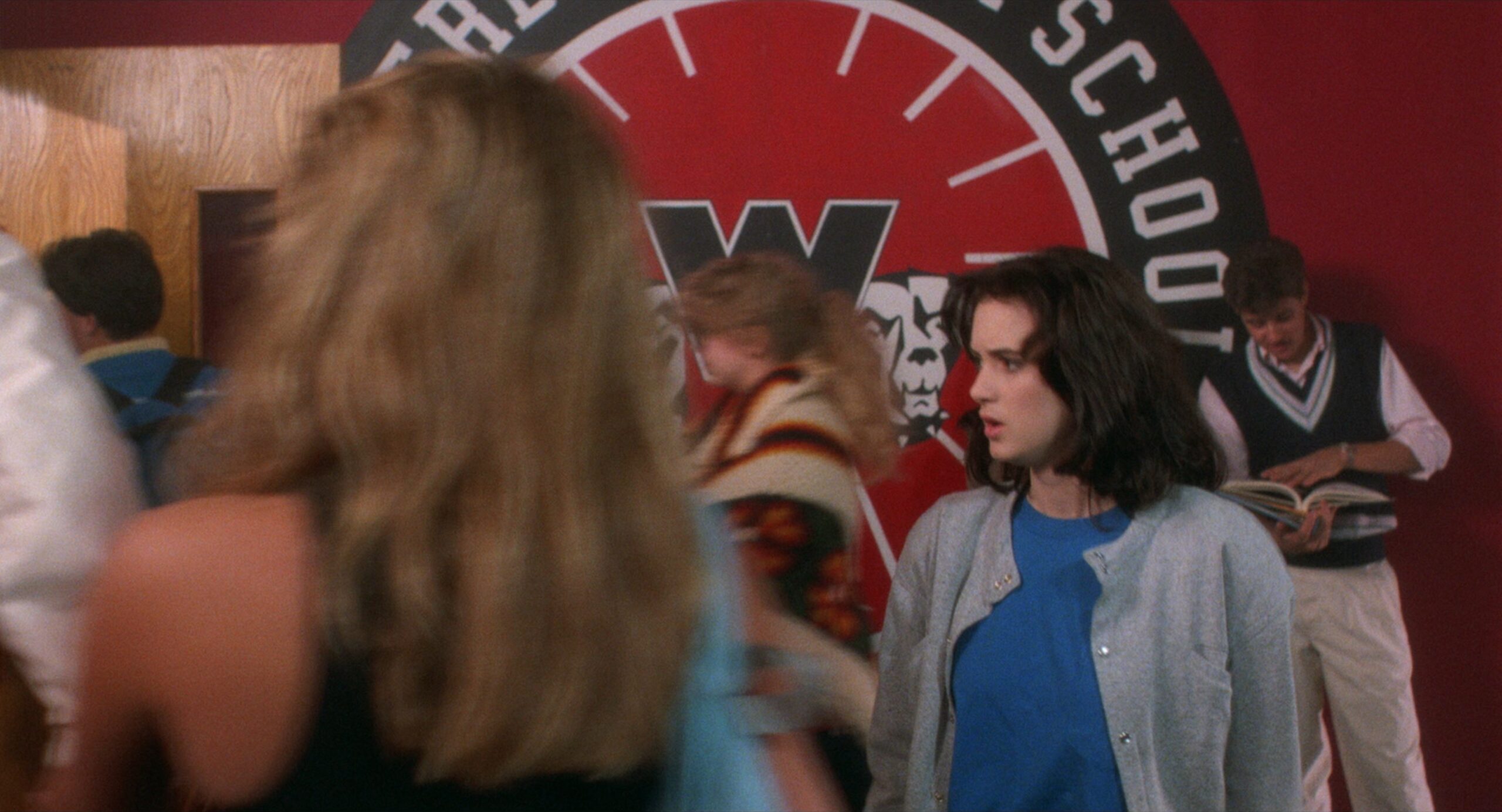
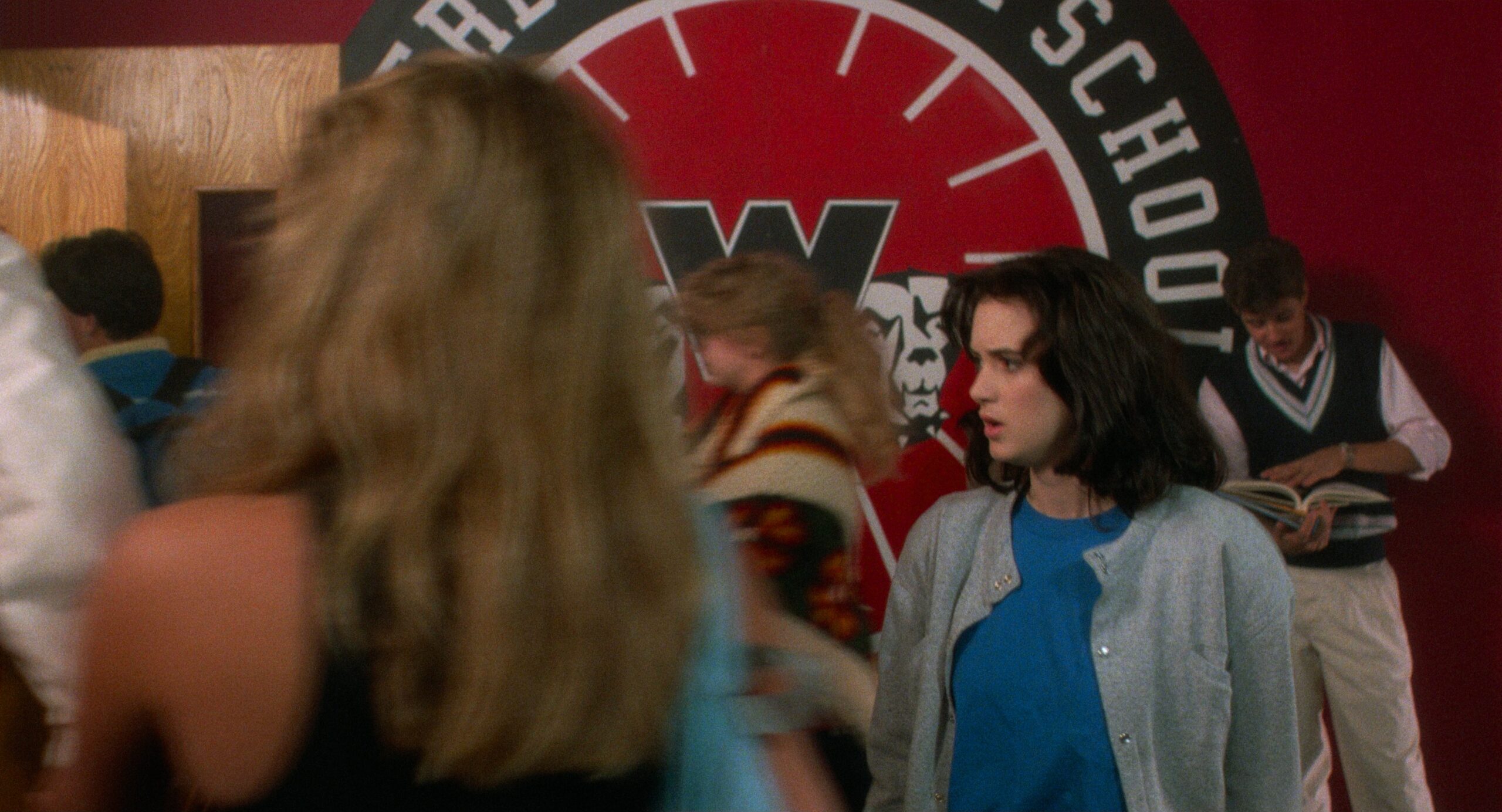
IMAGE – Result of a 4K digitization native of the 35 mm negative of signed origin Arrow Films, this restoration draws a purely cinema rendering. A meticulous dust removal and a very solid encoding preserve the entire texture of the organic grain. Despite the diffuse sweetness of photography*, precision chisele brushings XXL and held from the 1980s. Calibration HDR10 energizes the highly saturated shades and the depth of the blacks, even though the DV remains the preserve of the British clan.
* Francis Kenny's innovative visual leg remains a model of the genre. Behind a theatrical color code where each tone betrays the psychology of the characters, the screen skilfully slides pastel so heighties to a dark expressionism as the deadly drift increases. A style as toxic as it is symbolic, whose influence still irrigates a whole section of high school satire.

SON – If the original 1.0 track lacks a little trunk and the 5.1 mixing, discreetly expanded at the rear, softens the impact of the voices, the stereo VO imposes itself as the great winner of this edition. David Newman's score unfolds a superb dynamic, while the very striking dialogues are flawless sharpness. The VF 2.0 is just as rewarding: between a particularly playful dubbing and a generous frontal opening, it is a real misfortune.
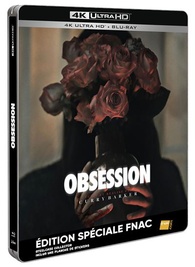
Obsession (2026)
Source France | Publisher The Covenant | Release date : 06 October 2026
Video format
2160p24 | Ratio 1.50
HDR10 | Dolby Vision | BT.2020
HEVC encoding | DI 4K
Soundtrack
English Dolby Atmos
English DTS-HD MA 5.1
Subtitles
French
Artistic : 9 | Video : 10 | Audio : 10
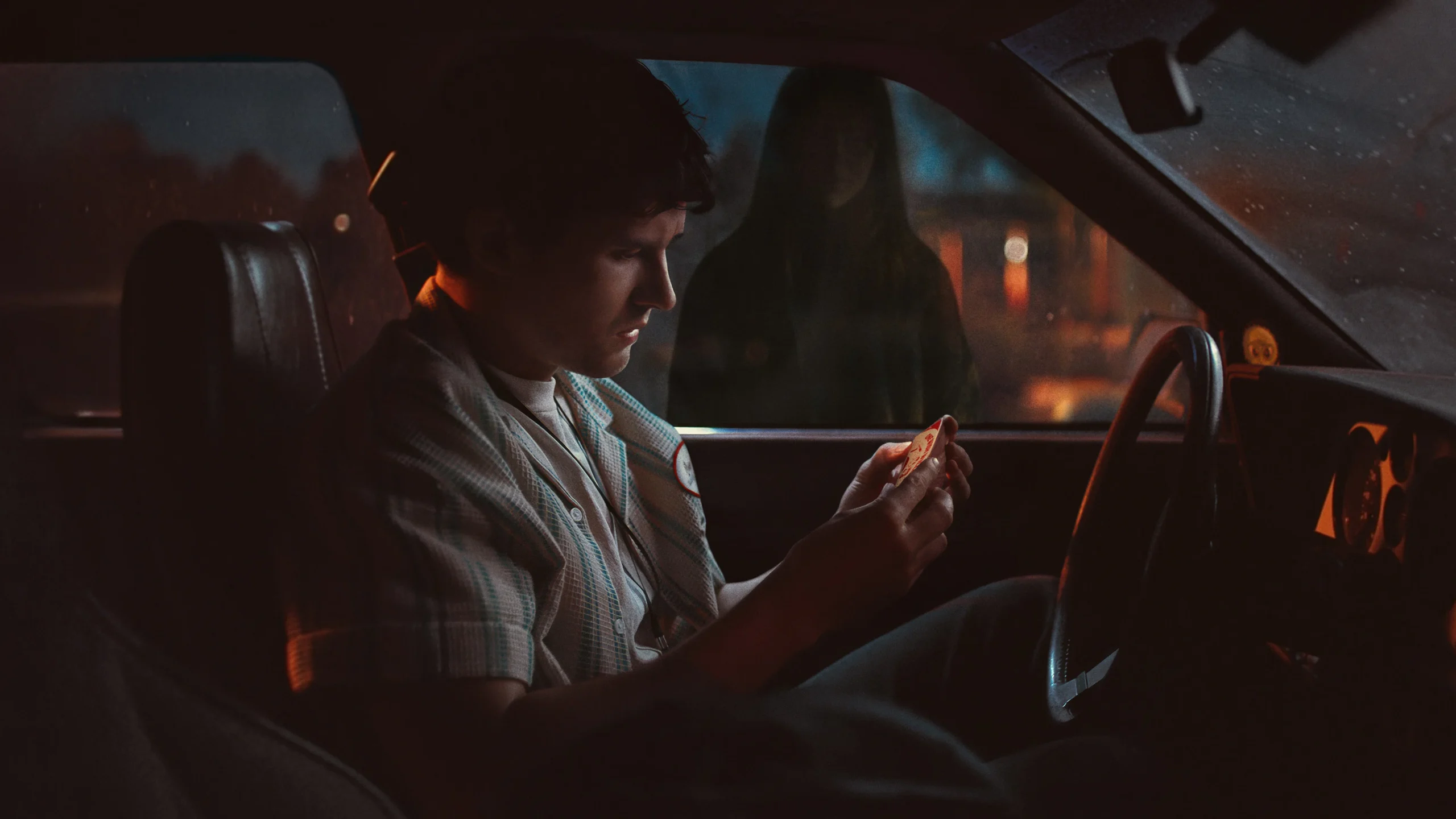
WORK – This sentimental nightmare subverts with maestria the romantic male fantasy into a terrifying emotional possession. Starting from a falsely harmless premise, he orchestrates an inexorable rise in tension where the malaise insinuates until vertigo. A prisoner of the trap, India Navarrette delivers a visceral performance, tilting with a confusing ease between vulnerability and predatory dementia. A disturbing and indelible dissection of love drift.
IMAGE – Tightened in a ratio of 1.50 to the claustrophobic effect, this UHD transfer delivers a sharp bite where textures and carnations touch through the rare light holes. But the calibration quickly turns towards asphyxiation: captured at full opening, the photo stifles the decor under half dark, greenish and amber reflections. The Dolby Vision rigorously sculpts these oppressive clear obscurs, now the legibility of the silhouettes drowned in magistrally cut blacks.
SON – Building on a highly anxiogenic acoustic sobriety, the VO Dolby Atmos distills a dreadful acuity dynamic. Rock Burwell's sheet music is in darkness, relayed by a verticality that raises the sound panorama without unnecessary overload. The inflection of the serious provides a physical basis for the bursts, while keeping the dialogues intelligible. More direct, the VF sins because of lack of shade: its plated dubbing separe of the mix, converting it into a fixed idea.
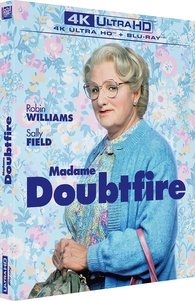
Mrs. Doubtfire (1993)
Source France | Publisher : 20th Century Studios | Release date : 07 October 2026
Video format
2160p24 | Ratio 2.35
HDR10 | Dolby Vision | BT.2020
HEVC encoding | DI 4K
Soundtrack
English Dolby Atmos
French SDR 5.1
Subtitles
English
French
Artistic : 7 | Video : 6.5 | Audio : 7.5
WORK – Outside his family comedy with sometimes showy strings, the carbide film with unbridled energy from his main performer. By camouflaging herself as a colourful governess to win back her children, Robin Williams transformed the divorce crisis into a high-profile Mimetic voltige. For if the farce sometimes gives way to the syrupy inclination of good sentiment, it retains an unarming tenderness and a strong sense of housekeeping rhythm.
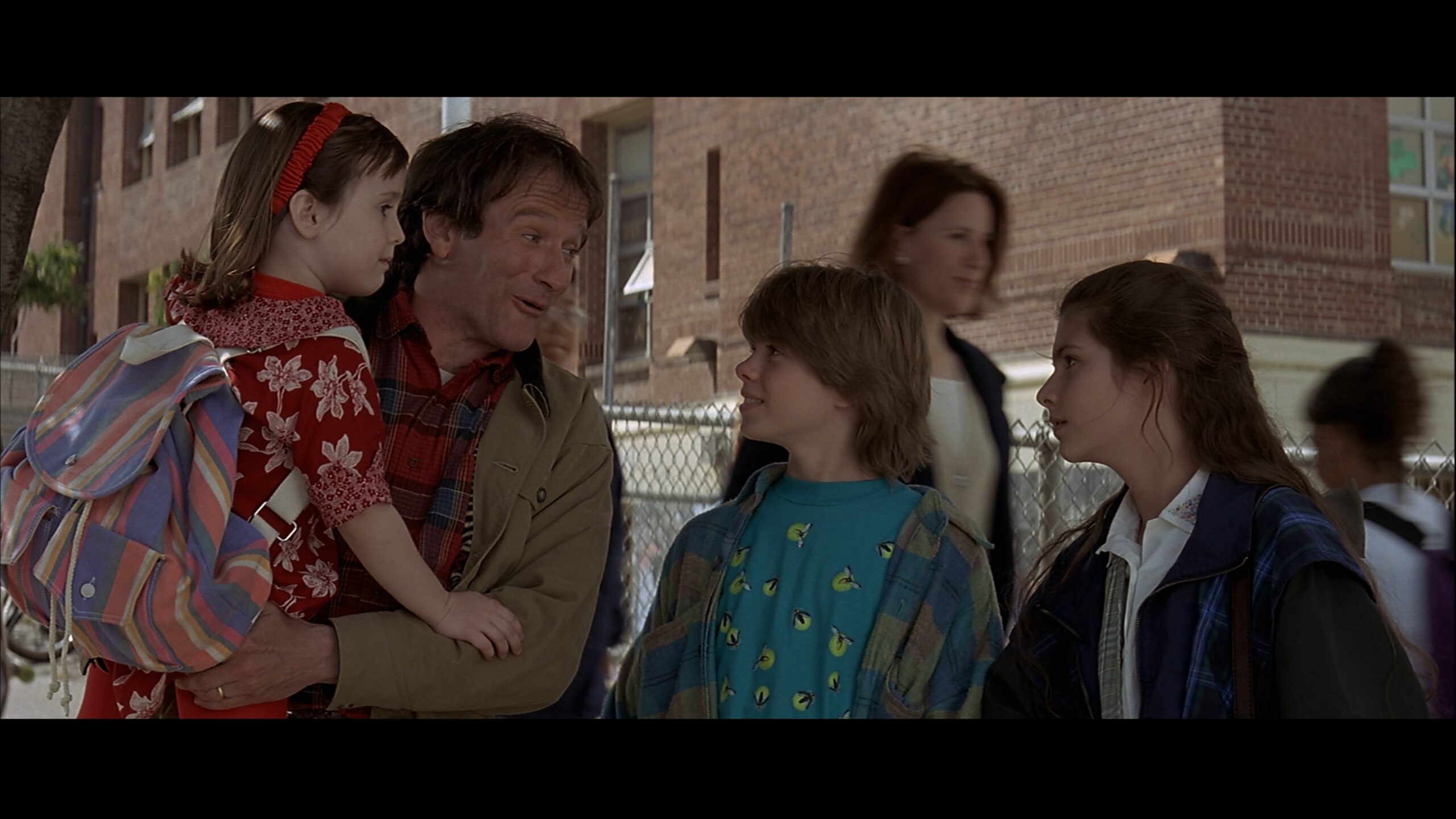
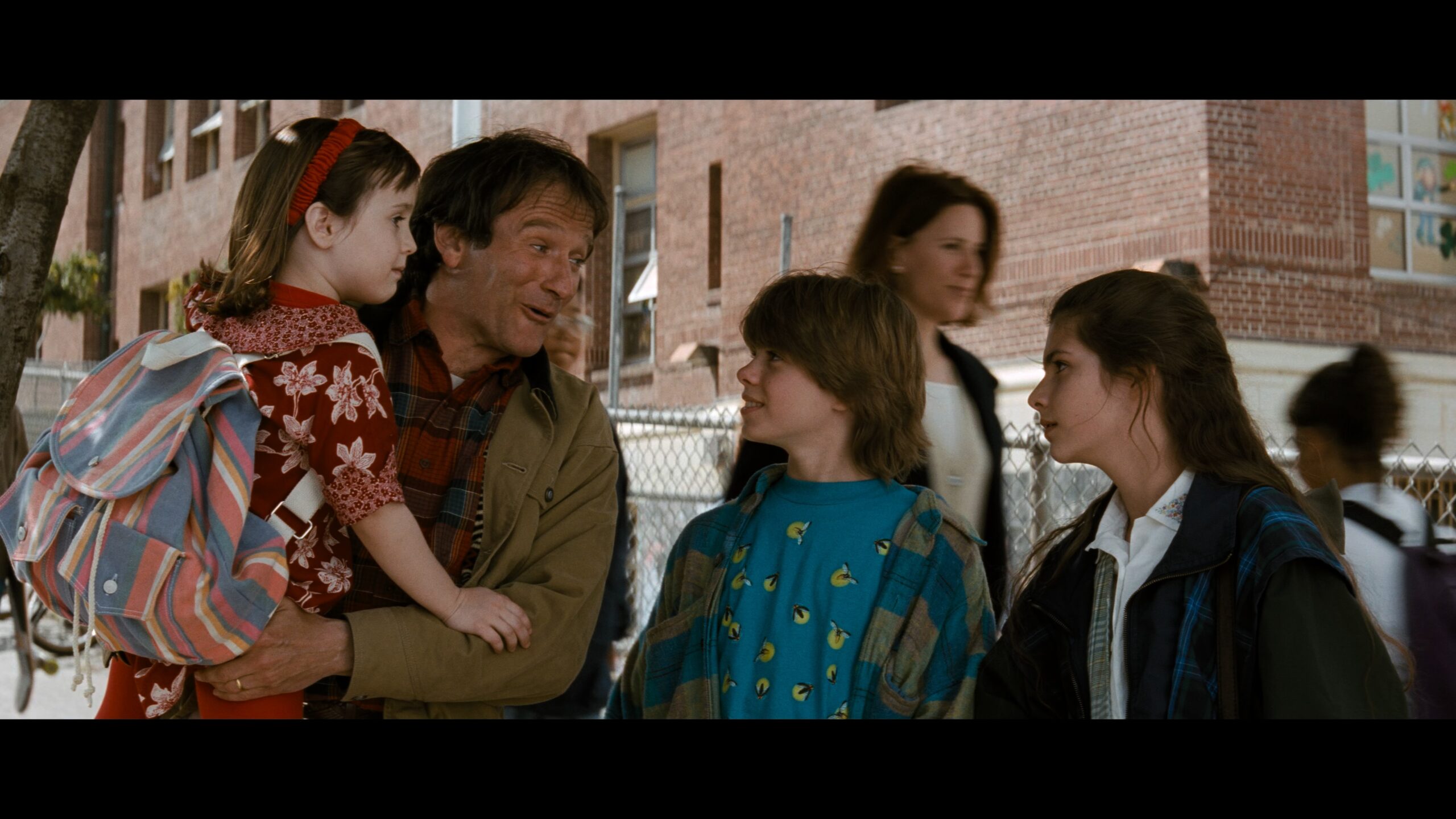
IMAGE – From the striking pique to the sometimes blafard carnations, this master 4K alternates the very good and the mediocre. The leap in sharpness compared to Blu-ray imposes immediately, carried by much denser blacks, revived primary colours and more catchy bright peaks. Alas, although present, the 35 mm grain is stifled by a drag compression. An average bitrate of 44.5 Mbps... Really? The image gets brighter, but leaves its cinema skate. How frustrating!

SON – Applying an Atmos treatment (in VO) to this comedy comes from the costume of the apparate. In practice, verticality is mainly used to describe Howard Shore's score, leaving the effects of height in the kitchen. Apart from the animals of the farm inviting at the back, the whole number rests on the front stage, where the central channel, with certain clarity, follows the vocal acrobatics of Daniel Hillard. The box remains wise, even during the citrus attack. Less prepared, the VF provides the service.
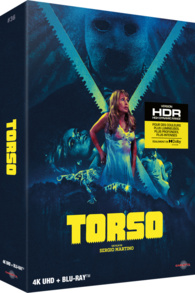
Torso (1973)
Source France | Publisher : Carlotta Films | Release date : 17 March 2026
Video format
2160p24 | Ratio 1.66
HDR10 | Dolby Vision | BT.2020
HEVC encoding | DI 4K
Soundtrack
Italian DTS-HD MA 1.0
English DTS-HD MA 1.0
Subtitles
French
Artistic : 7 | Video : 8.5 | Audio : 6.5
WORK – Extracting from mature giallo the modern slasher, Torso between the voyeuristic plastic of the bodies and the suffocating mechanics of a pure suspense. Sergio Martino (2019 after the fall of New York) Tailor-made the foundations of American terror: isolate a masked killer from young students in a remote villa, then watch the hecatombe. Between venous eroticism and scalpel-adjusted tension, the sacred work before the hour the tutelary figure of the final girl. It cuts!
IMAGE – Sculpted by encoding of Fidelity in Motion on triple layer disk, the UHD transfer gets the best out of this 4K restoration from the original 35 mm negatives. Disbarred from the slags of time, unlike the 1080p disc of 2014, the film retains its authenticity, up to the grain sometimes fluctuating during melts. The DV calibration makes the Pop palette of the 70s jubilate with a line contrast, perfectly legible blacks and carnations of confusing accuracy.
SON – Only to restore all the dialogues without a language jump, the Italian mono VO in DTS-HD MA upgrades a deaf English track set on an amputated montage. Purged from the parasites of Dantan, without however disposing of a slight residual breath, this mixing offers a noticeable frontal clarity: the partition perfectly harmonizes with voices generally well turned, without stridence in the acutes. A sober and balanced listening comfort, though a little flat over time.
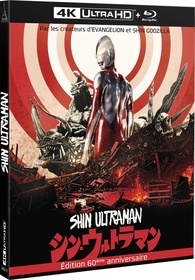
Shin Ultraman
Source France | Publisher : Factoris Films | Release date : 27 May 2026
Video format
2160p24 | Ratio 2.39
HDR10 | BT.2020
HEVC encoding | DI 2K
Soundtrack
Japanese Auro-3D
French Auro-3D
Subtitles
French
Artistic : 6 | Video : 5 | Audio : 9
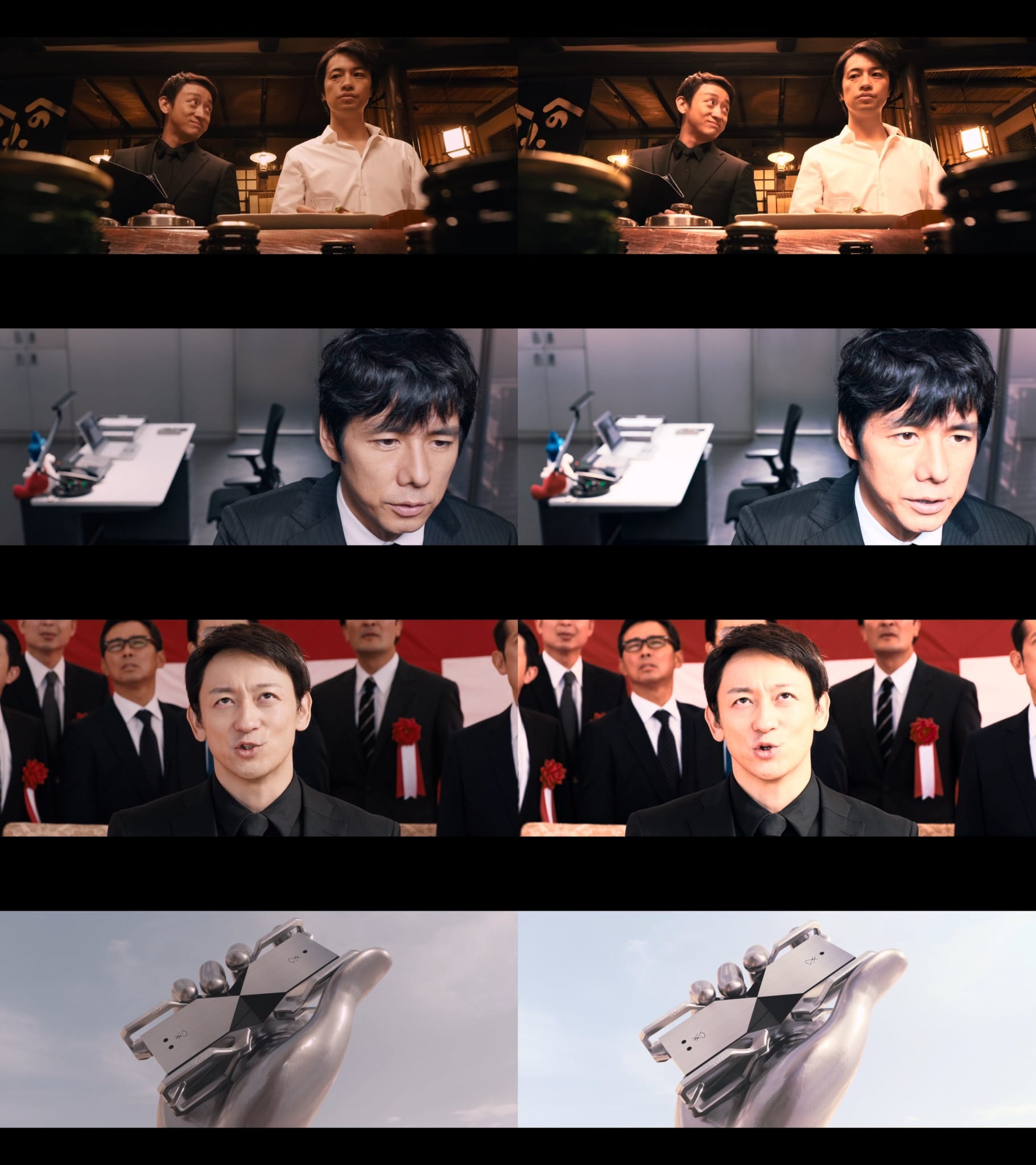
WORK – By celebrating the nostalgia of the Tokusatsu with enthusiasm, this dust removal of the series of the 60s immediately seduces with its titanic urban confrontations. Unfortunately, this true declaration of love for the Japanese pop culture quickly entangles in assuming palabres and a chopped structure, very television. A completely honest revival for the 60th anniversary of the franchise, even if the deflagration Shin Godzilla irradiating to a completely different level.
IMAGE – From a heteroclite mixing of cameras, hybrids « pros » Until the iPhone 11 Pro, this UHD transfer, which is much firmer in compression than the Blu-ray of 2023, better sculpts the relief of the decorations and more scars the skin of the kaijūs. But if the HDR10 calibration sparkles the chromatic palette, the luminance peaks derail: the image, too dazzling and constantly overexposed, burns the details in high values. An observation shared by the supplied HD disk.
SON – Propose two Auro-3D tracks 13.1* is a decision that strikes as hard as a Spacium Beam. A raging dynamic, the multiply mixing effects enveloping and colossal bass during the fighting, despite the noises mouched. For non-compatible installations, enable a virtualization DSP allows to recover a tangible vertical volume. More reserved, the VF suffers from a significantly lower sound level, serious assagis and altered balance on details.
* Compatible DTS-HD MA or LPCM (5.1 or 7.1) for classic configs, the immersive Auro-3D format, developed by the Belgian company Auro Technologies, sculpts a three-dimensional scene on three levels (ears, height and ceiling). Where Dolby Atmos and DTS:X place sound objects in space, its approach differs, favouring dedicated channels for a verticality of a striking natural.
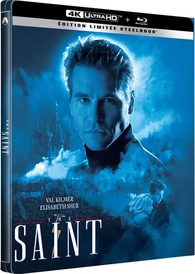
The Holy (1997)
Source France | Publisher : Paramount Pictures | Release date : 14 October 2026
Video format
2160p24 | Ratio 2.39
HDR10 | Dolby Vision | BT.2020
HEVC encoding | DI 4K
Soundtrack
English Dolby TrueHD 5.1
Dolby Digital 5.1 English
Subtitles
English
French
Artistic : 6.5 | Video : 8 | Audio : 7.5
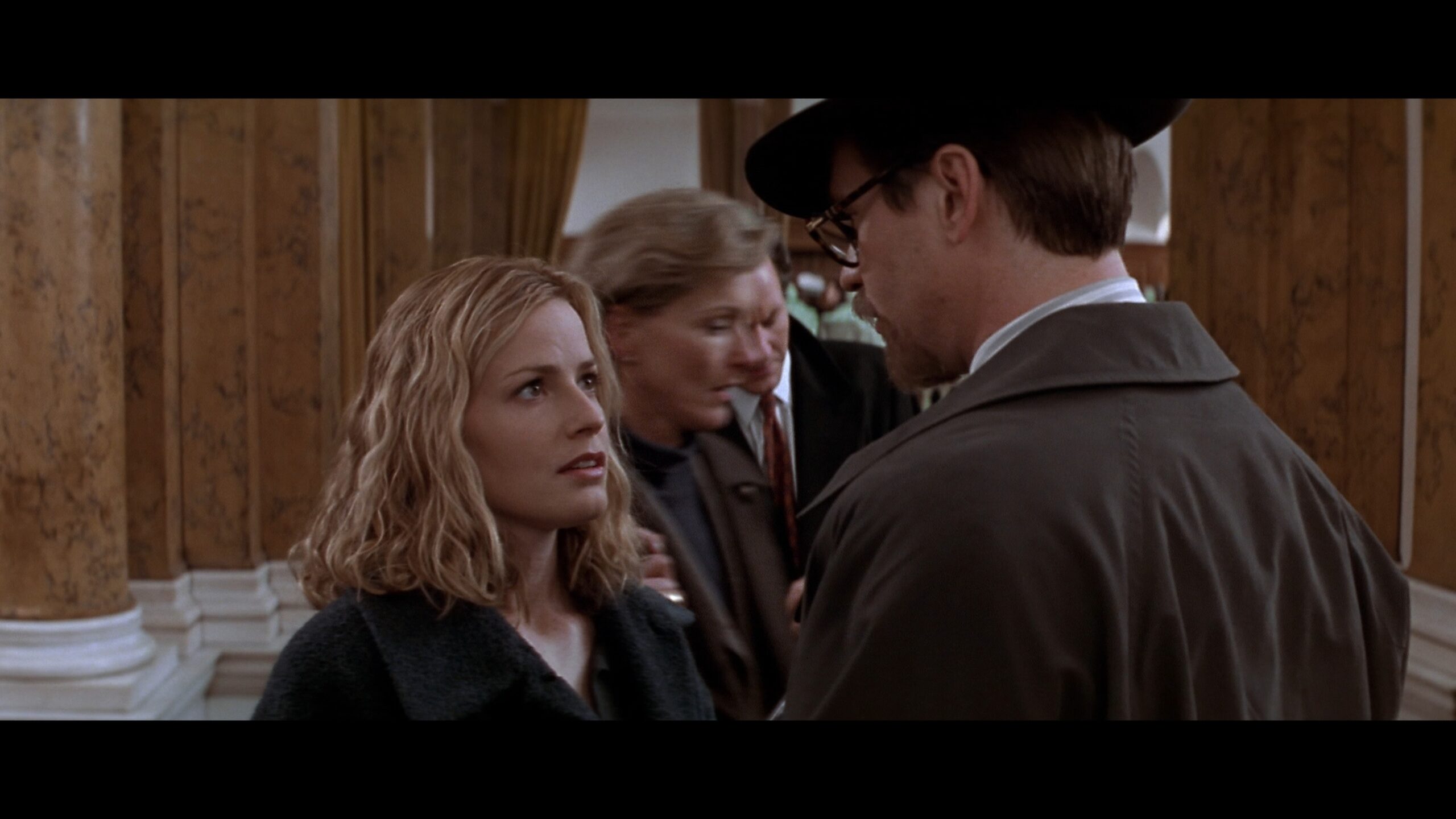
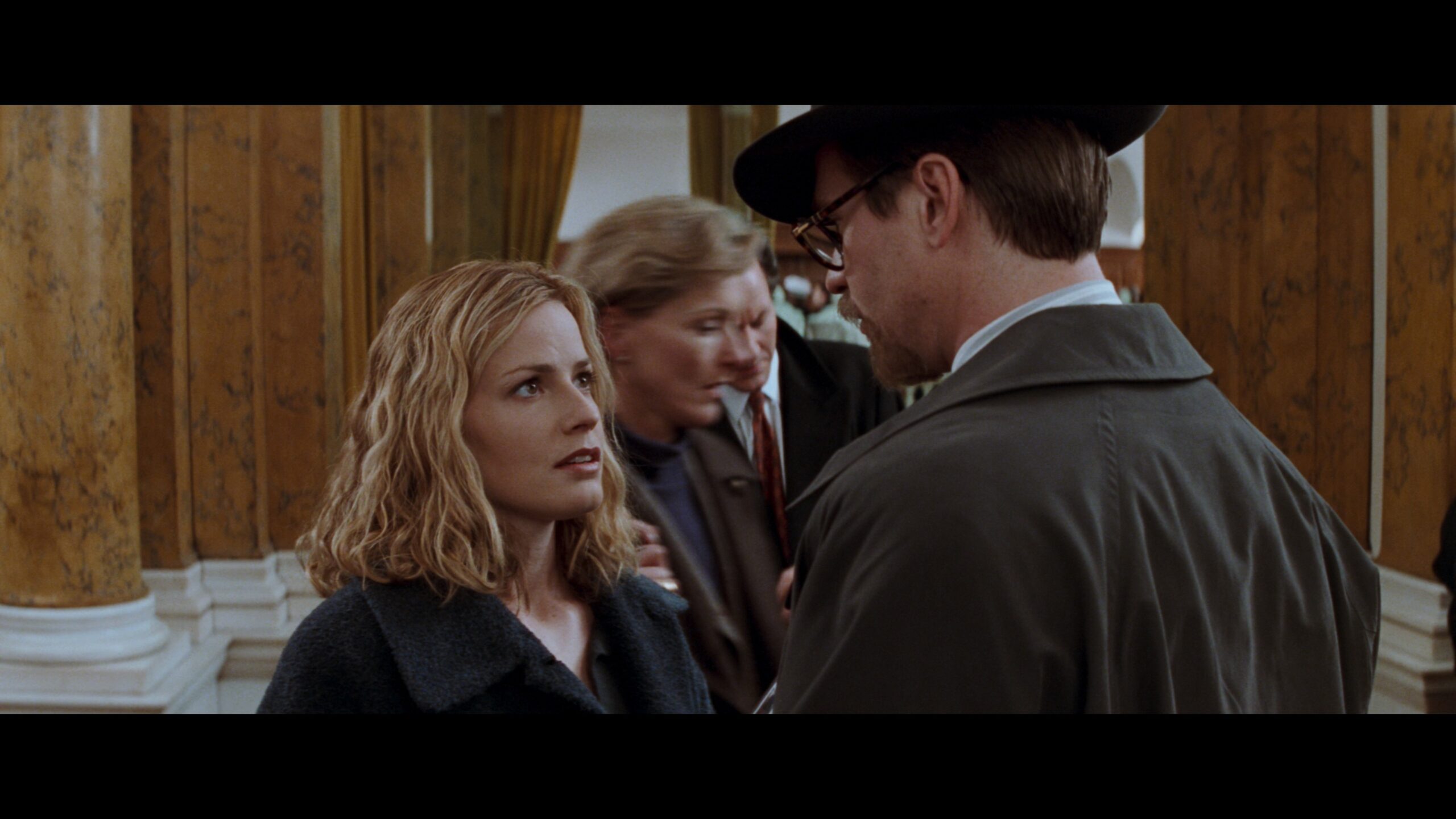
WORK – By transvestising Leslie Charteris' refined dandy as a high-tech mercenary, the film immediately approaches the sacrilege: Val Kilmer (Tombstone) multiplys the unlikely wigs and dubious accents in the middle of a rocky Moscow plot. Yet the sauce takes. Rhythmed by an iconic electro soundtrack and a very efficient realization, this popcorn thriller assumes its generous absurdity. The betrayal of the work is total, the guilty pleasure too.
IMAGE – Balancing the age of the previous Blu-ray, this 4K transfer restores a true silver nobility to photography, even though a limited encoding flow on a BD-66 disc sometimes chokes the natural texture of the grain. The particularly cold palette increases in shade thanks to the DV, which refines the carnations and calms the saturation, while the darkness regains its depth. With great cleanliness, this restaurant also enhances the pique of decors.

SON – Without realizing the miracle of a cold fusion, the Dolby TrueHD 5.1 mixing of the VO ensures the essential with rigour. If the dialogues remain impeccably centered, the sound scene exploits its lateral and surround channels to gine it and there mood effects and sublimate the musical illustration (Massive Attack, Chemical Brothers, etc.), despite a lack of momentum. The observation is more dull on the VF, deprived of finesse, punch and a really striking LFE.
...and for a few more dollars
Source France | Publisher : ESC Films | Release date : 07 October 2026
Video format
2160p24 | Ratio 2.35
HDR10 | Dolby Vision | BT.2020
HEVC encoding | DI 4K
Soundtrack
English DTS-HD MA 5.1
English DTS-HD MA 2.0
English DTS-HD MA 5.1
French DTS-HD MA 2.0
Subtitles
French
Artistic : 9 | Video : 8.5 | Audio : 8
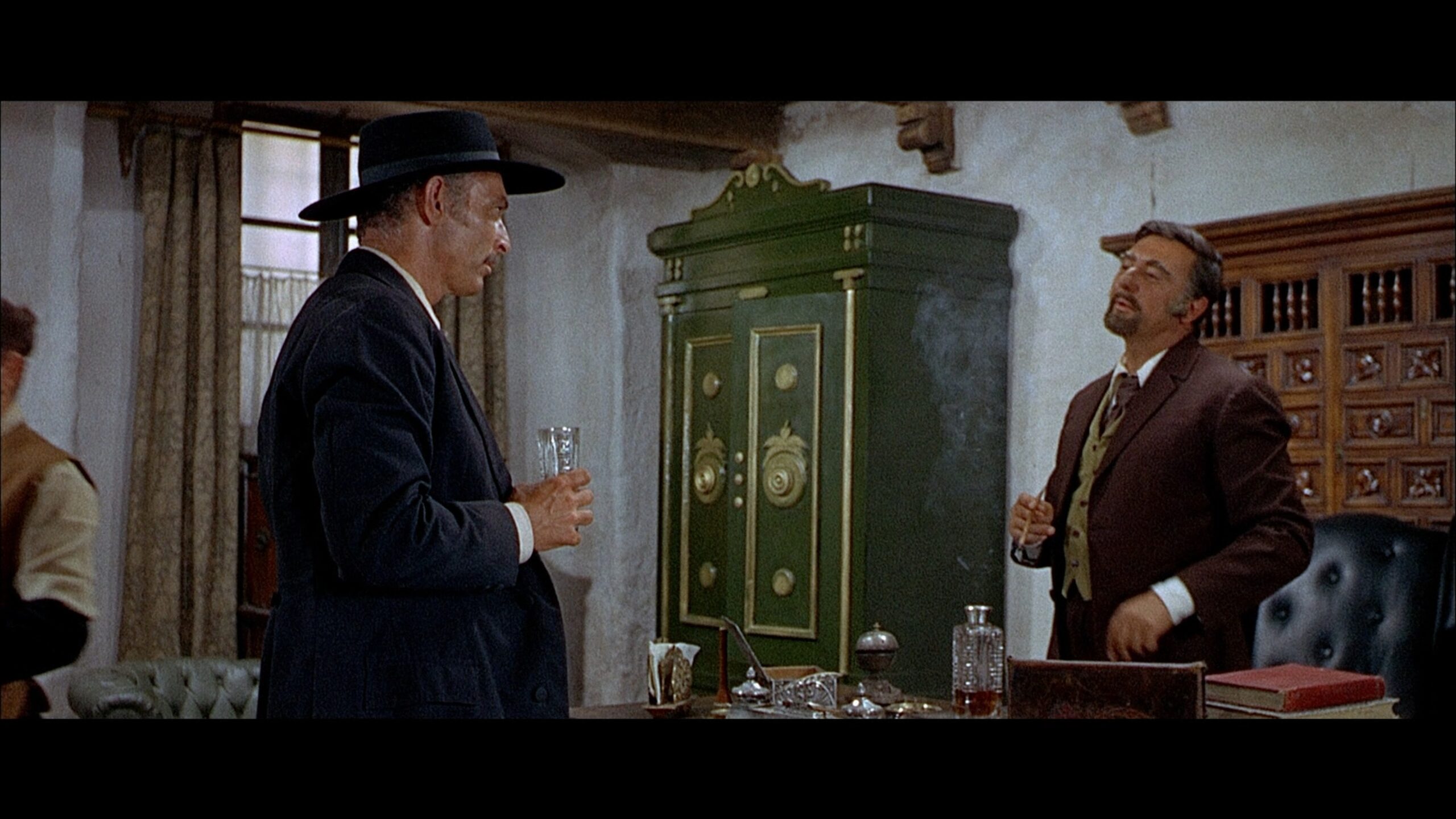
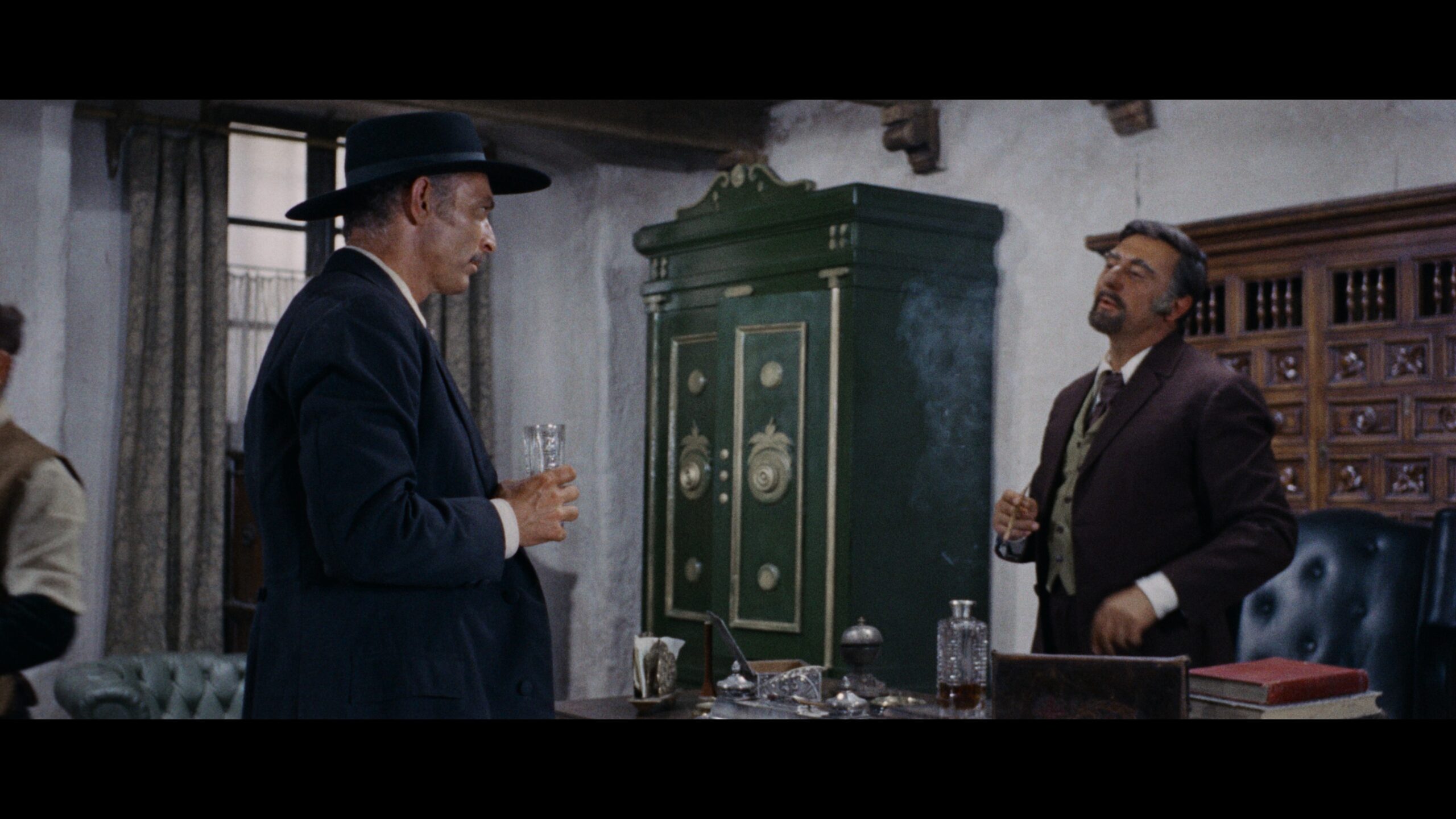
WORK – By extending the myth of pistolero to a covenant mixing greed and revenge, this spiritual continuation of For a handful of dollars. metamorphosis of a common manhunt into operatic tragedy. From this circumstance rivalry a constant tension, sublimated by the geometry of Sergio Leone's cadres. But it is the musical score, anchored in the narrative through a funeral carillon, that transforms this settlement of accounts into a top of the genre.
IMAGE – From the 16-bit 4K scans of the original negative made by Immagine Ritrovata and Master's Arrow Films, this Dolby Vision transfer quickly sweeps a very damaged generic. The density of blacks and the ochre palette, stripped of the excesses of d的antan, offer a fine readability in the darks, without burning the high lights. Supported by an impeccable encoding, the piqué gains in natural, far from strengthening the contours of the Blu-ray MGM, restoring the drought of textures better.

SON – On the audio side, the VO relies on a balanced DTS-HD MA 5.1, whose rear accurately relays the atmospheres and shooting echoes, and its original monophonic mix, dynamic but sometimes saturated in the peaks. The VF, proposed in dual-mono and 5.1, shines by its dubbing period, carried by Jacques Deschamps (Clint Eastwood) and Georges Atlas (Lee Van Cleef). But if his overall outfit convinces, the music of Ennio Morricone is a bit deafer than on the English track.
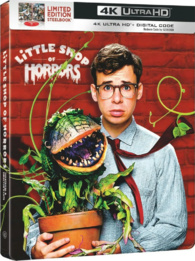
The Little Shop of Horror (1986)
Source France | Publisher : Warner Bros. | Release date : 18 November 2026
Video format
2160p24 | Ratio 1.85
HDR10 | Dolby Vision | BT.2020
HEVC encoding | DI 4K
Soundtrack
English Dolby Atmos
English DTS-HD MA 2.0 (film version)
Dolby Digital 2.0 (film version)
Subtitles
English
French
Artistic : 8 | Video : 9.5 | Audio : 9
WORK – Smelted in Corman's cuine bis and then flourished on Broadway's boards, this cult musical performs a completely jubilatory mutation. Frank Oz orchestrates this botanical delirium with a crazy craft virtuosity, magnified by a prodigious animatronic with a very real presence. Under his acidic pop choruses and kitsch aesthetics, the director packs a corrosive Faustian fable on greed. Between burlesque and terrifying, a carnivorous show!
The Directors Cut, longer than fourteen minutes, restores the original apocalyptic final and deleted musical sequences. The plant devours heroes there before invading the city with its congeners in a flood of dazzling special effects. Balancing the sweetened happy end of the cinema version to embrace the cynical blackness of the piece, this assembly imposes as undeniably superior.
IMAGE – Fruit of a 4K scanning of the original negative 35 mm, this master 2160p on triple-layer disc clearly replaces the 2012 Blu-ray. The 1.85 recovered scoping offers a new twist, exalting the fibers of costumes as the artisanal bill of the creature. Without overbidding, the Dolby Vision calibration balance the contrast: the crass of the decor gains in shade (green mouldy, tumbled brown and dusty grey), supported by dense blacks and perfectly legible.
SON – A true course is reached thanks to an Atmos track from the original 70 mm mixing. The sound scene expands considerably, giving a generous seat to Motown bass lines, a vocal relief of great clarity and formidable dynamics. However, it reserves alterations, between added noise and discreet deleted vocalizations. If the presence of the theatrical VO 2.0 will delight purists, the dubbing of the VF (including songs) is far too prominent.
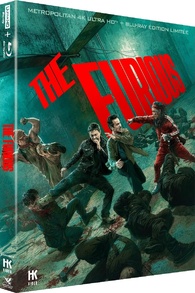
The Furious
Source France | Publisher : Metropolitan Video | Release date : 23 October 2026
Video format
2160p24 | Ratio 2.39
HDR10 | Dolby Vision | BT.2020
HEVC encoding | DI 4K
Soundtrack
English Dolby Atmos
English DTS-HD MA 5.1
Subtitles
French
Artistic : 9.5 | Video : 9.5 | Audio : 10
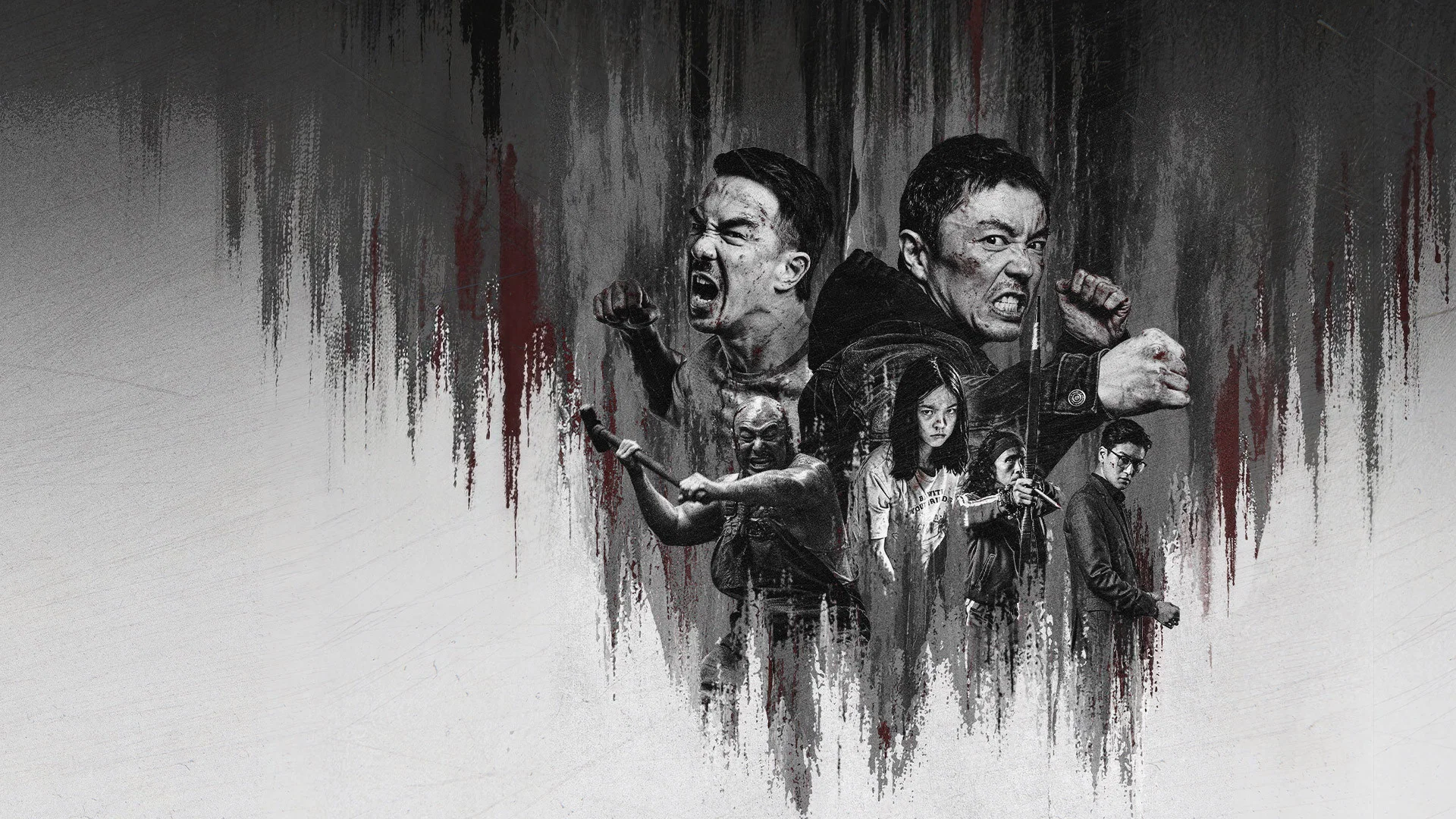
WORK – There's no need to tie your seat belts, this martial car is running without brakes anyway. Of course, the intrigue holds on to a post-it, but most of this pure HK product is logically played elsewhere: in a frantic distribution of mandals that skilfully turns its back on CGI's auctions. By relying on an old-fashioned physical impact, Kenji Tanigaki orchestrates a shattered crash that resonates into our own ribs. A regular beating, which puts the clocks back on time.
IMAGE – This 4K master replaces simple HD at first glance. Facial definition and urban views display a striking texture, although the camera carried and the nerve mount occasionally alter the accuracy. In DV, contrast management impresses: darkness exploits dense and carved blacks, while the overexposure of high lights is corrected. As for colorimetry, oscillating between warm and dark amethyst reflections, it refines clearly.
SON – The VO Atmos enters into the alive of the subject without preamble, pouring an acoustic mass of uninterrupted activity. From the urban tumult to the underground clashes, the directivity of the impacts (glass breaks, white weapons) shows a rigorous cutting. The vertical scene is full of harps, the LFE channel administers a strong physical pressure, and the music invests ample space. VF with careful dubbing, just as convincing in width.
Vicky Cristina Barcelona
Source France | Publisher : Metropolitan Video | Release date : 07 August 2026
Video format
2160p24 | Ratio 1.85
HDR10 | BT.2020
HEVC encoding | DI 4K
Soundtrack
English DTS-HD MA 5.1
Subtitles
French
Artistic : 8 | Video : 9 | Audio : 8.5
WORK – Under the Catalan sun, Woody Allen (Match Point) signs a sweet-sweet marriage of great elegance, exploring the meanderings of desire with caustic lucidity. Combining sensuality and disillusionment with brilliance, this bandinage dissects the passional contradictions through the trajectory of two American women seeking to flourish. But the real magic comes from his formidable quartet of actors, led by Javier Bardem, Scarlett Johansson, Penelope Cruz and Rebecca Hall.
IMAGE – Restored from the original 35 mm negative, this 4K master magnifies the solar plastic of photography. If the delicate softness of the silver support is preserved, the increased definition subtly refines the grain of the faces as the material of the decorations. As for the decisive contribution of the HDR10, it devotes all the sensuality of amber gildings whose captive voluptuousness more than ever... especially as the extended dynamic range reveals otherwise more magnetic contrasts.
SON – Proposed in a DTS-HD MA 5.1 container, these tracks are in fact a 3.0 blend with only frontal anchor, perfectly suited to this intimate narrative. Thus, the original version offers a beautiful vitality, articulating dialogues, musical flights and subtle Barcelona atmospheres in exemplary harmony. On the other hand, the French track suffers from a dubbing with a very unnatural game, whose excessive vocal thrust stifles the richness of the background.
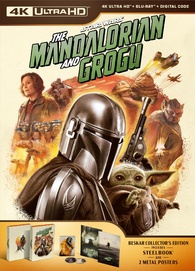
The Mandalorian and Grogu
Source France | Publisher : Disney | Release date : 21 October 2026
Video format
2160p24 | Ratio 1.78, 2.39
HDR10 | Dolby Vision | BT.2020
HEVC encoding | DI 4K
Soundtrack
English Dolby Atmos
English Dolby Digital Plus 7.1
Subtitles
English
French
Artistic : 8 | Video : 10 | Audio : 10
WORK – Transpose the spirit of The Mandalorian on a large screen was the risky bet. Bet held, forged in the purest beskar! This galactic western favours the attachment of its central duet to cosmic auctions. And if the intrigue does not reinvent the Force, the nervousness of the story as well as the complicit humour quickly win the adhesion. Certainly, this is the way to a controlled blockbuster... and Grogu robs hearts without saying a word.
IMAGE – In addition to the magnitude brought to the action scenes when it switches to 1.78 IMAX format, this native UHD transfer shines with its brightness (mando armor) and cleanliness. Even more incisive than in 1080p, the pique impresses, especially as the encoding at 70 Mbps guarantees an exemplary stability to the definition. The DV calibration magnifies colorimetry, from Shakari neons to toxic shades of Nal Hotta, and strengthens contrasts thanks to high rutilating lights and dense shadows.
SON – Powered by an incredible wealth of sound design, the VO Dolby Atmos mobilizes a constant wrap, where the rears wave at the slightest opportunity and the verticality energizes overflights of ships and other deflagrations. The bass box provides a physical seat at a great depth (the arena), while Ludwig Göransson's powerful score resonates with magnitude. Faced with this sharp sound, the more compressed VF remains in the Outer Edge.
Supergirl (2026)
Source France | Publisher : Warner Bros. | Release date : 04 November 2026
Video format
2160p24 | Ratio 2.39
HDR10 | Dolby Vision | BT.2020
HEVC encoding | DI 4K
Soundtrack
English Dolby Atmos
Dolby Atmos
Subtitles
English
French
Artistic : 6.5 | Video : 10 | Audio : 10
WORK – Arrested at the smooth nobility of Superman, this cosmic western with crooted boots makes straight away the bet of the craze and vulnerability. Milly Alcock (House of the Dragon) prints a desperate fury to this cabossed odyssey, tracing for the narrative a singularly nervous trajectory. Yet, despite this welcome gravity and a rejoicing breath of indocility, the flight of this rocky hunt ends up growing under the weight of a strict Hollywood specification.
IMAGE – A native 4K master set in 8K by Rob Hardy, this UHD transfer under Dolby Vision imposes a formidable acuity. Facing the Blu-ray, the gap is striking: the image displays a more tactile texture without overpitching, sublimating decors and creatures, while the HDR transcends colorimetry, combining twilight, amber glow and acid neon. A visual rendering of total control, supported by abyssal blacks and a triple-layer press with generous flow.
SON – A veritable acoustic storm, this Atmos mix deploys a colossal sound scene. The 3D space is animated with great strokes of dizzying spatial trajectories and deflagrations, supported by a particularly muscular LFE channel and very clear dialogues. Between the score signed Claudia Sarne and the multiple rock stings, music is a place of choice. Powered by the same steel dynamic, VO and VF (dubbing handle) are equal.
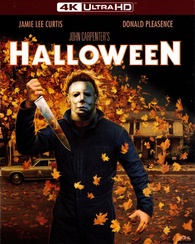
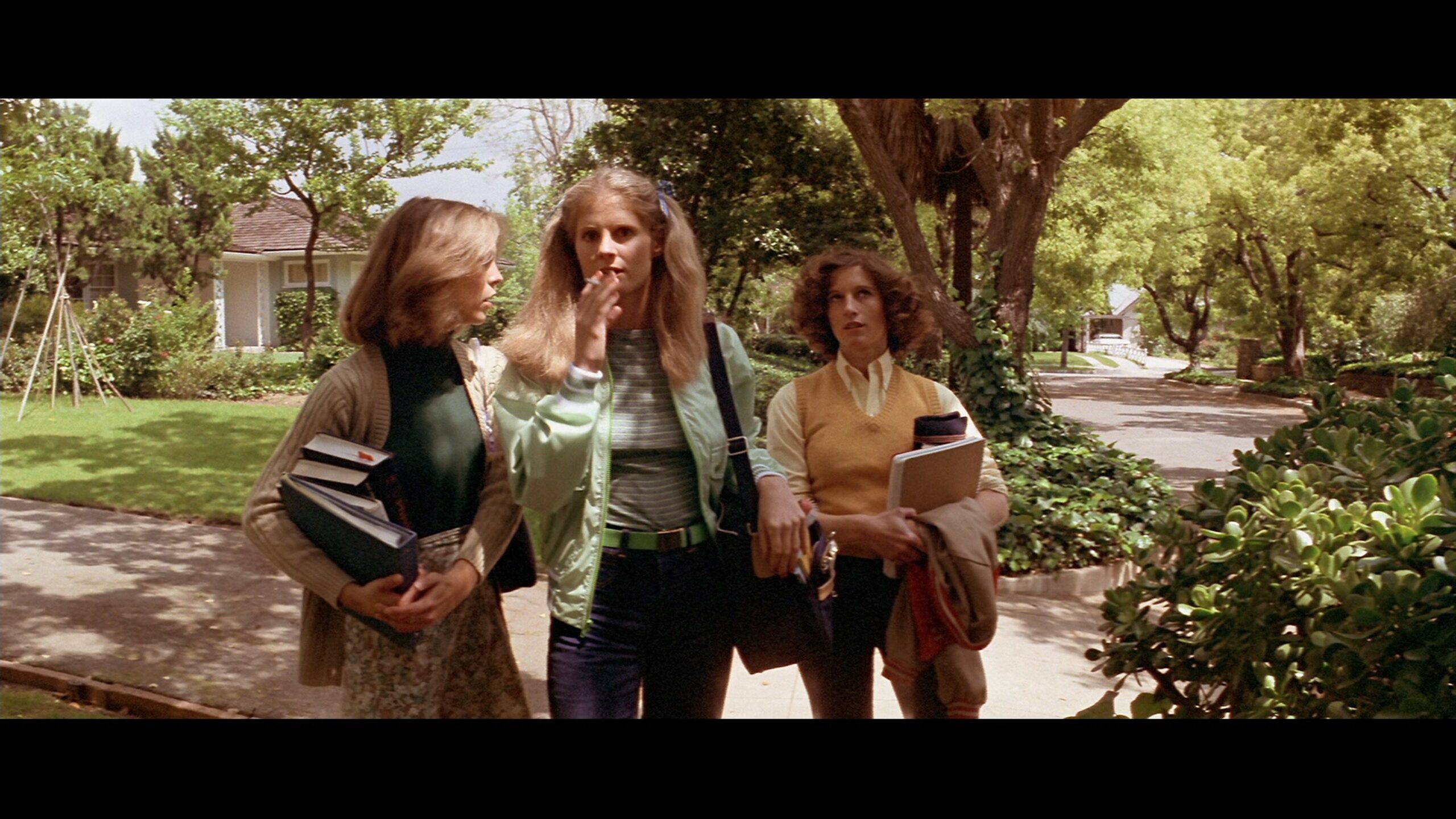
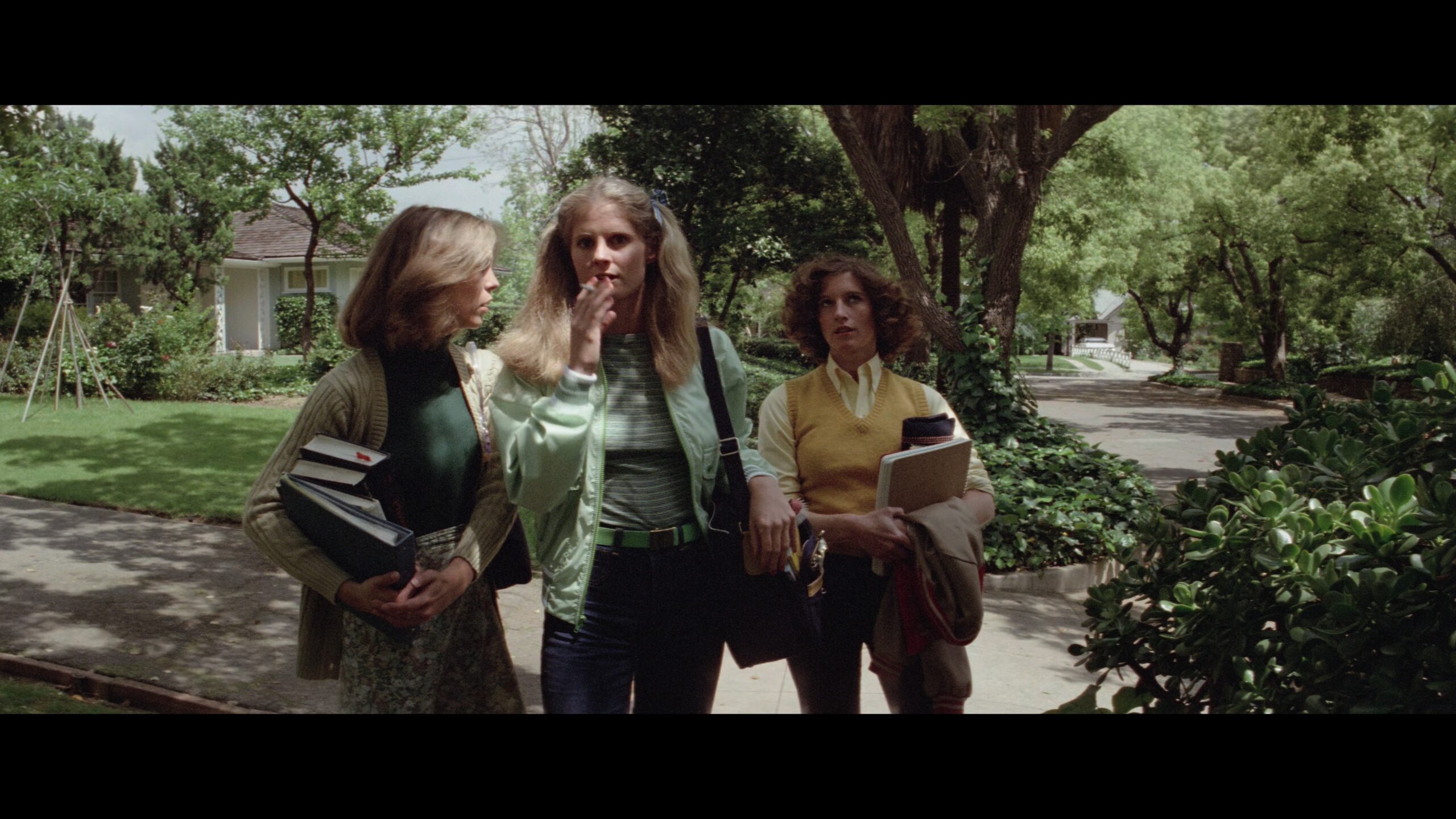
Halloween (1978)
Source France | Publisher : BQHL Editions | Release date : 22 January 2026
Video format
2160p24 | Ratio 2.39
HDR10 | Dolby Vision | BT.2020
HEVC encoding | DI 4K
Soundtrack
English Dolby Atmos
English DTS-HD MA 5.1
English DTS-HD MA 2.0
English DTS-HD MA 5.1
French DTS-HD MA 2.0
Subtitles
French
Artistic : 9 | Video : 9 | Audio : 8
WORK – Not content with imposing the slasher codes « Modern »the first Halloween goes beyond the simple dreadful film by the remarkable mastery of its spaces and framings. By making The Shape a silent and depersonalized incarnation of absolute evil, John Carpenter (The Thing) brilliantly exploits the field and the out-of-field to instill a constant tension, supported by a minimalist musical theme. A masterpiece often copied, never equaled!
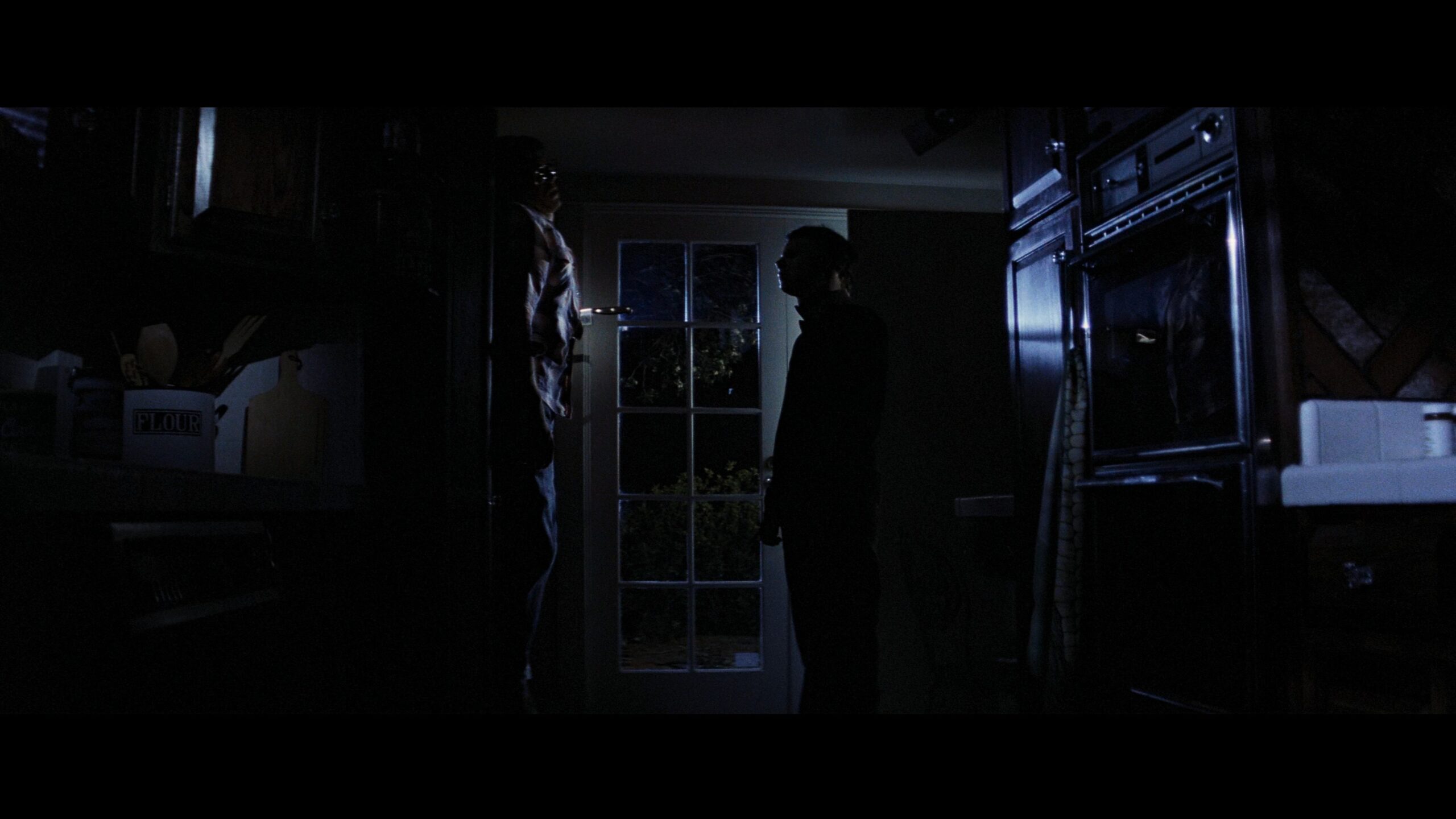
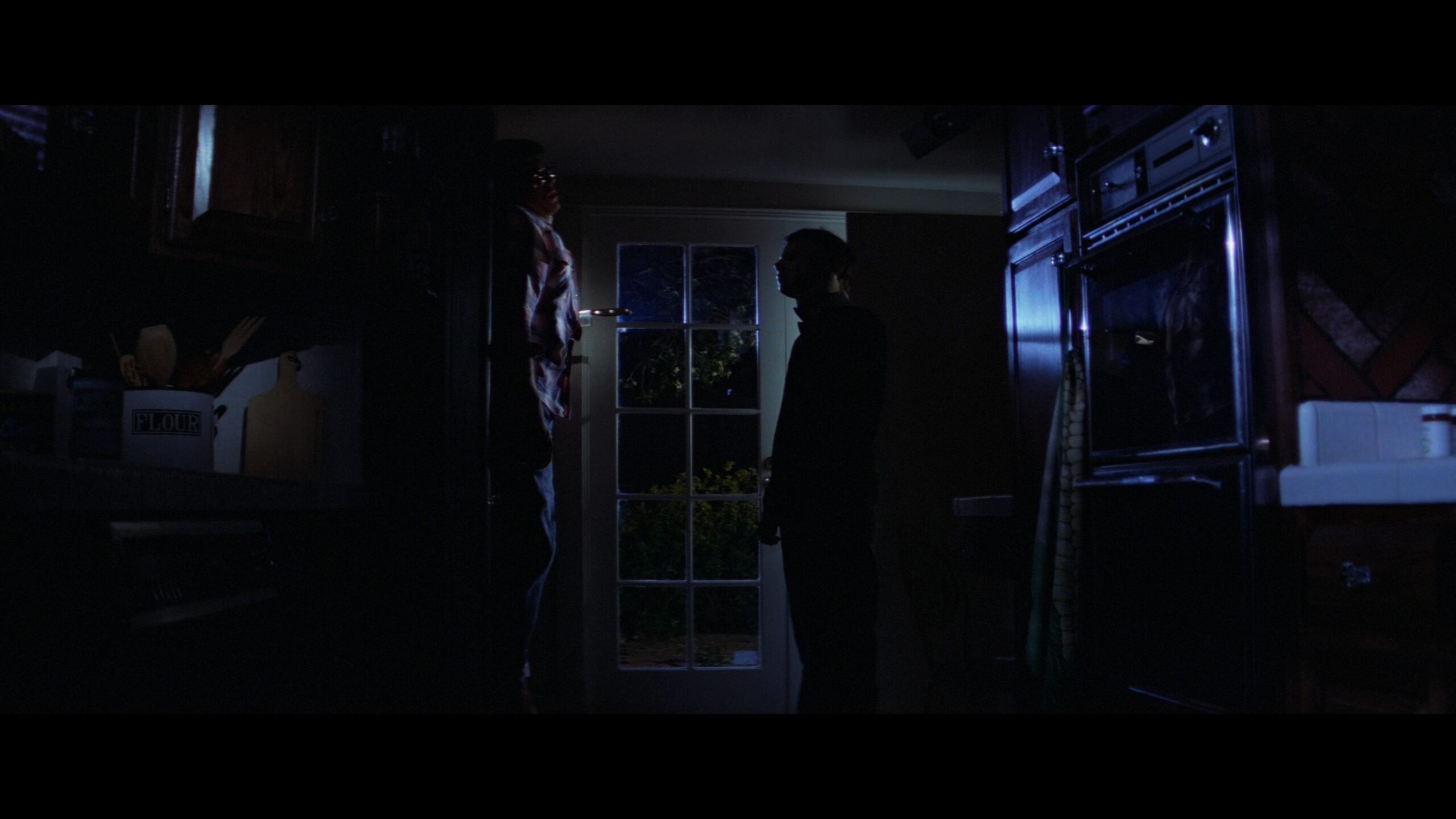
IMAGE – From a new 4K scan of the original 35 mm negative validated by Dean Cundey, this transfer surpasses edition Lionsgate (resumed at home by ESC). The texture of the grain returns to organic stability, while the calibration DV magnifies the darkness, more subtlely disguising the silhouette of the killer hidden in the shadows. More incisive light sources, bluish tone reinvesting at night and oversaturation of autumn hues (the Blu-ray Pathé) here again corrected.


SON – The unedited VO Atmos narrows the sound scene soberly: the height channels bring a natural relief to the weather, while the theme to the synthesizer gains sitting without breaking the original frontality. The DTS-HD MA 5.1 and 2.0 mixes ideally balance modern immersion and fidelity to the original monophony. As for the VF, declined in 5.1 and dual mono 2.0, it suffers from a dubbing of such an approximate period in its traduction quartificiel in its integration.
🌎 Comes from elsewhere
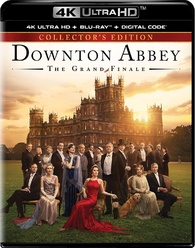
Downton Abbey: The Grand Final
Source United States | Publisher : Universal Pictures | Release date : 11 November 2025
Video format
2160p24 | Ratio 2.39
HDR10 | Dolby Vision | BT.2020
HEVC encoding | DI 4K
Soundtrack
English Dolby Atmos
English (Quebec) Dolby Digital Plus 7.1
Subtitles
English
French
Artistic : 7 | Video : 10 | Audio : 9
WORK – The ultimate reverence given to the iconic British saga, this third film chapter seals the fate of the Crawley family with an irreproachable distinction. While the story sometimes gives way to the expected drama of the era, the preciousness of the bill and the nobility of interpretation offer the TV series a particularly sumptuous twilight. A felted farewell, filled with an exquisite nostalgia, which will delight the aesthetes without however jostling the established codes of this great fresco.
IMAGE – What a delight to observe salons, towers and lands under this UHD master of a rare distinction. Calibration Dolby Vision magnifies the dynamics of the lights: the felt heat of the candles caresses the grain of the bindings in the library, while the bright daylight exalts the golden stone of the domain without altering the correctness of the hues. The fabrics, silk or tweed, reveal a prodigious texture, and the shadows, from half tints to deep blacks, retain an exemplary outfit.
SON – From the sweetest whispers to the most vehement vocal bursts, the VO Dolby Atmos preserves a crystalline intelligibility of dialogues. The majestic sheet music flourishes with an infinite grace, while 3D spatialization sculpts a living sound space where the felted click of the offices gives way to the spectacular fury of the gallops of Ascot. The refinement is sovereign. Unfortunately, the French track is losing its spatial scope, while its vocal interpretation is deprived of phlegm.
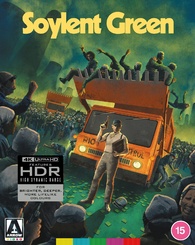
Green Sun
Source United Kingdom | Publisher : Arrow Films | Release date : 27 July 2026
Video format
2160p24 | Ratio 2.39
HDR10 | Dolby Vision | BT.2020
HEVC encoding | DI 4K
Soundtrack
English LPCM 1.0
Subtitles
English
Artistic : 7 | Video : 9 | Audio : 8
WORK – This pillar of SF anticipation is always impressed by its disturbing foresight in the face of environmental disaster and overpopulation. Immersed in an asphyxiating atmosphere, we follow a captivating police thriller, led by a Charlton Heston (Ben-Hur) in disillusioned moral compass. Despite a visual invoice that accuses its age and some narrative lengths, the film retains a major philosophical reach, served by a shocking outcome that haunts for a long time.
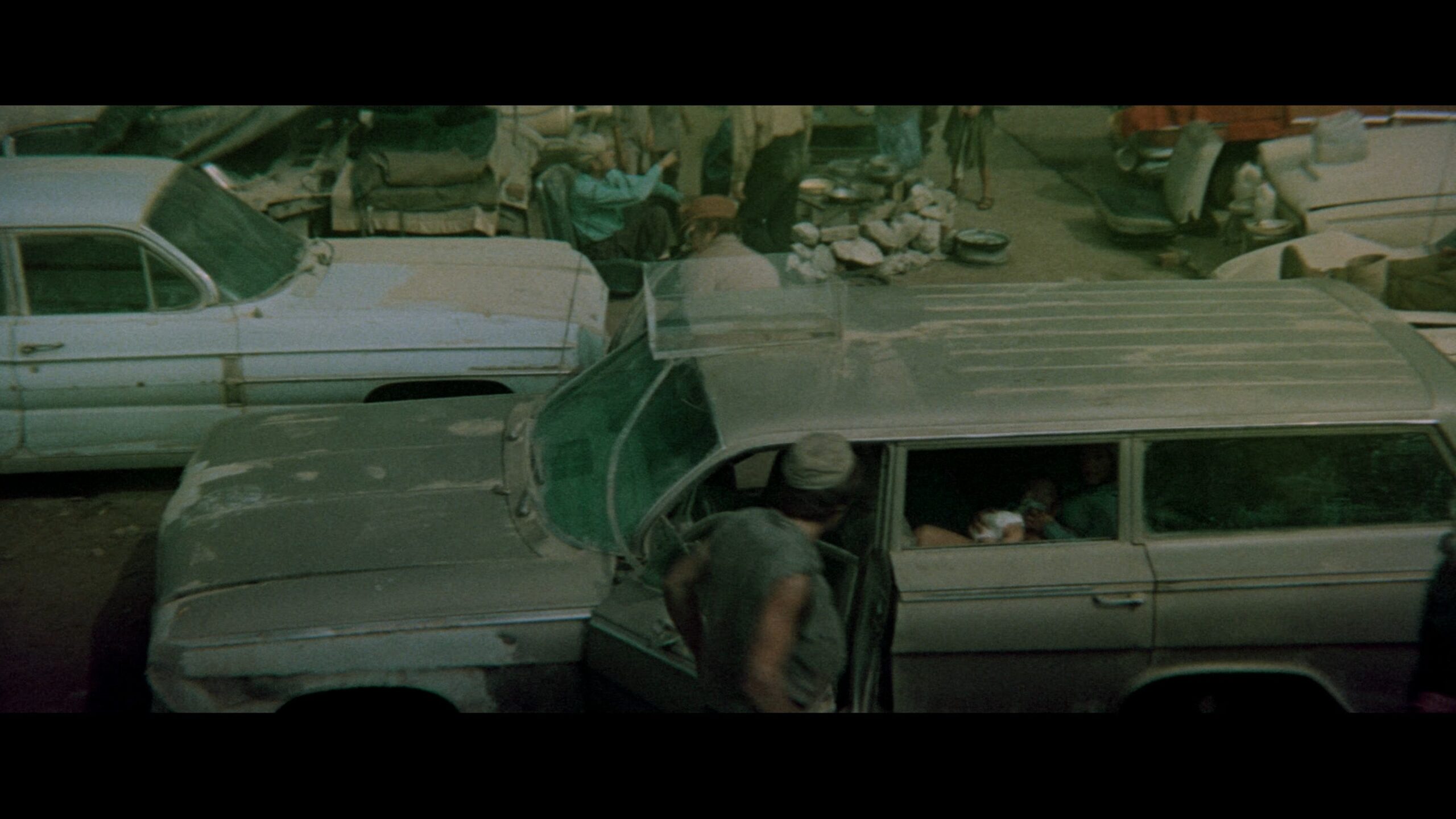
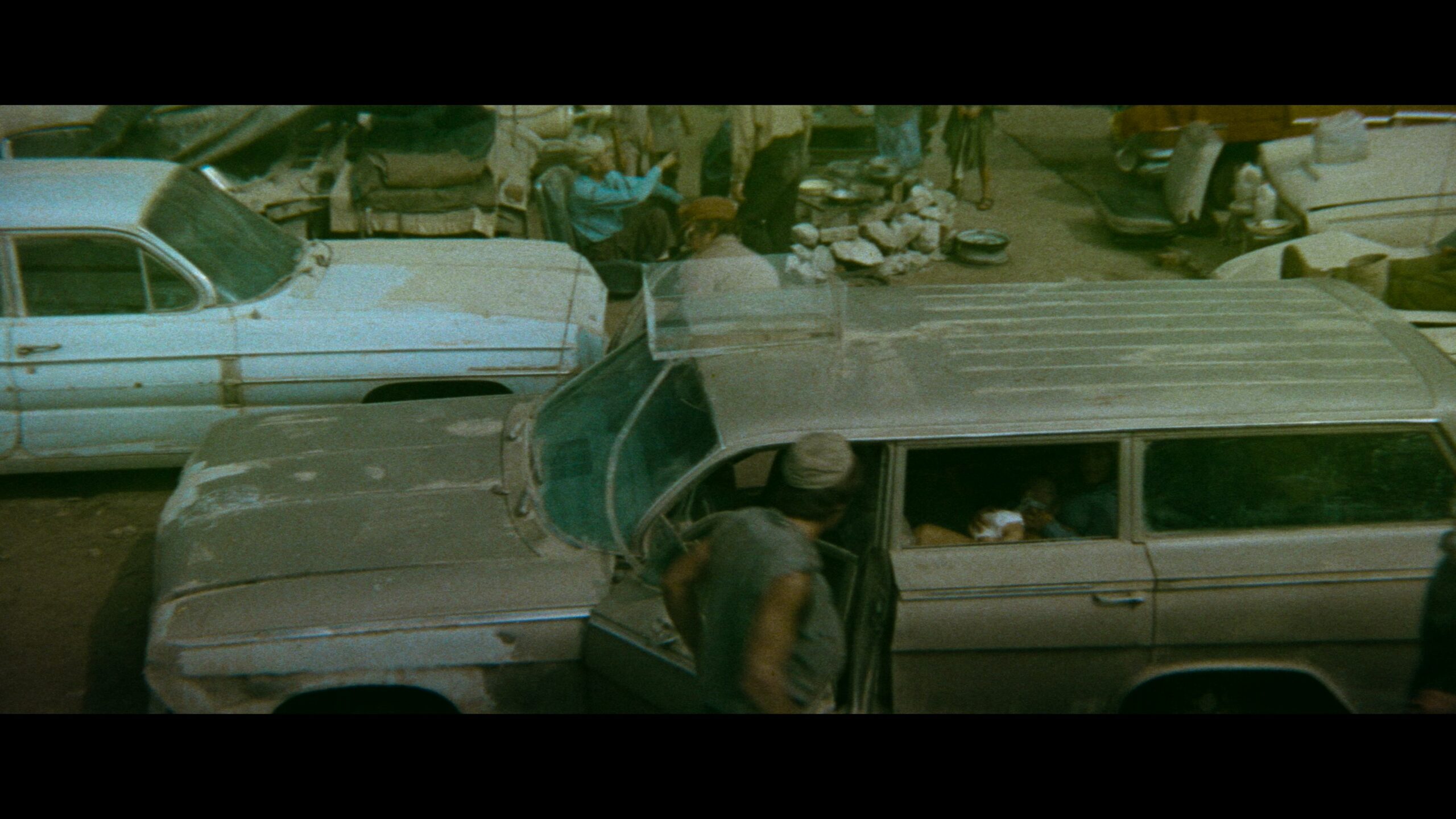
IMAGE – A new 4K restoration from the original 35 mm negative, this UHD transfer surpasses the Blu-ray with sharper contours and a grain with beautiful authenticity. Encoding, of irreproachable cleanliness, lets breathe the texture of sweaty faces and dilapidated decorations without artifacts. The Dolby Vision brings out the red accents while magnifying the greenish climate of the outside, while abyssal blacks give the dark a striking density.

SON – Proposed in mono original via an uncompressed LPCM 1.0 stream, this soundtrack surprises with its dynamics. Fred Myrow's score, with jazz and disco inflections, unfolds generous graves and great instrumental richness. All dialogues remain perfectly clear, while effects find a natural place in mixing. Cleaned in depth, the track eliminates any extant breath, even if it leaves light level instability inherent in the shooting.
We Bury the Dead
Source Australia | Publisher : Umbrella Entertainment | Release date : 08 July 2026
Video format
2160p24 | Ratio 2.39
HDR10 | Dolby Vision | BT.2020
HEVC encoding | DI 4K
Soundtrack
English DTS-HD MA 5.1
English DTS-HD MA 2.0
Subtitles
English
Artistic : 6 | Video : 9.5 | Audio : 8
WORK – Daisy Ridley (Star Wars) which trolls the Force against cold blood in the Australian bush, the promise had something to seduce. Yet, this macabre journey lacks life. By erecting its rubble and its revenants into allegories of loss, the zombie drama auscultes grief under contemplative light. But stuck between intimate chronicle and fantastic survival without ever daring to cut, this undecided narrative tramples, unable to bury its own hesitations.
IMAGE – It is through its light management that this UHD transfer subjugates: the DV harmonizes with maestria the overwhelming sunlight and the darkness of the interior scenes. Calibration, deliberately arid with its ochre shades and bluish breakthroughs in low light, is gaining a superb density. The accuracy of the bite is surgical, magnifying the slightest micro-texture of the faces as wild expanses, while unfathomable blacks return the simple Blu-ray to oblivion.
SON – Preferring the atmosphere to the bursting effects, this mix DTS-HD MA 5.1 makes the choice of sobriety. Far from offering an entourage of all the moments, the rear scene shows too much restraint, awakening only to broadcast the score or press a few bursts. With dialogues with crystal intelligibility, the frontal field concentrates most of the work, supported by a dynamic to awaken the dead and strong physical shaking.
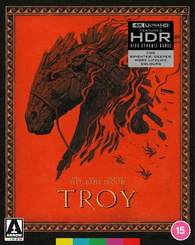
Troy
Source United Kingdom | Publisher : Arrow Films | Release date : 17 August 2026
Video format
2160p24 | Ratio 2.39
HDR10 | Dolby Vision | BT.2020
HEVC encoding | DI 4K
Soundtrack
English DTS-HD MA 5.1
English LPCM 2.0
Subtitles
English
Artistic : 8.5 | Video : 9.5 | Audio : 9
WORK – By abandoning the divine whims of the Homeric myth, Wolfgang Petersen (Poseidon) signs a tragedy on a human scale. Supported by a grand artistic direction, from colossal scenery to the fury of battle scenes, the heroic fresco impresses with its visual mastery. And dominated by the shock of anthology between a fierce Brad Pitt and a nobility-thinking Eric Bana, this modern pellum combines spectacular power and dramatic density. Indisputable.
With an additional 33 minutes, the Director's Cut corrects the Achilles heel of the original: more blood in the dust, a Trojan bag of a new barbarity and enhanced heroes. The cinema version remained smooth as marble; This montage sabers modesty, remakes music sometimes punctuated elsewhere for more brutality and gives the religious rites all their ancient fatality. The Olympus has decided.
IMAGE – Made from a 16-bit 4K scanning of the original 35 mm negative, supplemented by a 2K master oversampled for the additional sequences of the DC, this UHD transfer is a brilliant jewel cure: beautifully preserved silver grain and increased relief, from weaving of fabrics to stone walls. The input of the DV warms the image of golden and honeydy shades, while providing an unprecedented depth to the dark night and a vibrant radiance to the light sources (torches).

SON – While we can regret the absence of a Dolby Atmos remix, the DTS-HD Master Audio 5.1 track shows a remarkable grip. The acoustic space brilliantly exploits the slightest enclosure: the storms of the waves, the sound of the arrows, the impact of the bronze and heavy drums of war make the surrounds sing and the LFE channel grunt with a physical fury. At the heart of this epic melee, rhythmized by the score by James Horner (Avatar), votes retain exemplary clarity.
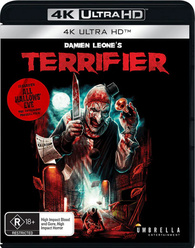
Terrifiing
Source Australia | Publisher : Umbrella Entertainment | Release date : 18 December 2024
Video format
2160p24 | Ratio 1.90
HDR10 | BT.2020
HEVC encoding | DI 4K
Soundtrack
English DTS-HD MA 5.1
English DTS-HD MA 2.0
Subtitles
English
Artistic : 7 | Video : 8.5 | Audio : 6.5
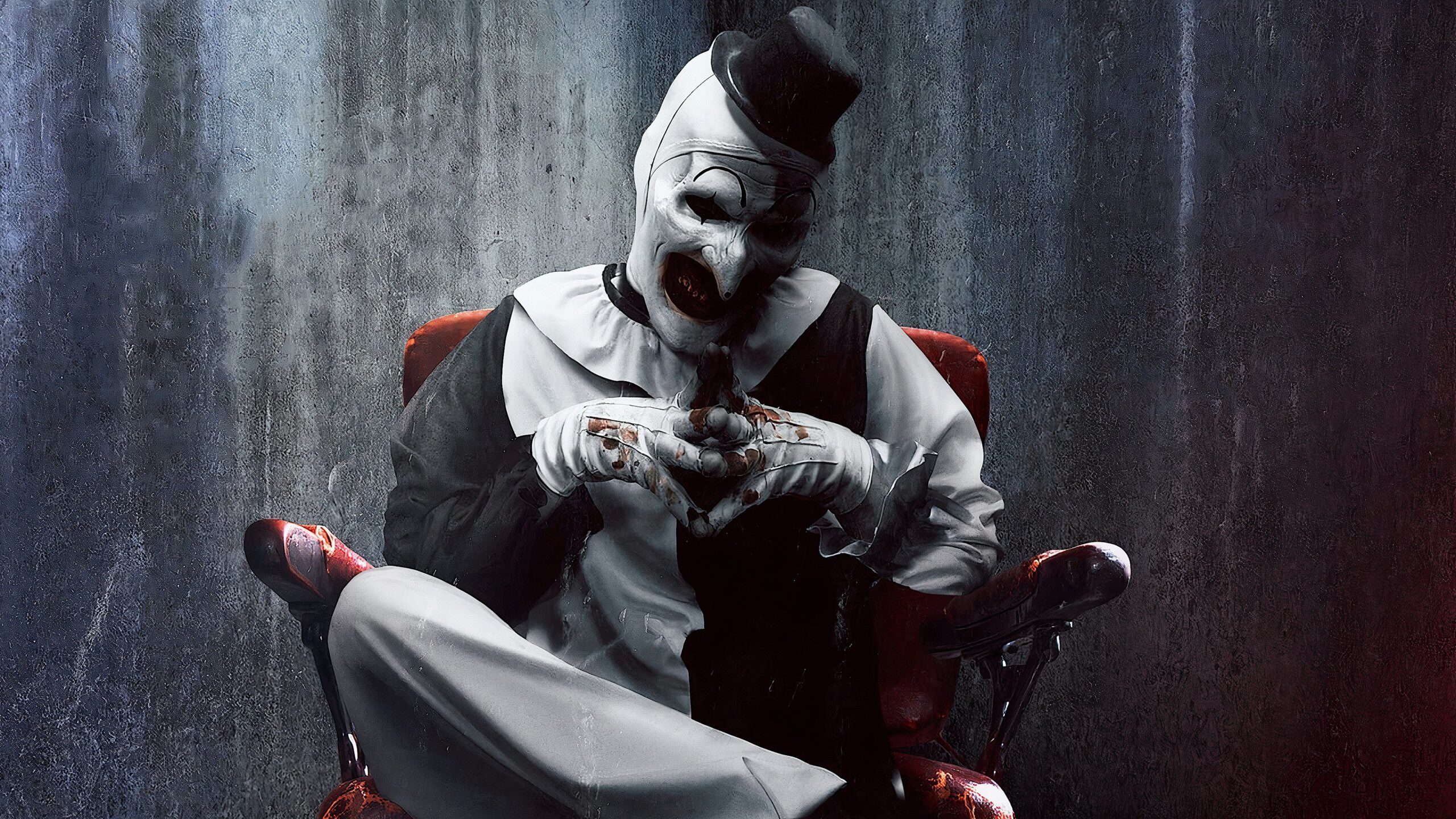
WORK – Macabre style exercise without any filter, this « midnight movie » fully assumes its status as a craft butcher. If the scenario is based on a confetti and the victims lack the answer, the show gains its galls thanks to its evil mime: Art the Clown. His jovial mutism and his bloody faces make wonders of very black humour. A peaty carnage, as vicious as it is striking, tailored for extreme cutting enthusiasts.
IMAGE – Surprisingly accurate, the pique of this UHD transfer cisels the slightest texture: freed from most of the Blu-ray compression artifacts, it displays a synthetic grain with exemplary hold, even in the darkest areas. Between unfathomable blacks, although deliberately blood, and very targeted luminance peaks, the dynamic slices very strong. Finally, typed calibration « Grindhouse » semancipe in extreme saturated red and green. Visceral!
SON – Although structured around a rather large register, from deep serious extremes to glittering acutes, this 5.1 track quickly betrays its budgetary constraints (less than 100,000 $). The impact of the effects often lacks authority, like the shots, and unexpected reverberations disturb the balance. Moreover, the mix is obstinating to focus almost exclusively on the front stage, asking for the surrounding channels only by means of the score and some organic projections.
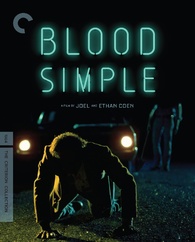
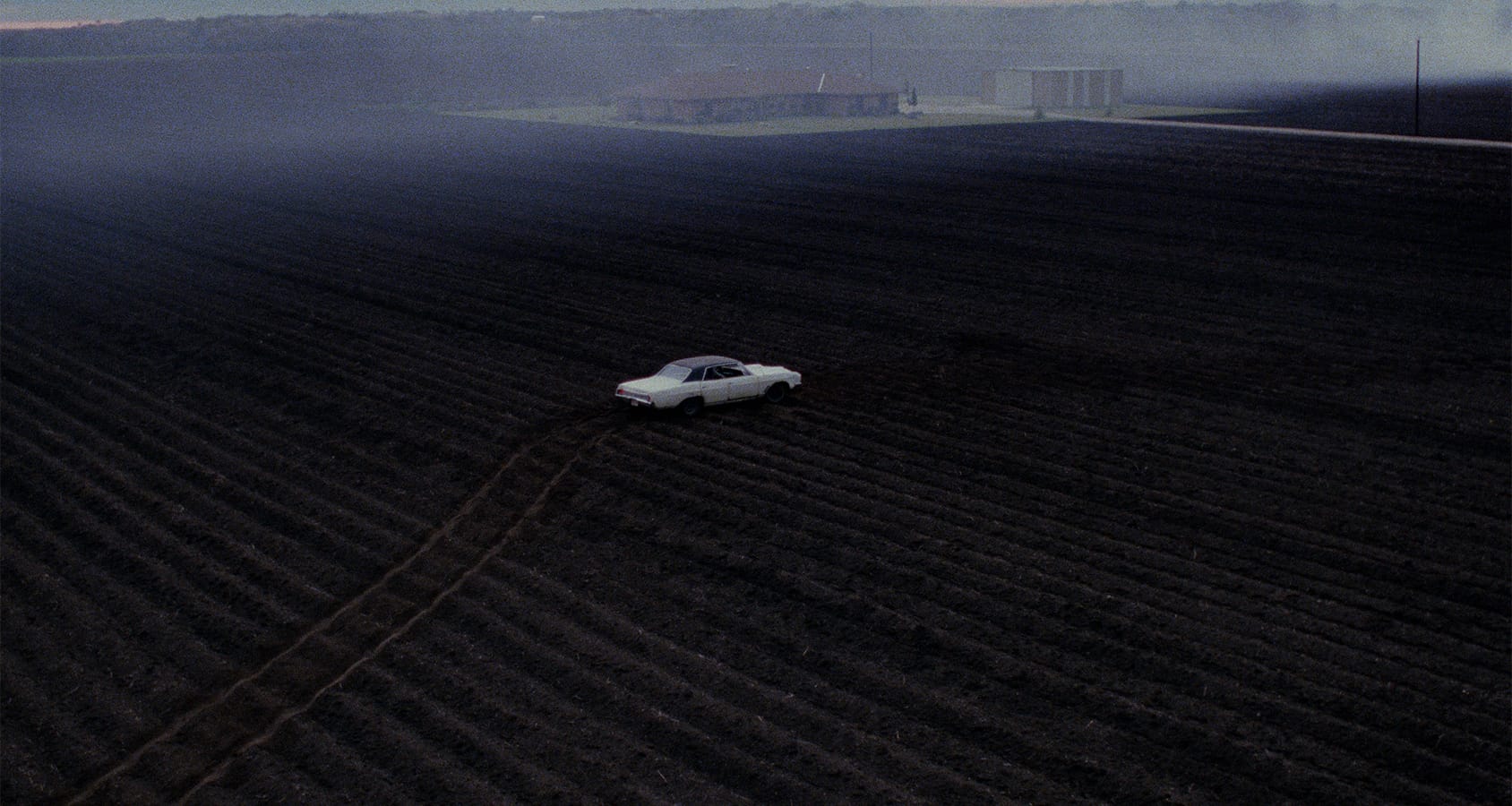
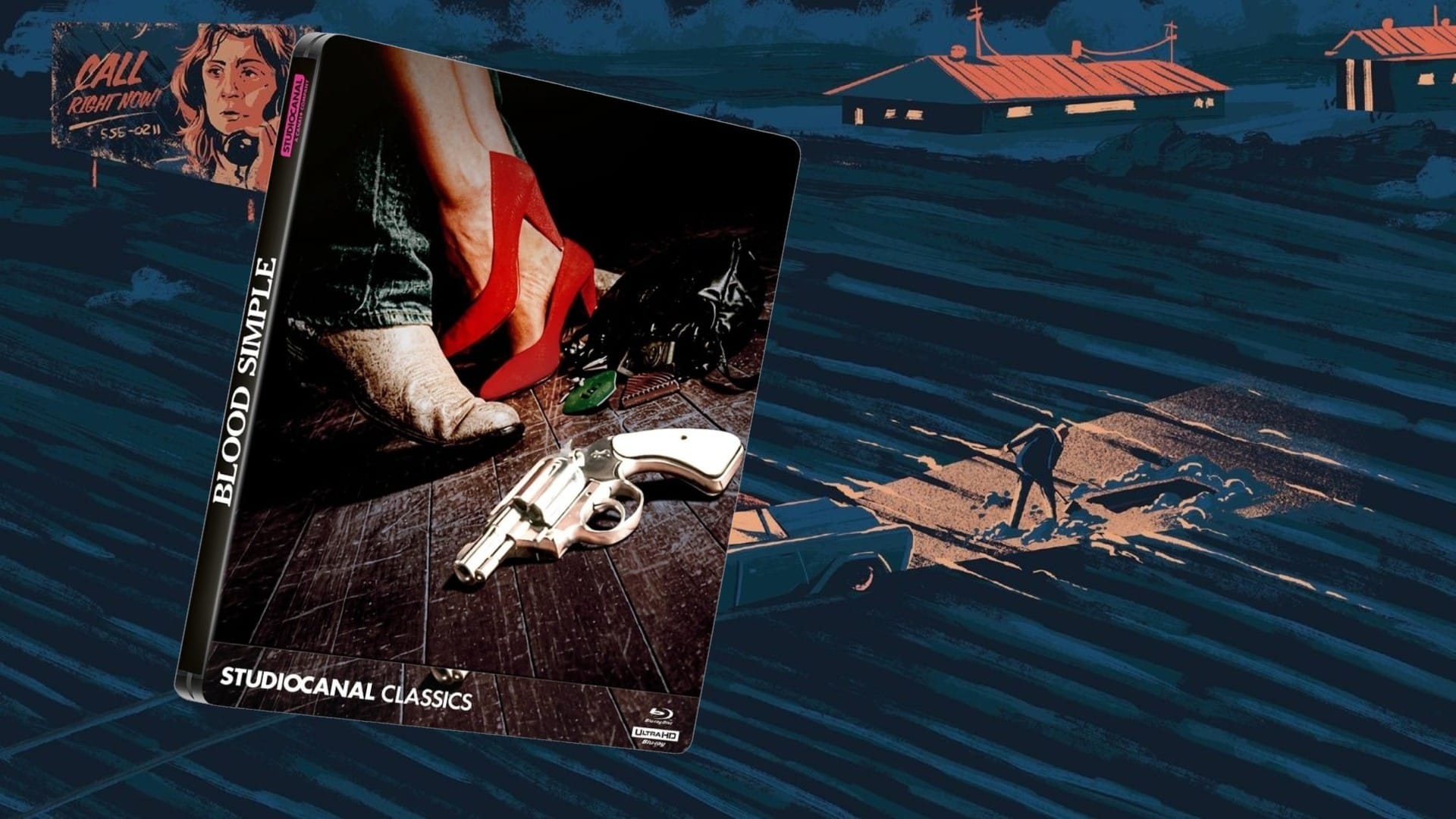
Blood Simple
Source United States | Publisher : Criterion | Release date : 09 January 2024
Video format
2160p24 | Ratio 1.85
HDR10 | Dolby Vision | BT.2020
HEVC encoding | DI 4K
Soundtrack
English DTS-HD MA 5.1
Subtitles
English
Artistic : 8 | Video : 9 | Audio : 8.5
WORK – From their very first feature film, the Coen brothers reinvent the black film by shaping a gear of relentless cruelty. Far from the usual artifice of the genre, this narrative revolves around pernicious quiproquos where each decision inexorably worsens the situation. Sublimed by a peaty photograph, the staging distills a stifling tension, crossed by a biting irony. An inaugural work where rigorous script and formal mastery are already working.
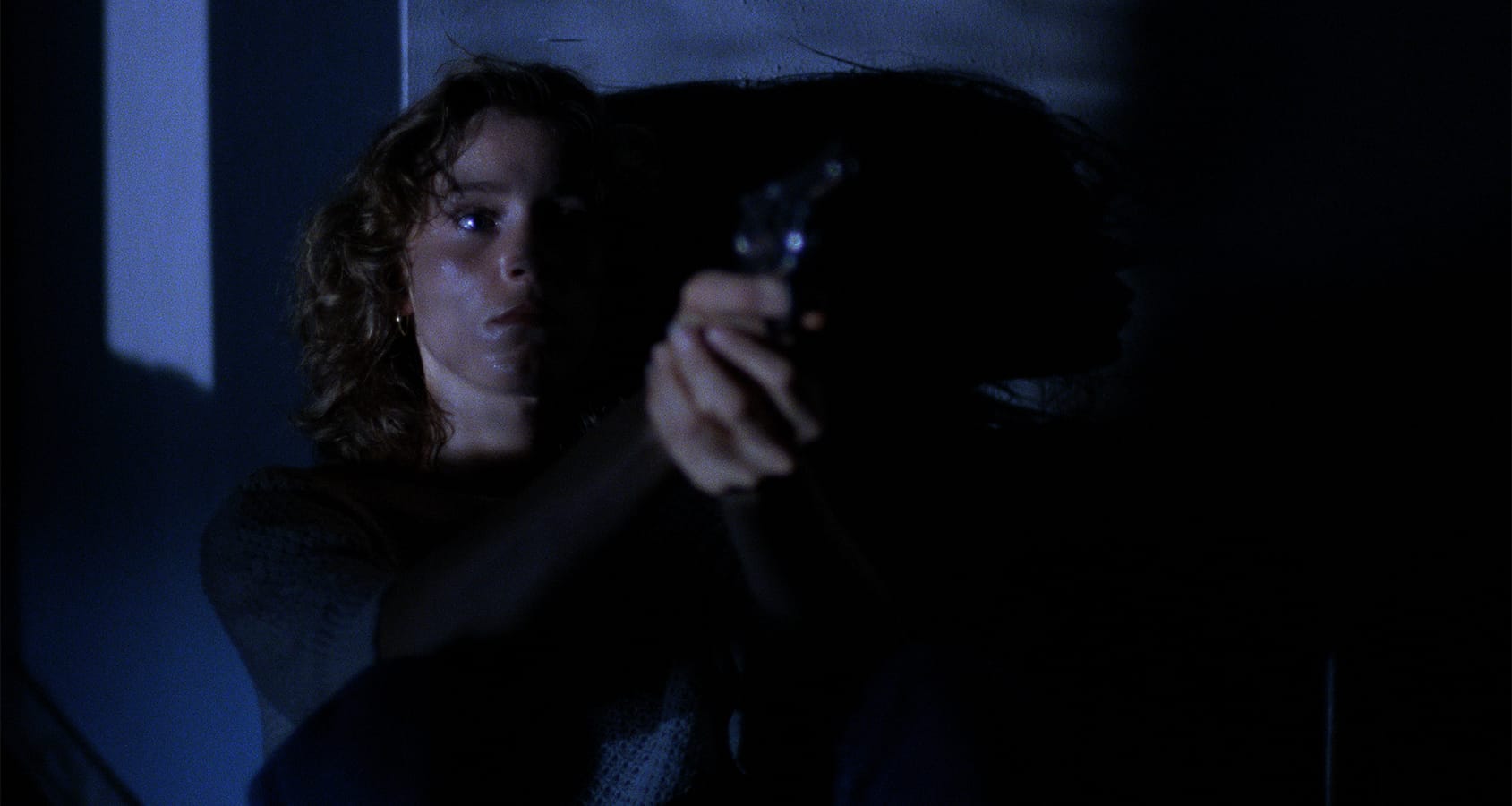
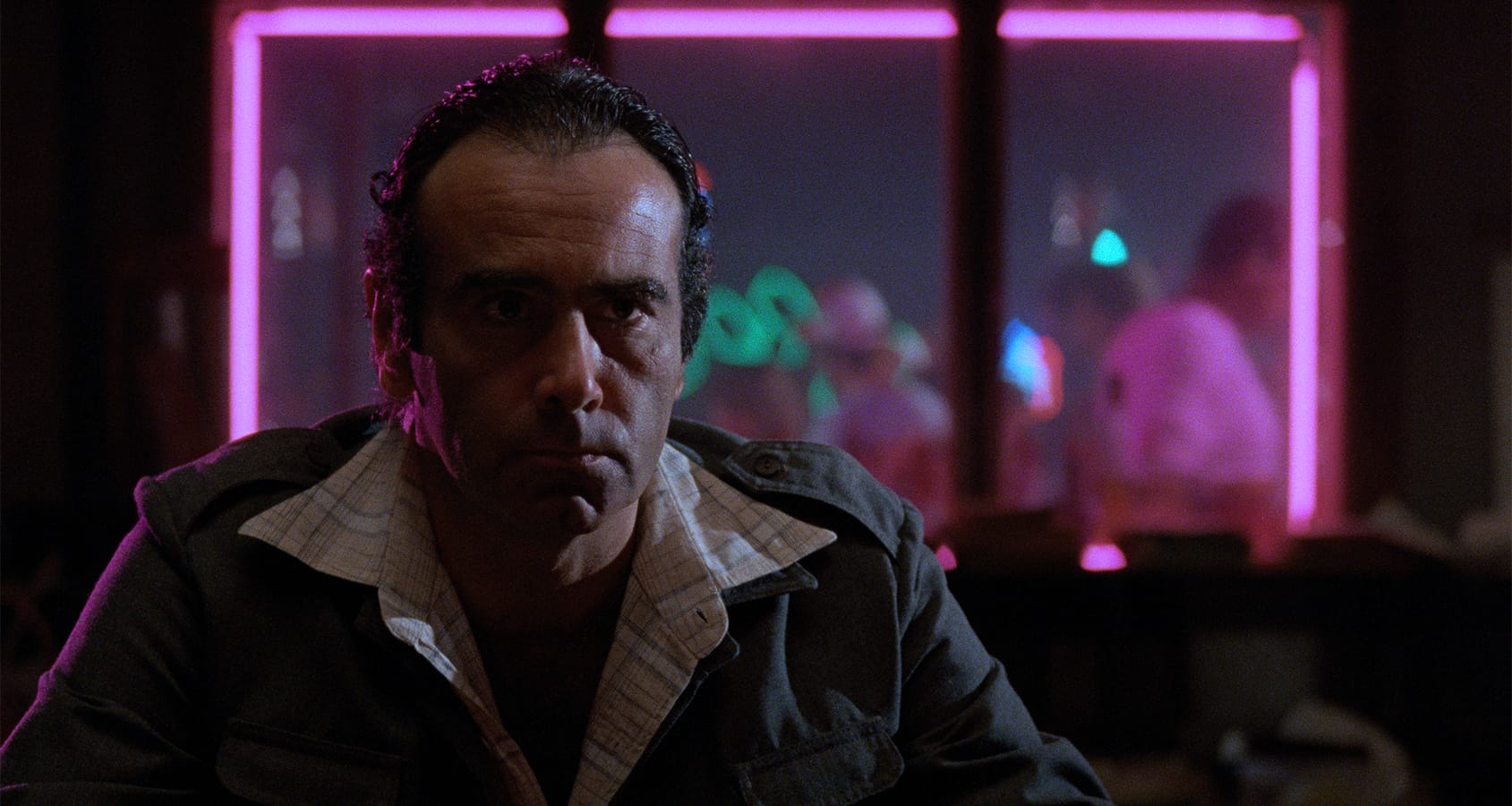
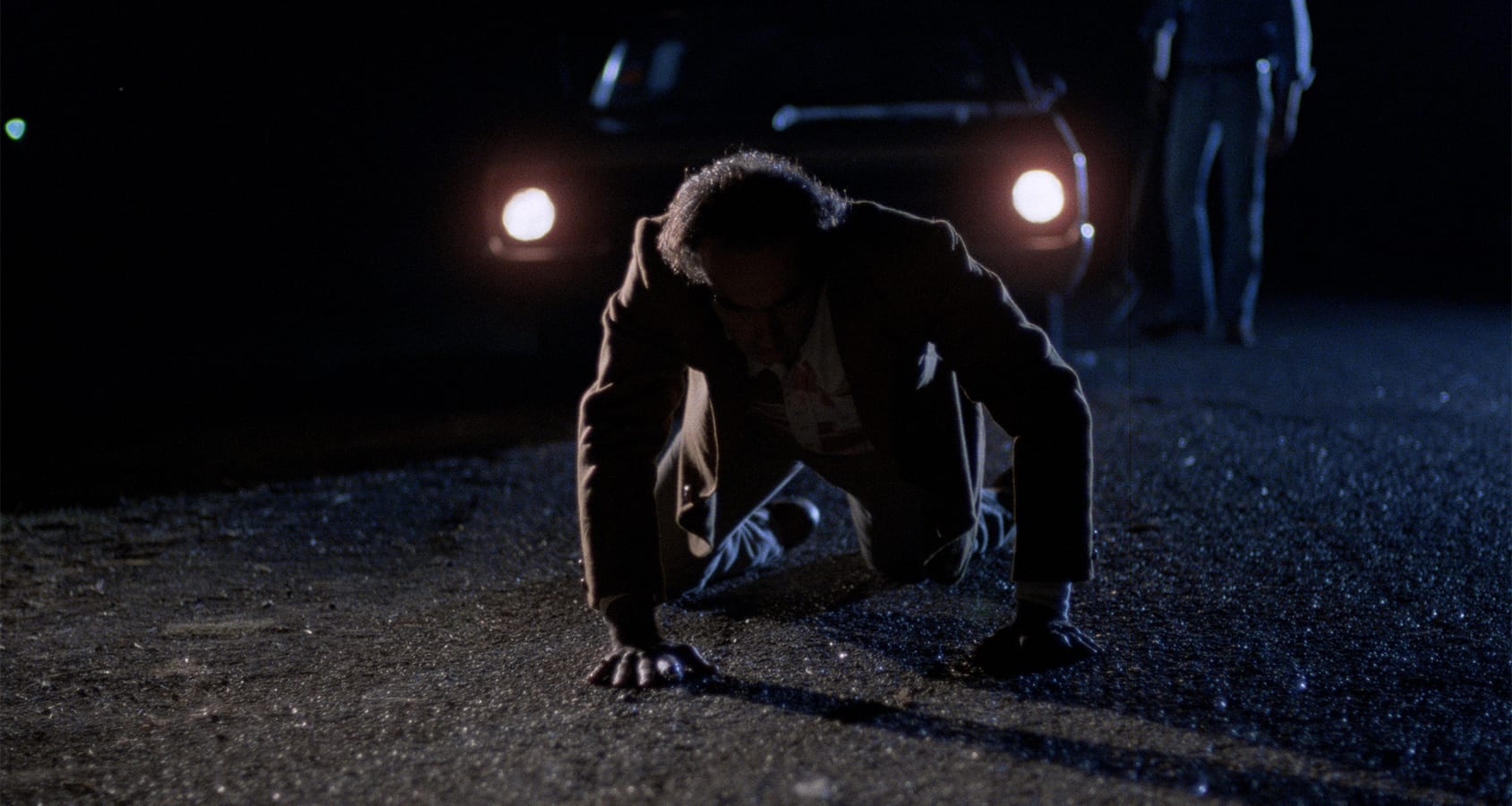
IMAGE – Supervised by Barry Sonnenfeld and the Coen brothers, this 4K restoration calibrated in Dolby Vision sees the contribution of the HDR transfigure the night atmospheres. The striking brilliance of the neon and the richness of the peasy hues (earthy browns, malady greens) sublimate blacks of remarkable density, without ever stifling the details. In front of the 2016 Blu-ray from the same master, the pique gain remains subtle, but holding the encoding makes the difference in the fineness of the grain.
SON – Set in DTS-HD MA 5.1, the soundtrack favours a frontal scene of beautiful clarity. The dialogues, of perfect intelligibility, integrate into a sober mixing where the melancholic piano score by Carter Burwell takes on a natural dimension. If the rear channels intervene with a real restraint to extend the atmospheres, the overall dynamics and the firmness of the basses (serious notes, detonations) preserve the authenticity of the original work without ever yielding to fireworks.
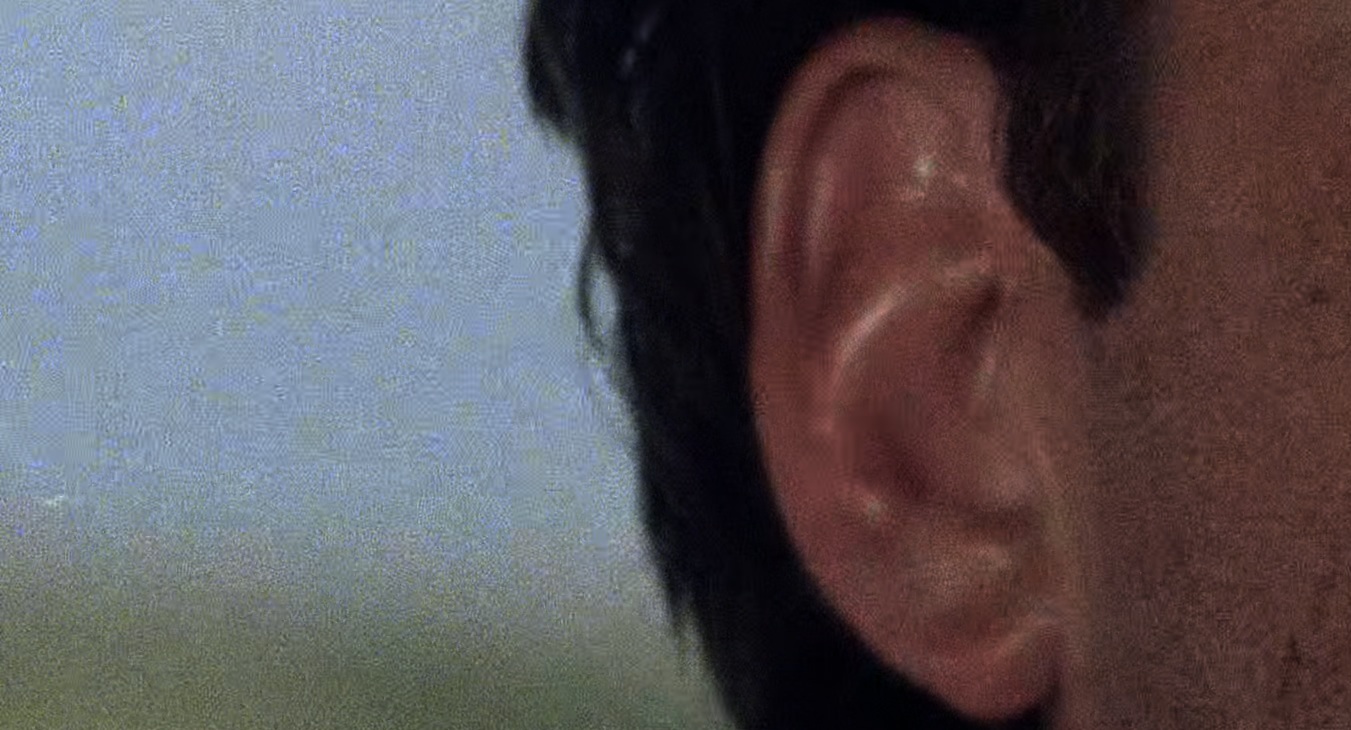
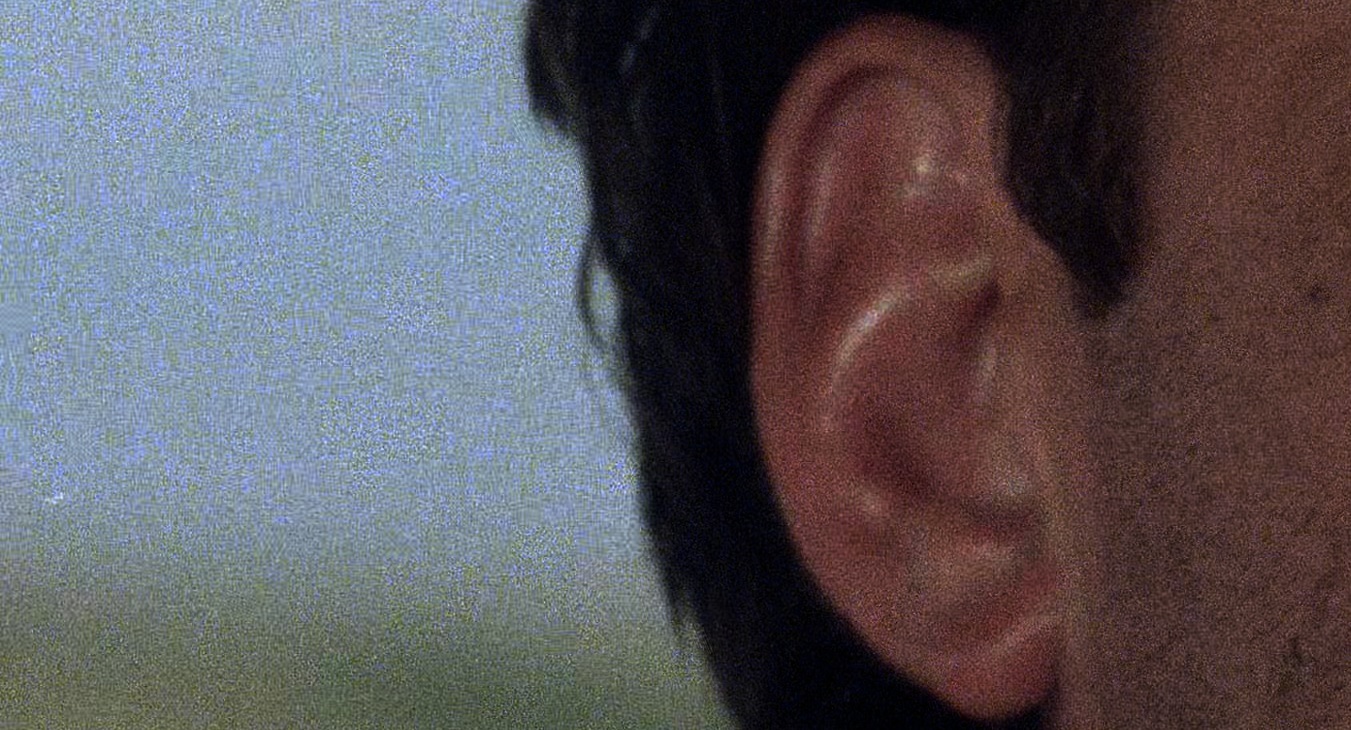
Built on master 4K of Criterion, the galette FR Studiochannel is not quite « bloodless ». If the Dolby Vision is delusional, the compression is a bit of a blunder: smooth details and tingling betray a slight technical trap. Worse, in VF DTS-HD MA 5.1, the derail gear: between dusty dubbing and occasional desynchronization, crime is definitely not perfect.

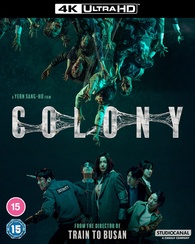
Colony (2026)
Source United Kingdom | Publisher : Studiocanal | Release date : 28 September 2026
Video format
2160p24 | Ratio 2.39
CSD | BT2 BT2 NT2 NT2 NT2 NT2 NT2 NT2 NT2 NT2 NT2 NT2 NT2 NT2 NT2 NT2 NT2 NT2 NT2 NT2 NT2 NT2 NT2 NT2 NT2 NT2 NT2 NT2 NT2 NT2 NT2 NT2 NT2 NT2 NT2 NT2 NT2 NT2 NT2 NT2 NT2 NT2 NT2 NT2 NT2 NT2 NT2 NT2 NT2 NT2 NT2 NT2 NT2 NT2 NT2 NT2 NT2 NT2 NT2 NT2 NT2 NT2 NT2 NT2 NT2 NT2 NT2 NT2 NT2 NT2 NT2 NT2 NT2 NT2 NT2 NT2 NT2 NT2 NT2 NT2 NT2 NT2 NT2 NT2 NT2 NT2 NT2 NT2 NT2 NT2 NT2 NT2 NT2 NT2 NT2 NT2 NT2 NT2 NT2 NT2 NT2 NT2 NT2 NT2 NT2 NT2 NT2 NT2 NT2 NT2 NT2 NT2 NT2 NT2 NT2 NT2 NT2 NT2 NT2 NT2 NT2 NT2 NT2 NT2 NT2 NT2 NT2 NT2
HEVC encoding | DI 4K
Soundtrack
Korean Dolby Atmos
Korean DTS-HD MA 5.1
Korean LPCM 2.0
Subtitles
English
Artistic : 8.5 | Video : 9 | Audio : 10
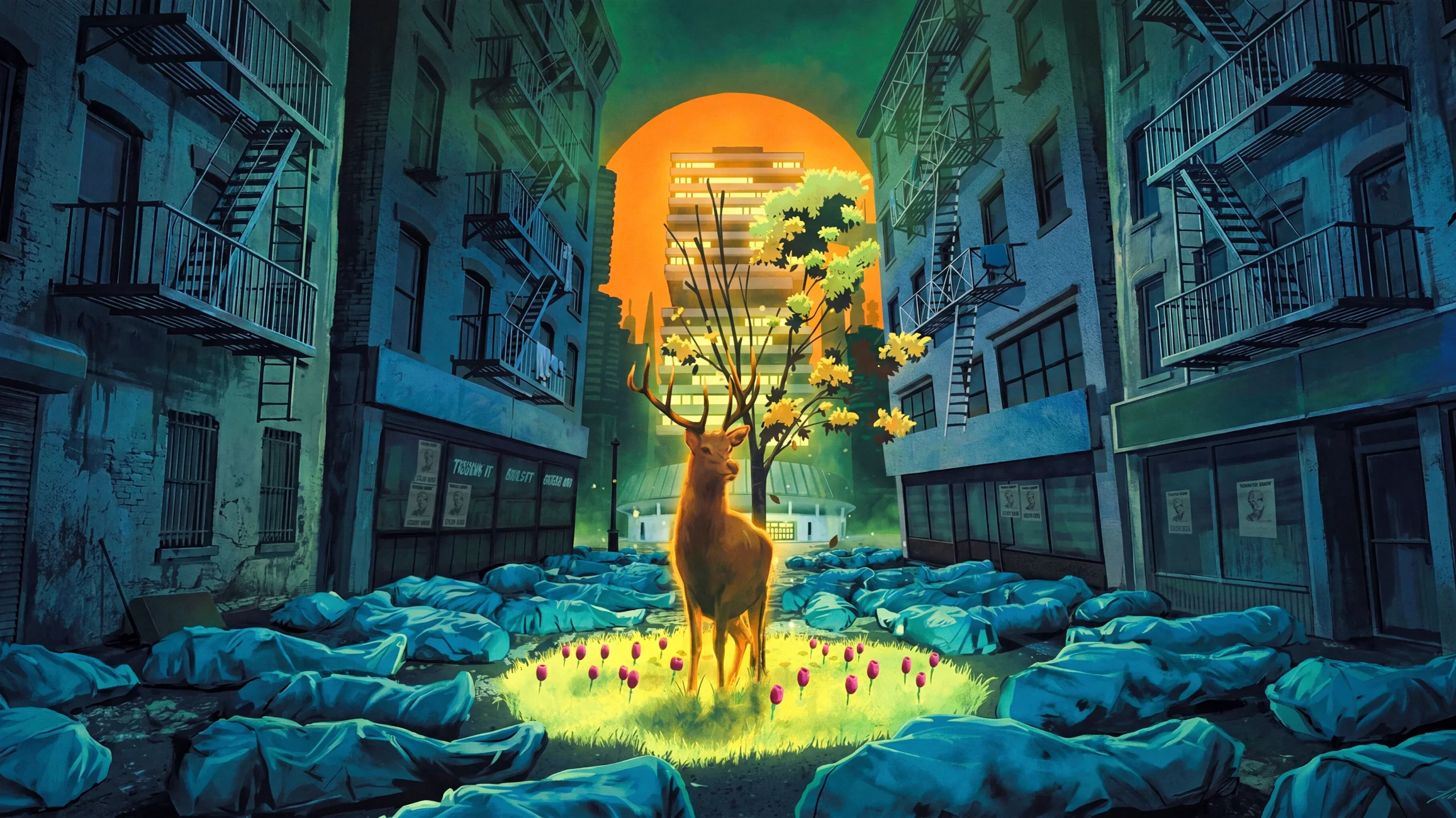
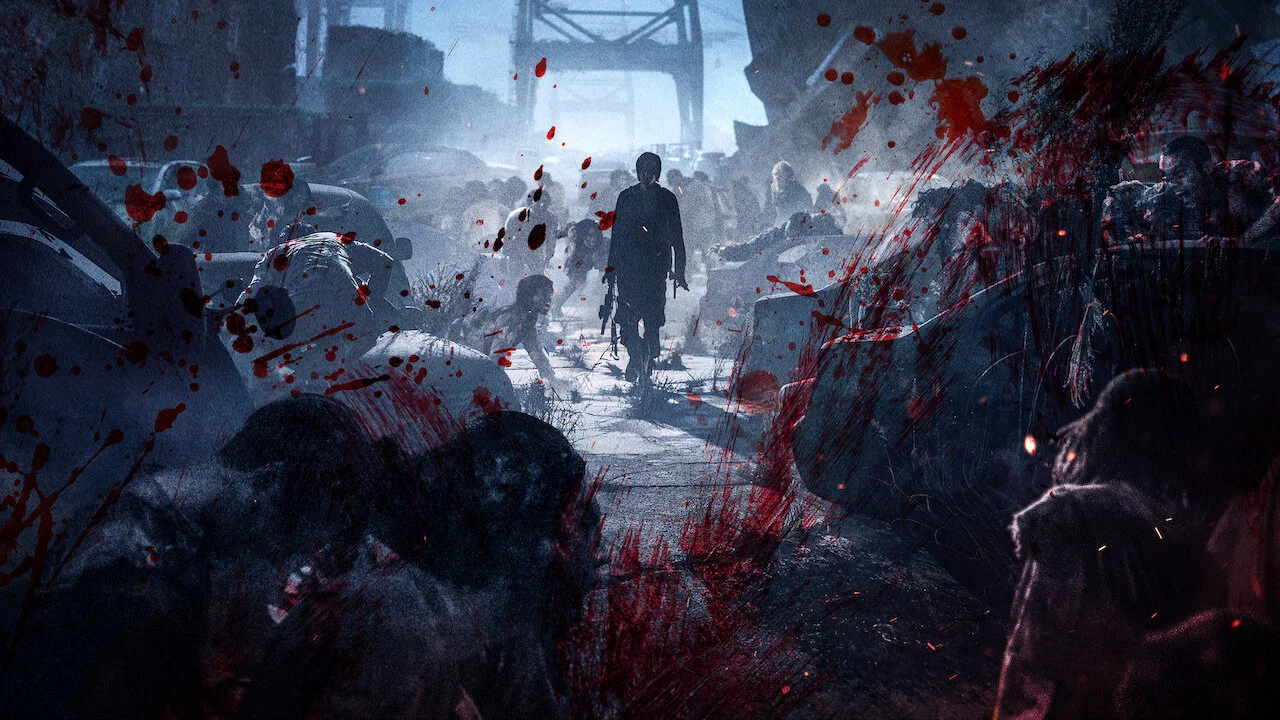
WORK – When Crystal Trap is taken hostage by the zombie flick, the real of the Last train to Busan Reunite with his rage. Survival in camera where the infected, endowed with a collective intelligence, mutate into a strategic pack, carbide to carnage continues: physical stunts, fierce makeup, kinetic chaos way 28 Days Later. And under the slaughter, Yeon Sang-ho inoculates a charge against the South Korean state and forced individualism. The contamination is total.
IMAGE – Graved from a native 4K matrix, this SDR Rec.709 master compensates for the absence of HDR by a remarkable plastic outfit. The signature of anamorphic optics breaks the digital dryness, marrying a sharp central tip to a very silvery peripheral softness. Organic textures and complex make-up are full of micro-details, while a camaieu of grey and sterile whites carpets the place. Despite a hard luminance ceiling, blacks remain dense.
SON – Equipped with a monumental Atmos track, this edition offers a 3D spatialization model. The acoustic field continuously exploits the vertical and lateral channels, injecting atmospheres and bursts of attack with a striking relief. The dynamic gap jumps to the ears: mixing passes from a suffocating whisper to physical loads of a staggering incisivity, backed by deep but perfectly maintained serious extremes. Beautifully detached dialogues.
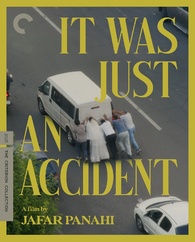
A simple accident
Source United States | Publisher : Criterion | Release date 30 June 2026
Video format
2160p24 | Ratio 1.85
CSD | BT2 BT2 NT2 NT2 NT2 NT2 NT2 NT2 NT2 NT2 NT2 NT2 NT2 NT2 NT2 NT2 NT2 NT2 NT2 NT2 NT2 NT2 NT2 NT2 NT2 NT2 NT2 NT2 NT2 NT2 NT2 NT2 NT2 NT2 NT2 NT2 NT2 NT2 NT2 NT2 NT2 NT2 NT2 NT2 NT2 NT2 NT2 NT2 NT2 NT2 NT2 NT2 NT2 NT2 NT2 NT2 NT2 NT2 NT2 NT2 NT2 NT2 NT2 NT2 NT2 NT2 NT2 NT2 NT2 NT2 NT2 NT2 NT2 NT2 NT2 NT2 NT2 NT2 NT2 NT2 NT2 NT2 NT2 NT2 NT2 NT2 NT2 NT2 NT2 NT2 NT2 NT2 NT2 NT2 NT2 NT2 NT2 NT2 NT2 NT2 NT2 NT2 NT2 NT2 NT2 NT2 NT2 NT2 NT2 NT2 NT2 NT2 NT2 NT2 NT2 NT2 NT2 NT2 NT2 NT2 NT2 NT2 NT2 NT2 NT2 NT2 NT2 NT2
HEVC encoding | DI 2K
Soundtrack
Persian DTS-HD MA 5.1
Subtitles
English
Artistic : 8 | Video : 8.5 | Audio : 9
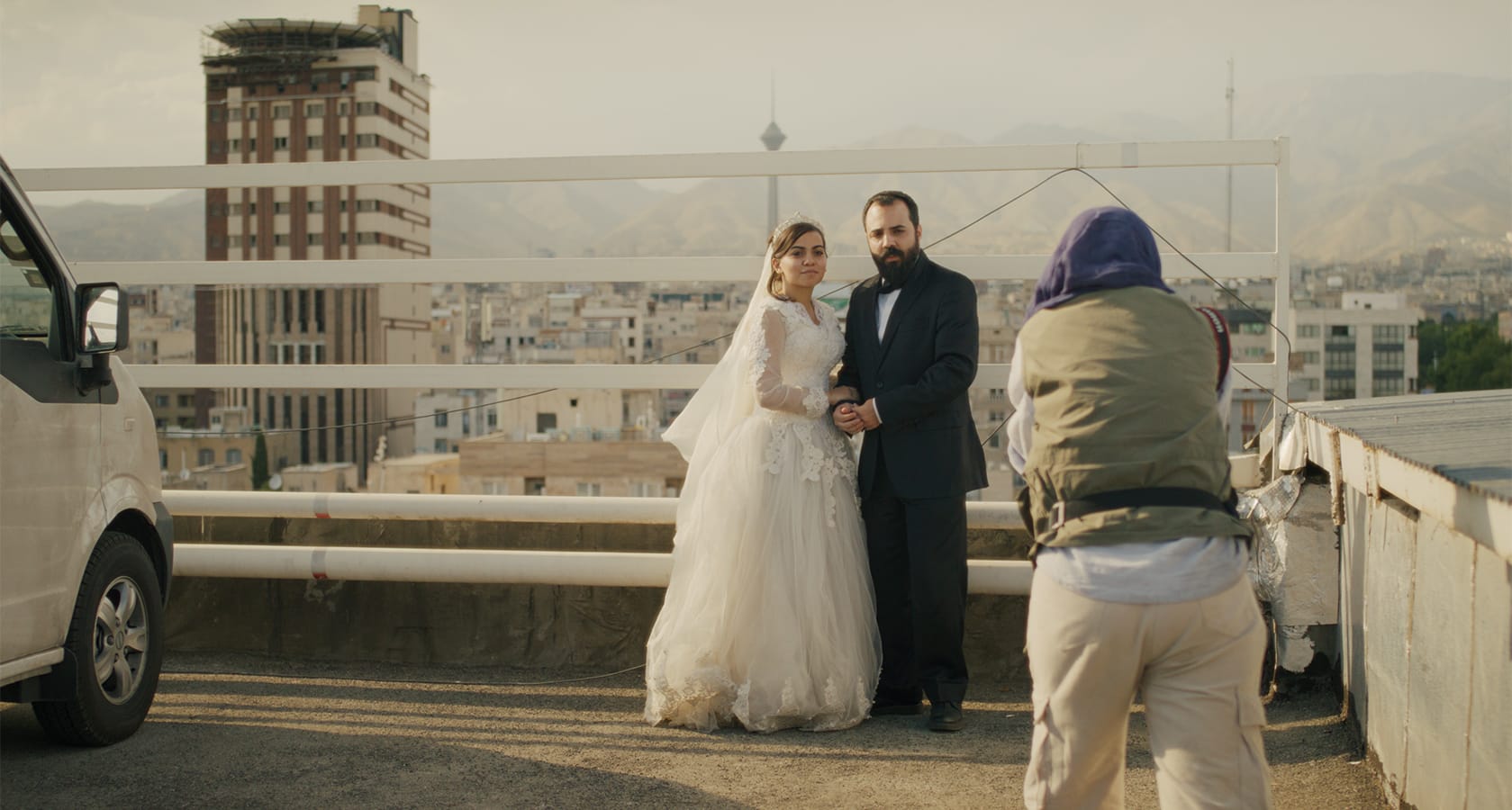
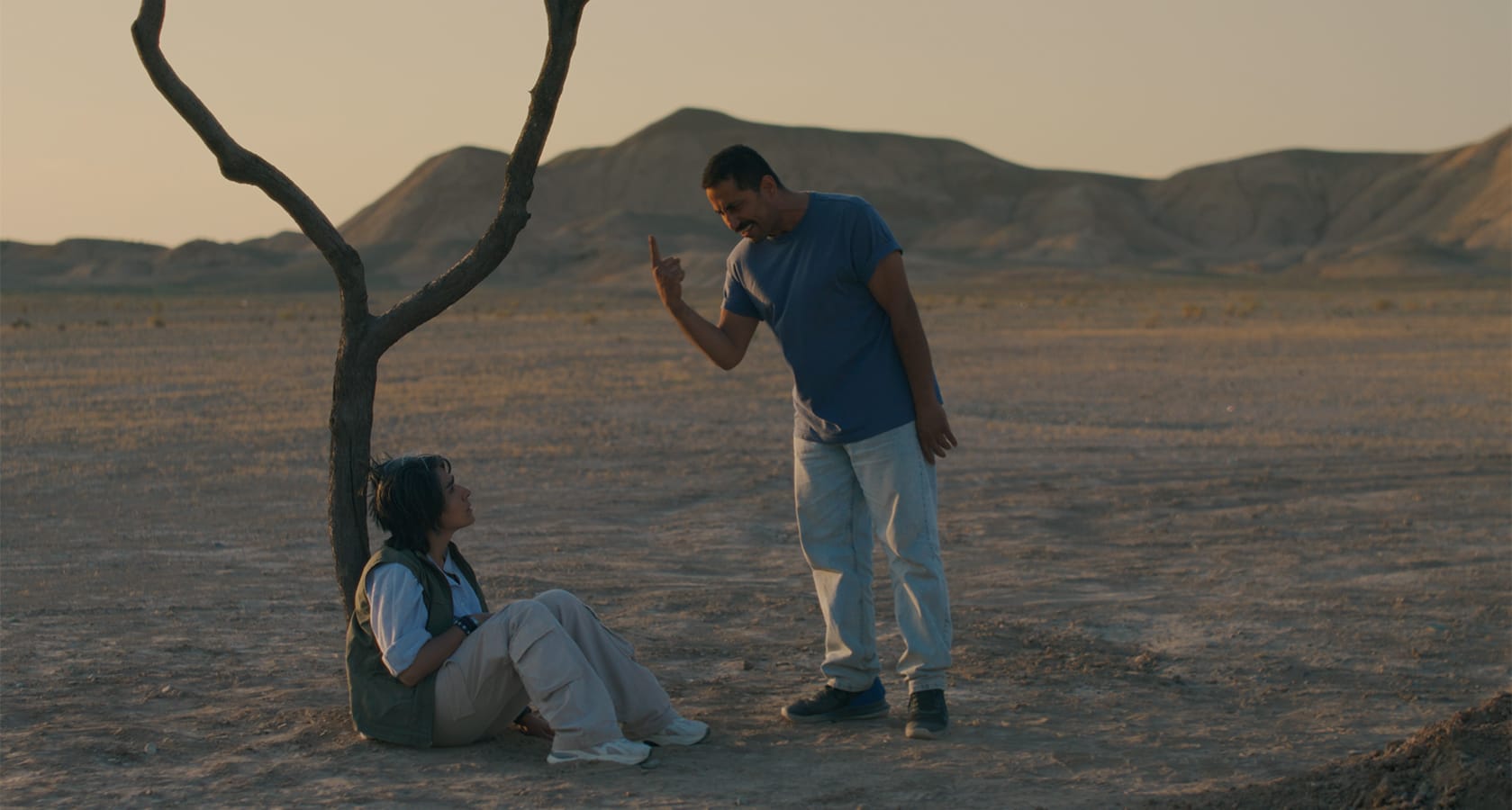
WORK – Froma simple accidentJafar Panahi interrogates after prison and torture in the closed doors of a van where the Tehran regime is tried. Politically engaged, funny and open to moral reparation, this social tragi-comédie turned underground is of an unarming correctness when it evokes Iranian struggles and the revolt that roars. Both in the background and in form, a beautiful lesson of humanity that is freed from the desire for revenge.
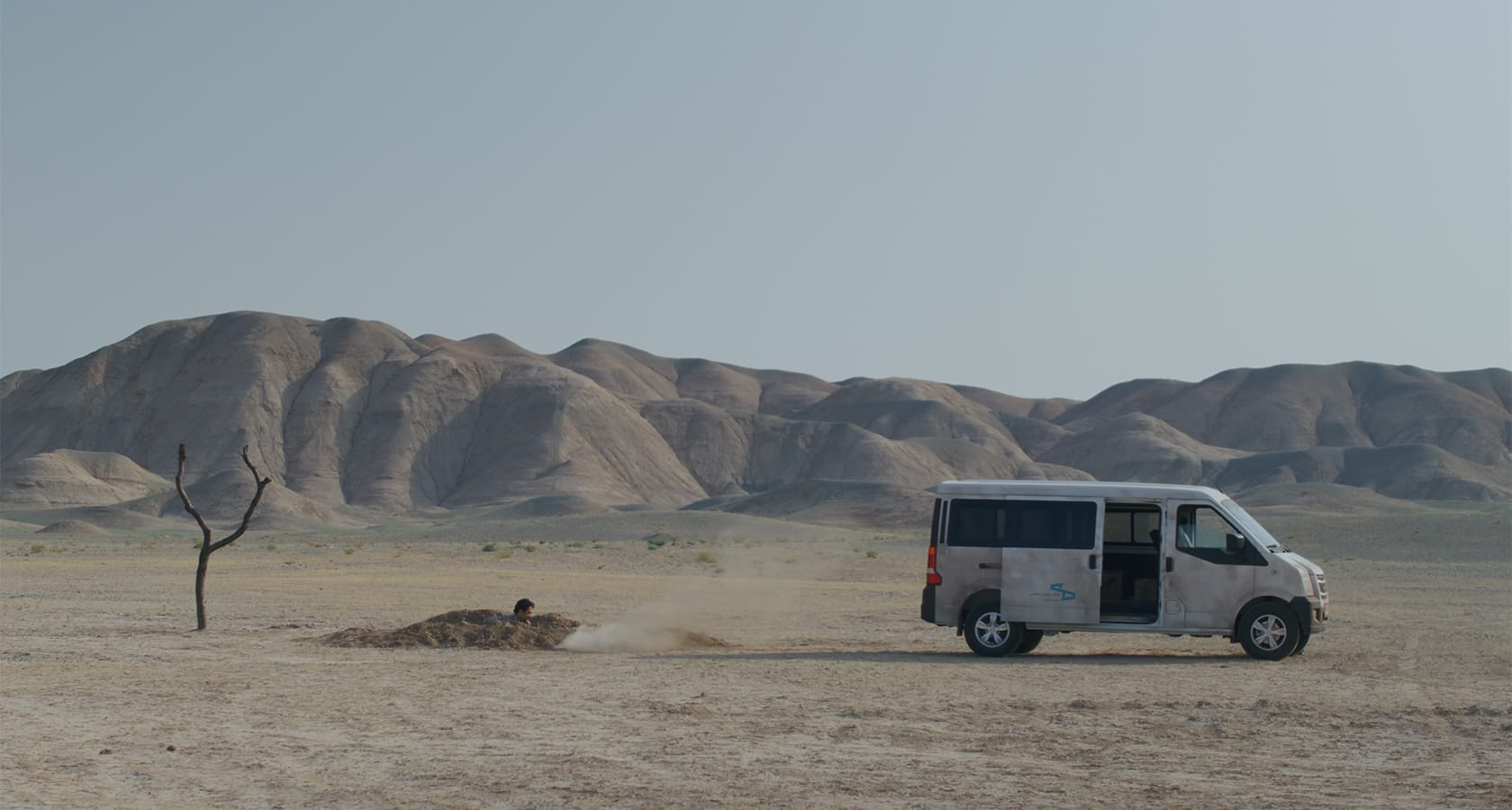
IMAGE – Mastered under the supervision of the director, this UHD SDR transfer from a digital shooting shows surgical sharpness. Despite the absence of HDR calibration, the image surprises with its dynamics, from night scenes to arid desert landscapes bathed in sunlight: dense blacks, fluid gradients in the shade and very vibrant reds. Apart from a discrete native video noise on a handful of planes, encoding preserves the purity of the source. Technical success.
SON – Encoded in DTS-HD Master Audio 5.1, this Persian VO track impresses with its fidelity and the finesse of its mixing. If the whole remains sober, apart from some urban rumors and an attempt to bury in sandy ground, the clarity of dialogues and the restitution of micro-details, such as the treacherous grinning of a prosthesis, are exemplary. The field surrounds the scene with a beautiful presence, leaving the wind and birds, omnipresent, to express naturally.
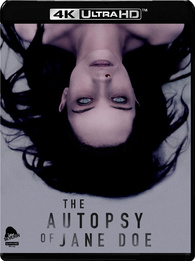
The Jane Doe Identity
Source United States | Publisher : Severin Films | Release date : 13 October 2026
Video format
2160p24 | Ratio 2.40
HDR10 | BT.2020
HEVC encoding | DI 2K
Soundtrack
English DTS-HD MA 5.1
English DTS-HD MA 2.0
Subtitles
English
Artistic : 7.5 | Video : 8.5 | Audio : 9.5
WORK – This suffocating lock-up takes the form of a fascinating forensic puzzle. By contrasting the story with a totally silent remains of inexplicable traumas, the realization built an insidious malaise that derives from the macabre polar towards the pure esoteric nightmare. If the last act gives way to more agreed horrific fireworks, the atmosphere still ices blood with maestria. A captivating auscultation that proves that the dead sometimes keep their secrets warm.
IMAGE – True visual leap compared to the previous Blu-ray, this UHD HDR10 transfer shines with its elegant output dynamics. Blacks, unfathomable, keep every shade in the shade without ever closing the frame. Calibration delivers a remarkable saturation where deep reds and sterile green of the morgue contrast beautifully with epidermal paleness. Apart from some isolated planes with strangely reinforced contours, the definition is surgical (anatomic details).
SON – Although the Atmos mixing of the rooms has still not been passed on the operating table, this DTS-HD MA 5.1 track dissects the soundscape with formidable acuity. Balanced around dialogues of clinical clarity, it relies on a gradual rise in tension. The rear scene distills subtle envelopes of ambience carved by the outside storm, while the bass box causes particularly physical impacts during bursts and musical breaks.
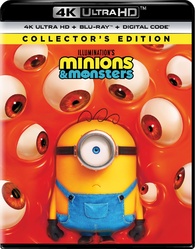
Minions and Monsters
Source United States | Publisher : Universal Pictures | Release date : 08 September 2026
Video format
2160p24 | Ratio 2.39
HDR10 | Dolby Vision | BT.2020
HEVC encoding | DI 2K
Soundtrack
English Dolby Atmos
English (Quebec) Dolby Digital Plus 7.1
Subtitles
English
French
Artistic : 6 | Video : 10 | Audio : 9.5
WORK – While the neat animation and the monstrously rejoicing design of creatures flatter the retina, this tribute to the golden age of genre cinema is also full of tasty winks. However, this plastic generosity does not fill the gaps in the narrative. Because, deprived of a real narrative breath, the intrigue quickly tramples under an avalanche of frenetic gags. Nevertheless, this Bananaaaaa recreation proves to be pleasant to follow, failing to become a monster of the 7th art.
IMAGE – Coming directly from the digital master's, this UHD transfer to the sharpness e bella like the Papaya! From the grain of the fabrics to the viscous textures of the monsters, the fineness of the details strikes immediately. The contribution of the DV intensifies the primary shades, giving the iconic yellow a brilliant depth while carefully spreading the retro sequences of silent cinema. Finally, dense blacks and flawless encoding guarantee irreproachable legibility in the dark.
SON – As soon as the opening, the VO Dolby Atmos deploys a 3D scene of certain magnitude. John Powell's orchestral score is fully sanctified without ever choking the minionese, intelligible and centered all along. For their part, the vertical effects and the serious impactors bring height and physicality to the many agitated scenes, including that of kaijū. Far from being a chipolota, VF 7.1 is just as dynamic and immersive: pure Bee-do happiness! Bee-do! Bee-do!
The Sabre of Guardians
Source : Hong Kong | Publisher : Universe Entertainment Limited | Release date : 26 June 2026
Video format
2160p24 | Ratio 2.39
HDR10 | Dolby Vision | BT.2020
HEVC encoding | DI 2K
Soundtrack
Mandarin Dolby Atmos
Cantonese Dolby TrueHD 5.1
Subtitles
Traditional Chinese
Chinese Simplified
English
Artistic : 9 | Video : 9.5 | Audio : 10
WORK – Transfiguring the raw material of the eponymous Chinese manhua, this fresco reimposed the secular grandeur of the wu xia pian. Under the Magisterium of Yuen Woo-ping (Tai Chi Master, Tiger and Dragon), the cutting repudiates the digital lightness to marry the boldness of the real. In the heart of a mineral desert, the fury of the irons articulates into a kinetic mechanics of calligraphic precision. This refusal of superfluousness and this science of rhythm give the genre a summit of noble fury.
IMAGE – On this 4K master, the contribution of the WCG refines the chromatic palette, contrasting the dryness of desert ochres with the bluish coldness of snowy sequences. The surgical definition highlights the vast natural decorations up to the smallest grain of sand, while the DV balances with maestria lubrication and the bright glow of night lights. But under this level of increased precision, the integration of some virtual inlays sometimes reveals their synthetic invoice.
SON – Proposed in Atmos in its Mandarin VO, the soundtrack shapes an acoustic field with total immersion. Spatialization exploits the verticality and rears abundantly, catapulting the whistles of arrows, gallops and bursts of blades above and around the listener. During the desert storm, the mix literally envelopes the room under a whirlwind of sound material, while the percussion martial instills in the confrontations a formidable dynamic.
🔍 Close frame on
Heathers (Fatal Games), the ultimate edition of a class massacre
To wrap this black jewel of high school misanthropy, Cameflex It's not a question of means. After the gallop test Marquis, the publisher delivers a Mediabook imbued with the very essence of the 80s, flanked by an indispensable booklet where director Michael Lehmann gives himself to an open heart. The first two cakes (4K Ultra HD and Blu-ray) offer a technical case impeccable to the visual harness of the film, bringing together a plethora of retrospective modules that will do a crazy good to first-hour lovers.
The whole mythology of Westerburg High It is dissected with goldsmith precision. The composer David Newman (Galaxy Quest, Serenity) looking back at his awesome choice of a synthetic soundtrack, a budgetary constraint transformed into a soundmaster coup, while decorator conductor Jon Hutman and stylist Kara Lindstrom decorate this falsely innocent pastel aesthetic under which the poison covers. Lisanne Falk evokes her trajectory as a young model crossed with her role as a resigned Heather, while actor John Ross Bowie (The Big Bang Theory) comes to claim his unconditional love for this unusual satire. At the heart of this constellation, the retrospective documentary leaves Michael Lehmann, screenwriter Daniel Waters (Demolition Man) and producer Denise Di Novi (The Worshippers) trace the desert crossing of a scenario deemed too toxic for Hollywood studios, a cross-breeding exchange that one finds with guilty pleasure as a result of an audio commentary by a rejoicing greener.
The aesthetes of the shadow will gloat before the presence of The Beaver Gets a Boner, Michael Lehmann's unreleased short film, refurbished for the occasion. Nineteen minutes of pure fantastic heresy where a biker tries to plan his angles to blend into the mould, sketching already the social observation with stained glass and the detestation of the school diktats that will make the salt of the feature film.
To perfect this black mass, the assistant editor of the selected pieces made to measure. First of all, Stéphane Moïssakis cooks Michael Lehmann and Daniel Waters separately in two interviews of formidable efficiency, free of unnecessary chatter. Then, joined by Marie Casabonne, the journalist passes the film to the scalpel: invention of a high school slang remained cult, dynamiting in good order of the codes of the ten comedy of the 80s and direct descendants with irony biting of Buffy against vampires. A banquet of supplements necessary to celebrate one of the most ferociously jubilatory cinematic objects of his time.
The ultimate audacity of this edition is based on a third galette (HD) that was not necessarily expected at such a party: the full stage recording of Heathers: The Musical, captured in London theatre fervor The Other Palace. Immersing myself in this theatrical adaptation is the most exciting telescopage of the year, where the decapitating acidity of 1988 rubs itself with explosive choreographies and overvitamin choruses Broadway. If the tone sometimes gives some sweetness to the High School Musical, the communicative energy of the actors, extended in the bonuses of the record by a newspaper behind the scenes and inflamed exchanges with the troupe, pays tribute to the immortal vitality of this classic of the black comedy.
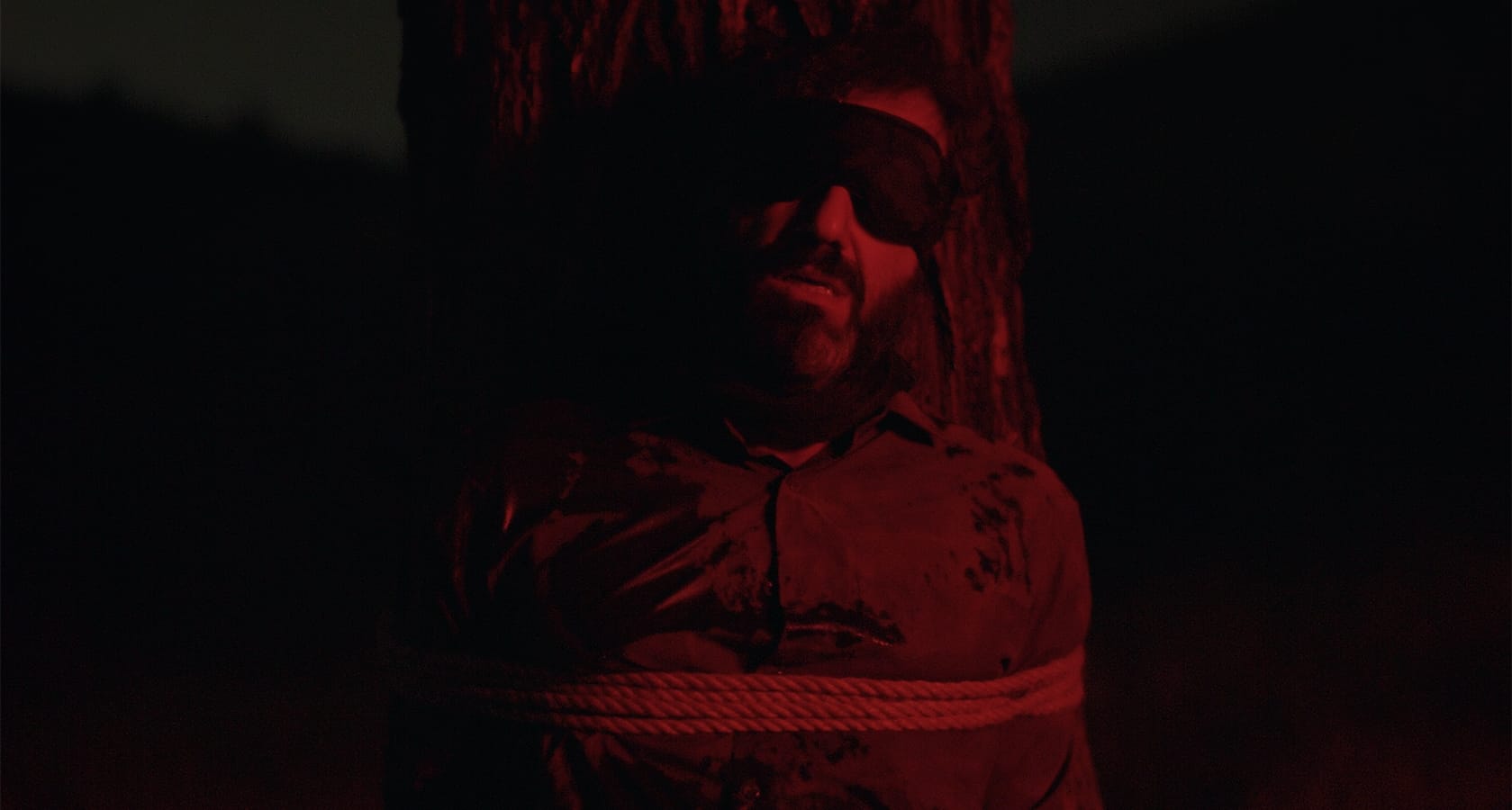
Obsession (2026), when fantasy becomes the worst desecration
Notice: : I prefer to warn you from the outset: Close frame on unveils the complete intrigue and outcome ofObsession. If you haven't seen the film yet, I strongly advise you to suspend your reading. Once these lines are crossed, no wish, and especially no broken branch, will be able to erase these revelations from your memory. And believe me, after-sales service does not accept any return. At your own risk!
Initially, Obsession avant under the familiar amazements of independent romantic comedy. There we discover Bear, a shy and introverted young man, entangled in his social awkwardness and employed in a music store. The boy feeds a secret love for his childhood friend and colleague, Nikki. Everything in Curry Barker's exhibition evokes the imposed figures of the genre, from embarrassing rehearsals orchestrated with his friends Ian and Sarah up to the soft light of a daily tinted with melancholy. Then, the feature suddenly breaks its own frame. Since the appearance of a strange vintage toy of the 1960s, the One Wish Willow, the film operates a thematic turn without return. By breaking a branch to express the wish that Nikki loves more than anything in the world, Bear does not trigger a nice mutual passion, but a mechanical psychological horror. The romantic varnish instantly seffrites to give way to a closed mind where devotion turns into furious madness. Barker skilfully diverts expectations by showing that the realization of the most common male desire can become the terrifying ground.
By relying on the classical structure of the warning tale in the line of The Monkey's Paw by W.W. Jacobs, the film reinvents the motive for the vow that is being fulfilled and turns against its author. However, the great success of the filmmaker lies in the displacement of the threat. The magic artifact does not summon any outside demon from darkness; It only exacerbates the very nature of Bear's request. The One Wish Willow acts as an amplifier of emotional possession. When Bear tries to contact the after-sales service of the object to cancel his wish in the face of Nikki's first overflows, the answer falls like a cup: cancellation is impossible. The vow did not corrupt reality by supernatural malice, it simply materialized the logic pushed to its end of control of others. The magical object is only the revealing of a violence already present in power in the desire to appropriation the protagonist.
The true horror ofObsession Not so much in the violence of the acts committed as in the underlying condition of his heroine. Behind the facade of the suddenly devoted girlfriend is a terrible intimate drama: Nikki's consciousness remains intact, imprisoned inside a body and mind hacked by the spell. His own identity, aspirations and capacity for consent have been completely swept away to make way for Bear's fantasy. The film materializes this internal struggle by an impressive body dementia. The scene of the dinner with friends, where Nikki suddenly tipped into inconsistent words and self-inflicted Spasms of violence, illustrates the desperate rebellion of her deep being against the magic injunction. Later, during a brief moment of lucidity, she begged Bear to kill her. This poignant request reveals the profound nature of the film: by forcing one person's love, Bear committed an act of absolute dispossession. Nikki is no longer a partner, she has become the helpless witness of her own psychological desecration.
Through Bear's character, Curry Barker creates a deconstruction to the scalpel of the myth of « chic type » Poor in love. In a soft appearance and victim of sentimental fatality, the young man actually conceals a deeply toxic sense of right. Because he is attentive and discreet, Bear believes that Nikki's affection is due to him in return. Rather than facing otherness, risking refusal or accepting Nikki in its complexity, he chose the path of manipulator shortcut. The film shows with lucid cruelty that this so-called romantic does not seek to establish a sincere connection, but to validate his own ego. Her reluctance to complete Nikki when she asks for her death is not the result of an impulse of compassion, but the refusal to admit the naked truth: she would rather cease to exist than to love her voluntarily. Under the vulnerability of the introvert is the figure of a petty demiurge.
Once the vow has been sealed, the story slips into a bloody metaphor of coercive control and influence relations. Paradoxically, Nikki's artificial devotion takes on the characteristic behaviours of an abusive partner: malady jealousy, permanent coping and emotional blackmail. To ensure the total exclusivity of their relationship, Nikki methodically eliminates the surrounding obstacles. She broke Sarah's skull before assassinating Ian, totally insulating Bear from the rest of the world. The stalker thus finds himself trapped in his own game, becoming the direct victim of the choking dynamic that he himself initiated by magic proxy. Barker staged a real turn in which the desire for man's appropriation was transformed into a prison from which he could no longer escape.
On a philosophical level, the film explores the unbridgeable gap between true love and idealized projection. Bear has never been in love with the real Nikki, with his doubts and his autonomous choices. He was fond of the image that he had built from her in his mind. By forcing reality to align with his fantasy, he destroys precisely what made the being desirable. Now a mechanical caricature of worship, Nikki loses all humanity to look like an empty-eyed automaton. The film highlights this tragic dissonance: from the moment that the other is deprived of his ability to say no, his consent no longer has any value. Forced devotion turns out to be an empty shell, a cold mirror that only returns to Bear its own fundamental solitude.
Shot with a modest budget but taking advantage of a staging of surgical precision, the film orchestrates its climax as a hell in camera. The camera gradually tightens its frames, swapping the light shades of the opening for a night aesthetic and claustrophobic, as close as possible to the faces distorted by terror. The outcome seals this psychological trap in the darkest way. Hunted and unable to bear the consequences of the massacre he provoked, Bear tried to commit suicide, illustrating his ultimate cowardice. It's then that Nikki takes the last piece of the magic branch remaining. In a gesture of absolute macabre poetry, she uses it to deprive Bear of her own physical and mental autonomy. The film ends with a finding of total cruelty: Bear finds himself frozen, conscious but unable to act, forced to experience exactly the hell he had inflicted on the young woman. As for Nikki, she wakes up in the midst of the bodies of her loved ones, liberated from the spell but condemned to bear forever the trauma of having been the conscious instrument of this horror. Without concession or soothing moral resolution, Curry Barker signs a striking work, claiming that wanting to possess the spirit of others remains the most absolute form of monstrosity.
The Furious, Bone Violence
Since the Revolution The Raid In 2011, the action cinema desperately sought its new tipping point. The Hollywood and international industry was gradually bogged down in the aesthetics of the post-Gun-fuJohn Wick, a subgenus where costumed assassins sequence impressive but curiously exsangue choreography (Atomic Blonde, Polar, Bloody Milkshake, Kate, Bullet Train). It is in this landscape saturated with heroes literally bulletproof that The Furious lands like an authentic anomaly. The project, led by the historic producer Bill Kong (Tiger and Dragon, Hero, Creation of the Gods), not just singing the radicality of Gareth Evans: it operates an organic fusion between the visceral fury of South Asian cinema (Headshot, The Night Comes for Us) and the absolute geometric rigor that made the glory of Hong Kong's golden age, instantly redefining the standards of impact on the screen.
In order to measure the shock wave represented by this proposal, we must also observe the very trajectory of the martial cinema, which has always functioned by cycles of ruptures. The rhythmic and almost operatic precision of the Shaw Brothers in the 1970s (The 36th Chamber of Shaolin, Five Dead children) gave way to the air and cable elegance of Hong Kong in the 1990s (Once upon a time in China, Tai Chi Master). South-East Asia then came to sweep everything away at the turn of the millennium, imposing raw, destructive and wireless brutality of works like Ong-Bank then The Raid. But for ten years, the machine had been running empty. Hollywood systematization eventually smoothed the violence, transforming fighters into untouchable ballistic tacticians. The Furious he did not invent a new ex-nihilo movement, he succeeded in the synthesis that everyone expected: to associate the manic spatial legibility of Hong Kong's old cinema with the dreadful savagery of the silat, while reinjecting a totally lost dramatic gravity.
This alchemy is primarily due to the vision of his director, Kenji Tanigaki, and his dizzying technical background. Trained at the rough cascade school in Donnie Yen's stable (Ip Man, Raging Fire, Akra), the Japanese filmmaker personally traversed and shaped the evolution of the film-based baton (SPL, Flash Point, saga Kenshin the wanderer). Supported by choreographer Kensuke Sonomura (Hydra, Ghost Killer), he filmed the body-to-body as a total confrontation where space, gravity and textures regain their rights. Its cutting refuses contemporary epileptic charcutage in favour of broad and stable frames, allowing the clarity of action to dictate the rhythm of the sequence.
The choice of casting physically embodies this intention note, with a fascinating stylistic opposition acting as a huge narrative circuit breaker. In front of the camera, Joe Taslim represents the Pencak-Silat school pushed to its climax of lethality. In line with its destructive roles (The Raid, Mortal KombatHis aggressiveness is here reptilian, surgical. Its movements are implacable economy: no great circular gesture, each strike aims at a vital point or a joint to break. It's an absolute predator. In contrast, the work of Xie Miao (Eye for an Eye) falls under the masterclass of "disapprenticeship". The former child prodigy of wushu (The Legend of the Red Dragon, My Father Is a Hero) deliberately erased the fluidity and grace of his inheritance to play this mutic and worn-out father. He does not seek to place beautiful chains: he clings, cashes with frightening resilience and uses the weight of his own body as an avil.
When these two forces collide, Kenji Tanigaki extracts brute violence, without any filter. The stroboscopic strike speed of Joe Taslim is to shear Xie Miao's guard, but the latter compensates for a phenomenal power stop. Their weapons passes never look like a polite ballet where opponents expect to shine. There is a real sense of seeing a mutual demolition with bare hands. The grips slide, the bodies clumsyly tangle on the ground, the breath lacks and the fatigue cruelly slows down the reflexes. It is a struggle for peaty survival, a brutal dialogue between two schools of thought of cinema d'action.
This rise in tension should not be random: it is based on a masterful management of the actional crescendo and on the typology of the forces involved. Far from being just a thread of interchangeable bastons, the work develops a true mapping of the threat, methodically raising the level of peril at each arena. From the first urban clashes to the final assault of the police station, through the burning of the bastions of the underworld (like this ice factory turned into a slaughterhouse), Kenji Tanigaki opposes the duo an adversary fauna with strictly hierarchical styles. Each level raises on their way leading figures of the genre, of the dry brutality of Yayan Ruhian (The Raid, Boy Kills World) to the true acrobatic bulldozer that incarnates Brian Le (Everything Everywhere All at Once) of the collective Martial Club, transforming narrative progression into a dantesque attrition test. The more the enemy coalition aligns specialized executors, the more the sequences gain in scenographic amplitude and tactical ferocity, pushing the organisms to burn their ultimate reserves in an escalation that seems never to know a plateau.
This physical shock highlights the great strength of the film: its reinvention of body vulnerability. In The Furious, confrontation uses, tears and exhausts. Survival is coined with makeshift tools, slippery hammers of sweat and broken phalanges against furniture. Fighters stumble, miss their catch, blow violently. This choreography of agony transforms each major fight into a visceral tension exercise, redacted from any superheroic varnish. The pain pierces the screen, giving the film violence its real weight and its repulsive dimension.
Yet, this sensory fury would only be a brilliant exercise in style if the film, far from the simple peloch of exploitation, did not refuse to isolate the stronghold of emotion. Violence is never an end in itself, nor a promise of popcorn jubilation. It remains the only language available for two broken beings, consumed by loss, unable to express their mourning otherwise than by the annihilation of the other. By anchoring his deluge of blows in the quest of a man deprived of words and in the descent to the underworld of a widower, the story gives a tragic dimension to each fracture. This is not just the best action film of the decade; It's the overwhelming requiem of a kind that has just found, in sweat and blood, his lost soul.

Green Sun, Cannibal Prophecy
When he left the halls in 1973, Green Sun Richard Fleischer made a definitive break in American anticipatory cinema. Until then dominated by the vertigo of the conquest of space or the haunting of the atom, Hollywood science fiction suddenly abandoned the sky to anchor its fears in the reality of Earth. Inspired by Harry Harrison's novel and fed by the concerns of the 1972 Meadows report on the limits of growth, the film shifts the danger: the peril no longer comes from cosmic otherness, but from the organic exhaustion of the planet under human action. Fleischer (Manufacturer, Kalidor: The Legend of the Talisman) staged an asphyxiated megapole where the future is no longer written in the distant future, but in the direct extension of our industrial drifts.
The mastery of the director lies in the socio-economic detail with which he depicts the New York of 2022. Urban space appears to be an enslavement machinery where overpopulation stifles the least human dignity. Long before the notion of collapsology was imposed in public debate, the feature film theorized the integral commodification of existence. The missing natural products are the exclusive privilege of a barricaded oligarchy, while the mass simmers in stairwells, forced to consume synthetic cakes distributed by the monopoly of the Soylent Corporation. Dehumanization goes through all the strata of this society, until the reification of women, reduced to the legal status of « furniture » attached to luxury apartments.
By adopting the structure of a peaty polar led by Inspector Thorn (Charlton Heston), Richard Fleischer transforms the police investigation into a methodical stripping of the workings of power. The final revelation on the composition of the Green Sun goes beyond the simple value of script bounce. It reveals the accounting outcome of industrial capitalism: a perfect anthropophagous loop where industry recycles corpses to maintain the working power of the living. This transformation of the human body into the ultimate raw material transforms technological utopia into a state cannibalism, finding that a system based on infinite growth inevitably ends up consuming its own substance.
In the midst of this moral deprivation, the film draws its emotional power from the dialectic of memory. The character of Sol Roth (Edward G. Robinson) is the last smuggler of history, the helpless witness of a world where water flowed freely and where forests still existed. The sequence of the centre of euthanasia, Thanatorium, imposes itself as an elegiac parenthesis of a phenomenal range. Under the projected images of a disappeared nature and the notes of Ludwig van Beethoven, Fleischer filmed death chosen not as a defeat, but as the ultimate act of aesthetic resistance against concrete hell. This is the poignant demonstration that the destruction of beauty precedes the biological end of the species.
The print left by Green Sun on contemporary creation proves considerable. Direct filiation is found in the macabre diet of Matrix or Soap nutrient paste designed from recycled workers in Cloud Atlas. Bong Joon-ho pays him an explicit tribute in Snowshoeing: The Snowshoeing with its black protein bars distributed to the populace, just as Denis Villeneuve extends his ecology of rationing in Blade Runner 2049. Spatial segregationElysium suicide assisted by government kit in The Sons of ManThe figures of the modern environmental crisis will all come from this original matrix.
More than half a century after its release, Richard Fleischer's proposal retains an intact intellectual acuity. Green Sun did not attempt to accurately predict the details of our century, but to provide a grid of political analysis of our blindness. By stripping the idea of progress of its salvator varnish to keep only the logic of gross exploitation, the feature film has raised the genre cinema to the rank of critical diagnostic tool, imposing as the indisputable pillar of modern eco-dystopia.
Art the Clown, the new icon of the slasher-splatter
When Damien Leone first sketches the silhouette of his killer in the short film The 9th Circle In 2008, no one imagines that a mute buffoon dressed in a black and white suit is about to redefine the contours of the contemporary slasher. Art the Clown is then only a secondary figure, a grotesque anomaly arose in a bus station abandoned to trap a young woman. The enthusiastic reception of the pre-premium spectators pushes Leone to offer it a central role in Terrifiing in 2011, a short film that will serve as a matrix for the upcoming feature film. At that time, it was actor Mike Giannelli who lent his stature to the character, wearing a summary makeup but already crossed by a disturbing strangeness. Experience goes on in anthology All Hallows Eve in 2013, where Art became the driving thread of a cursed VHS cassette. But the real creative click comes when Giannelli decides to retire from comedy. To replace him in the sock-funded feature film project, Leone organizes hearings and meets David Howard Thornton. A result of the theatre and a solid mime formation, Thornton brings to the creature an unprecedented physical dimension. As he will tell later about this hearing without preparation: « When I arrived, I was worried about not having a text, and the team simply replied, "You don't need it, Art doesn't talk." » Thornton immediately grasped the conceptual potential of the role and conceived it in direct opposition to established figures. « Art was thought as absolute antithesis of Pennywise : he is bald, mute, exclusively dressed in black and white, totally stripped of color », stresses the actor. Inspired both by Charlie Chaplin's silent play and the sadistic cruelty of the Jack Nicholson's Joker, Thornton transforms Art into a theatre entity whose absolute silence becomes the most destabilizing weapon.
Art's film journey is an economic anomaly in American industry. Released in 2016 with a derisory budget of $35,000, First Terrifiing impose as an exercise in radical style, stripped of any complex narrative artifice to concentrate on a peaty manhunt. It was in 2022 that the phenomenon moved into another dimension with Terrifiing 2. Produced with the support of a $250,000 crowdfunding campaign, the film raises more than $15 million at the World Box Office. Damien Leone enriches his mythology by introducing the heroine Sienna Shaw, interpreted by Lauren LaVera, a warlike warlike figure thought as the mystic counterweight of the creature. The real coup de force occurs with Terrifiing 3. Transposing its action during the Christmas holidays, the feature film s'empare of the first place of the North American box office from its opening weekend, crossing the bar of 85 million dollars of revenue on a global scale. Made without any classification of the Motion Picture Association, this third part shows that an extreme gore work can dethrone traditional Hollywood productions. Referring to this fundamental creative independence in the face of the demands of conventional distribution channels, Leone summarizes the philosophy of the project: « The studios would have imposed a damaging smoothing, while the very essence of our approach lies in the absolute refusal of compromises in the face of censorship. »
The visual success and visceral impact of franchise is based on a now rare aesthetic choice: the categorical rejection of digital visual effects in favour of prosthetics and practical makeup. Damien Leone, trained as a make-up artist before passing behind the camera, designs and manufactures all the silicone prostheses and false dismembered bodies necessary for shooting. This artisanal approach gives the violence of Art an organic materiality that contemporary studio cinema has gradually lost. The killing sequences do not seek stylized elegance but dwell on the methodical destruction of the flesh. Whether it is the cutting with the jumping saw in the original film, the surgical massacre in the bedroom of the second opus Or from the shower scene to the chainsaw in the third part, each murder is thought of as a demonstration of technical know-how. This debauchery of artisanal carnage has moreover earned to Leone the ultimate adorning of a legend of the middle. Witness of the shock caused by the third film, Tom Savini (The Night of the Dead 1990) came to find the director in the cinema hall to drag him a phrase that remained famous: « Terrifiing 3 Make it pass Zombie for Bambi. » Leone will subsequently confess to having received during this exchange « the greatest compliment of all my makeup career. »
What distinguishes Art the Clown from the tutoring figures Michael Myers (Halloween), Jason Voorhees (Friday 13) or Freddy Krueger (The Griffes of the Night) lies in the striking contrast between the lightness of his pantomime and the extreme sadism of his actions. Unlike Jason or Michael Myers, still and monolithic, Art is constantly moving. He communicates exclusively by exaggerated gestures and silent laughter with deployed throat. Actor David Howard Thornton explains this particular body dynamics: « What I love with this makeup is that it offers me complete freedom of expression. It is not about staying passive behind a rigid mask, but pushing the physical game to its maximum to give the character a confusing human presence. » By combining the visual grammar of silent cinema with the brutality of the great guignol, Thornton creates a cognitive dissonance in the spectator, forced to laugh at the impertinence of the character for a second before being confronted with the graphic reality of his abuse. The use of absurd weapons, a small pear horn alongside a bag filled with rusty tools, fully participates in this aesthetic of the macabre burlesque.
The imprint of Art on contemporary popular culture goes far beyond the dark rooms and genre cinema lovers. The stories of fainting and the distribution of bags to vomit during the projections of Terrifiing 2 fed an urban legend that propelled the character into the mainstream media landscape. In a few years, the black and white clown has become an essential motif of Halloween's celebration, featuring both official costumes and collection figures. Its integration into major franchises of video game like Call of Duty or Dead by Daylight, as well as its presence in the metal group's clip Ice Nine Kills for the piece A Work of Art, attest to its assimilation by the global creative industries. David Howard Thornton comments on this popular craze with lucid enthusiasm: « Seeing Art becoming an icon that people embody at Halloween or find in their favorite video games remains something totally surreal for us. » Art succeeded in becoming a figure recognizable by the general public while maintaining its status as an uncompromising and uncompromising monster, a feat that the slasher had no more known since The emergence of Ghostface in the 1990s.
The future of the character is already in line with its phenomenal expansion, with the confirmed development of Terrifiing 4. Damien Leone revealed that this fourth opus will take place on New Year's Eve, closing a thematic cycle linked to the calendar holidays after Halloween and Christmas. Thoughtd by its creator as the final chapter of the confrontation between Art and Sienna Shaw, this project aims to offer expected answers while preserving the halo d'ombre surrounding the killer. Asked about the risk of revealing too much about the origins of his creature, Leone explains his approach: « If you pull the curtain too much and lose this mystery, everything collapses. We're not supposed to see the magician behind his decor. I want to bring revelations while maintaining a very abstract, Lynchian narrative approach. » Beyond this immediate future, the impact of Art the Clown on horror cinema is already irreversible. By proving that an independent production model, supported by demanding practical effects and total tonal freedom, can compete with Hollywood superproductions, the saga Terrifiing redefined the mechanics of a genre thought breathless. Art thus imposes as the legitimate heir of the sacred monsters of the 1980s, a titan of the gore entered from his lifetime into the history of fantastic cinema.
From TGV to the Quarantine Tower: Yeon Sang-ho's zombie empire
When Yeon Sang-ho arrived at the Cannes Film Festival in May 2016 with Last train to Busan, few observers predict that the filmmaker from adult animation will permanently transform South Korean horror cinema. By immediately prolonging this first visual shock by animated feature film Seoul Station, then expanding the framework with Peninsula in 2020 before closing this cycle with Colony Six years later, the director orchestrated a real thematic trilogy in real shots. Without linking his characters by a continuous intrigue, this triad provides a state of affairs in the course of Korean society in the face of decomposition. Through this fresco spread over a decade, the infection is not merely a pretext for macabre entertainment, but is affirmed as a formidable magnifying magnifying glass on the brutality of social relations and the collapse of institutions.
The first part of this triptych, Last train to Busan, bases its dramatic efficiency on a straight geographical and human trajectory, locking a handful of passengers in a high-speed train connecting the capital to the last preserved bastion of the country. In this confined space running at full speed, the struggle for survival takes the form of a reproof against galloping individualism and the cynicism of the economic elites, embodied by an active manager forced to relearn altruism in the face of the savagery of a superior cadre ready to sacrifice others for his own salvation. Yeon Sang-ho places his formal signature there with the support of choreographer Jeon Young, insuffusing the infected with a disarticulated and convulsive gesture, while exploiting the sensory flaws of creatures, stimulated by the slightest sound but totally blind in the absolute black of tunnels.
Four years later, Peninsula takes the foot of this railway claustrophobia by propelling the spectator into a vast and devastated post-apocalyptic setting, where Korea as a whole is placed under a strict quarantine by the international community. The narrative then abandons the tight psychological tension to embrace the codes of the unbridled action film, drawing its inspiration openly from the baroque aesthetics and the mechanical fury of the saga Mad Max. By observing mercenaries plunged back into the chaos of a Seoul in ruins and confronted with the barbaric drifts of Unit 631, which organizes gladiatorial fighting between survivors and infected, the film moves its sociological discourse towards the fate reserved for refugees and fundamental amorality that arises when state structures faint completely.
With Colonypresented at the midnight sessions of the Cannes Festival 2026, Yeon Sang-ho closes this chapter by returning to a spatial geometry of absolute rigor, trading the speed of the train and spreading of the peninsula against the oppressive verticality of a high standing residential complex in Seoul. Intrigue locks up residents and security forces at the heart of a brutal containment where the biological threat crosses a new level, showing infected people capable of unpredictable mutations and a disturbing form of collective adaptation. The director urges to his climax the criticism of community retreat and urban paranoia, transforming each level and each lift cage into a political arena where the management of the crisis by the authorities reveals a deeply inhumane bureaucracy.
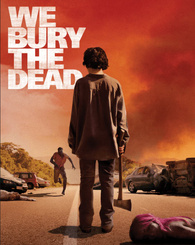
At the aesthetic and technical level, the consistency of the trilogy relies largely on an organic and almost sculptural treatment of the suffering human body. The monster gesture, designed by Jeon Young with a troupe of dancers and contortionists, bypasses the traditional figures of the life-death of Rome to create a fluid mass, flowing into uncontrollable waves along the corridors or agglutinating against obstacles. This movement physics, combined with a millimetred work on the light and contrasts of enclosed space, allows the director to constantly renew the space suspense, whether it be windows hidden by newspapers in a wagon or blind spots under video surveillance of a tower under quarantine.
By bringing these three works together under the same critical look, Yeon Sang-ho imposes as one of the most lucid observers of contemporary genre cinema, reinventing the myth of zombie to make it a mirror of the haunts of his time. Where Western fantasy cinema frequently favours the heroic reconstruction of the individual after chaos (I am a legend, World War Z), the trajectory drawn by the Korean filmmaker remains haunted by the certainty that the real monstrosity lies in the defiance of collective solidarity. It is precisely this moral constant, married to a sense of spectacle of formidable efficiency, which gives this unofficial trilogy its universal reach and its major place in the horrific cinematography of the 21st century.
The sword of the guards, the revenge of the wuxia
While Chinese action cinema has irremediably been stuck in the drifts of xianxia for fifteen years, this fantasy fond of digital incrustations and celestial powers (Jade Dynasty), manhua adaptation Blades of the Guardians Xu Xianzhe operates a fundamental realignment. By turning its back on virtual auctions, the film immediately reimposed the materiality of the traditional wu xia pian. Intrigue embraces the savagery of a story escorted into arid territory, reviving a cinephilic vein that was thought to be stifled under computer layers. By anchoring its stakes in the geopolitics of the end of the Sui dynasty (in 607 AD), the fresco regains the primary function of the genre: to confront martial ethics with the brutality of history.
This trajectory is in direct line with the major milestones of Hong Kong and Taiwanese sabre cinema. The narrative structure immediately recalls the tension in extended closed-door Dragon Inn of King Hu, while borrowing from the deserted stern of Dragon Gate: The Legend of Flying Sabres or gross fury of The Blade Tsui Hark. Here we find this fundamental figure of the solitary sabreur bound by an implicit code of honor, evolving in the midst of corrupt factions and mercenaries without faith or law. The film does not seek to parody this legacy, but by reactivates the dramatic dynamics with a first saving degree.
Under the patronage of Yuen Woo-ping (Tai Chi Master), the staging unfolds a martial grammar of absolute rigour. The legendary master of weapons repudiates invisible cables and artificial lightness to favor the mass of bodies, the weight of weapons and the shock of metal. Turned in natural decorations in the vastness of the Gobi desert, the fighting sequences are distinguished by an exemplary legibility cutting. Each blow carries a real physical load, recalling that the effectiveness of a duel rests on the science of rhythm and the occupation of space.
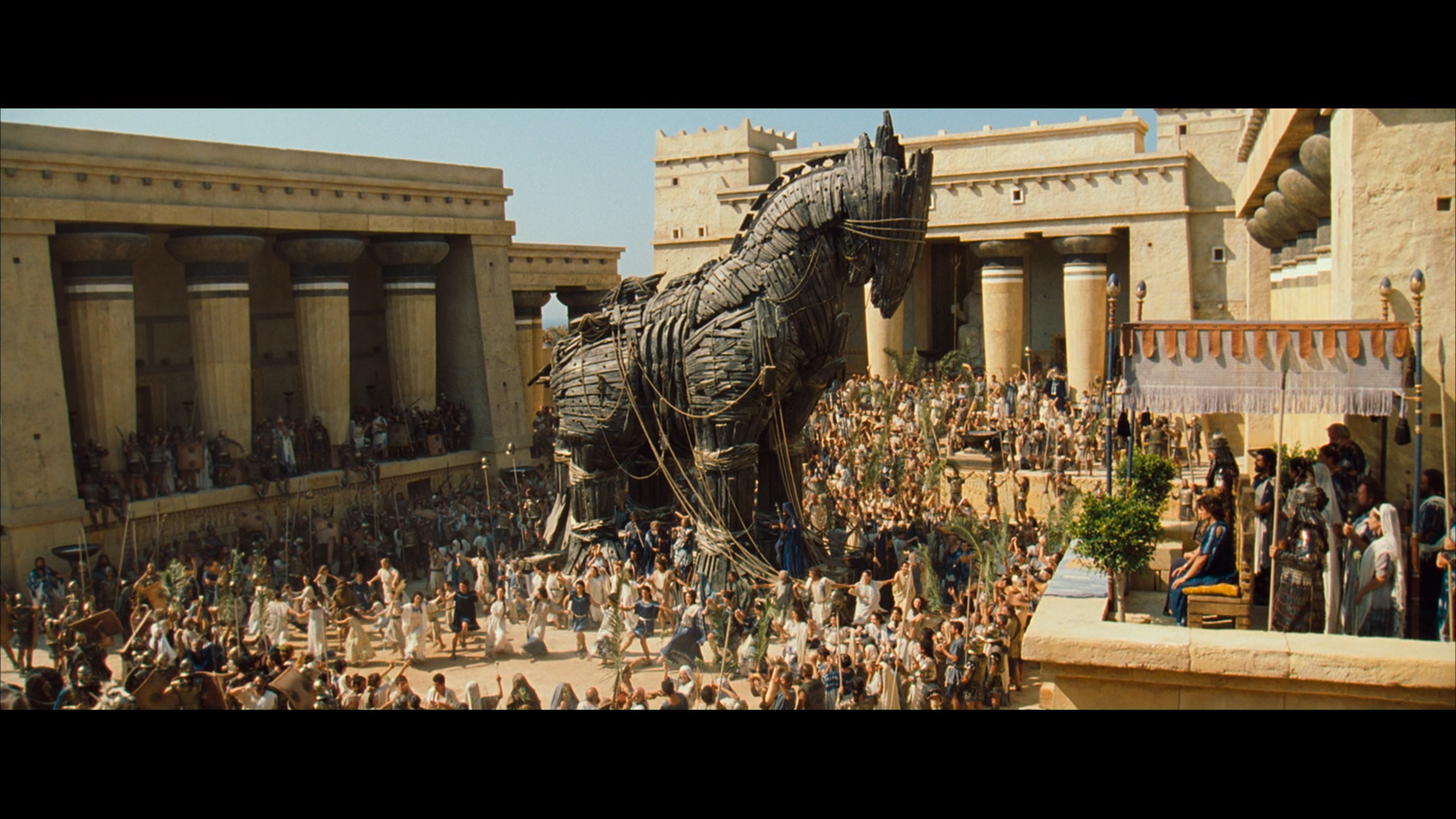
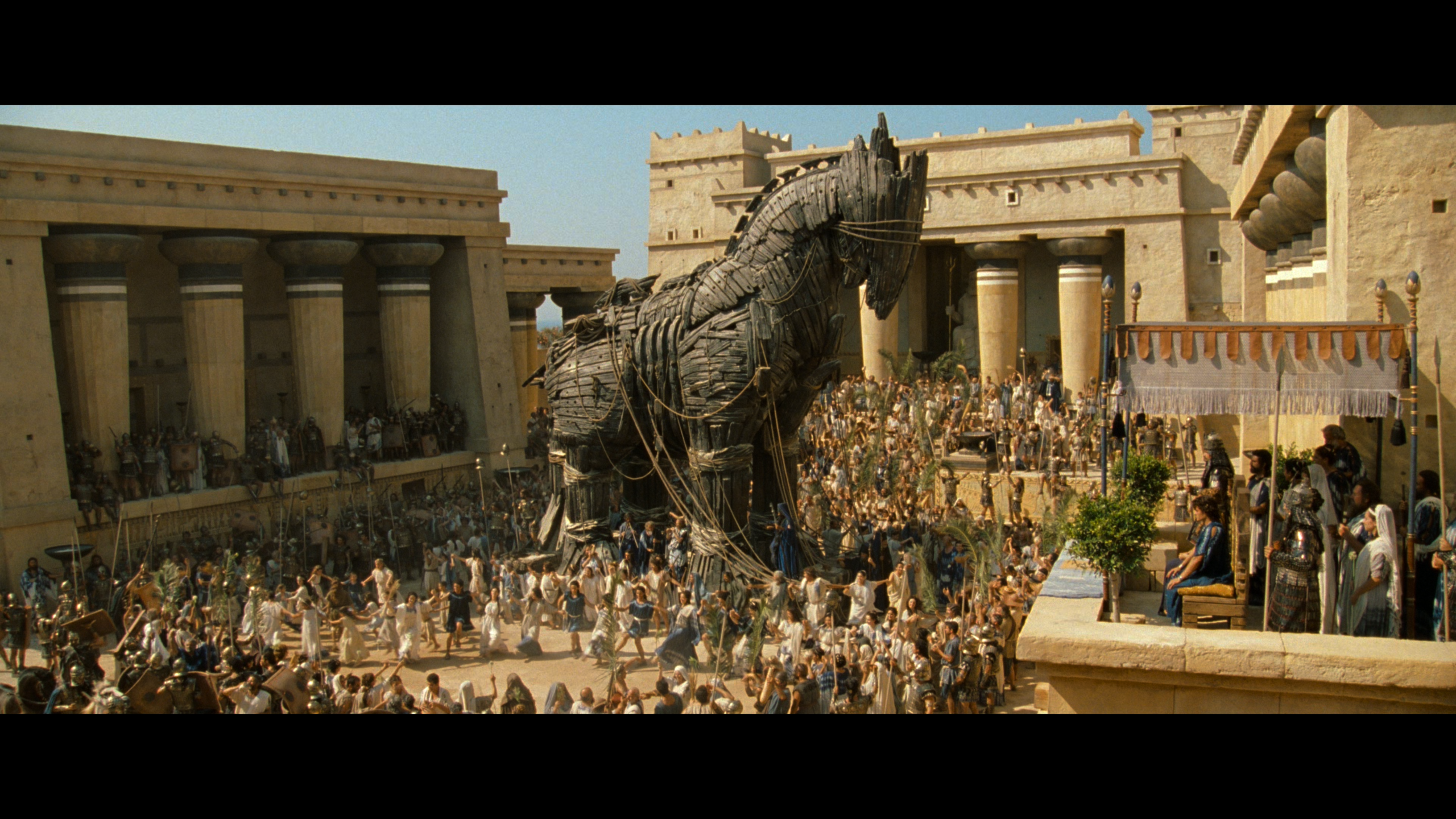
The contribution of the original comic strip nevertheless prevents the work from pouring into the trap of museum nostalgia. Xu Xianzhe's trait breathes into the story a peaper blackness and historical realism that contrasts with the poetic wuxia of the 2000s. The violence there is dry, rid of the ethereal romanticism of a Tiger and Dragon or Hero. This visual bias gives the characters an Earth dimension where survival takes precedence over the beautiful posture.
The on-screen meeting of major figures like Wu Jing (Wolf Warrior 2), Nicholas Tse (Raging Fire) and Jet Li (Fist of Legend) actively participates in this recapture of the rooms. By investing fully in challenging physical performance, casting brings the legitimacy necessary to bring such a project to the top of the box office. This alliance between the former cascade guard and confirmed stars proves that there is still an audience for a demanding action cinema, far from the productions calibrated for streaming platforms.
Rather than a real resurrection, it is therefore appropriate to speak of a reminder to the magisterial order. The film shows brilliantly that the wu xia pian had no need to be reinvented by modern fireworks, but simply reaffirmed with sincerity. By restoring to the sword its edge and in the desert its dust, this sovereign work recalls that the strength of the genre lies first and foremost in the truth of the martial gesture.
🏅 Essentials, Flare for You
The Wolf's Eye
Obsession |
The Furious | A visual unleash that unchecks amethyst reflections and striking texture
Minions and Monsters |
The Mandalorian and Grogu |
Supergirl |
The Sabre of Guardians | The DV sharpens its blade, from desert ochre to blue snow
Wolf's ear
Obsession |
The Furious |
Colony |
The Mandalorian and Grogu |
Supergirl |
The Sabre of Guardians |
🎙️ View life in 4K Ultra HD
Tops of support:
- The best 4K Blu-ray in support v.1, v.2
- The best 4K Blu-ray to test 3D sound v.1, v.2
- The best 4K Blu-ray 2020, 2021, 2022, 2023, 2024, 2025
Support flops:
Useful links:
Nyctalope like Riddick and with a very good hearing, I am ready to jump on physical editions and SVOD platforms. But if the quality isn't on the rendezvous, stop at the bite! #WeLovePhysicalMedia
Categories
Recent Posts
Gears of War: E-Day, you had us
- 17 November 2026
- 15 min reading
Romeo Is a Dead Man, the crazy
- 2 November 2026
- 11 min reading
The 4K Ultra HD Bazaar, volume
- 2 November 2026
- 77 minutes. readable
NAZA, life of others: adjustment variable
- 16 October 2026
- 26min reading
The Mag.7: Guillaume Kosmicki's selection
- 12 October 2026
- 19min. of reading