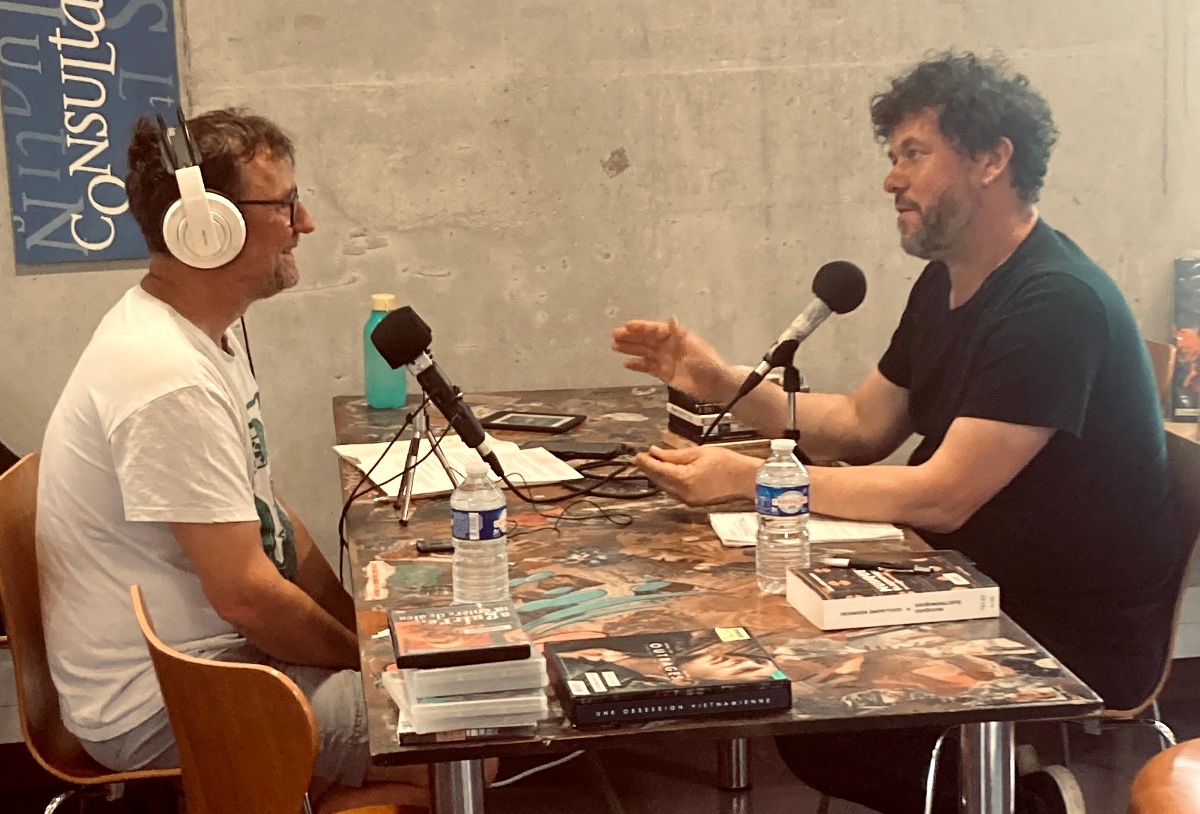
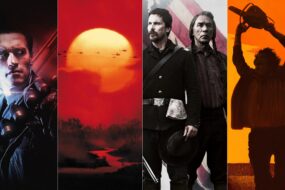
If Étienne still remembers his recording in public with Mathieu Amalric, our dear host was able to take advantage of the event organized by the libraries of Agglopolys to get to know musicologist Guillaume Kosmicki. Neither one nor two, he hastened to call to the microphone this new guest to be ready for the game of Mag.7: choose DVDs and share his selection with our dear listeners.
It was the next session!
Mag.7 is a podcast, produced and distributed by the association blésoise The Next Meeting. The principle is simple: in collaboration with libraries of Agglopolys In the town of Blois, the host Étienne invites people to walk through the music-cinema service and video games of the places and to choose DVDs there. More specifically, seven films, series, documentaries or concerts – seven corresponding to the borrowing capacity proposed by the library – then evoke their selection to the microphone. A monthly program based on the sharing and passion of the 7th art, and seeking to highlight the quality and quantity of films available in public libraries, all accessible for modest amounts, if not totally free in some communities.
Cinema and musicology
In a previous episode, our host Étienne had the chance to meet Mathieu Amalric, who came to Blois to present his documentary films on American saxophonist John Zorn. But it should be noted that this event was accompanied by a conference on scholarly music. The latter was animated by musicologist Guillaume Kosmicki, whose works you can find via its website. You're starting to get to know Étienne: he's obviously eager to invite this new personality to the microphone of his show, so that she can tell us about his selection. In this edition of the Mag.7, a brand new floppy DVD punctuating both in the world of feature films and TV series that must be (re)discovered.
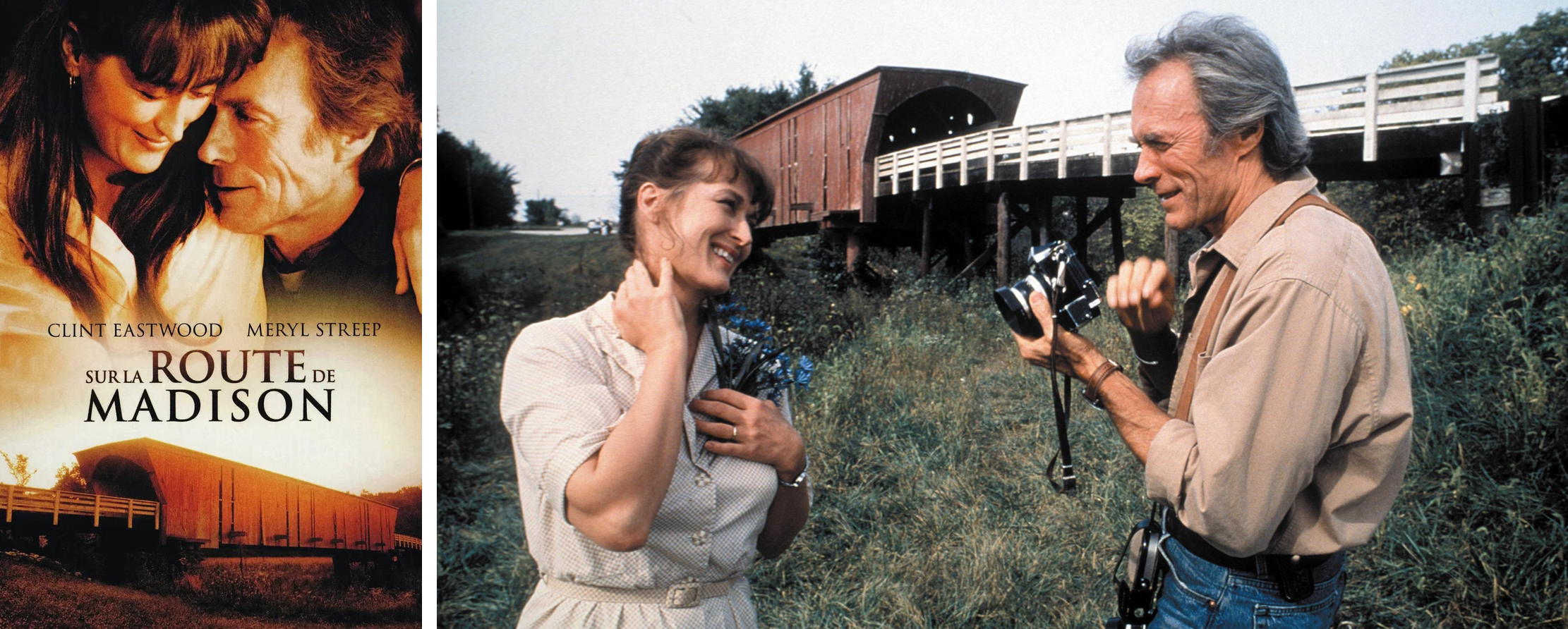
On the road to Madison (1995)
Title V : The Bridges of Madison County – Nationality : United States – Gender : Drama, Romance – Implementation : Clint Eastwood – Distribution : Meryl Streep, Clint Eastwood, Annie Corley, Jim Haynie, Victor Slezak...
DVD Edition France | Warner Bros. | 06 April 2011 - Blu-ray Edition France | Warner Bros. | 12 November 2014 - Dissemination platforms : PremiereMax, La Cinetek, VIVA, Orange, ARTE Boutique, Rakuten TV, Canal VOD, Pathé Home and SOONER
The pitch Michael Johnson and his sister Caroline return to their childhood farm to settle the succession of their mother, Francesca. They will discover a whole part of their mother's life ignored by all: her brief, intense and unforgettable connection with a visiting photographer...
Opinion of The Next Meeting (Marie): If only one film from the 1990s were to be retained, would it not be this one? So intense and dizzying...
Vertiginous, because it opens up to the loss of a mother and the discovery of what she leaves behind. Or rather what she chose to hide. Vertiginous, because going back and forth between the past and the present in similar places makes resurgence an evanescent moment, so powerful that it will have sufficed to fill the rest of a life.
Intense, because he explores the ambivalence of the choices we can make, the decisions we make, the roads we leave behind, the renunciations that shape us. How then not to make Francesca's reply resonate: « We are the choices we have made. » Intense also thanks to Meryl Streep, who carries the whole film and reminds us how much this actress manages to take us in each of her performances, would it not be time for us to dedicate a Mag.7 All to this actress? This is the look of his character we follow. The latter is inhabited by fatigue and fatigue, filled with desire, hope and, finally, duty and morality. It is his character who gives the tempo to this story. So yes, intense because it's not so common in our film history, so male-oriented.
And finally intense by the original tape of the film, notably directed by Dinah Washington and Johnny Hartman. How not to vibrate to the depth of the voice of this one? I don't know if On the road to Madison tells love or the beginnings of love. I believe above all that he is staging something much bigger, a destiny so familiar to women.
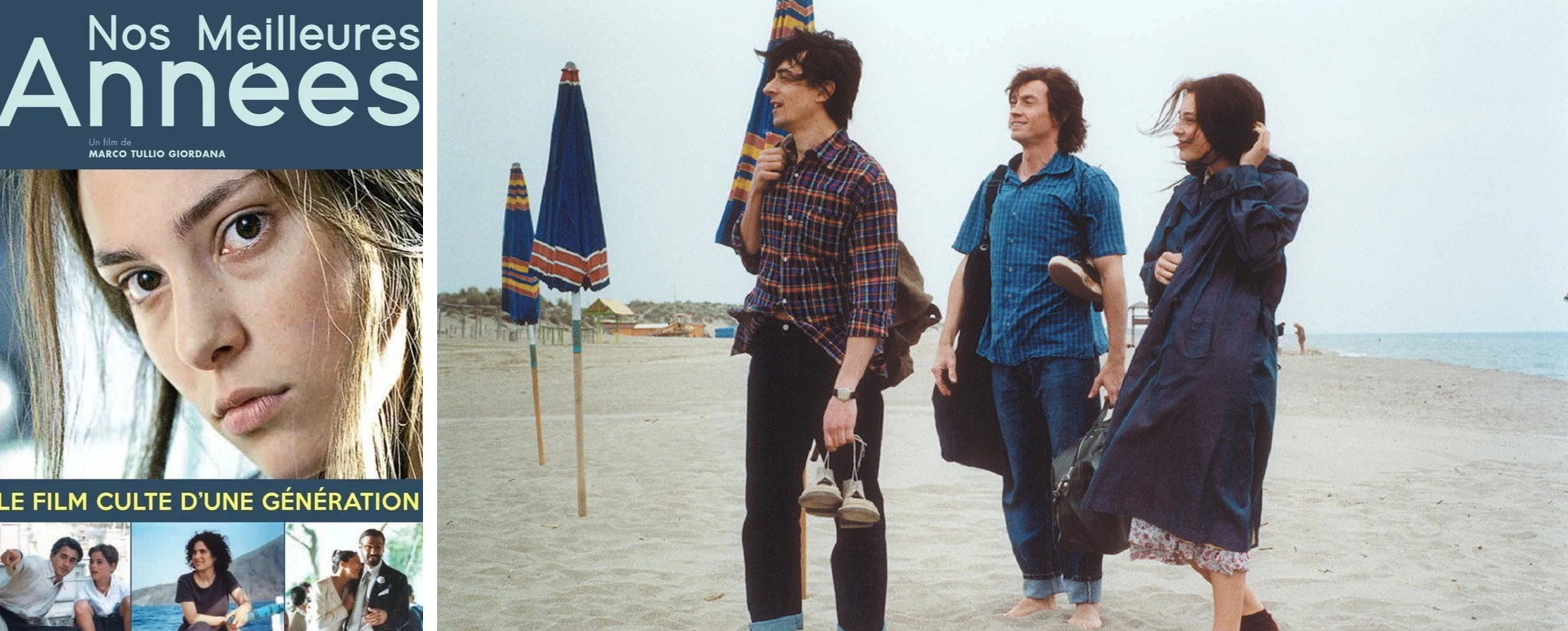
Our Best Years (2003)
Title V : The Meglio gioventù – Nationality : Italy – Gender : Drama, History, Romance – Implementation : Marco Tullio Giordana – Distribution : Alessio Boni, Luigi Lo Cascio, Adriana Asti, Sonia Bergamasco, Fabrizio Gifuni...
DVD Edition France | Paradis Films | 08 April 2004 - Blu-ray Edition France | Pyramid Video | 02 November 2016 - Dissemination platforms : Canal VOD, Orange, SOONER and LaCinetek
The pitch : At the end of the sixties, two brothers of an Italian family share the same dreams and hopes, until the day when the meeting with Giorgia, a young girl suffering from mental disorders, determines the destiny of each...
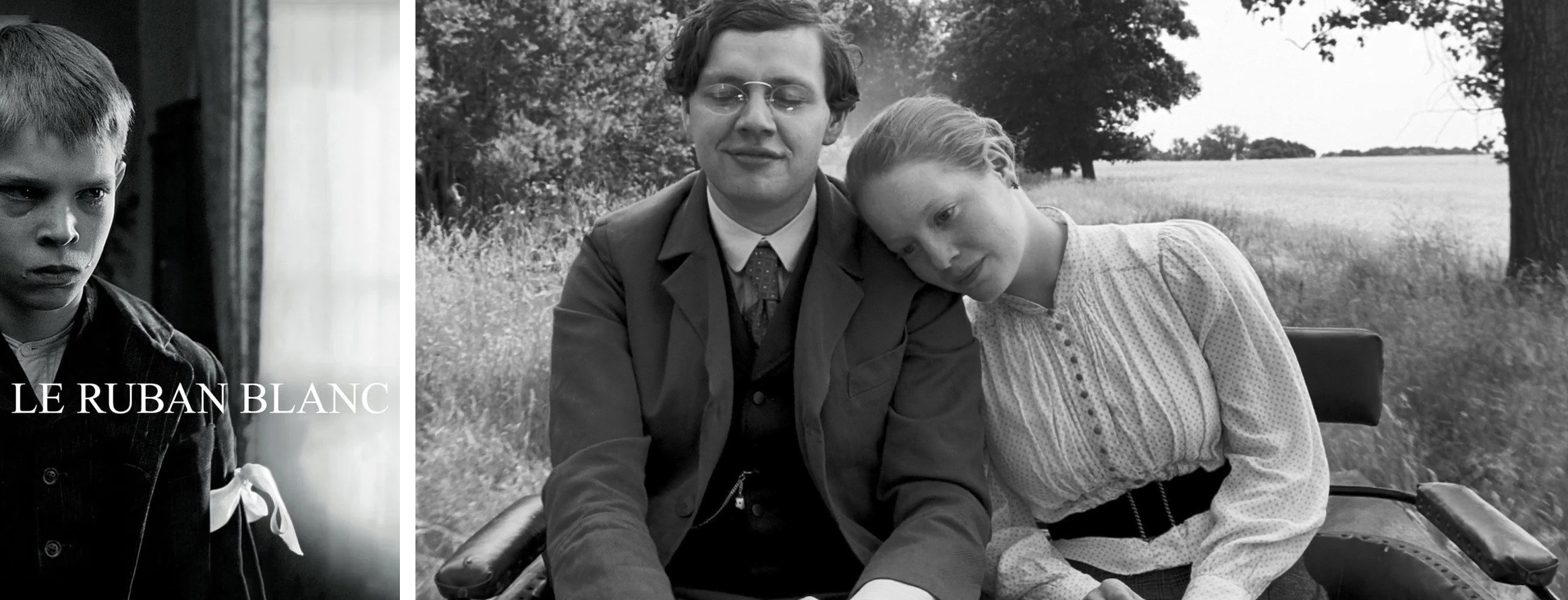
White Ribbon (2009)
Title V : Das Weiße Band – Eine deutsche Kindergeschichte – Nationality Austria, Germany, France, Italy – Gender : Drama – Implementation : Michael Haneke – Distribution : Christian Friedel, Ernst Jacobi, Leonie Benesch, Ulrich Tukur, Ursina Lardi...
DVD Edition France | TF1 Studio | 03 March 2010 - Blu-ray Edition France | TF1 Studio | 03 March 2010 - Dissemination platforms : Paramount+, SOONER, LaCinetek, PremiereMax, ARTE Boutique, VIVA and Orange
The pitch A Protestant village in North Germany on the eve of the First World War (1913/1914). The story of children and adolescents of a choir led by the village teacher and their families: the Baron, the administrator of the estate, the pastor, the doctor, the midwife, the peasants... Strange accidents occur and gradually become the character of a punitive ritual. Who's behind this?
Opinion of The Next Meeting (Sébastien): Far from the simple armband worn by the children of the film, the white ribbon of the title has a symbolic range. And because of it, it alone represents purity and innocence. This metaphor, Michael Haneke ties in with it by his bias taken from black and white, offering a visual as pure as magnificent. He also did so by his desire to plant his camera in a German Protestant village before the First World War, where there seems to be a spirit of conviviality and constant self-help. But to stop at this simple interpretation would be to veil one's face, the filmmaker amusing himself with this approach to better divert it. Like the pastor who denatures the meaning of the white ribbon into an object of shame and punishment, Haneke transforms this idyllic image into something colder and more unhealthy.
If he depicts a village where peace and harmony seem to reign, the director of Funny Games highlights the vices of this community, the shadows of each inhabitant. Between the pastor who inculcates his religious education with a firm hand, the authoritarian position of the Baron, the treatment given to women by certain men, the disabled child whom many deny, the young people who are severely punished, the doctor who sexually abuses his own daughter... Each door, each house reserves its lot of horrors, forcing the spectator to put himself in a position of awkward voyeurism. The latter attends, powerless, to what is happening and, like the majority of characters, can only silence and close their eyes to certain atrocities... The most evocative plan, in my view, is this door that closes on these two children being hit by their father. The arrival of the war will also be the climax of the plot, passing in silence all that the village lives, as if nothing were happening. The basic black and white so pure becomes an ingenious bias, reinforcing the heavy and evil atmosphere of the frame, which is also accompanied by a pronounced musical silence, the film offering almost no theme or composition.
And since the white ribbon is diverted into a punitive image, it is also by criminal acts that everything will be exposed. If the film depicts a whole community, the trigger of this terrifying portrait results in a series of mysterious events that target the high instances of the village. The Baron and his family, the pastor, the administrator, the doctor... All, whatever the degree, are victims of these many tragedies that come to break the peace of this group. While the feature still has doubts about the identity of the culprits, it does point the finger at the children. These basic beings, so innocent, witness the atrocities committed by adults, their parents... They too are helpless in what is happening, like this boy facing his father's abuse of his daughter. Impregnant by this religious education, they decide to punish in their own way people hiding their perversity behind a beautiful image. In turn, they corrupt the symbolism of this white ribbon, proclaiming themselves to be actors in the shame and punishment of a falsified society. That's what makes this 2009 Golden Palm a film object as complex as intriguing.

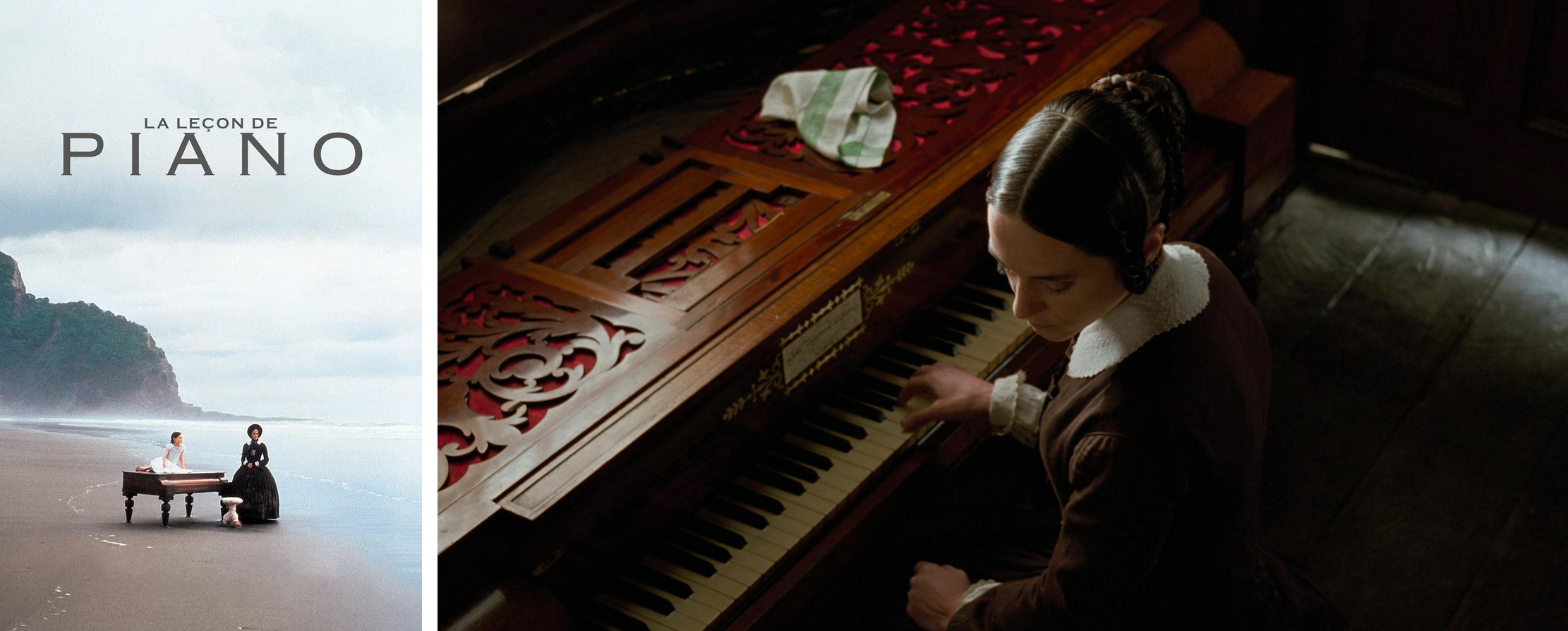
The Piano Lesson (1993)
Title V : The Piano – Nationality New Zealand, Australia, France – Gender : Drama, Romance – Implementation : Jane Campion – Distribution : Holly Hunter, Harvey Keitel, Sam Neill, Anna Paquin, Kerry Walker...
DVD Edition France | Carlotta Films | 02 June 2026 - Blu-ray Edition France | Carlotta Films | 02 December 2025 - 4K Ultra HD Edition France | Carlotta Films | 02 December 2025 - Dissemination platforms France TV, SOONER and MUBI
The pitch : Ada, mother of a nine-year-old girl, is about to share the life of an unknown, at the bottom of the New Zealand bush. Her new husband agreed to transport all her possessions, with the exception of the most precious: a piano, which failed in an illiterate neighbour. Unable to accept this loss, Ada accepts the market offered by the latter: to return to the piano, touch by touch by submitting to his fantasies...
Opinion of The Next Meeting (Sebastian): The Piano Lesson is clearly a Golden Palm that we must remember. Not that the film takes place in 19th-century New Zealand, a space-time setting that is not widely used in cinema. But rather for what it represents. We are in 1993 and cinema is, like many social as well as cultural circles, fully male. Few women directors are honoured or lead major projects. This feature film directed by Jane Campion, a filmmaker who will be offered recognition of the profession by winning the Palme d'or at the Cannes Film Festival, but also various awards at ceremonies, including the Oscars the following year: three statuettes out of eight nominations. By thus valuing a woman's work, cinema is taking a step towards a social revolution that is still boiling. And if The Piano Lesson owns this aura so symbolic, it is not just thanks to Jane Campion's growing reputation in the film industry, but also because of what she tells through this work.
If it is, at first glance, a conjugal drama, the filmmaker uses her intrigue to give the word to a woman. The paradox is that it is silent. But silence can be just as speaking and evocative as any sound. And it is through this mutism that the character of Ada McGrath expresses all his feelings, all his emotions. Grief is of course the cause of this, but it is above all anger that emerges most from his attitude. This hatred is directed towards her father, who sends her into the arms of a man whom she does not know. She also targets this husband who does not understand her, whether it is her feelings or her passion for the piano, and, as a result, is severe, even cruel, with her. Thus Ada, unable to keep all this silence for her, all this patriarchal pressure, will come close to a somewhat ambiguous neighbour. A man who is full and questionable in his approach, but whose way of life, close to nature and Maori culture, will create a relationship synonymous with sensitivity and freedom for Ada. For if everything starts as an emotional blackmail to lead to a carnal relationship, the heroine will finally find the opportunity to emancipate.
It is in this theme that The Piano Lesson draw all his strength. Beyond a simple romance, the feature film mainly tells the emancipation of a woman in general. By the character of Ada, Jane Campion manages to say what many fail to express and keep in them. Through this mute figure, she gives them a voice that speaks a lot about their social condition. And while things have changed a lot, there are still so many injustices to correct, making The Piano Lesson a work that is still topical. In addition to some nice piano pieces, the film is above all a life lesson, carried by an imperial Holly Hunter and sublimated by New Zealand landscapes. And it is in this that he can without being misunderstood as a pivotal work of cinema.
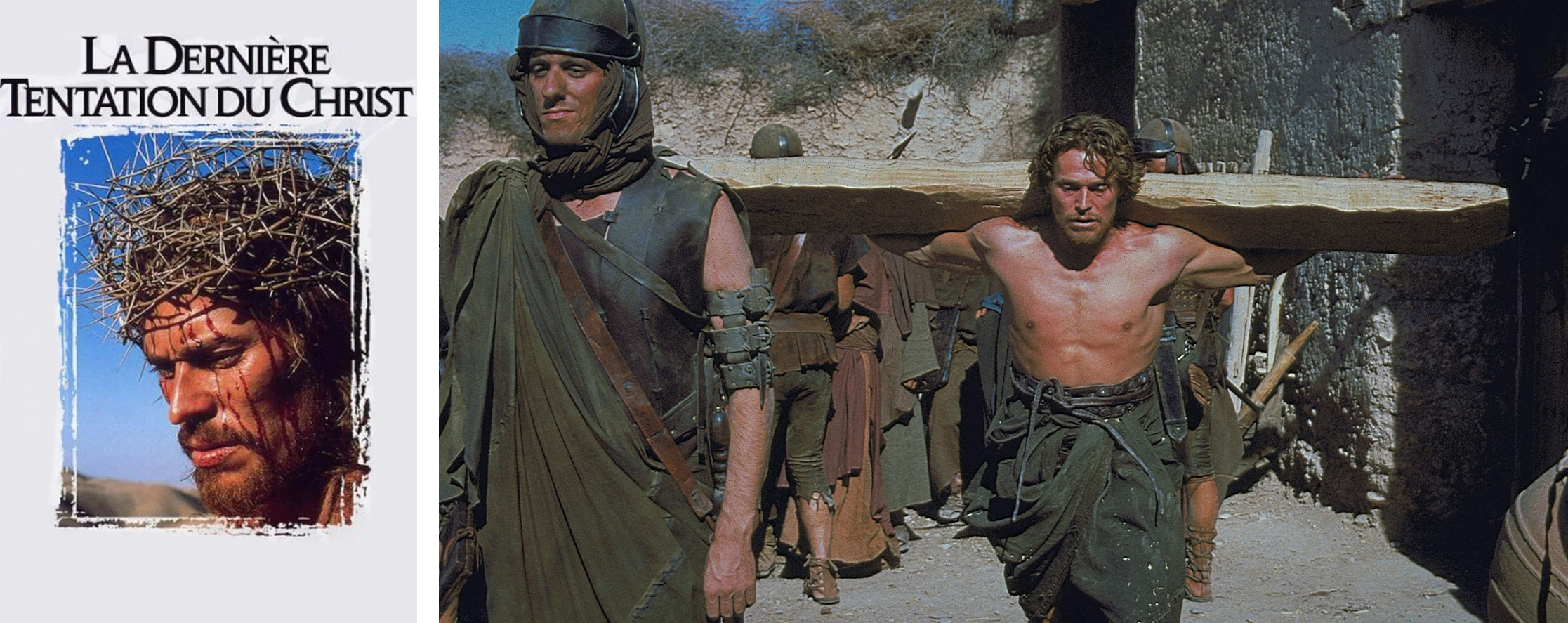
The Last Tentation of Christ (1988)
Title V : The Last Temptation of Christ – Nationality : Canada, United States – Gender : Drama, History – Implementation : Martin Scorsese – Distribution : Willem Dafoe, Harvey Keitel, Barbara Hershey, Victor Argo, Verna Bloom...
DVD Edition France | MEP Video | 03 November 2010 - Blu-ray Edition France | Universal Pictures | 23 May 2013 - Dissemination platforms : Pathé Home, Orange, PremiereMax, VIVA, ARTE Boutique and Canal VOD
The pitch : The evocation of the life of Jesus Christ, separated between his humanity and his divinity.
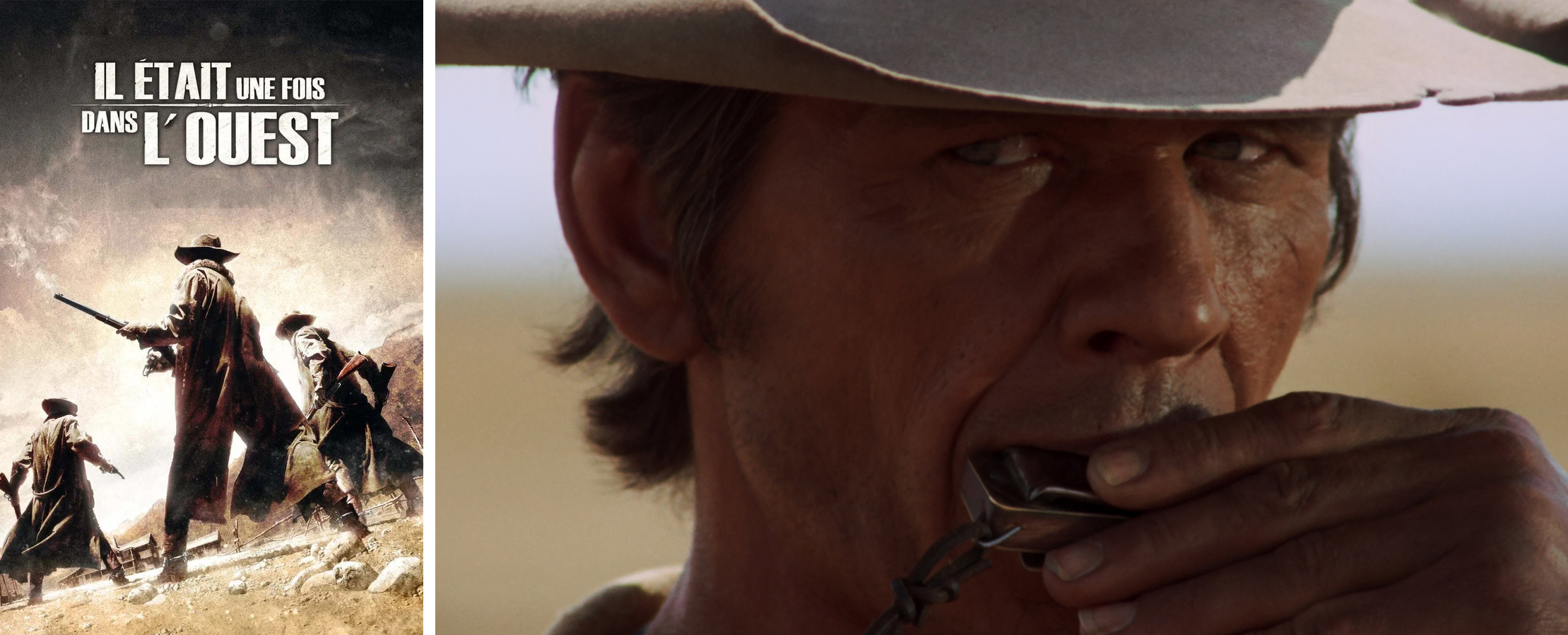
Once upon a time in the West (1968)
Title V : Once Upon a Time in the West – Nationality : Italy, United States – Gender : Drama, Western – Implementation : Sergio Leone – Distribution : Henry Fonda, Charles Bronson, Claudia Cardinale, Frank Wolff, Gabriele Ferzetti...
DVD Edition France | Paramount Pictures | 13 May 2008 - Blu-ray Edition France | Paramount Pictures | 15 May 2024 - 4K Ultra HD Edition France | Paramount Pictures | 15 May 2024 - Dissemination platforms : Cine+ OCS, VIVA, PremiereMax, Orange, LaCinetek, Rakuten TV, Pathé Home, SOONER and Canal VOD
The pitch : As he prepares a party for his wife, Bet McBain is killed with his three children. Jill McBain inherits her husband's lands, coveted by Morton, the perpetrator of the crime, as they gain value with the imminent arrival of the railway. However, suspicions are about an adventurer, Cheyenne...
Opinion of MaG (Celeste wolf): Far from Hollywood conventions, this western desacralizes pioneering mythology by stretching duration to pure tension. The silences, the gnashing of the Windian and the immensity of the frames create a striking visual liturgy. The music does not just accompany the action: it precedes and dictates it. Faced with the inevitable progress of the railway, the story becomes a vast funeral prayer where violence performs as a tragic choreography.
Opinion of The Next Meeting (Mia): Sergio Leone paints a portrait of a Far West far from that of John Wayne's westerns. From the first sequence, the murders chain to the rhythm of harmonica and revolvers without saving any women or children. The oppressive heat of the desert hovers over the image and the spectator. The Italian director deconstructs the myths of the conquest of the West, a world without justice where only the law of the strongest reigns.
Once upon a time in the West is a movie to listen to. The Italian practice allows Sergio Leone a total control of the sound: the film is completely post-synchronized. Between silences and resounding music by Ennio Morricone, Sergio Leone masterfully shapes the sound. So that finally, it is the sound that guides the image and the characters, provokes their actions and imposes narration on them.
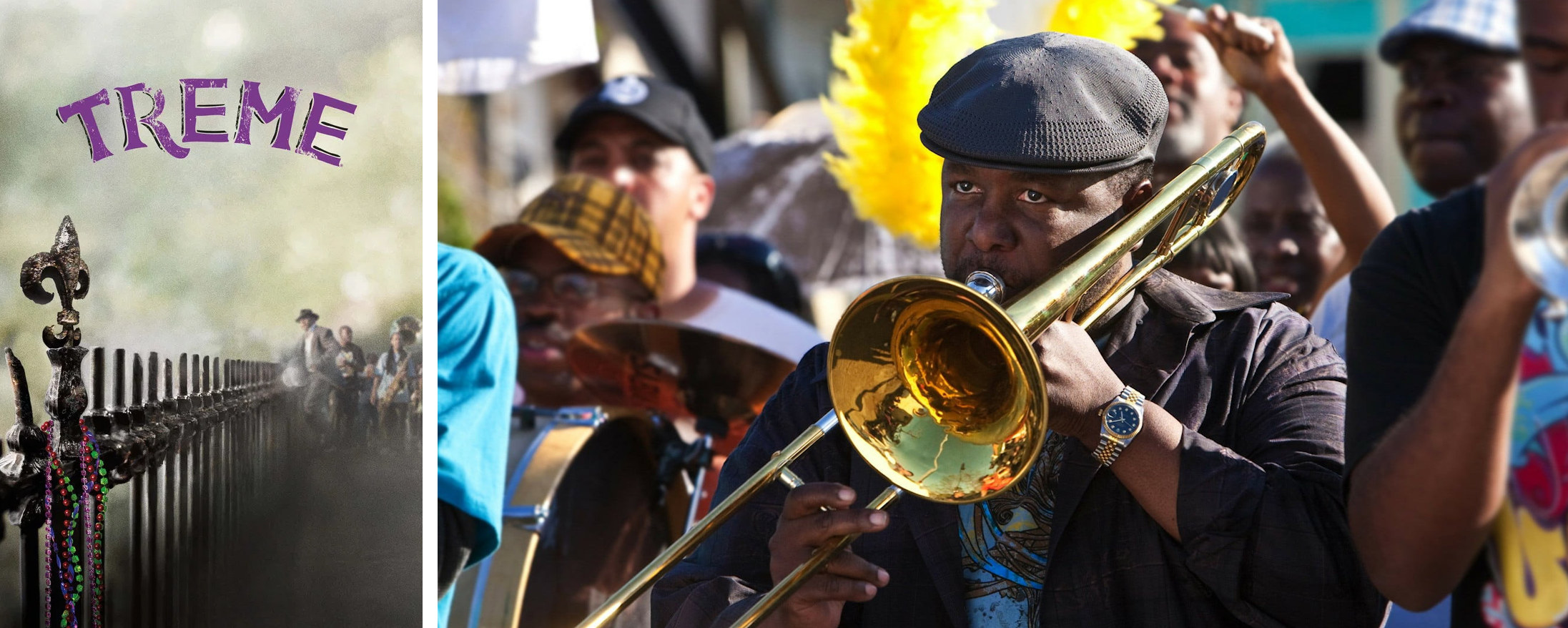
Treme (2010-2013)
Nationality : United States – Gender : Drama – Creating : David Simon and Eric Overmyer – Distribution : Wendell Pierce, Clarke Peters, Khandi Alexander, Kim Dickens, Melissa Leo...
DVD Edition France | HBO | 09 April 2014 - Dissemination platforms : HBO Max, Canal VOD and Orange
The pitch : Musicians from the same band are trying to rebuild their lives in New Orleans post-Ouragan Katrina. The talented jazz trombonist, Antoine Batiste, is trapped in a life with his partner and their baby, while he secretly runs after his former wife, Ladonna. However, she is busy trying to keep her bar afloat. Albert Lampreaux, a great chief of the White Feather Nation, was trying to bring the tribe home.
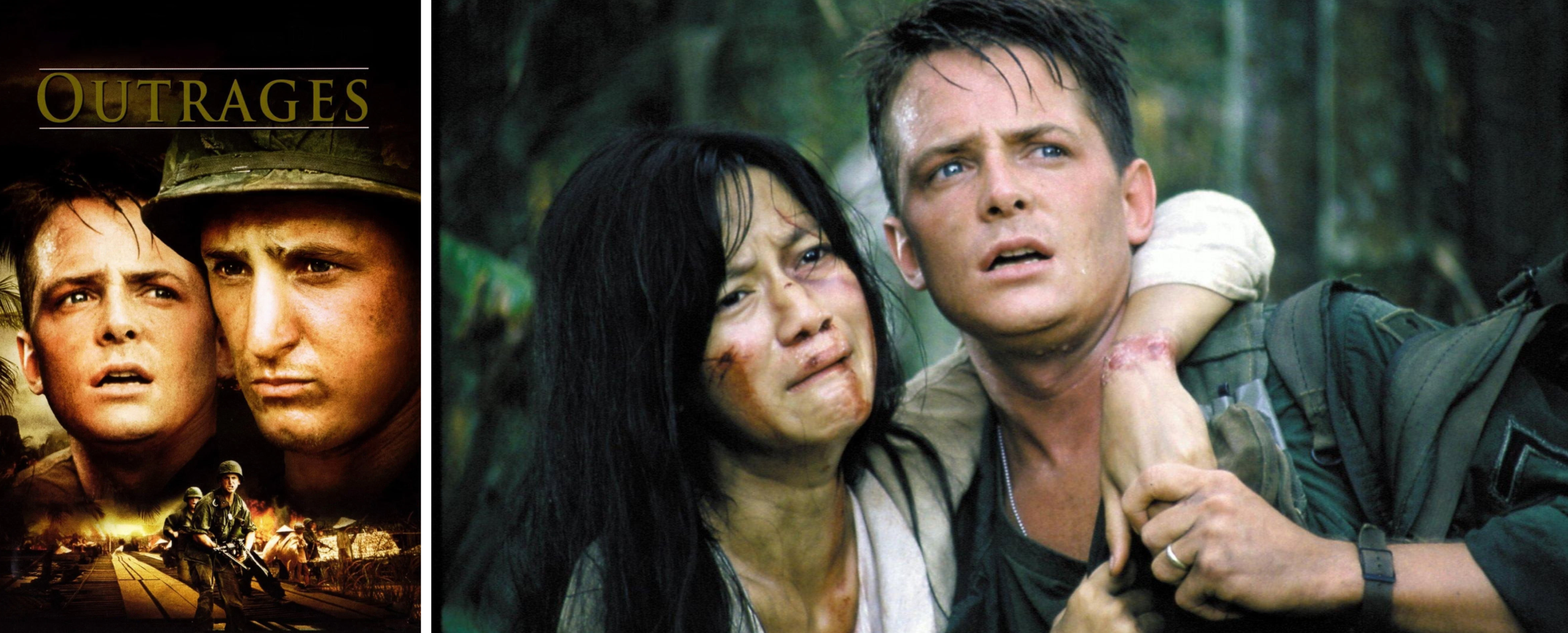
Outrages (1989)
Title V : Casualties of War – Nationality : United States – Gender : Drama, History, War – Implementation : Brian De Palma – Distribution : Michael J. Fox, Sean Penn, Don Harvey, John C. Reilley, John Leguizamo...
DVD Edition France | Sony Pictures | 22 March 2006 - Blu-ray Edition France | Sony Pictures | 08 January 2025 - Dissemination platforms : Pathé Home, Orange, PremiereMax, VIVA, ARTE Boutique and Canal VOD
The pitch : 1966, during the Vietnam War. Eriksson, a young recruit, was saved from death by his commander, charismatic Sergeant Meserve. A few days later, the squad radio was shot dead in an allied village. In retaliation, Meserve decides to abduct a young villager...
Opinion of MaG (writer): Far from heroic celebrations, this war film transforms the Vietnamese conflict into a stifling moral tragedy. Through a virtuoso staging that tracks the slightest ethical renunciation, the story contrasts a soldier's conscience with collective barbarism. The camera, with surgical precision, dissects the gear of fault and loss of humanity. A tragedy where fear does not lie in the fight, but in the indelible weight of remorse.
Opinion of The Next Meeting (Sebastian): Since Trip to the end of hellAmerican filmmakers continued to portray the horror of the Vietnam War and its repercussions. Francis Ford Coppola and Revelation NowStanley Kubrick and Full Metal JacketOliver Stone with Platoon and Born on 4 July... There are many examples, including in entertainment cinema, such as Rambo Ted Kotcheff. But in any case, they all evoke the horror of men sent to the front, where some see their bestiality and animality take over from the carnage in which they participate. The ethical boundary no longer exists, the monstrosity becomes both a reflex and a normality, even a heroic act. This is what these feature films tend to point to, featuring characters pushed into their last cuts to the point of killing out of pleasure. But murder is not the only atrocity in this war. Indeed, many other crimes have found themselves trivialized by the conflict, which Brian De Palma is trying to highlight in Outrages.
Building on the success of Incorruptible, De Palma here attacks a fact already dealt with in 1966 in the German film Okay. and in Visitors d-Elia Kazan in 1972, the incident of hill 192. Or how an American squad found itself raping and murdering a young Vietnamese village girl, taken hostage to satisfy the vices of her kidnappers. By the prism of Michael J. Fox, who refuses to take part in horror and serves as a landmark for the spectator, Outrages shows without any shadow the crime endured by the young woman, which we can only assist, helpless. Of course, De Palma is not content with the facts: Outrages tells the battle of this young soldier who wants to denounce the misdeeds of his comrades. Unfortunately, the latter is confronted with a hierarchy preferring to silence collective rape so as not to tarnish the image of the American army. The act is even attributed a justification by what men daily endure in front of the enemy and by the conditions of combat (meteo, jungle, dead at the front...). The character confronts the camaraderie of his peers, who refuse to see the truth and reputation of theirs dirty by a novice. And if the outcome of the case brings justice, it does not prevent the protagonist from living with his demons: the ghost of the victim who came to haunt him, but also the paranoia from seeing his executioners meet him at the corner of the street for revenge.
You will understand, Outrages is not an easy-to-understand film, if only by its subject and the frankness with which it approaches. Some might blame Brian De Palma for pouring into sensationalism during the rape sequence. The title remains a pivotal work of the war film, orchestrated by a master hand thanks to the technicality of its director. The whole is based on a distribution of highly invested actors, who manage to transcribe humanity of their respective roles by their fragility, but also, paradoxically, by their monstrosity.
The different podcasts of The Next Meeting are accessible at this address.
Biberned to Steven Spielberg's films and passionate since the discovery of a certain Alien Ridley Scott, I'm eating every movie that comes under my hand. The cinema for sharing and cultural gathering, I like to discuss it with lovers of 7th art. The Next Meeting
Categories
Recent Posts
Romeo Is a Dead Man, the crazy
- 2 November 2026
- 11 min reading
The 4K Ultra HD Bazaar, volume
- 2 November 2026
- 77 minutes. readable
NAZA, life of others: adjustment variable
- 16 October 2026
- 26min reading
The Mag.7: Guillaume Kosmicki's selection
- 12 October 2026
- 19min. of reading
Silent Hill: Townfall, societal concussion
- 30 September 2026
- 5 min. of reading