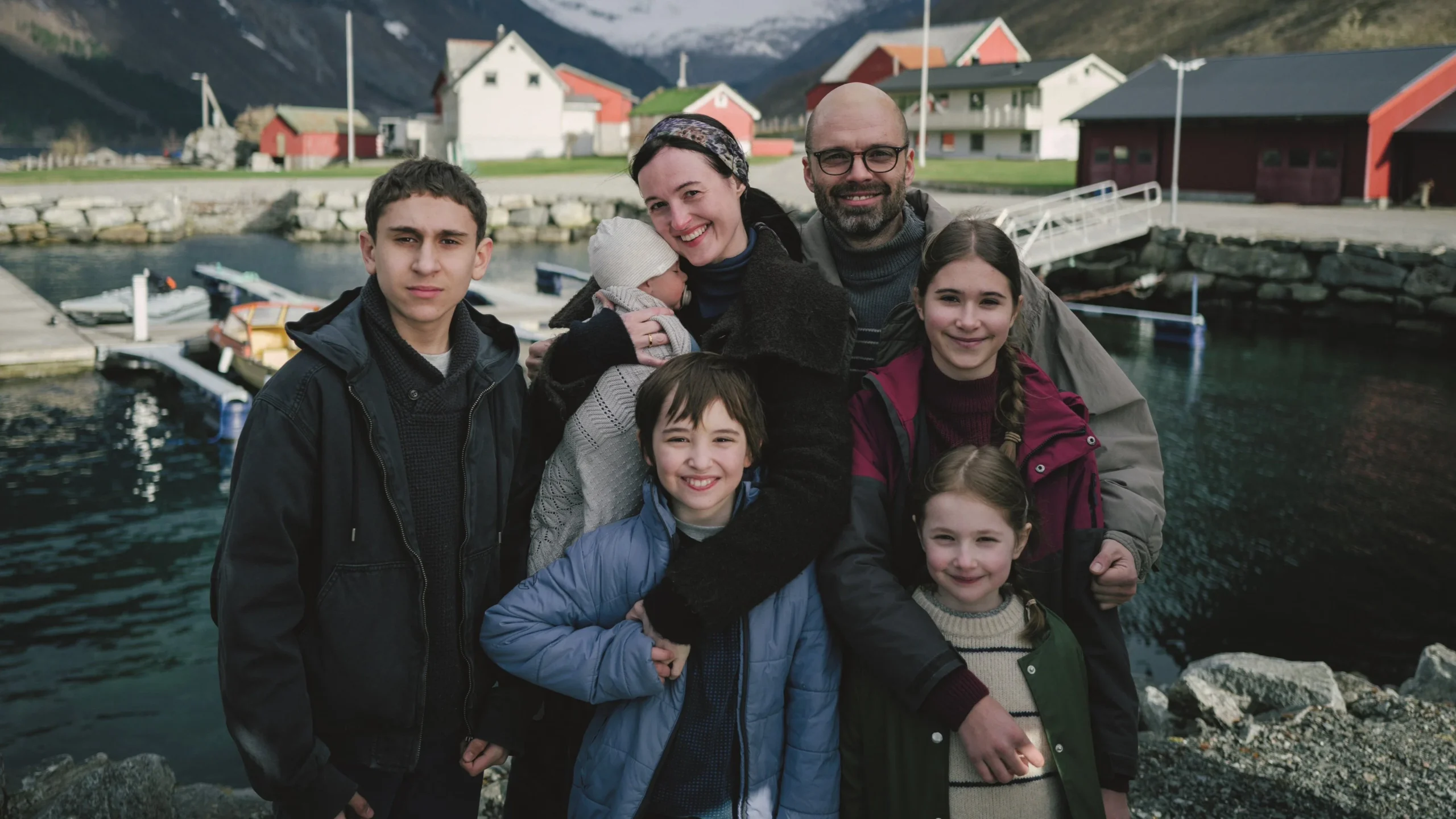
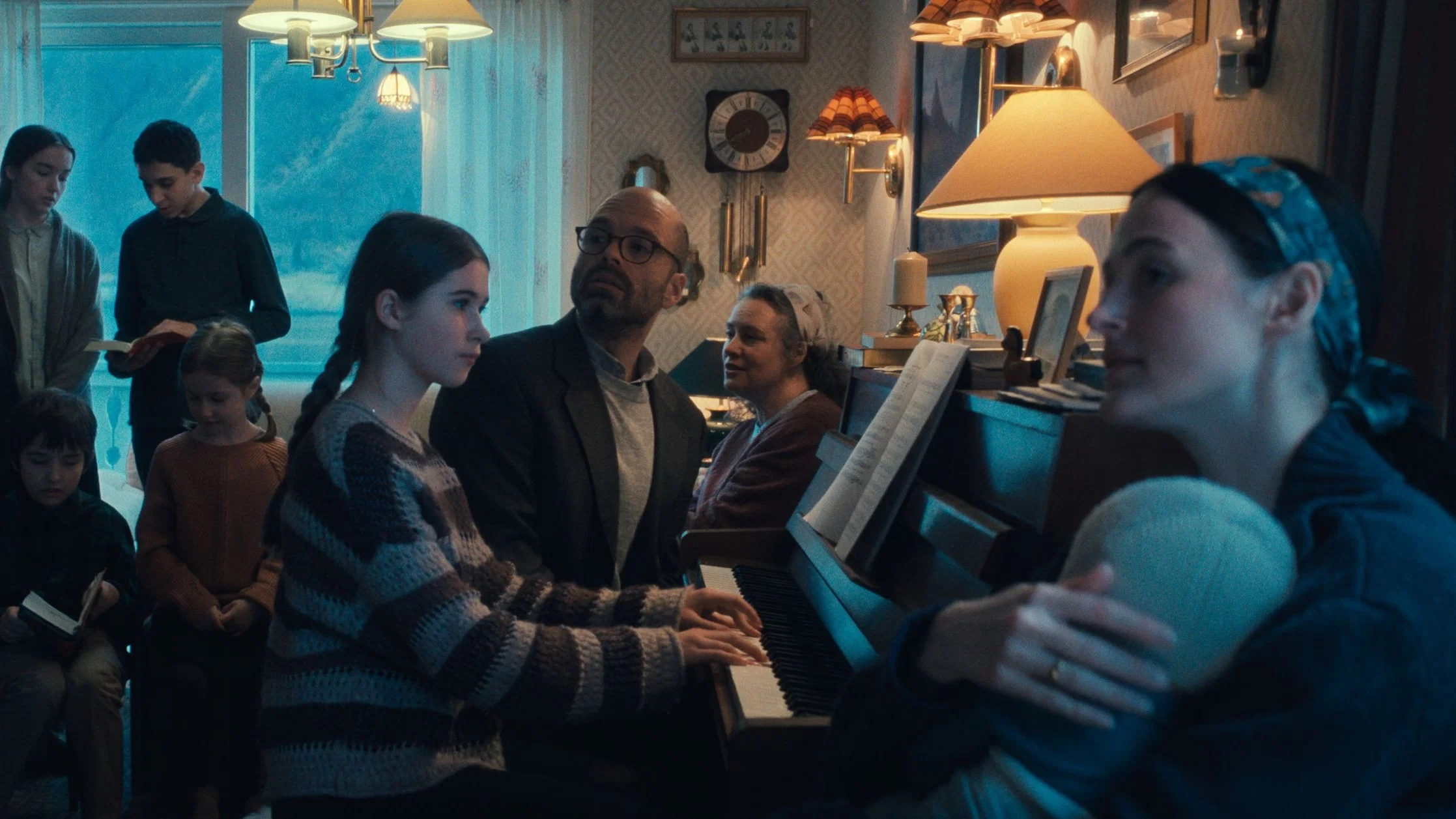
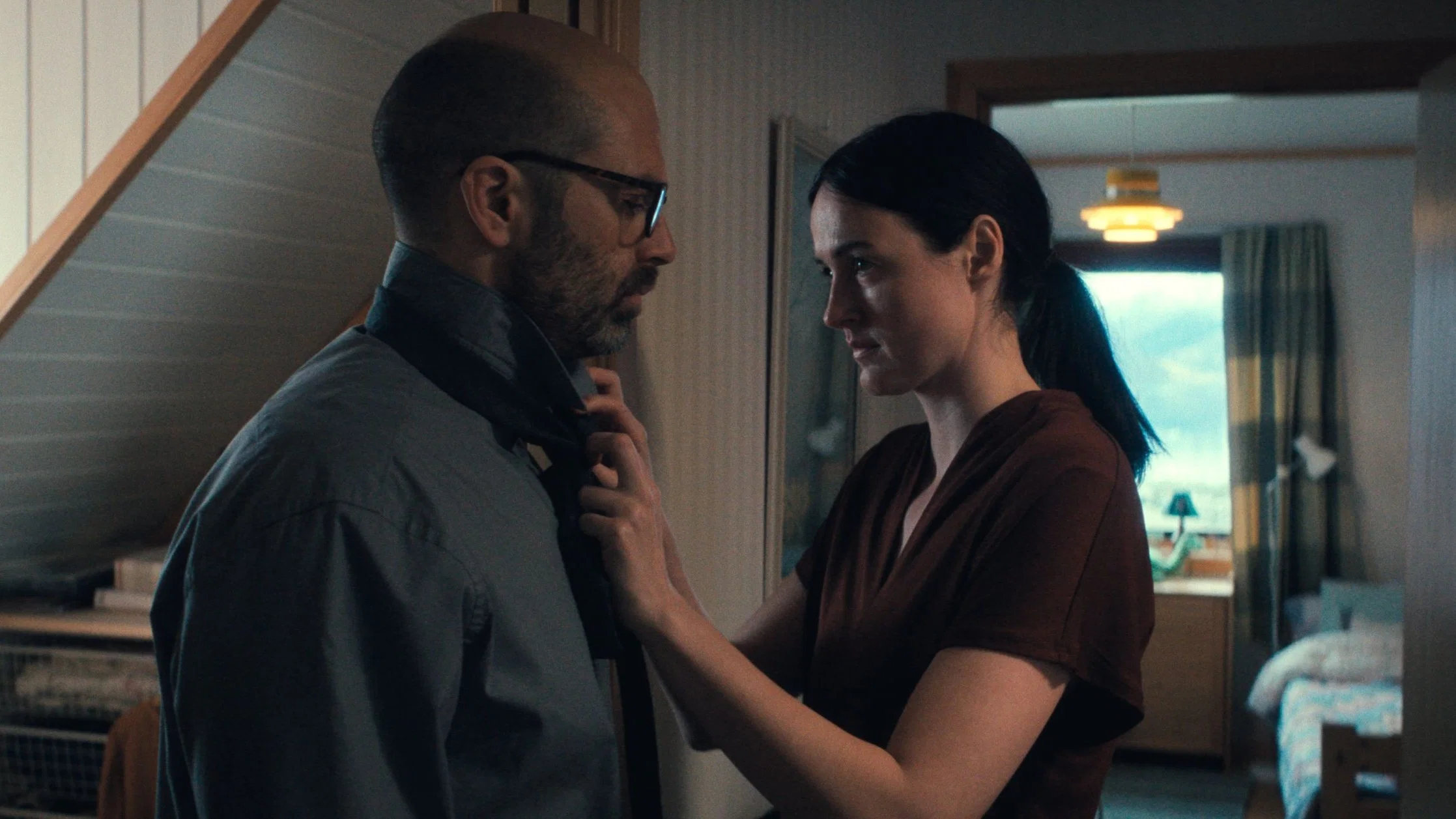
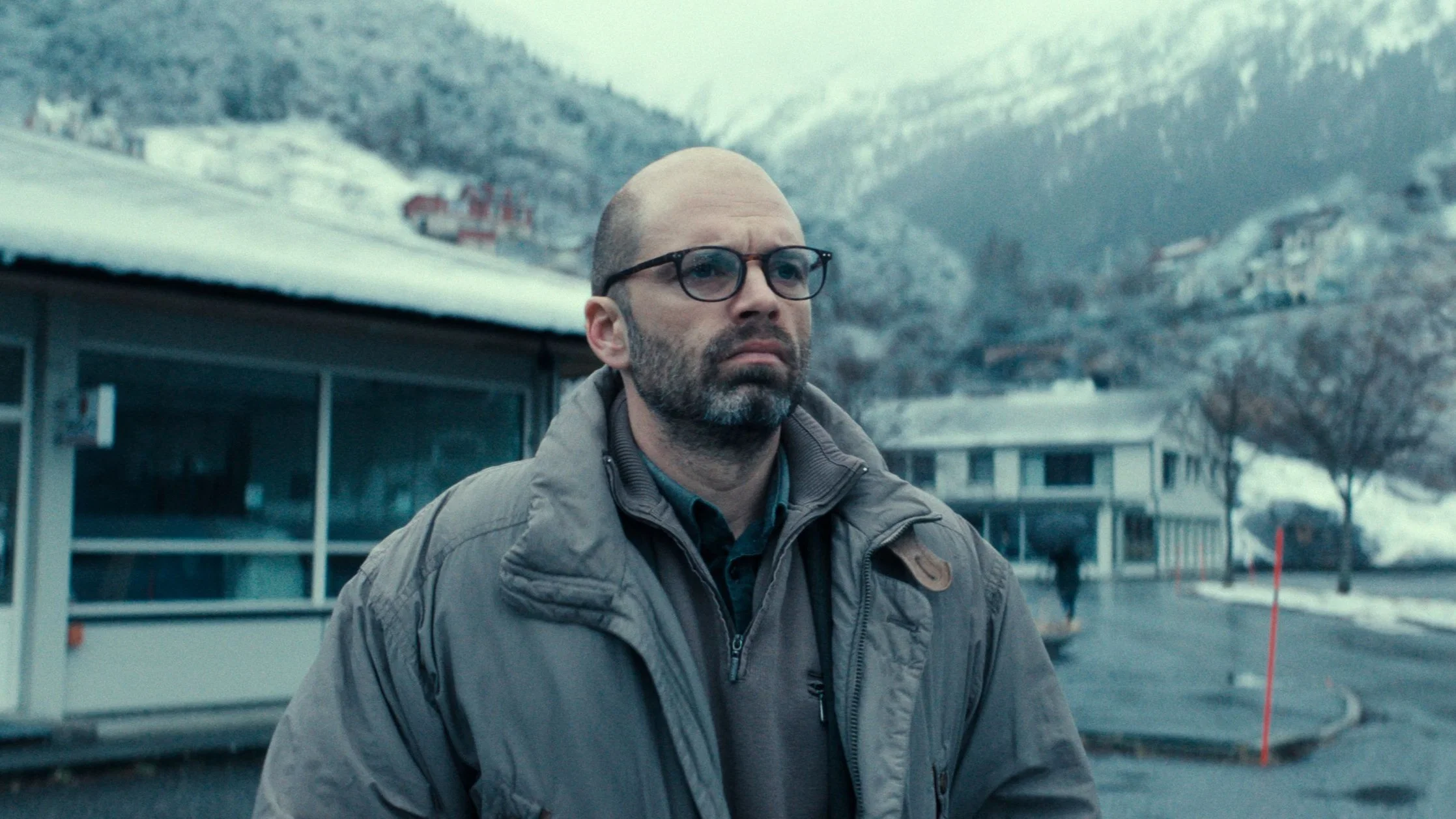
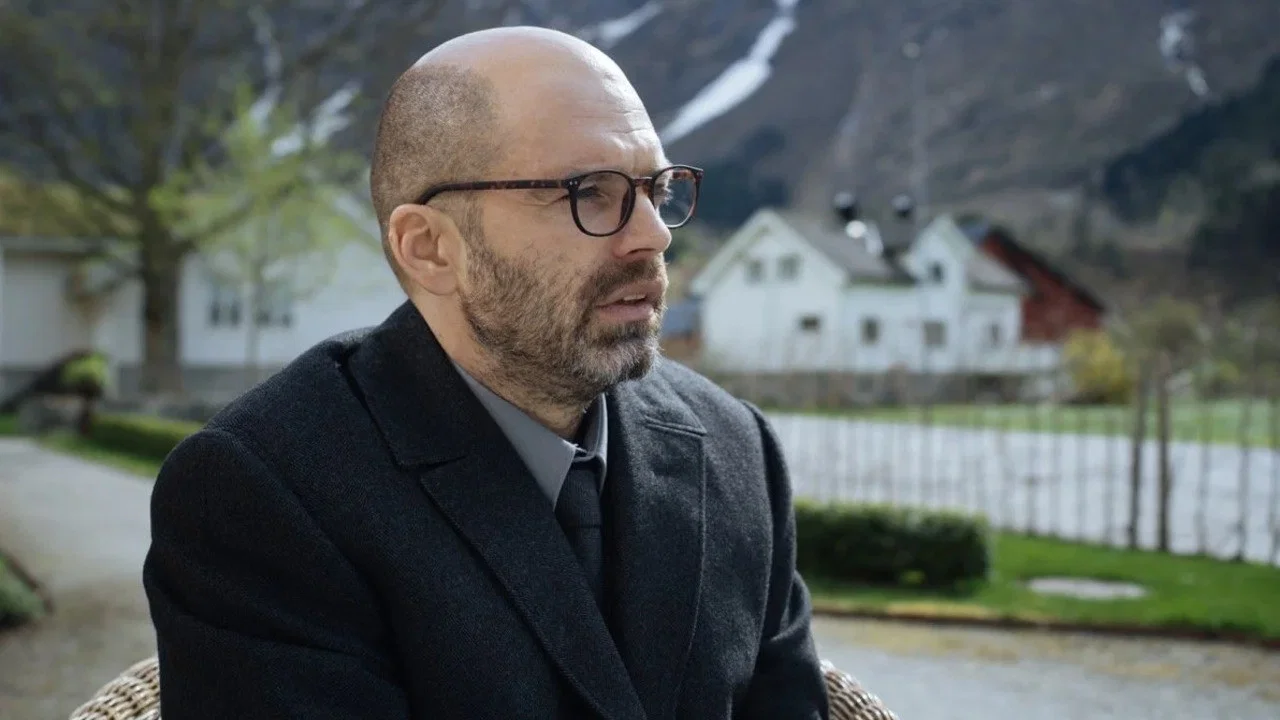
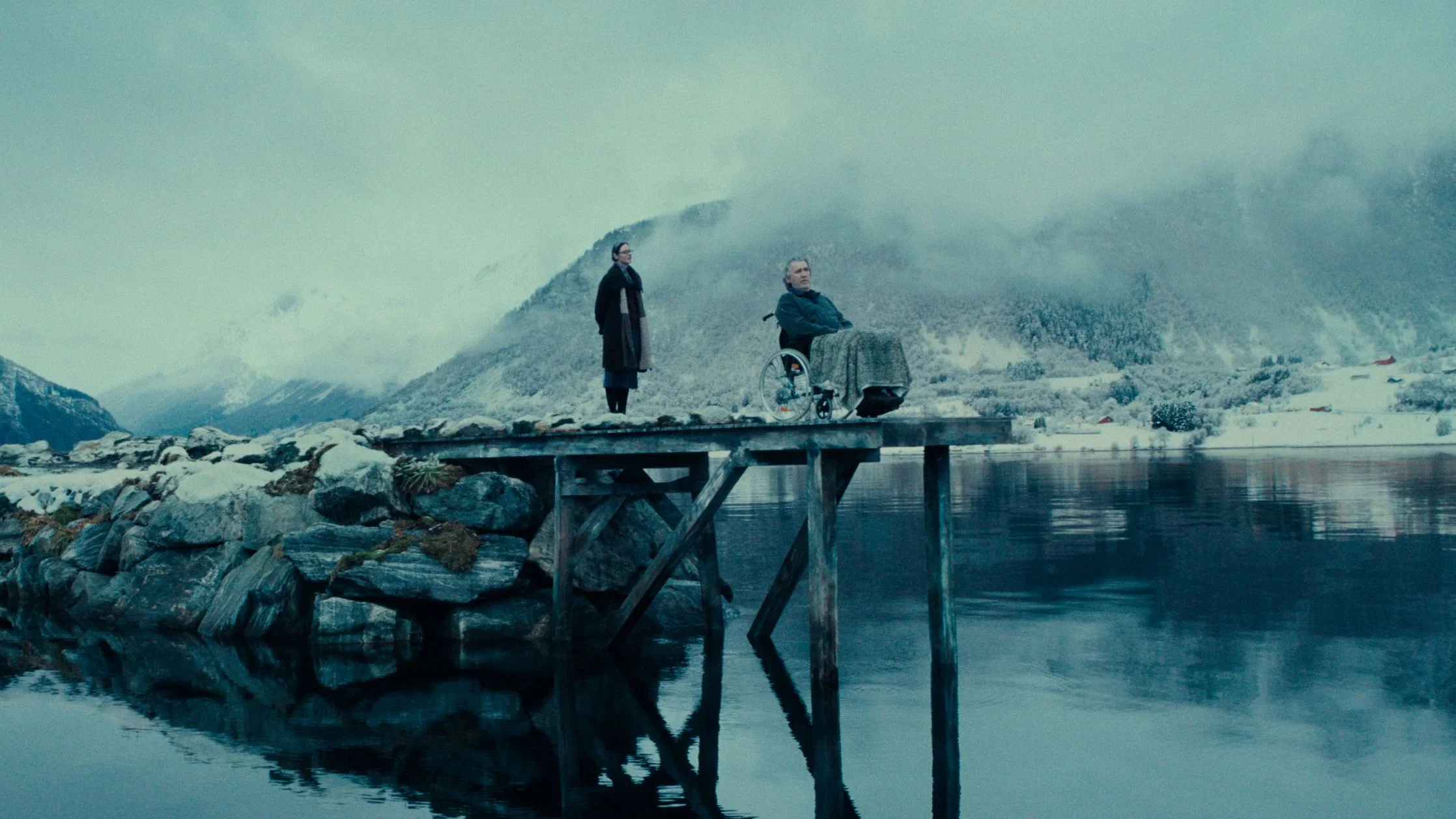
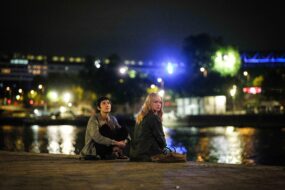
The Gheorgiu are Romanian-Norwegian. The couple just settled in a village surrounded by Norwegian fjords. When the educational team discovers bruises on the body of Elia, the elderess of the five Gheorgiu children, the child's aid is immediately set in motion and, with her, the great judicial grinder. Palme gold of the Cannes festival, Fjord in line dAnatomy of a fall, of which it takes over part of the scenographic system designed to rule out any bias in order to question the societal treatment of a domestic conflict that has led to child abuse.

Anatomy of Norway

The last film by Romanian filmmaker Cristian Mungiu takes place in a village on the west coast of the country between Ålesund and the Stranda fjord. Here everyone is nearby and the boundaries between the professional and the staff are porous, despite the attention paid to separation, like this principal who refuses that his daughter calls him « Dad » in school. « No Dracula here » Does he throw new arrivals on their first day, as if to tell them that the school here is not a matter of bagne. Faced with this proximity and institutional benevolence, what can this beautiful facade hide? For those who have had a more traditional education elsewhere in the world, Norwegian education often appears to be one of the flagships of progressive policies. And because of this, Norway is on the podium every year in countries that guarantee gender equality, thanks to an inclusive structural policy from childhood onwards.

This is why the Nordic country is often presented as a « Unisex model » gender discrimination has been combated at the source. Let us not give in to angelism, however, this heritage is now seriously challenged. So part of the population seems seduced by the conservative and deeply anti-immigration discourse promoted by right-wing populism embodied by the said party « of Progress » (semantic subversion and preemption of language that tell us that progress is therefore a reversible concept). To understand that beyond what can be seen in the rankings on national happiness where the regions of the North are leading, Norway, like other countries affected by globalization, is crossed by opposite winds. In Norway, the issue of immigration is new and it is only from the 1970s that the country slowly opens up to immigration until the process is accelerated by the country's integration into the European Economic Area and the Schengen area in 2001 opening the way to xenophobic identity discourse.

It is no coincidence that it was in the Scandinavian countries that Korans were burned on the pretext of exercising the sacrosanct freedom of expression. In the wake of Sweden and Denmark, an Iraqi Christian had carried out the same kind of provocation in Norway, which had initially led the justice system to consider the incident as a « legal political expression »where other countries would have more readily identified the crime « incitement to hatred ». It is this deaf polarization between progressives and reactionaries that occupies a central place in Mungiu's film and it would certainly be wrong to pretend that the plot frame was purely anecdotal. Behind the progressive varnish, there are discriminations that do not say their name in a changing society. Cristian Mungiu, on the other hand, invites us to put ourselves in the place of the other.

The right of minorities to the universality of the law

First Gheorgiu are not an ordinary couple. It is the result of a union between Lisbet (Renate Reinsve), a Norwegian native, and Mihai (Sebastian Stan), a Romanian immigrant. To this is added a second reading grid which has nothing to do with anodine. Norway is one of the least religious countries in Western countries, which certainly explains why such progressive and avant-garde policies have been carried out so far. While nearly a third of Norwegians are Christians, almost all of them are Lutheran disobedience. So Orthodox, evangelical and Catholic people do not together make up even 5% of the number of believers, just over 3% of the country's Muslims who obsessed with the far right and its « Norwegian ethnic ». It is to these 5% that this mixed and highly practicing couple belongs. The Gheorgiu must therefore be understood as a minority among minorities in a society largely freed from religious precepts and, de facto, guided by an ideal of so-called progressive society. An ideal so far mostly shared by the population.

Where Cristian Mungiu could have simply staged a couple of religious fundamentalists – which would otherwise have been more convenient not to push our convictions – the filmmaker decides instead to play with margins and nuances. The father educates these five children well as required by God's law. It punctuates the evangelical songs with an archaic bonus-malus system (although shared by many believers or mere lost parents) to share his beliefs with his offspring. « Punishment is a blessing from heaven » preach the father to the brother. If forgiveness precedes punishment, the repentance of those who fail must not, however, be exempt from the atonement of their sin, he explains. According to this Puritan logic recalling indulgences, Father Gheorgiu gives free rein to a rigorist education, nevertheless loving, he pleads. Ironically, it is the same precept limiting the punishment that will be applied to him by the majority culture and Norwegian justice. Fjord raises a question from the outset that continues to divide policies. Is education a matter of personal freedom? On the other hand, how far does educational freedom end and where does national education begin and its corollary, child protection?

When the teaching team reports the ecchymosis of Elia to help children, it is the excess of zeal that strikes the viewer. The interference between working life, neighbourhood and friendship also contributes to this feeling of injustice, as if the Gheorgiu couple were immediately struck by indignity and the banishment of society. At the same time, there is a form of automatic benevolence towards the words of children, while being blind to the condition of the holders of parental authority. It is all the more striking that it is the same neighbours of child welfare who show no humanity when they come to tell the mother that her children were immediately entrusted to a foster family. Institutional coldness, forced recording of conversation, testimony by coercion, lack of time left to prepare a defense, even embryonic... the child's benevolence completely disappears between adults. Even the infant must be separated immediately from his mother and subjected to a battery of tests which appear disproportionate in the state.

The quasi-inquisitorial model of the sequence contrasts with the principle of adversarialism, which seems somewhat undermined to protect children from domestic violence. The Gheorgiu will also be held responsible for prohibiting children from using social networks and mobile phones, thus drowning the frontiers of the private sphere in the injunction to modernity promoted by liberal progressism. Is it a form of violence or necessarily a sign of abuse? Norwegian justice is looking for a bundle of at least questionable clues to charge the spouses Gheorgiu.

Fair trial passiche

The good neighbour (the same one who too often closes his eyes to domestic violence) immediately vanishes. Although she is of Christian faith, Lisbet nevertheless shows signs of obvious openness towards the other, in the image of this sequence in which she entrusts her phone number, carefully inscribed on a Bible, to a woman struck by mourning, what will be reproached later, suspicion of proselytism obliges her. Lisbet is, however, far from being an isolated or confined bigote in a sectarian community. Child welfare, however, does not produce any sign of empathy, even in protocol. Let us also note that Lisbeth and her spouse are brought to justice by a woman who has no children, which may seem curious, even if it is not a disqualifying element.

As for the father who understands Norwegian, but struggles to speak it, he is initially required to make a statement in the language of the host country. And when he tells the police officers that these terms have been partially disused, it is an end to not receive that he is immediately opposed. This is the sine qua non for regaining temporary freedom, in other words a judicial blackmail that is only too well known today. The factory of consent is immediately abused. The same applies to Lisbeth, who will later be required to leave his own job and accept the conditions of a guilty plea that has never satisfied the rights of defence in any democracy worthy of that name. Behind this ceremonial protector of childhood, the right to a fair trial is chaotic, as if the end justified the means. Whatever he wants... But for what purpose? Is it about protecting children or imposing a new moral order?

Defining Violence

Finally, the question of whether or not there has been violence against Gheorgiu children is (almost) secondary, as all the stages of this judicial process seem marked by an irrefragable presumption of guilt of the spouses. Whatever if the bruises could have been caused by another generator, the various actors involved in child welfare, police and justice seem to have the intimate conviction that the Gheorgiu couple beat their children. The simple statement of the father at the beginning of the film, the same one who wanted to distinguish « spanking » and « strike » on the buttocks serves as a preliminary recognition of guilt on which any subsequent testimony, however sincere it may be, will come to light. One of the film's key sequences reveals the complexity of the equation. When Gheorgiu children are summoned and questioned by child welfare, the system is completely different. No recording, no constraints: the children's speech is queen, but is it totally free? In a logic dictated by benevolence, the adults ask the children to answer if they have been abused by their parents, to which little Elia immediately replies by another question:

« What do you mean by violence? »

Are the words of children the same as those of adults? What common denominator to find to qualify « Violence » When you belong to two different cultures? If, of course, justice is formed in these matters, then Fjord « Catechism » Manichean of child welfare shows so little nuances. It is this relativism which is part of the total impasse between a policy thought as progressive and holistic in the face of religious education (which by nature is lagging behind from the point of view of the progressives) above all considered as the reserved domain of the parents. In both France and Norway, parents convicted of child abuse face criminal imprisonment. However, the reading of violence differs fundamentally. Not that it is a matter of reducing the real continuum of violence against children, a simple tap on the fingers seems to have the same qualification of « Child abuse » in Norway, without intelligible graduation for foreign litigants on the scale of sanctions. Without even going through the criminal machine for suspicions of violence against minors, it is possible to seize children and to remove them from the home for acts that are wrongly or rightly considered minors elsewhere.

As an exemplary model of child protection, the system takes on a coercive colouration which has led to a great deal of litigation before the European Court of Human Rights in recent years (ECHR, 10 September 2019). It should be noted that the objection is not unfounded: the highest court guaranteeing public freedoms has condemned Norway for violations of article 8 guaranteeing the right to respect for private and family life, accusing the child welfare service of disproportionate recourse to the withdrawal of children and forced adoption, to the detriment of family reunification.

In Mungiu's film, the consensus seems widely shared by the Norwegian community on the citizen's obligation to report suspected abuse. Paradoxically, the footage filmed by Mungiu almost gives the feeling that the mechanisms of delation are unfolding, without distancing and convening families. No warning, the rule is legal, but is it totally legitimate? Where Mungiu's screenplay as well as the staging apparatus is flying, it is that everything lies in the strength of the conditional. More serious violence could have existed if the offence was characterized by Norwegian legislation. And as nothing or so little is shown on the screen, the spectator will content himself with the words of the accusation and the defense as the only compass. Proof that the trial does not fully fulfill its role, the spectator will give to his « intimate conviction » failing to be informed by the deliberate. Fjord by the same token our own relation to the violence that we would have suffered in the past or that we would today reprove on our own children according to a well-known sociological mechanics. The trial then gives the opportunity for forced repentance, as if it were a question of allegiance to the dominant culture.

Obedience or what?

At several moments in the film, a form of common sense emerges, not from the words of adults, but from the words of children. « Or what? » toss teenagers when they challenge parental authority, turning back each other's practices to contain this « Ungrateful age ». Violence in all its forms passes through the film and we find ourselves scrupulously analysing the facts and actions of the village's parents as a whole of the variations of brutality and impotence. First against oneself, whether it is the question of scarifications, suicide or the end of life; then when violence occurs against others, in school, in hospital or in the home. Violence irrigates the film and is paradoxically one of the questions that the defendant asks on the stand: « Are words sometimes no more painful than physical violence? ». There is some form of violence on the part of the progressives, which is minimal because of this monopoly of judicial violence on both defendants and victims. Not least, they will not appear at any stage of the trial. The kids are almost erased. It is not enough to hear them, but to listen to them.

Of course, any legal institution of any kind is the result of a form of violence, simply by setting the boundaries of freedom of conscience in order to guarantee living together, which is itself bounded by the game of democracy. But depriving the parents of their child can characterize unguarded institutional violence. If battered children can act against the state for failure, vice versa parents deprived of their children on disproportionate grounds can also be sued for abuse of power. According to a certain schematic vision of the Law, the concept of the right over the good must also be integrated. The good would be all the value judgments that we make from our subjective referents, while the just is what would allow the different conceptions of good to coexist with each other. While balance may seem inconclusive, the distinction is fundamental and is illustrated by the principle of secularism, which is systematically used and too often used by politicians. The priority of the just over the good is to say that, whatever the convictions of individuals, they can never impose it as the principle of order of society, the reciprocal being just as true for the guarantors of the institution itself.

« I do not believe that even if we are convinced that our values are the best, we have the right to impose them. »

Justice cannot anchor itself in any conception of good, otherwise it can move into an architecture similar to that promoted in authoritarian theocracies or regimes. To this argument of just over good priority, other thinkers like Karl Popper will oppose the paradox of tolerance. Tolerance advocates must sometimes be intolerant with intolerants to defend tolerance. But are the Gheorgiu parents intolerant? And here we are again rushed into the same societal impasse as that presented by the Romanian filmmaker. This indifference to the divine, which we find in Western society, which is presented as universal, nevertheless suffers from many counter-examples, and this even in the countries displaying as exemplary democracies, in the image of the United States and Israel, do not dislike the speeches of facades.

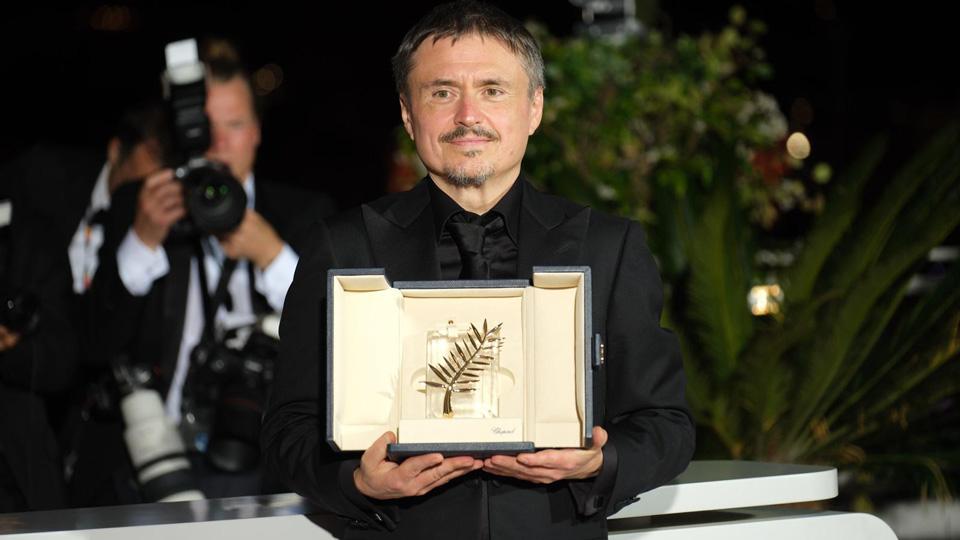
Cristian Mungiu, gold palm of the 79th Cannes Festival, at the photocall of the award-winning Bonté/CNC

The community precedes the individual

Are we mere guardians of parental authority? This is also what is raised by Fjord when the prosecution does not fail to recall that a child in foster care belongs to the State. This scene is all the more amusing, so to speak, that we find at work the same mechanics and legal arguments as those promoted in theocracies like Iran. Like the principle of human dignity recognized by the European Court of Human Rights in France (cf. Dwarf Throwing CaseAs in Iran, human dignity does not belong to the individual but to the constituent body and public order. Let's stop right now, because legal comparison is not vain. The veil, a symbol par excellence of male domination according to the Westernised prism poisoned by the theories of the clash of civilizations, did not at all mean this in the Islamic Republic. If this tissue became compulsory after the Iranian revolution of 1979, it is because it is a logic of control by the body mullahs who no longer belong to women. In the logic of fundamentalists, women must be protected from femicides and violence to which they expose themselves by revealing their bodies, regardless of whether they are opposed. As Iranian Chowra Makaremi shows in his book:

« Dignity is a fundamental characteristic of our humanity of which we are only the custodians and the State the guarantor. »

In a similar logic, parental education in Norway seems to respond with the same centripetal strength. Education takes the form of a characteristic whose parents would be the custodians and the State the guarantor. Let us remember, if necessary, that women were until 1965 the property of the spouses as if they were minors. Marital rape did not exist simply as a result of marriage, the unconsented sodomy was treated as a mere indecent assault. Children are also not intended to be the property of parents. This same archaic reasoning based on property is obviously not sustainable for a moment, whether it concerns the fate of women, children and to some extent animals whose rights are not progressing sufficiently today because of their ambivalent status of « furniture » while recognizing their quality « to be sensitive ». However, this paradox of tolerance of Fjord Does it not lead to another form of violence that is equivalent to that which has or would have been inflicted on Gheorgiu children?

«A wife was the property of her husband; Him « take » thus constituted an infringement of his property and an insult to his honour. »

On this point, Mungiu's film could have gone further because there was reason to deepen this paradox of tolerance against the right to culture, which appeared only on the surface during the Gheorgiu trial. Parents defend themselves from simply following their religion. Admittedly, simply accepting cultural defence is to tolerate practices of oppression inflicted on minority cultures. But rejecting it as a whole does not seem to be an acceptable solution. It is this stalemate that might have had to be pushed further into Fjord, because there was reason to deepen one of the dead angles of the theory of law and its foundations. Where Anatomy of a fall the dynamics of the trial, Fjord is more timid.

Defence through Culture

In his article « Cultural defence in American law »Professor Sarah Song, who specializes in the theory of law and minority issues, was precisely digging the question of the cultural exception through the prism of emblematic trials that have shaken our conceptions of good in the face of the rights of defence. These decisions have each shaped jurisprudence until the recognition of rights now enshrined in the law, if not the supreme norm of the Constitution. In a now famous case, a defendant of Hmong ethnia alleged the cultural exception for raping and abducting a woman in the US on the pretext that it is a practice admitted by a part of the Hmong community according to a codified marriage ritual (Kong Moua case1995). Where U.S. society saw it (rightly) as a backward rite to be punished by U.S. law, Hmong immigrants had been shocked that the classification of rape was retained, since women's resistance to marriage was an integral part of their customs.

It is impossible to give in entirely to the argument of the mitigating circumstance without replicating patriarchal schemes inadmissible to the host society. Nor is it understandable to support such a thesis simply because of the universal vocation of human rights, among other conventions. Cristian Mungiu never gives in to relativism. But should the sociological framework preceding the individual be completely disregarded as if the facts had been committed by someone from the dominant culture? It is exactly the same impasse that we find today at the bloody feast of the Grindadráp, where the inhabitants of the Faroe Islands invoke their right to culture to massacre hundreds of globicephals during this rite of transition to adulthood that unworthy the rest of the international community. What some will denounce as a mere legal deception is, however, the fruit of values peculiar to a dominant culture that is concerned with the uniform application of the Law in a sovereign territory.

The paradox of tolerance to the test of diversity

To this thorny question of the cultural exception, Cristian Mungiu does not cut and prefers to show the direct consequences of such a policy on the family unit. Putting the child back at the centre of the scheme, is it not to consider his word, but also the consequences of foster care? Worse still, does not such tolerance policies lead to the opposite effect? When no space is left to the Gheorgiu family, the father takes refuge in the otherwise more radicalized community, some will say. The paradox of tolerance reinforces the identities of both sides, where assimilation should leave room for consideration of the difference in the event of sanctions.

This prompt Norwegian society to the legitimate authority of the state manifests itself at several moments in the film. When an avalanche occurs, no one panics and everyone follows the rules without eyebrowing, which will no doubt make the French spectator accustomed to scenes of chaos smile from the moment of any incident. But this apparent docility to authority for the benefit of the group hides a latent form of hypocrisy. This is what one guesses when tags presenting Norwegian justice as satanists are hidden by a large sign announcing the celebration of culture and diversity, without anyone seeing this benevolent masquerade. In trying to protect the miners, did the great grinder not forget the first ones concerned? What about the trauma of separation left to children as suggested by the epilogue of Fjord ?

There is no doubt that Mungiu's fim will give grain to grind, depending on whether you are a parent, child or simple professionals in law or child protection. The title of the film finally takes an evocative coloration. A fjord is a « deep indentation of a narrow shoreline bordered by cliffs », recalls the Larousse before specifying its origin « resulting from the invasion of a glacial age ». It is this cashed framework that swallows the individual. In a polarized society, « Aren't both sides indoctrinated? » Cristian Mungiu blows in a hollow twice. At the border, this barrier that Noura crossed during the last plans of FjordIt is the object that best represents this separation and Community impasse. In Fjord The only ones to brave the forbidden are the children, the first victims of this collective blindness. Ironically, whether one comes from a progressive or conservative family, the runaway, even ephemeral, brings them together in a common parenting, as if the two models of parenting had failed somewhere. Overnight, parental authority is challenged. Whatever.

JV critic and film always ready to lead Interviews at festivals! Amateur of genre films and everything that tends to the strange. Do not hesitate to contact me by consulting my profile.

0 0 Votes
Evaluation of Article
Subscribe
Notify of
guest
1 Commentary
oldest
most recent Most popular
the celest wolf
Administrator
17 days

In this icy drama where the apparent calm falls under the weight of convictions, Cristian Mungiu, on the background of child protection, dissects the cultural divides of contemporary Europe where faith, identity and hospitality come together without the possibility of dialogue. Nothing is simplified, nothing is cut, and the star couple (Stan-Reinsve) advances on the moral peak line with fascinating restraint. Only flat: impact on children, left in the shadow, as a flaw that the narrative bypasses.

1
0
We would like your opinion, please leave a comment.x