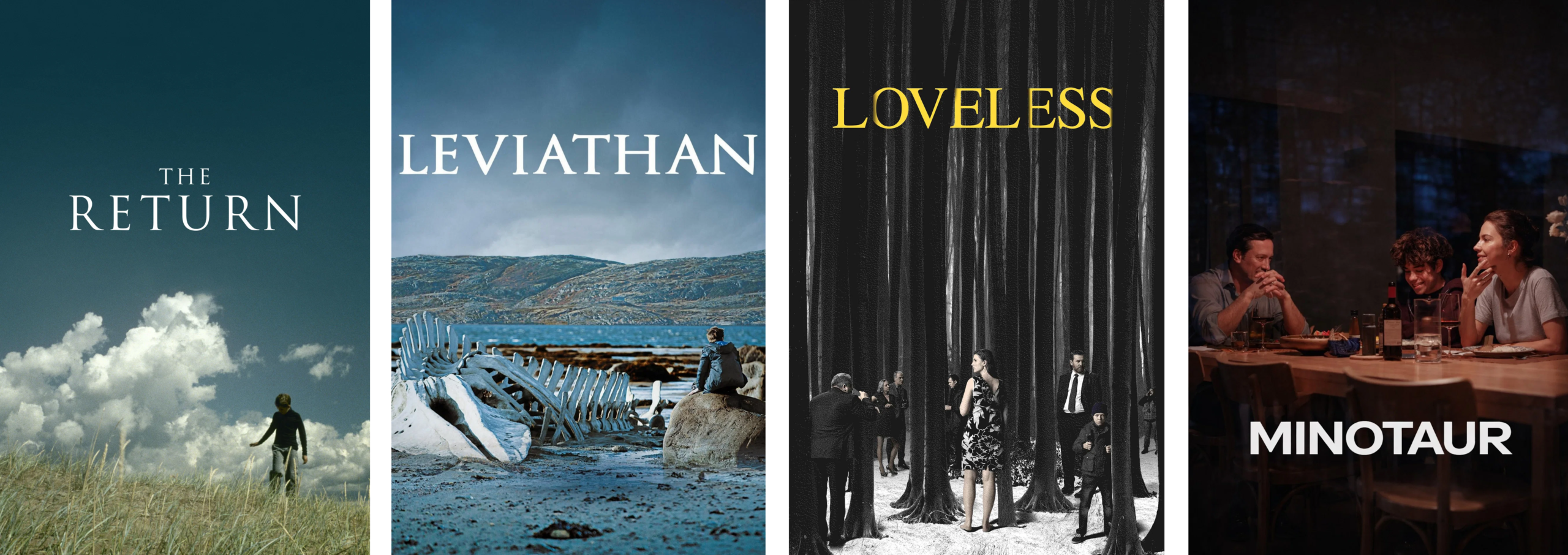
It was as a political exile that Russian filmmaker Andrei Zviaguintsev came to present his last film in competition. Free The Unfaithful Woman (1969) by Claude Chabrol, Minotaur takes on a political hue with the invasion of the war in Ukraine which serves as a backdrop to his story. In the context of a domestic conflict overwhelmed by adultery, the filmmaker gives the metaphor of resilience to denounce the mechanics of war.

Social and marital crisis

It is in the heart of a bourgeois Russian family that Zviaguintsev's film is rooted. Overhanging a property that is guessed to be consistent, the vast surrounding forest suggests that history takes place far from the laborious classes. And because of this, Gleb is an assiduous and paternalist entrepreneur. He never loses sight of his professional goals as personal, one being inseparable. Employees or rather « His guys. » as he calls them must maintain the performance imperatives set by his box. Whatever it takes. It is that we must adapt to the reality of the coming war and to a life that will never return to normal. In 2022, the filmmaker was already aware of the historical change at work: « Our destinies come from brutally forkling and for a very long time » Did he confide in the World? In Zviaguintsev's fiction, war also acts as a detonator. There'll be a front and a after.

« We will not return to the concert of nations anytime soon»

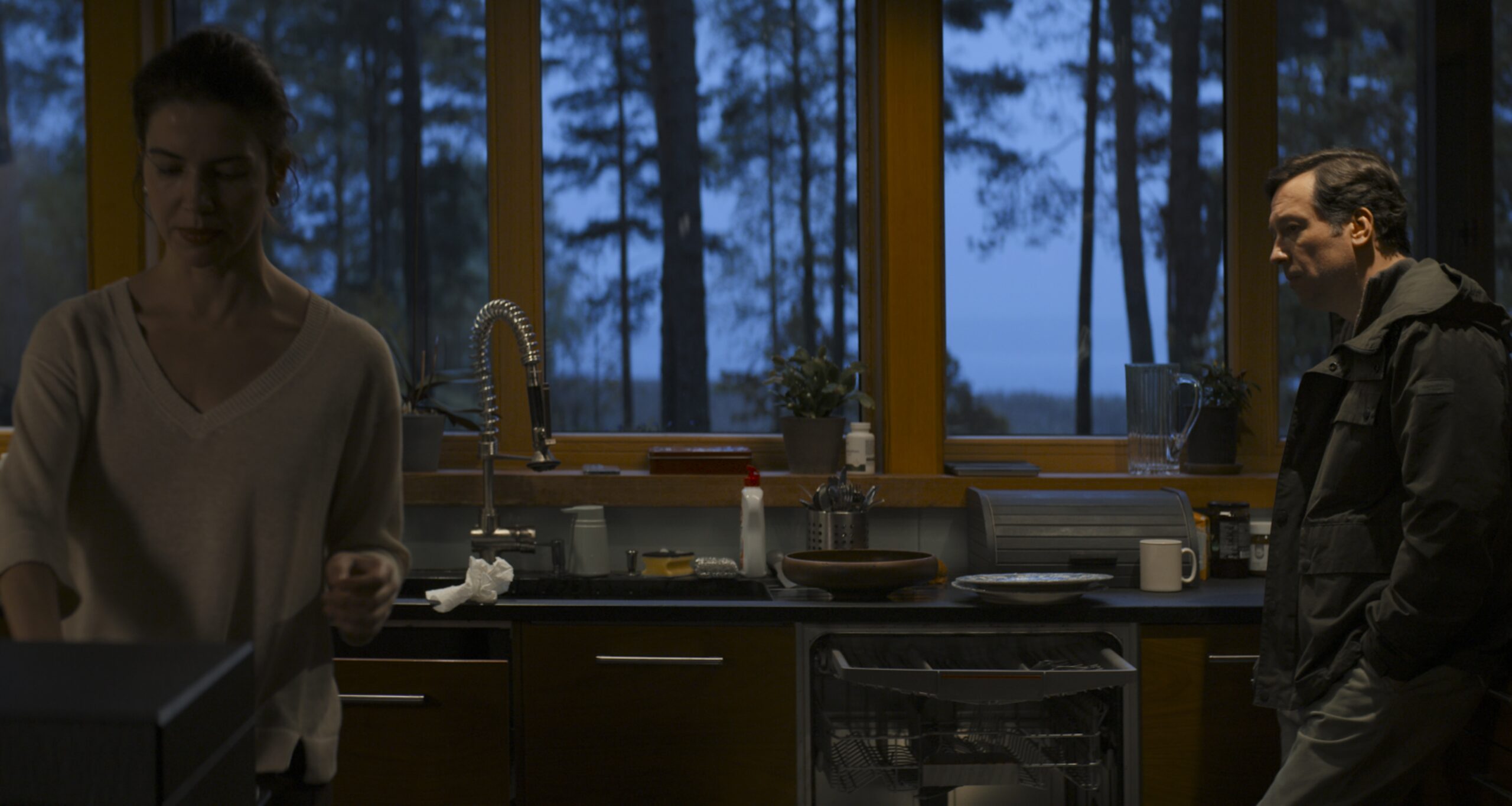
At home, Gleb seems to be a good father as much as a poor husband. The massive bay windows of this cossue residence show the remains of a delicacy of marital life. A sign that won't deceive anyone, as soon as he gets away, Galina rushes to his cell phone. Then only a smile emerges. When spouses separate, there is no sign of affection to report. A ceremonial kiss on the cheek is enough to signify to the spectator that this one-way union is only due to the minimal parental functions. One thing is certain, any sign of desire is now the vestige of a consumed life. And as proof, every attempt by Gleb to get closer to Galina is immediately rejected. If Galina is silent, her body is eloquent.

One mask to another

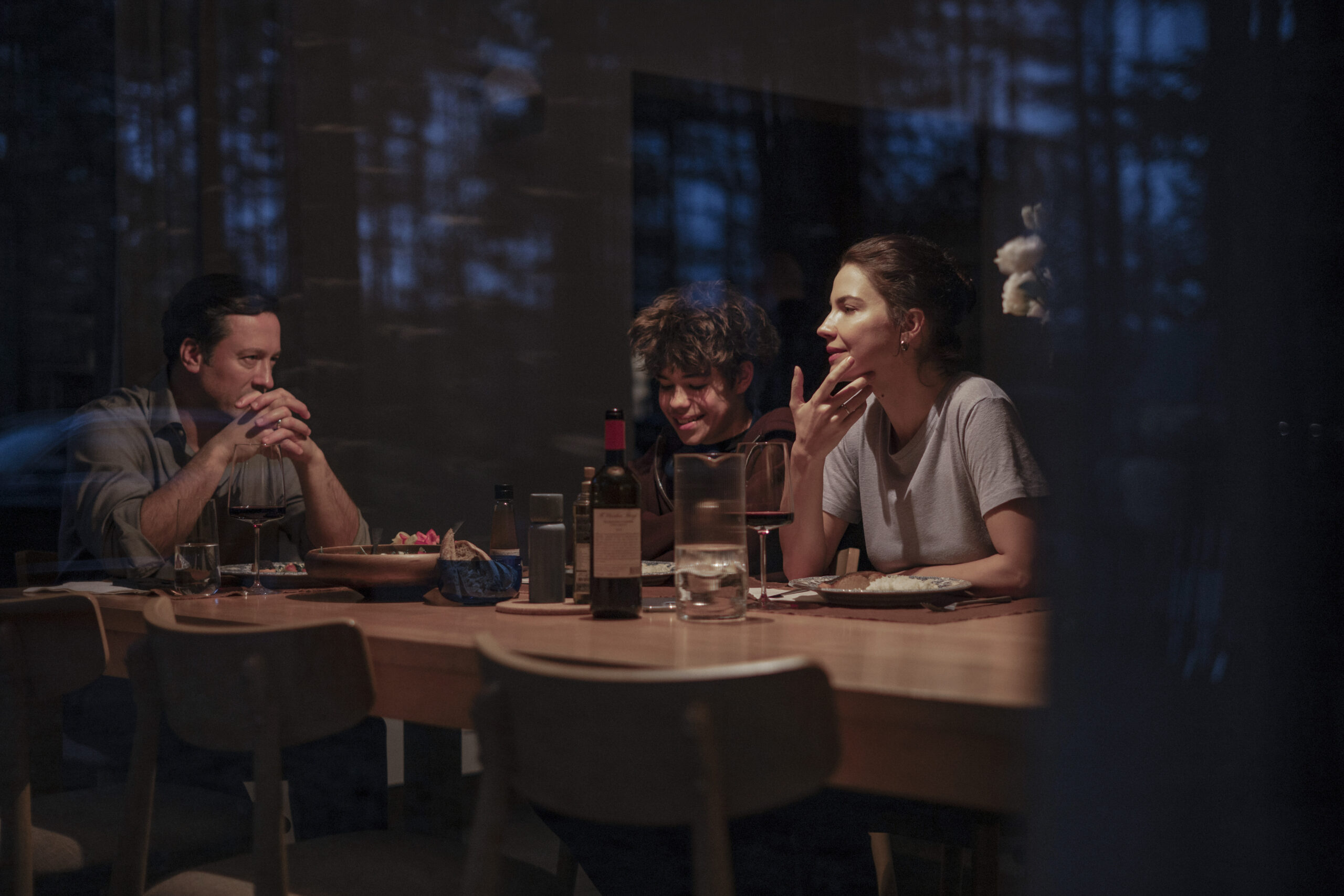
In reality Gleb and Galina are two characters that everything opposes. In the shadow of her husband, Galina is bored. Reduced to household chores, eaten by the silence and monotony of everyday life, where every pizza evening ends with an umpteenth Marguerita, Galina simply wants to feel alive. Her husband, on the other hand, seems more inclined to the natural submission that the social pyramid of the Poutinian oligarchy induces. This is what we understand from the beginning of the film when the mayor of the inner city to the greatest business leaders of provinces to provide profiles of people to be enlisted for the first wave of mobilization of the special military operation that still has not ended today.

When the father explains to his son how to defend himself from his comrades, he professes to him, sure of himself, that « the one who triggers it loses ». « He's an idiot. » He concludes, like a nose to Vladimir Putin and an indication of Gleb's character. Gleb's a funny low-end archetype. As every frustrated sleeps in him his true nature that only asks to express itself. If the formulation can surprise, it is actually an actor of its own submission. It is not submitted by others but by itself. Obedience does not pose serious problems of conscience and no one is ever ethical with him. Others of his friends preferred to leave the country or leave Thailand until the situation returned to normal. « In a few days » Do they think...

He is neither resigned nor someone who enjoys life; he simply performs the function assigned to him in society. Zviaguintsev takes advantage of a worldly evening scene to show the cynicism and indifference of the first of the ropes. Since people will be forcibly recruited whatever happens, as much as the small provincial bosses themselves choose which employees of their businesses they will propose to the mayor for mobilization. It is as if it were a new declination of natural selection, except that its organization would have been dedicated to capital. The pyramid stands because each floor oppressed the lower echelon already taught us The Boetia centuries earlier. The employees won't know anything about it.

Fleeing, Gleb refused to separate himself from his war labour and preferred to hire anonymous people rather than assume his role as a hood. As the term is used, it is only human resources. Whether they are dedicated to the company or to the front, whatever. Their body does not belong to them, they must be devoted to the motherland infinitely grateful as the professed bishop who gives the great Mass before letting the flesh with canon freshly enlisted take up arms. The parallel crosses both Russian society and marital life, where Galina should be available to her husband, by pure natural conjunction.

The Beast Who Grows

In Greek mythology, the Minotaur is a chimera at the crossroads of man and beast. Born of the adulterous love of King Minos' wife and of a white bull sent by Poseidon, the monster asks only to get out of the labyrinth in which he was locked up. Symbolically the Minotaur represents the figure of man caught by his impulses. It is the violence that sleeps in each of us that Zviaguintsev denounces and from which he can part of folklore until his epilogue. If this double narrative thread of Shabrol's triangle of characters works, perhaps it would have been a good idea for the filmmaker to show more audacity towards the portrait he draws of Russian society. Submission is a state of affairs in all the workings of power, to the police, of course. Zviaguintsev knows this and shows it to us with some notes of cynicism unfortunately too rare.

Shot in Riga because of the censorship and exile to which Zviaguintsev has been reduced, the provincial city that serves as the frame of the film does not completely convince either. The fim prefers to tighten its frame on its main characters. Relegated out of the field, the rest of Russian society is secondary. Cold photography partially fills the gaps in artifice. Despite the originality of Shabrol's marriage and of this war, which is also going on masked, the realization struggles to free itself from a certain academicism.

Since the first narrative thread is known, why not weave the second one more? Unlike other filmmakers facing the reality of war, Minotaur is wise and sometimes predictable for those who know the myth behind the title of the film. If the fact of not addressing anything frontally is a choice of the filmmaker, political criticism will remain confined to the background. Some will regret that the painful experience of exile did not lead him to take advantage of his found freedom to grasp more of the Ukrainian layer he throws on Shabrol's film. Almost a decade after his previous film Loveless, Minotaur position itself as a very good film certainly, but too sober to provoke the hangover that the spectator expected.

JV critic and film always ready to lead Interviews at festivals! Amateur of genre films and everything that tends to the strange. Do not hesitate to contact me by consulting my profile.

0 0 Votes
Evaluation of Article
Subscribe
Notify of
guest
0 Remarks
oldest
most recent Most popular
0
We would like your opinion, please leave a comment.x