

• Tested on PS5
  • Code transmitted by Sony
  • Adventure completed in 37 h by modifying no difficulty parameters of the carcossian modifier.
  • I systematically started solar eclipses as soon as I had the opportunity to strengthen the challenge.
  • I've finished all the challenges of nightmares and always took the alternative paths of the game.
  • My neighbors hated my home cinema!
  • Screenshots editor but home video capture.

If there's a studio that has been able to stuff its weapons from one game to another, it's certainly Housemarque. Since the Finns moved the slider from the arcade to the roguelite, their signature has been constantly refined. With Saros, the action comes from pure juiced adrenaline thrust. After the critical plebiscite of ReturnCould we touch grace twice? Would the studio have given way to the mermaids of accessibility with this spiritual suite?

A casual-hardcore game?

If Saros is not officially presented as an official suite of Return, the last born of Housemarque follows the steps of his older brother while seeking to emancipate him. First notable difference and not least, we feel that everything was done to accompany the novices and less ardent players who had let go Return, for lack of perseverance. First Saros abandons some of the characteristics of the roguelites. If the first game forced you to go back to the starting box with each defeat, Saros prefers to cut his adventure into biomes. Dying is therefore less painful, since you will only have to resume at the beginning of the biome, each of them travel between about fifteen and thirty minutes depending on whether you are athletic or soft stick.

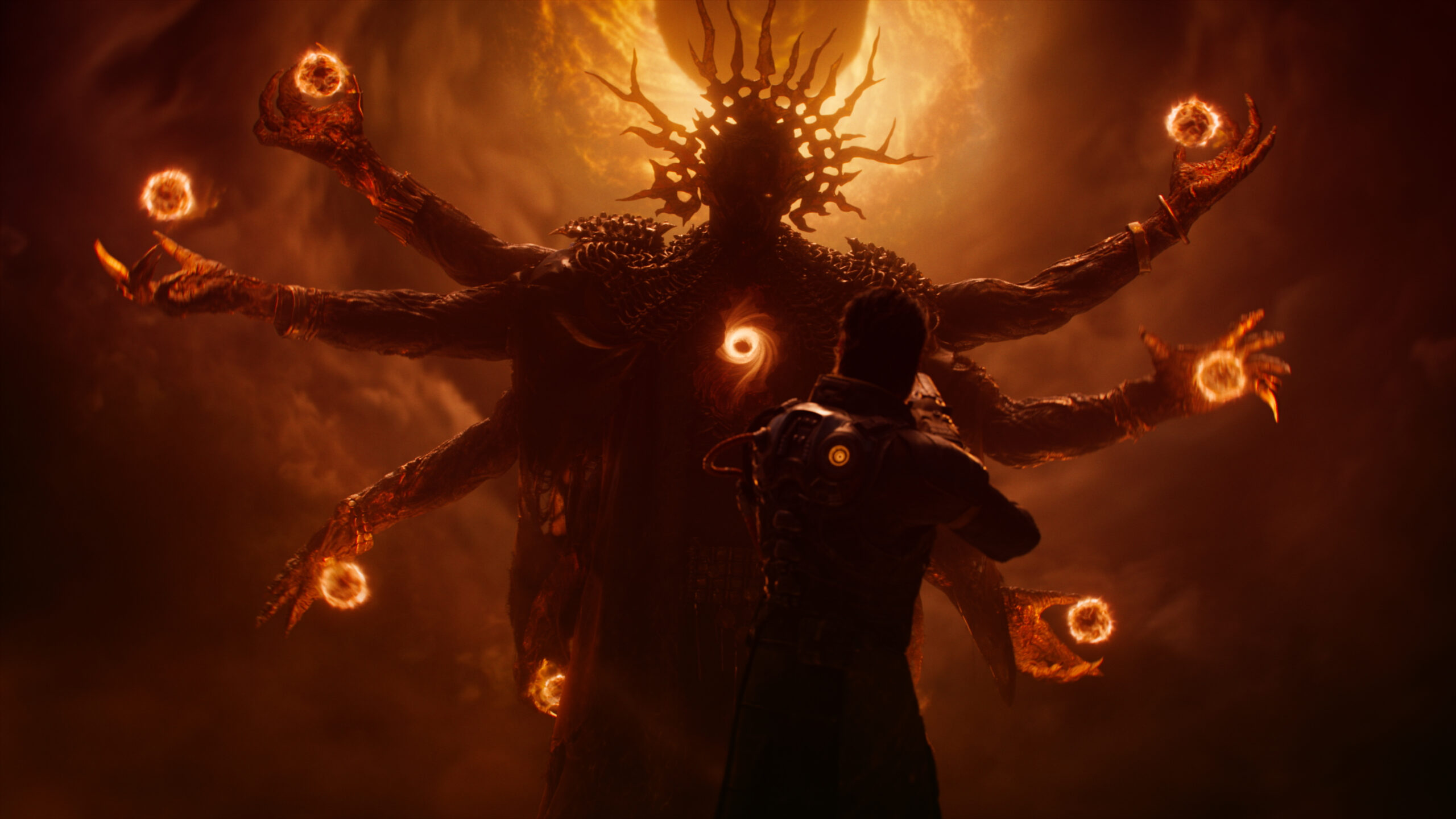
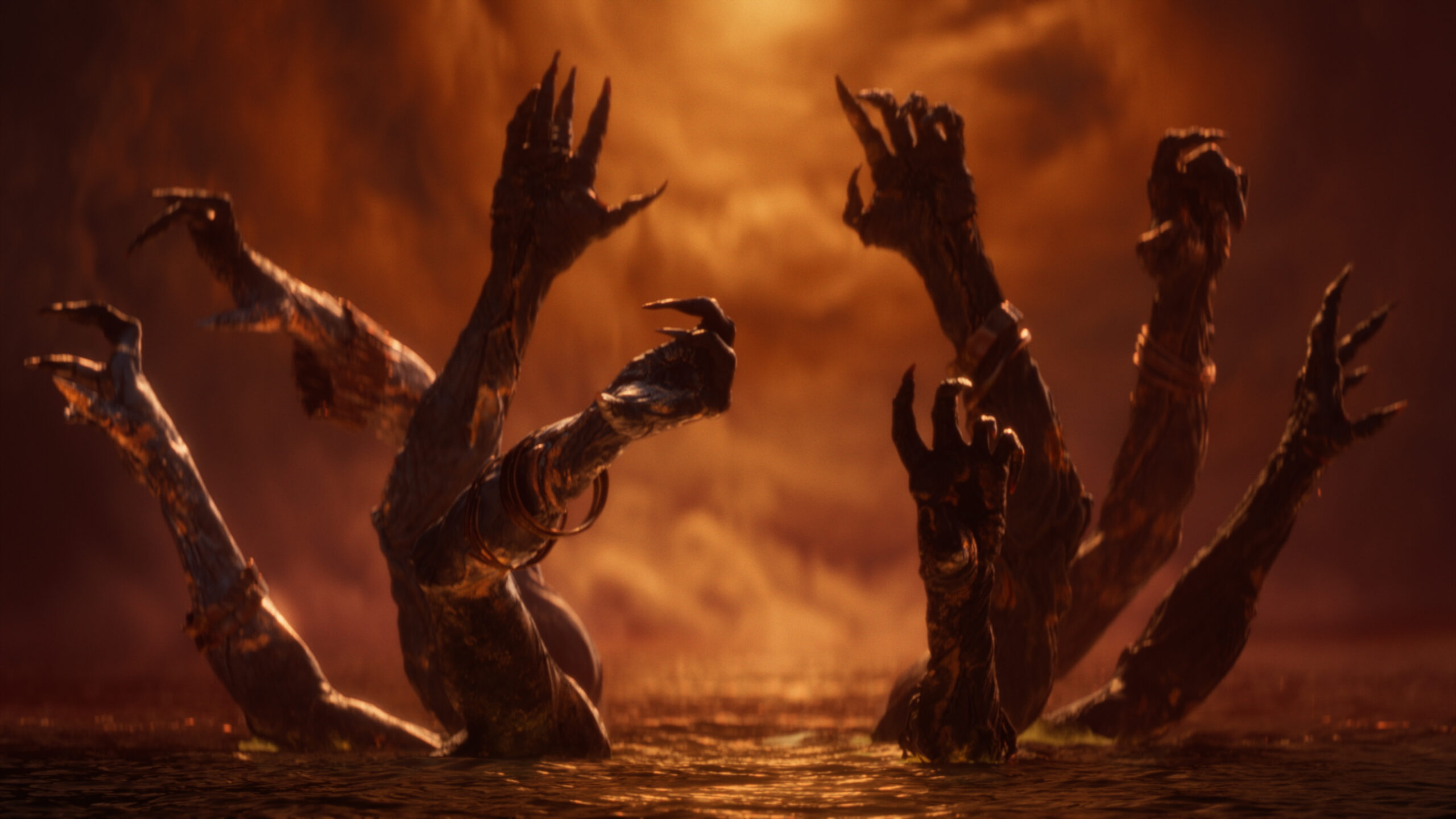
In Saros, you better like the ochre color.

Still in the perspective of dragging blueberries, Saros opts for a progressive tree as gigantic as indigestible that has the only function of doper incognito your character. Displayed objective: give the little push necessary to tender the other cheek after a carabinate blur. By being beaten, one actually feels the statistical gain, even if it alters part of the prestige of triumphing alone. Especially the tree is not very legible and does not manage to take advantage of its very nature: no truly strategic choice is made as the points of lucenis and euphorion collected ingame suffice to inflate the stats in mass. Do not expect different player profiles with this tree and much less an RPG dimension. Too bad because this might have allowed Saros to reach an even more insane layer of complexity.

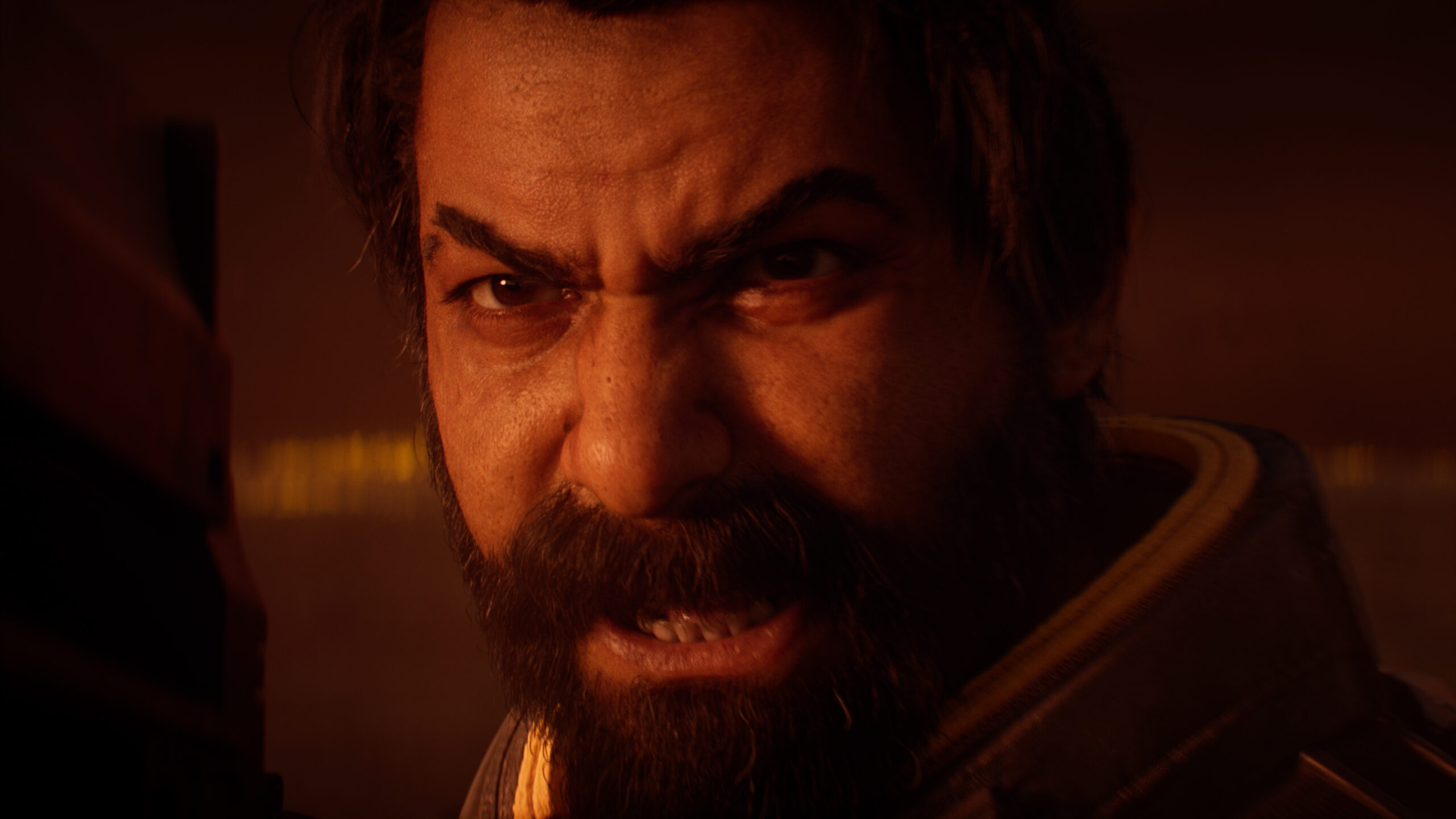
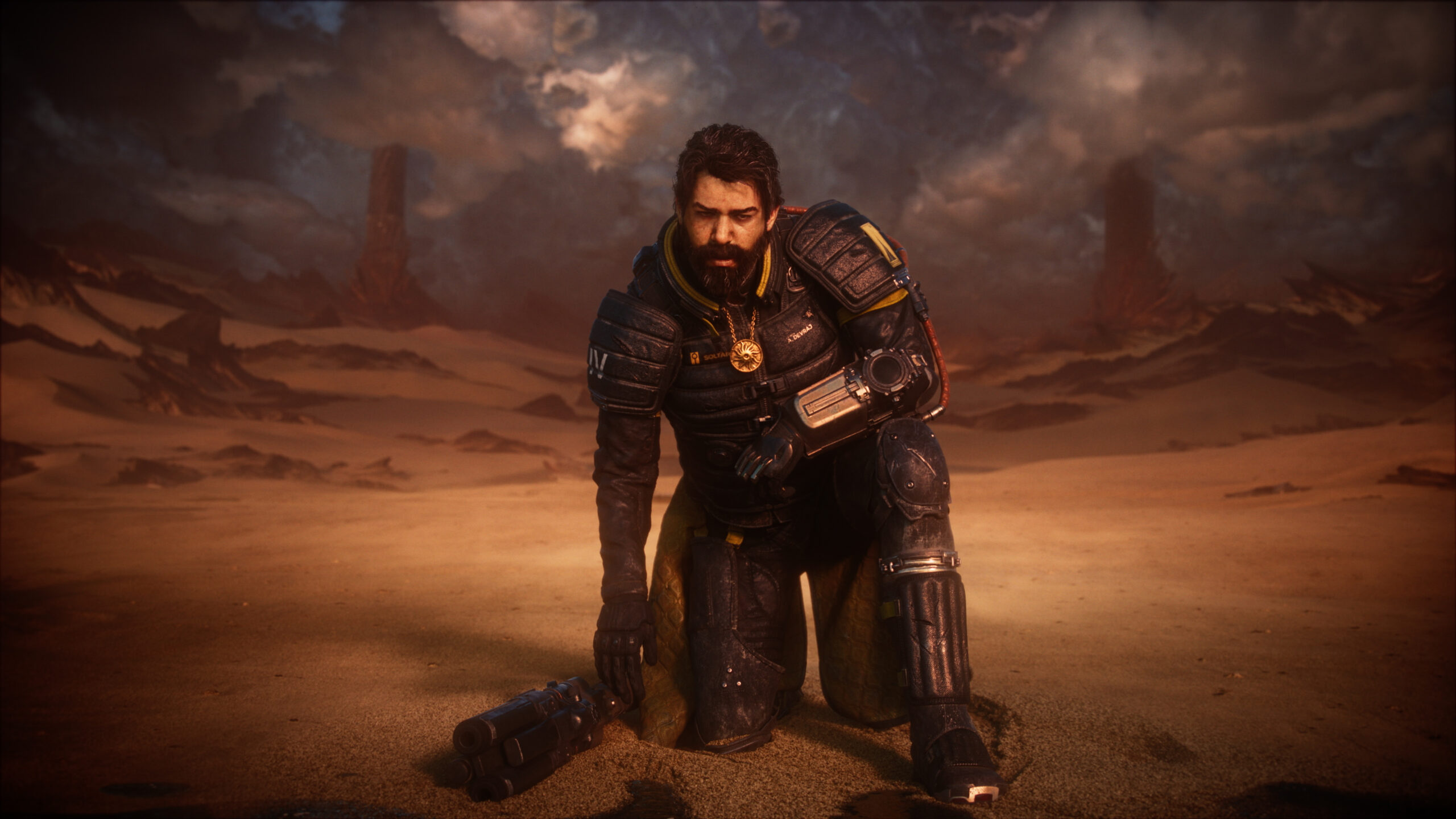
Arjun ate too much carcossian mushrooms...

To reconcile the most hermetic to the genre with the dolorist veterans, the devs integrated what they soberly called a « Carcosian modifier ». The mechanism allows to modulate the difficulty to the card by giving itself handicaps or, on the contrary, bonuses to facilitate the experience. On paper, this really allows everyone to choose the game they want. With Kid Icarus, Saros is certainly one of the smartest titles to adapt the challenge to the player. That said, as a well-trained masochist, we did not use this function to preserve the original intent of developers. We signed for pain after all.

The frenzy of a shoot'em up in a GST

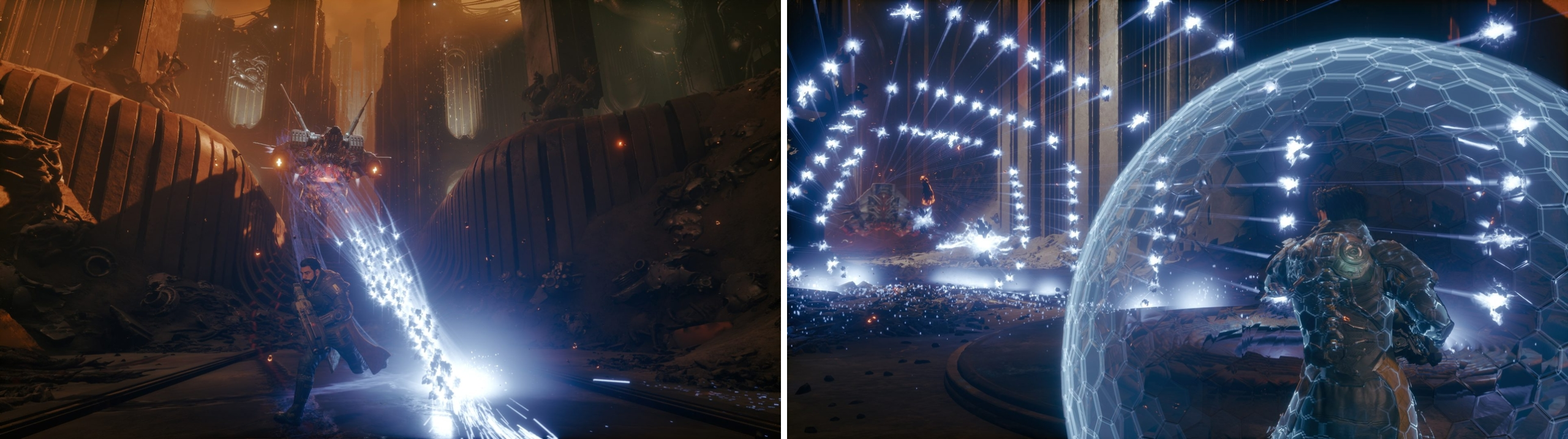
The real success of Saros is certainly his gameplay that takes back the same mechanics of movements that made the success of Return while adding a shield that immediately recalls Ikaruga. Capable of absorbing most of the enemy projectiles, it allows to blow for a while while filling our energy gauge. Once the pellets are absorbed, we can retaliate with the right arm of our character used as an energy weapon, the effects of which will vary significantly depending on what we have collected beforehand. So it's a clever mix of squids and shield guards that make the gameplay so much sin.

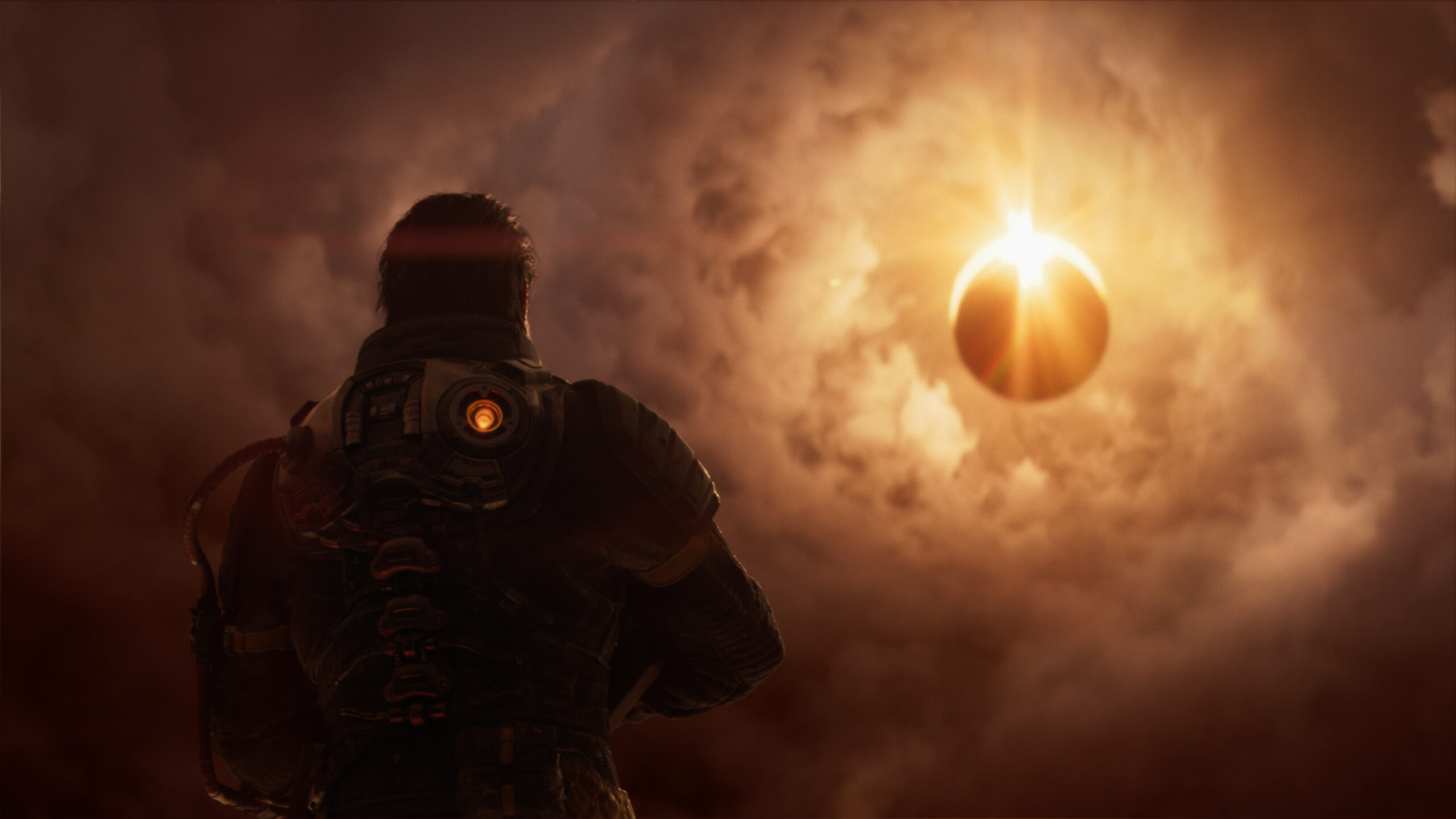
Arjun looks at the eclipse without glasses...

The strength of a good arcade gameplay is also to know how to exploit opposing attacks. We like to let the fret menu spit out some red projectiles that will be returned against larger fish. The game is particularly generous in terms of variety of approaches. It is only to be regretted that, in the first biomes, some weapons are totally downgraded from others. Overall, weapons without self-guided targeting are much less effective and if short-range weapons are often devastating, it will have to have the reflection of separating from them at the right time to face bosses cut off at a distance of fire.

Each main weapon has a secondary shot to target the monsters' weak points. And we must see how the Dualsense controller and its haptic vibrations reinforce immersion. The triggers oppose resistance to simulate the retreat of automatic weapons, the microphone discreetly supports the monumental basses of the OST while playing with the haptic vibrations. No doubt, Saros can boast of being a show of strength of all that a controller can make us feel. A playful slam to the great damne of the Dualsense autonomy, the battery melting like snow in the sun.

There you go... Bravo Arjun!

Finally, as in ReturnThere is an adrenaline system whose logic is based on a formidable idea. The better you play, the less damage you suffer, the higher the degree of adrenaline increases and unlocks Arjun's passive abilities. In the same vein, the more lucenites are collected on the killed enemies, the more powerful weapons can be found in the levels. And since it was still necessary to give a guarantee of accessibility to the player, a superpower called overregime allows to annihilate a substantial part of the enemies, like the BFG of Doom. This mechanics becomes formidable at the end of the game; A little too much, perhaps, since it also makes it possible to recover a large amount of ether care.

Gameplay dantesque but level design to the penalty

Let's not go four ways, gameplay is a pure pleasure. Saros demonstrates that an original GST can be made in 2026 without repelling everything that competition does. How good it is to see such biscorned weapons! It seems to be almost back in the 2000s when some titles did not hesitate to multiply the most unlikely large calibres. If the enemies certainly oppose considerable resistance, once the gameplay mechanics have been properly integrated, one becomes a real unstoppable war machine. The bosses are always as generous and the slightest inattention can quickly lead to drama. Emotional thought for those who have cats looking for attention at home... A well-placed rumbling can cost you a Game over. As for the grapple, an indispensable accessory of the decade, it also helps to remove tense situations while benefiting from a fraction of seconds of invulnerability in the air. It's an artifice that we've taken advantage of to fool the adversary.

The combination of Arjun picks in the aesthetics of Helldiver and Dead Space.

Where part of Return could end up in mudwater for harvesting the parasite too much, Saros is certainly more gracious or balanced will say the detractors of the first. Admittedly in the last biomes, Arjun may have malus but the effects are much less punitive than in the last game of Housemarque. Let's be clear, we pick up everything we find where we measured our choices much more in Return. The alterations are much less legible and binding, yet this was part of the excitement that was going through us every time we hesitated to take a parasite. What we gain in accessibility and consistency, we lose it in terms of chills and punishments for being too greedy. Who never regretted having equipped the parasite with too much in Return a pivotal stage in the course?

Like Doom The Dark Ages and his shield, Saros takes another angle of attack way « Stand and Fight »

Other black dot of Saros, his gamedesign is much more repetitive and much less inspired. Admittedly the developers have integrated an eclipse system that is active at choice to increase the difficulty and win more loot, but the level structure forces the game to otherwise less fantasy than Return. The levels don't change that much after I've started the eclipse. As a result, death is sometimes tiring when you know biomes too well. We'll find ourselves rushing to the final boss without difficulty. Mechanically, error can turn into frustration. It cannot be overemphasized that patience, more than perseverance, is essential to progress in the Saros. In addition to this trap created by returning to separate levels, the environments seemed too close to each other with a range of saturated colors that is not renewed enough. Return was also original because it could also change routines with some environmental narrative elements dispersed at key points in the procedural levels where Saros multiplies cryptic tracks with insignificant audio recordings and even less exciting written documents.

Strawberry narration

Another setback of a level design designed as more open, action may seem fragmented during the first biomes, where each open door was a big step towards the unknown in Return. It's simple: at no time did I feel doubt in the face of an alternative path, while I remembered that my adventurism had been punished more than once in Return. Of course. Housemark has planned micro-challenges in the levels with more muscular challenges that allow to regain an additional life and bonuses if one succeeds to emerge alive from its fractions of the yellow bank. Yet this second life that we gain very early in the adventure also denatures part of the initial experience, even if the developers will certainly answer that the difficulty is adaptive accordingly, with the system of carcossian modifiers or the triggering of eclipses that boosts the aggressiveness of enemies. You will understand, rather than impose a difficulty on the player, this time it is the developers who adapted to him.

Even if Saros plays with your nerves, the game draws a lot from the Buddhist tradition.

Last point and by far the most embarrassing in my eyes: narration. It is felt that the developers wanted to get to the level of contemporary prods where we should have NPCs that guide history. On balance, we find ourselves with a set of insipid characters with bancal facial animations. Stage IV members and their variants multiply platitudes. Arjun makes us tired of constantly wailing about his ex-wife who made her trunk. Failed and not least, at no time did we manage to enter into empathy with Arjun and even less with his colleagues. The strength of ReturnIt was his metaphorical dimension and the tight scoping on a woman rushed into the unknown, while she was reborn at each death. Here, the stakes are ill-placed and a tech-based screenwriting pirouette explains why Arjun systematically returns to life. Much more classical, history refuses to explore completely the axes that it draws and where there was still a matter of questioning the player, for example about domestic violence or minimizes toxic relationships. Unfortunately, the unfolding of the story remains very binary and without much distance from the character. It may sound silly but that's one of the reasons why my investment was more mechanical than intimate in Saros that in Retual.

So is Saros better than Returnal? Everything will certainly depend on how you found the last one. Those who had been rejected by permanent death may find this formula more to their liking, since it is to them that it is intended. Housemarque excels in pure and hard arcade and Saros is a demonstration of controlled gameplay from end to end. By getting to the level of the player, however, the philosophy of the game loses part of its radicality. The unknown learns with fewer errors of course and bad surprises that made all the salt of Returnal. More conventional, the adventure unfortunately borrows all the industry with a history that lacks the essentials. A clumsy attempt to tell a drama without mastering its stakes. That we don't misunderstand, however, Saros remains an excellent TPS that is among the best exclusives of the console. A title ripped out without glory on a generation where Sony didn't do much to caracole at the top of console sales. In any case, Housemarque once again demonstrates its talent and its rise to power, recalling that adrenaline is an art that Finns master perfectly!

For
  • Rich and greying gameplay
  • The Ikaruga side assumed
  • Beautiful graphics
  • Remarkable fluidity
  • Effects of stunning particles
  • Sound design exceptional
  • Best use of Dualsense
  • Sensational haptic vibrations
  • Lovecraftian atmosphere
  • Excellent Arsenal
  • The A la carte difficulty system
Against
  • Less punitive mechanics
  • Level design less bright and repetitive
  • The underexploited eclipse system
  • Game more « Convention »
  • History missing the essentials
  • Insipid characters
  • Why did you insert NPCs?
  • A few strawberry guns
  • Proficiency tree
  • Less surprising than Returnal
  • A superficial critique of capitalism

JV critic and film always ready to lead Interviews at festivals! Amateur of genre films and everything that tends to the strange. Do not hesitate to contact me by consulting my profile.

0 0 Votes
Evaluation of Article
Subscribe
Notify of
guest
1 Commentary
oldest
most recent Most popular
Ummagumma
1 month

The only excluded PS5 released recently that is in my list of games to do!

1
0
We would like your opinion, please leave a comment.x