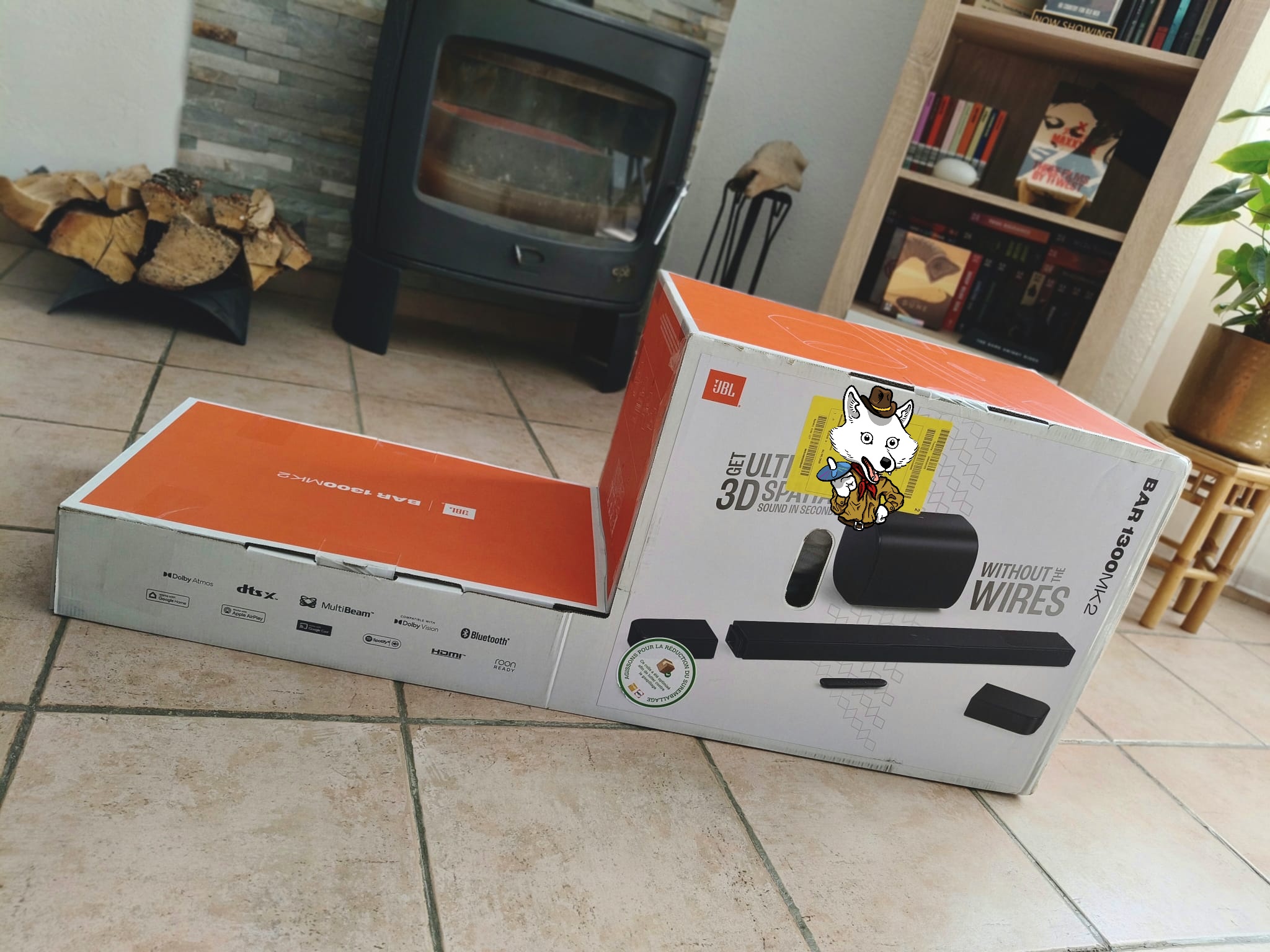
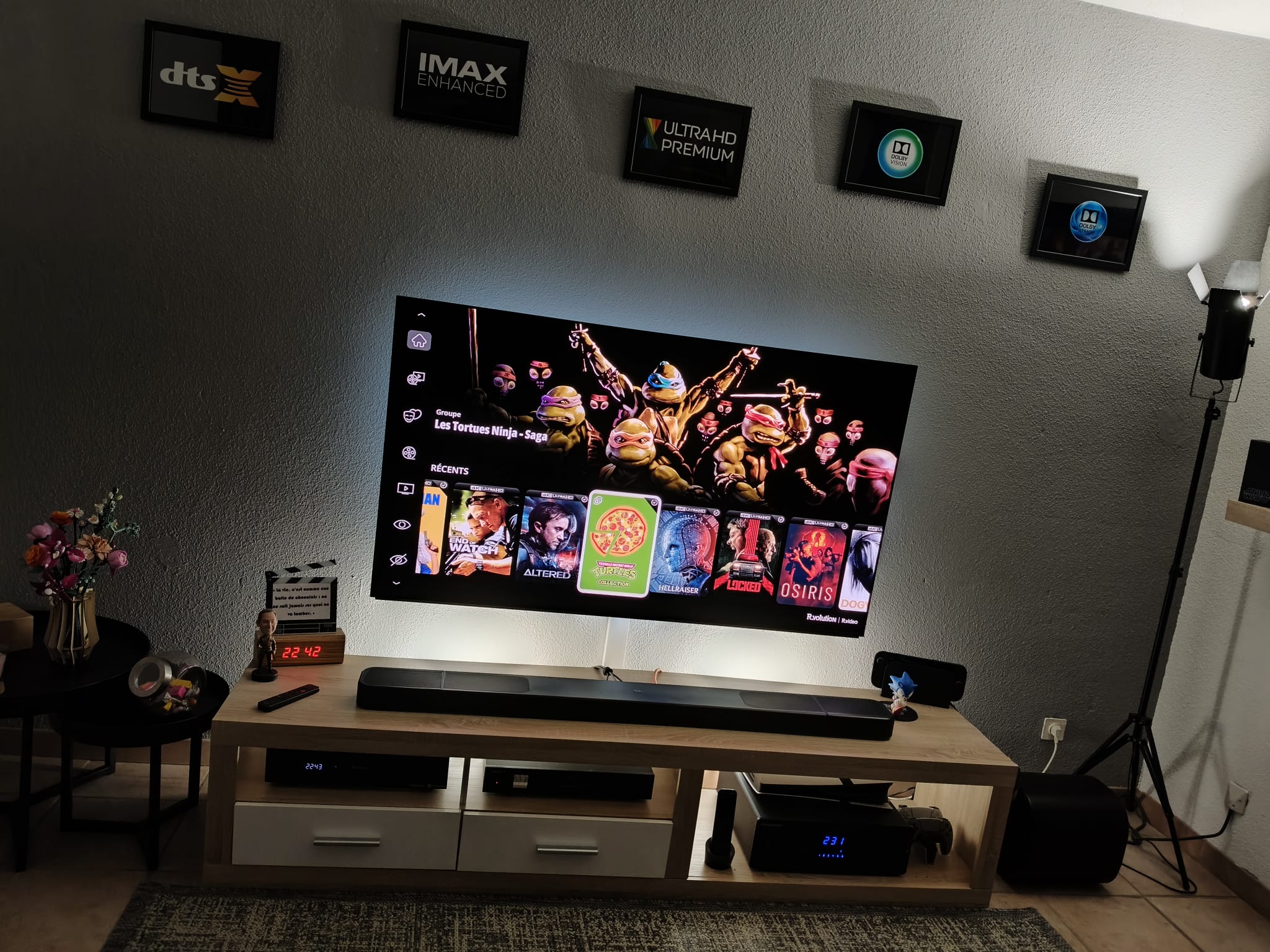
There are bars of sound that seek to be forgotten, to melt in the decor, to content themselves with improving what the TV is struggling to express. And then there are bars like theJBL Bar 1300 MK2, which are not satisfied with this secondary role.

Contents

Introduction: the promise of a total cinema

As soon as we get out theJBL BAR 1300 MK2We understand that it was not designed to accompany a film, but to devour it, to engulf and spit it in a larger, higher, deeper, more physical version. She's not trying to be an accessory. She wants to be the movie experience.

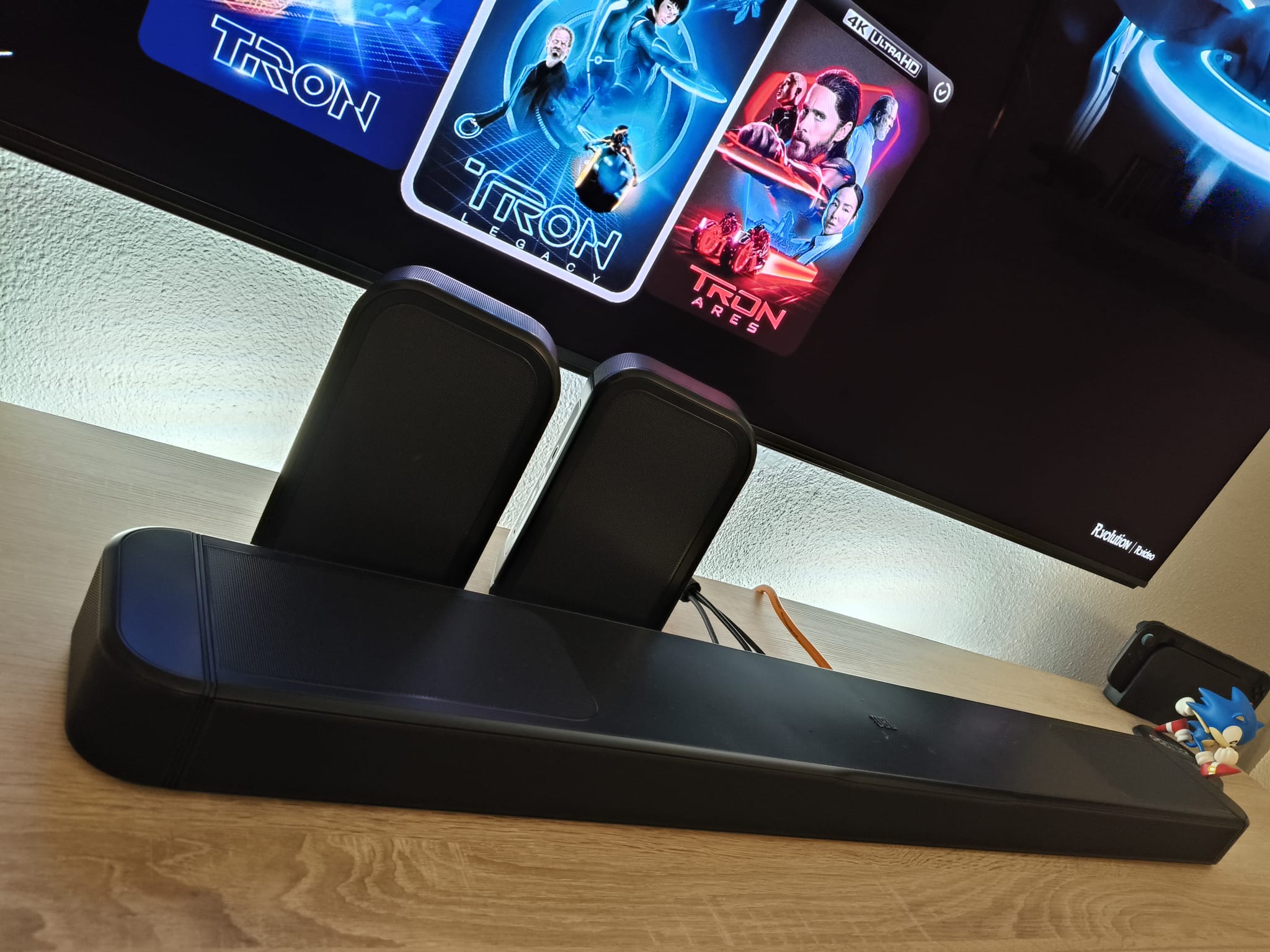
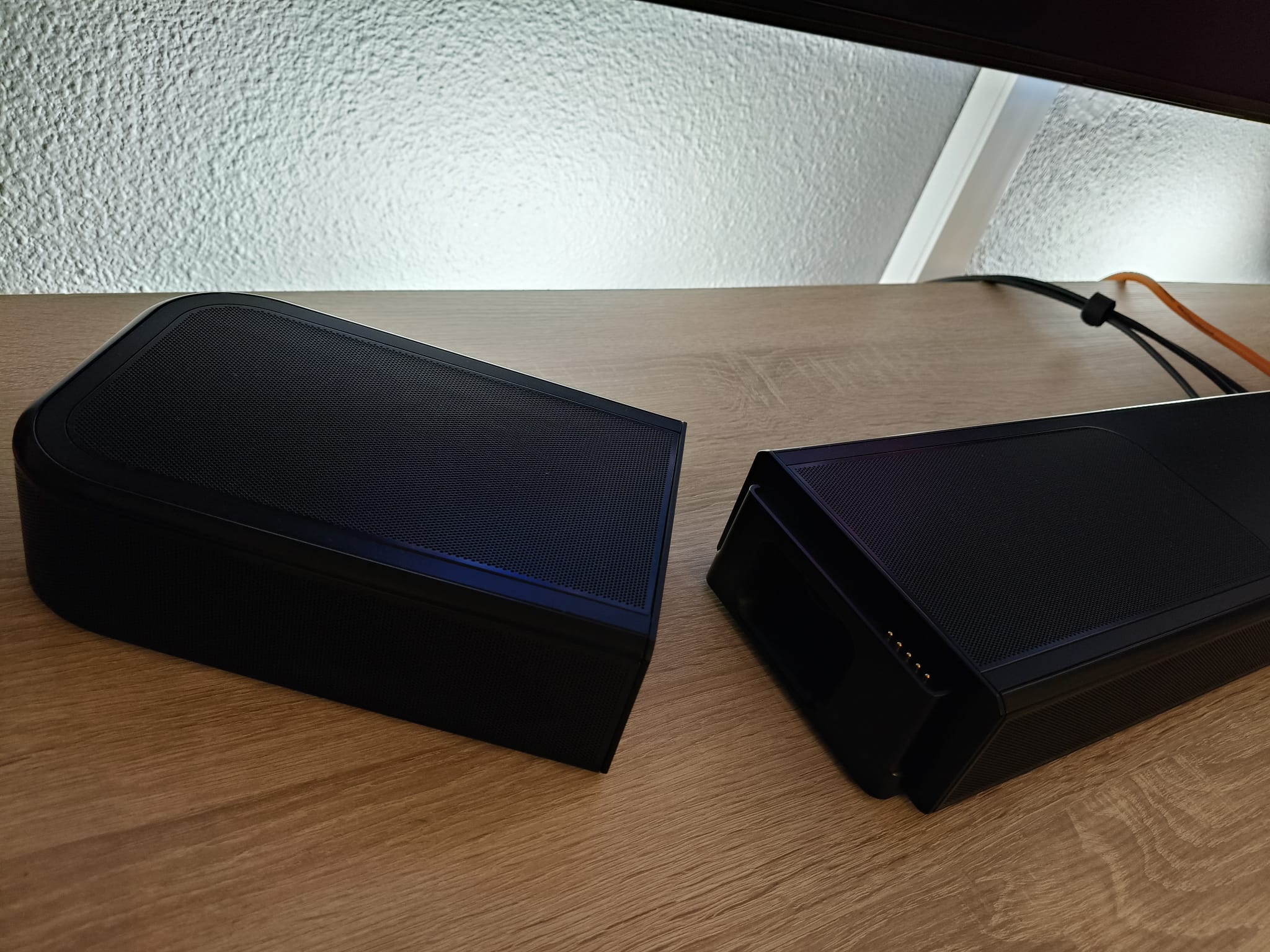
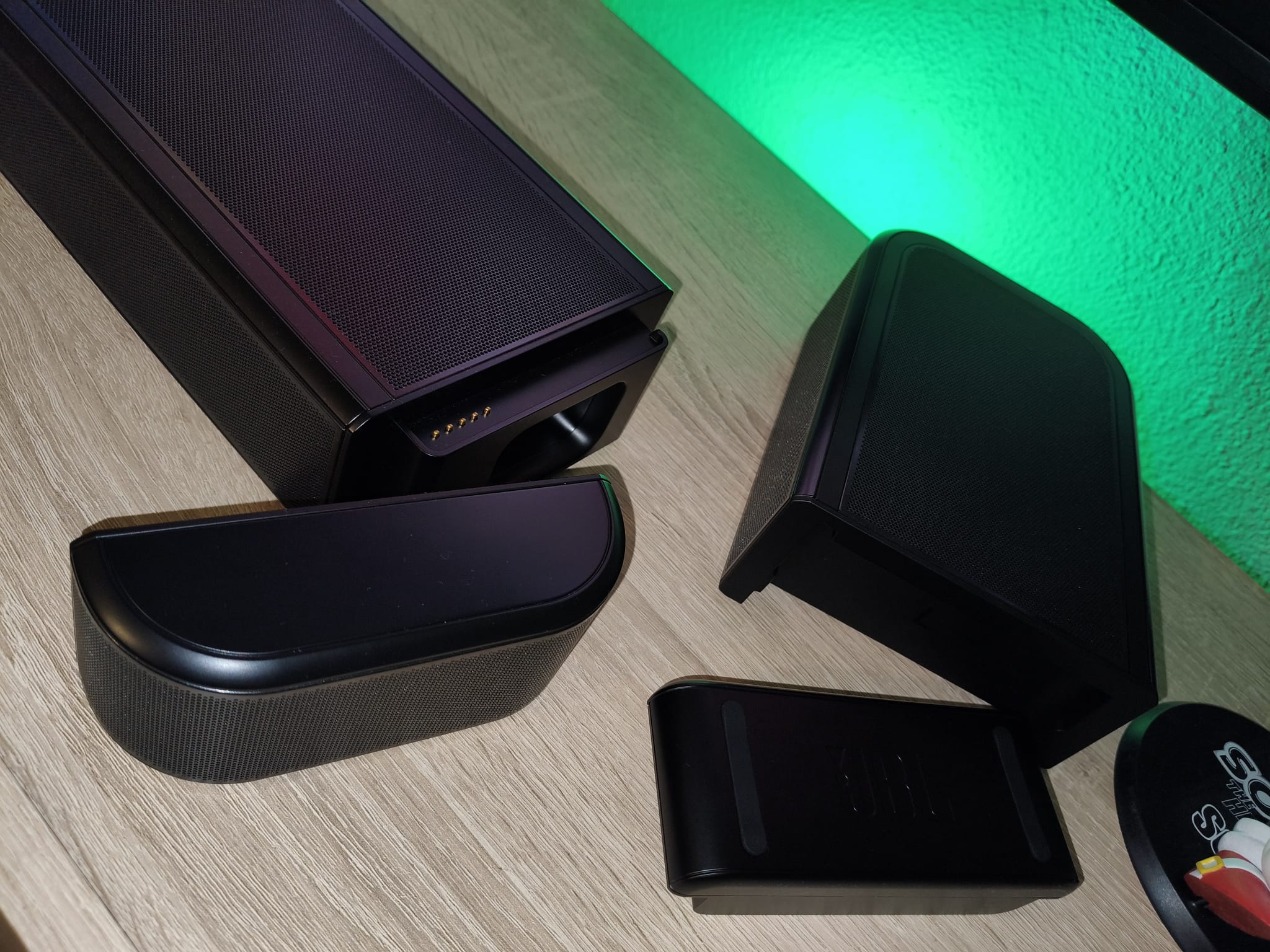
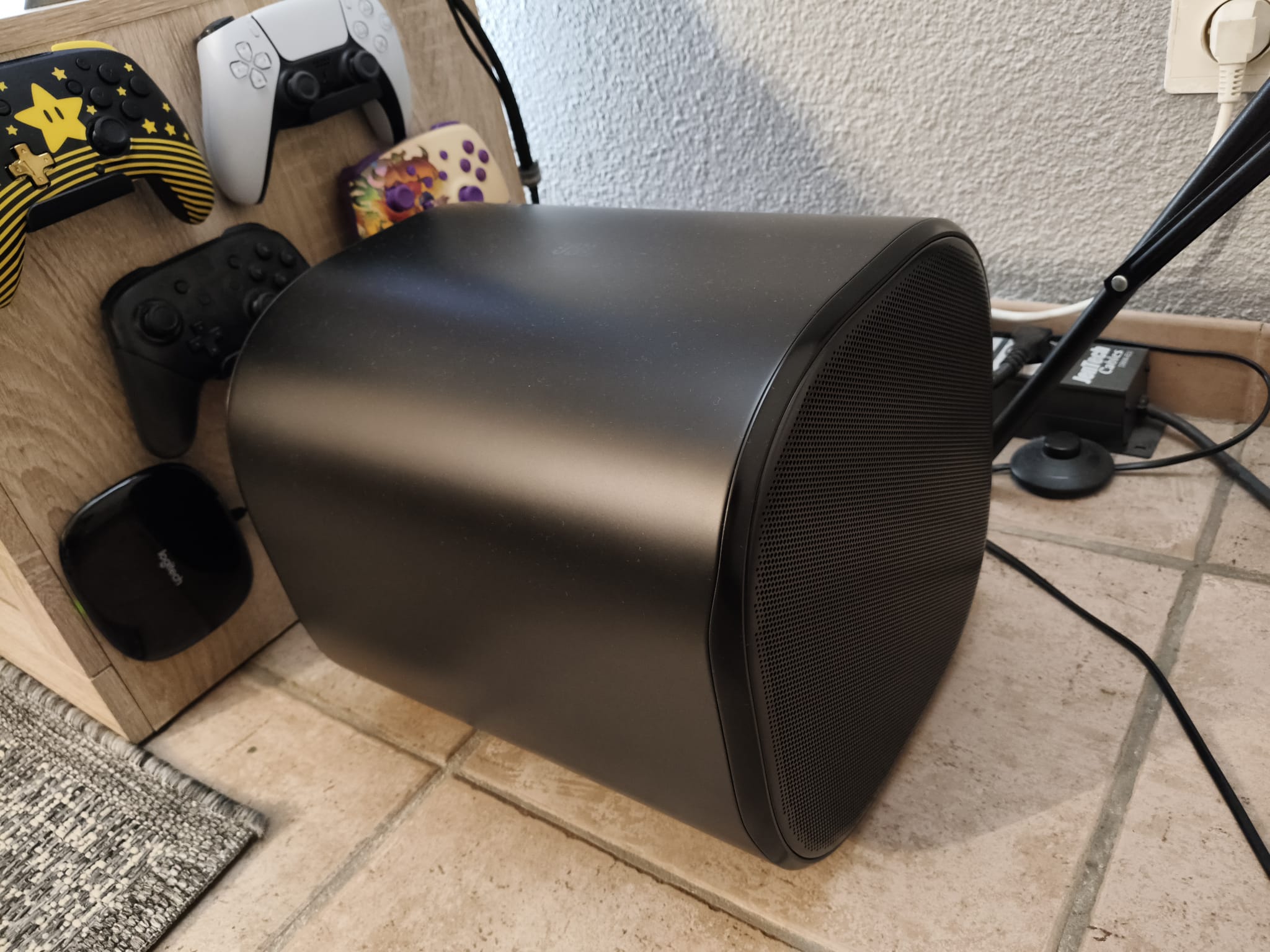
The1300 MK2is a soundbar that doesn't pretend. It stretches over the entire width of a TV cabinet, flanked by two detachable satellites that attach magnetically to its ends like two folded arms. Next to it, the bass box looks like a sculptural block, a curved cube that houses two woofers mounted back to back, like two pistons ready to hit in perfect opposition. Nothing in this set breathes restraint. Everything announces power, density, the will to fill space.

This test is that of a Dolby Atmos and DTS:X system that does not seek to be reasonable. It is that of a real 11.1.4 channel pack that claims its demeasurement (2,470 W through a total of 29 speakers), and which, for once, manages to control it.

Design and construction: an assumed presence

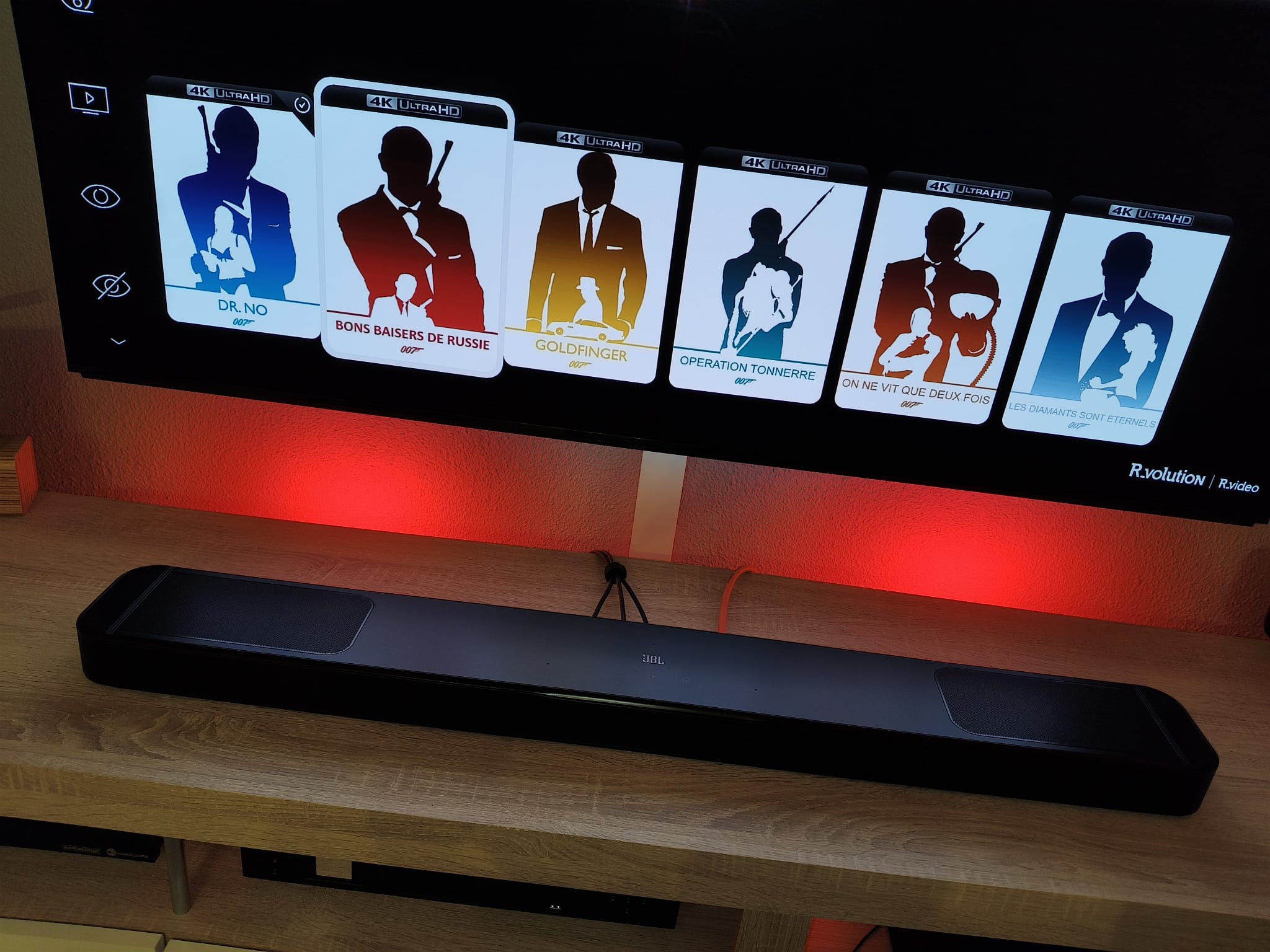
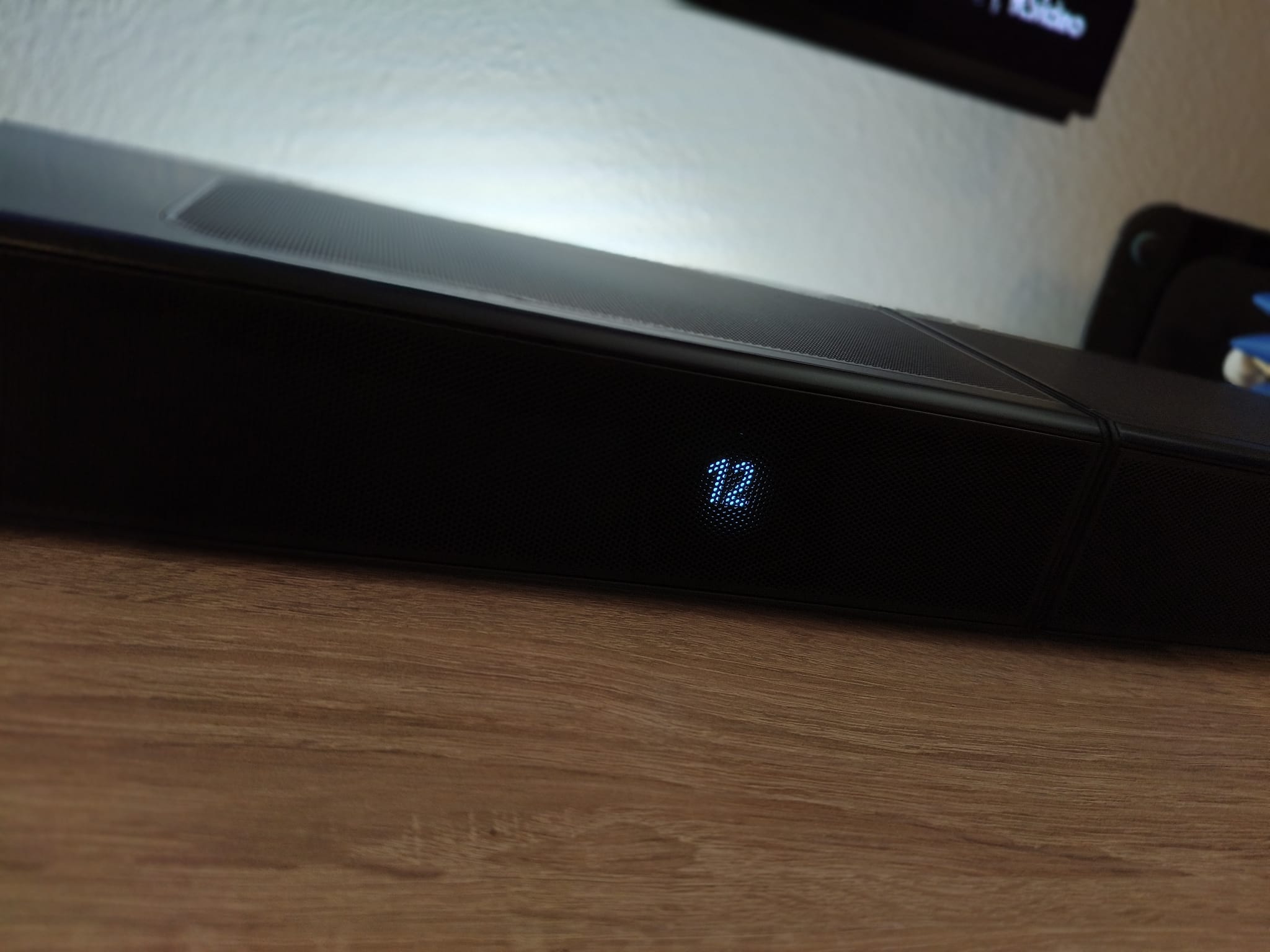
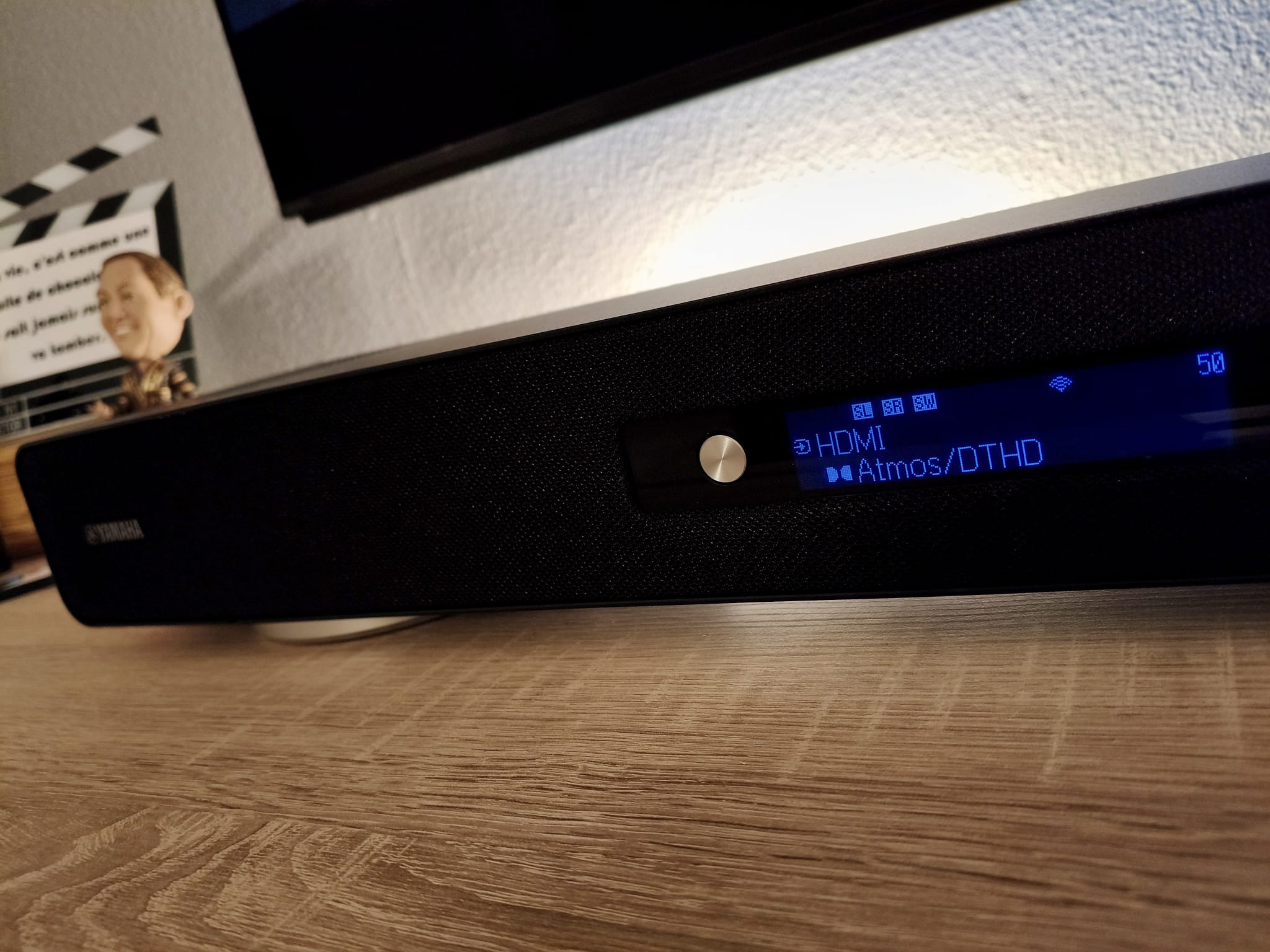
TheJBL Bar 1300 MK2is not a bar that slips under a TV like a discreet guest. It occupies space, imposes its silhouette, claims its central role. Its full-width metal grid, straight lines, matte finish that absorbs rather than reflects light, everything helps give it a professional, almost industrial look. You feel like you're dealing with a tool, not a gadget. On the top, a discreet area hosts the essential commands: volume keys and source selection. On the façade, a discreet point matrix display delivers useful information, readable without ever stealing the star.

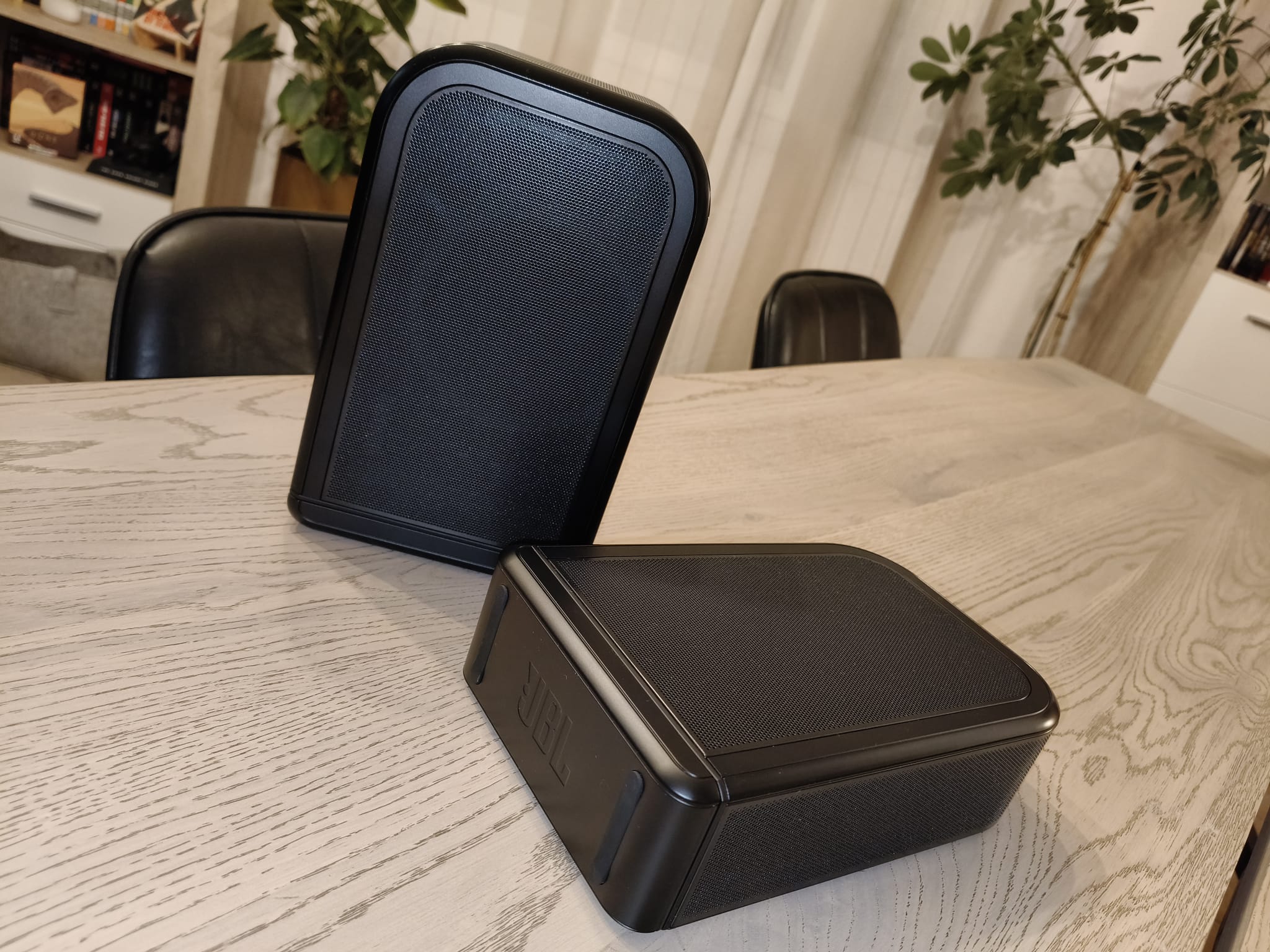
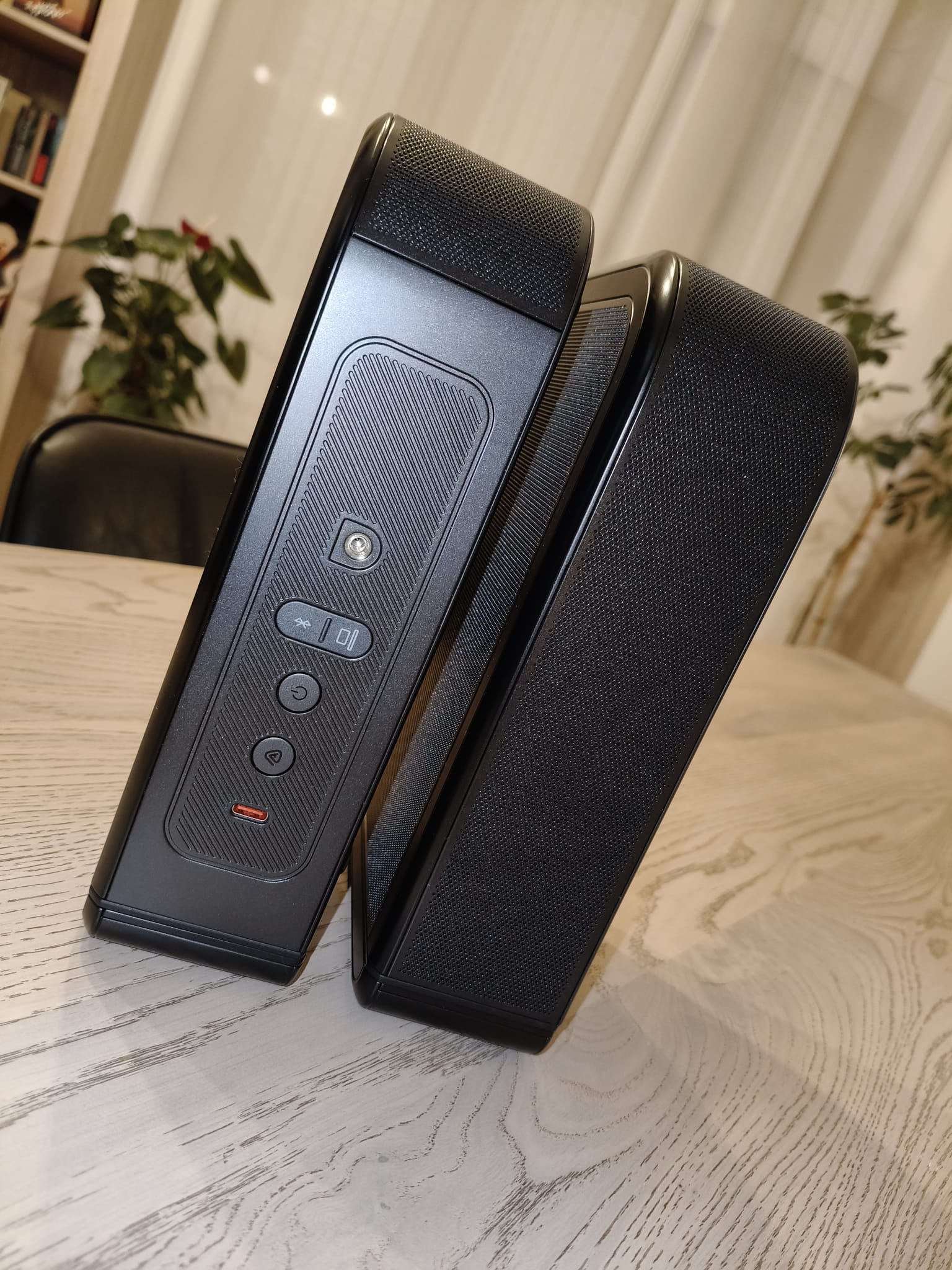
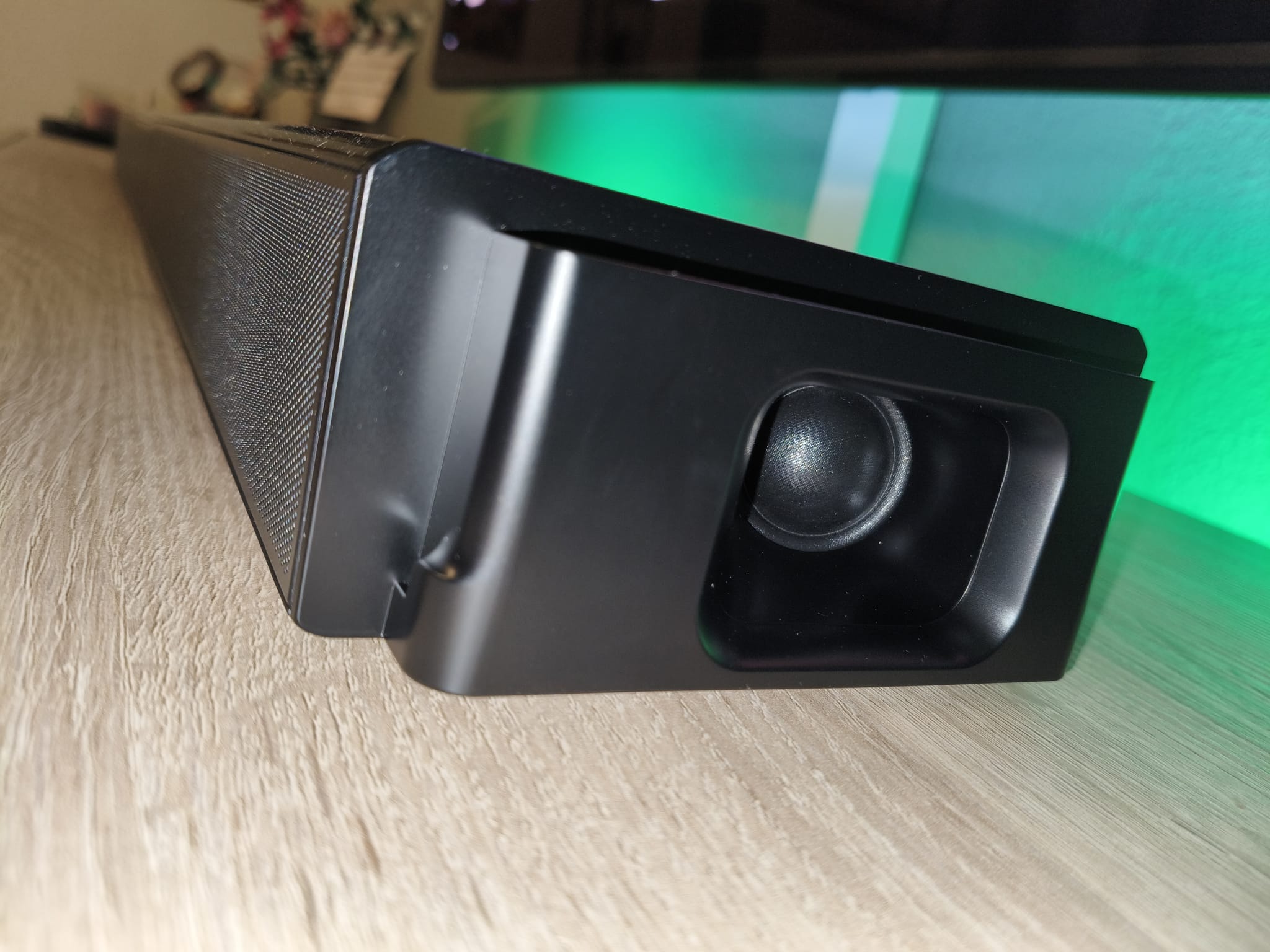
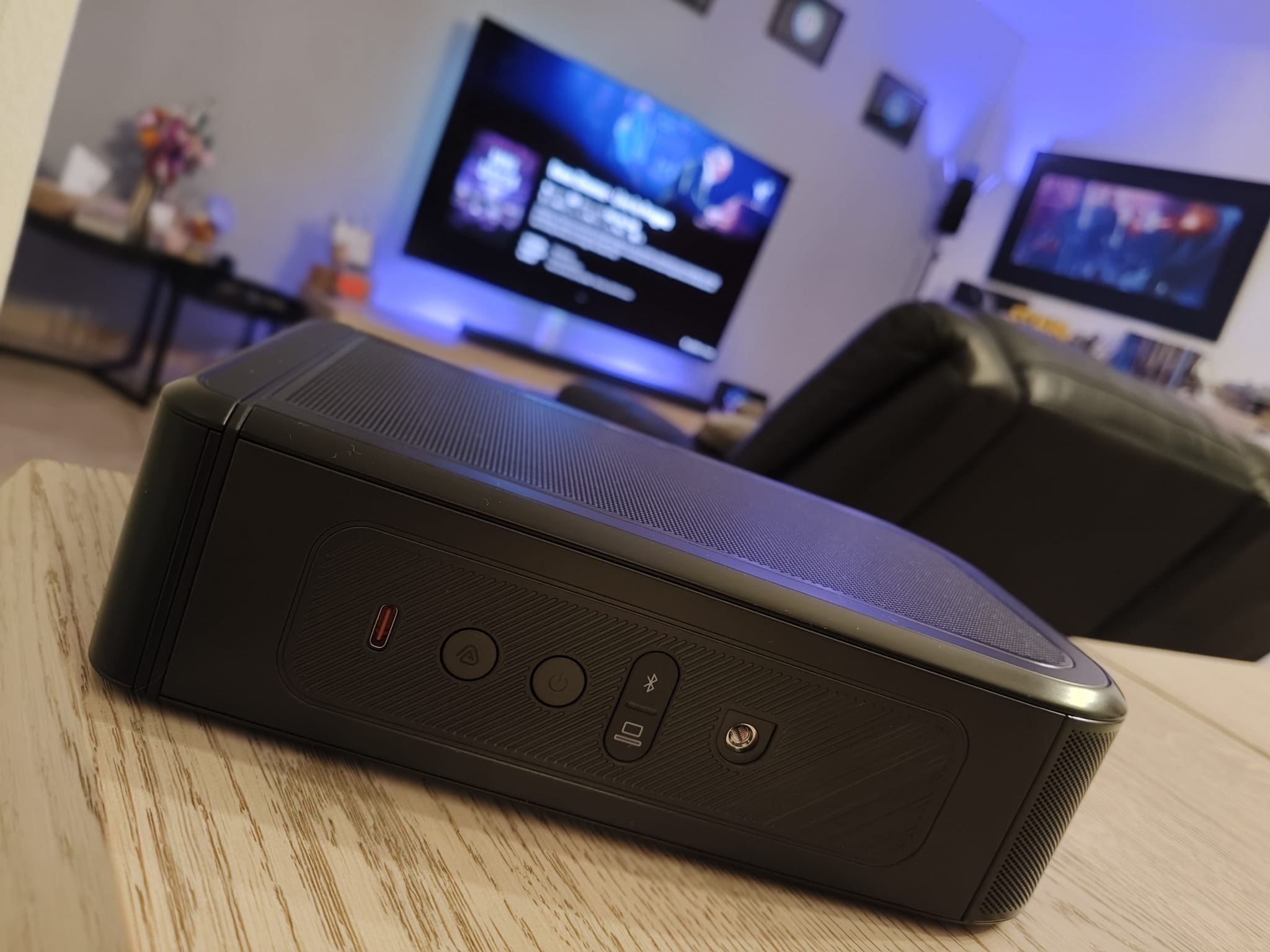
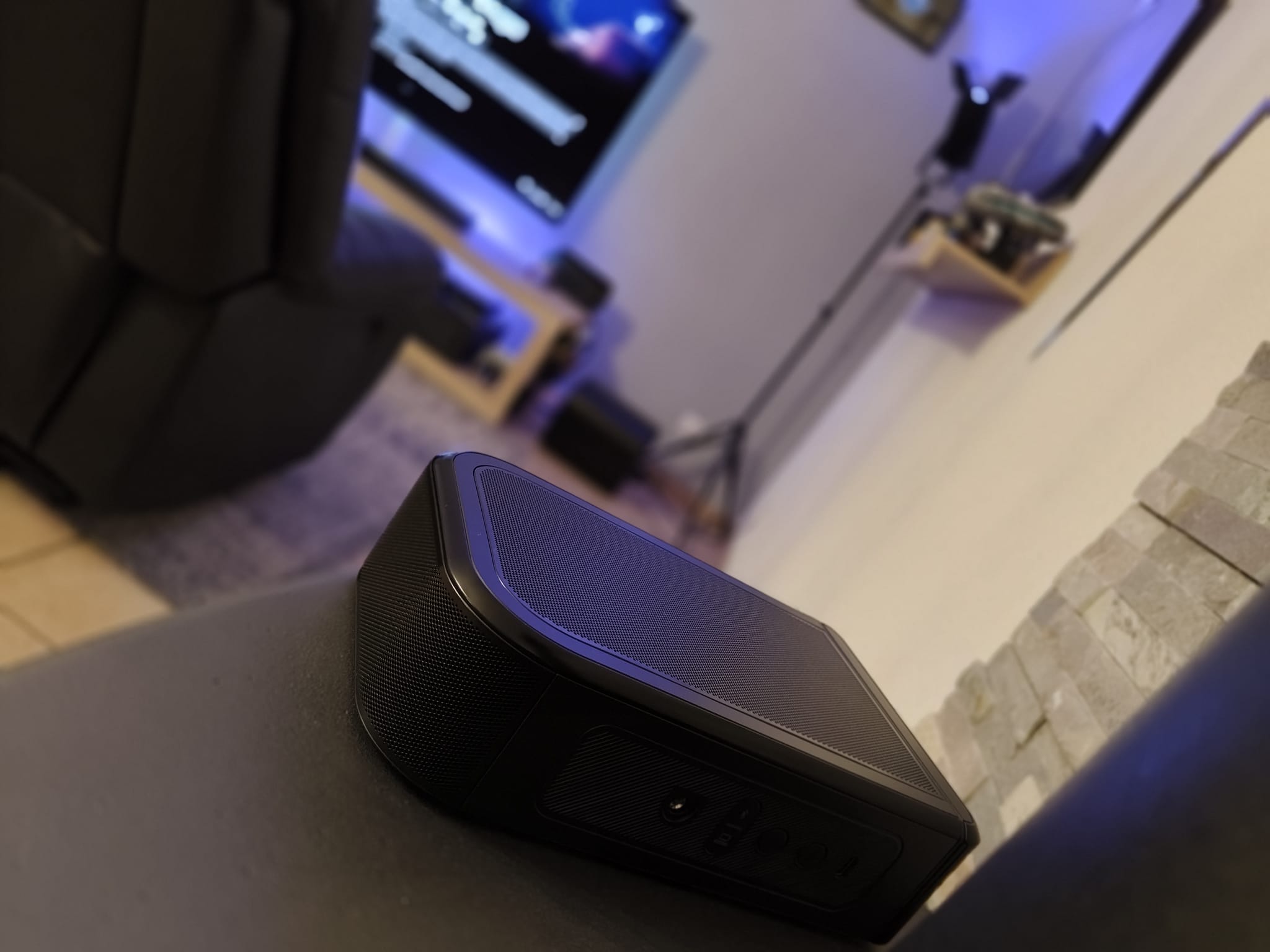
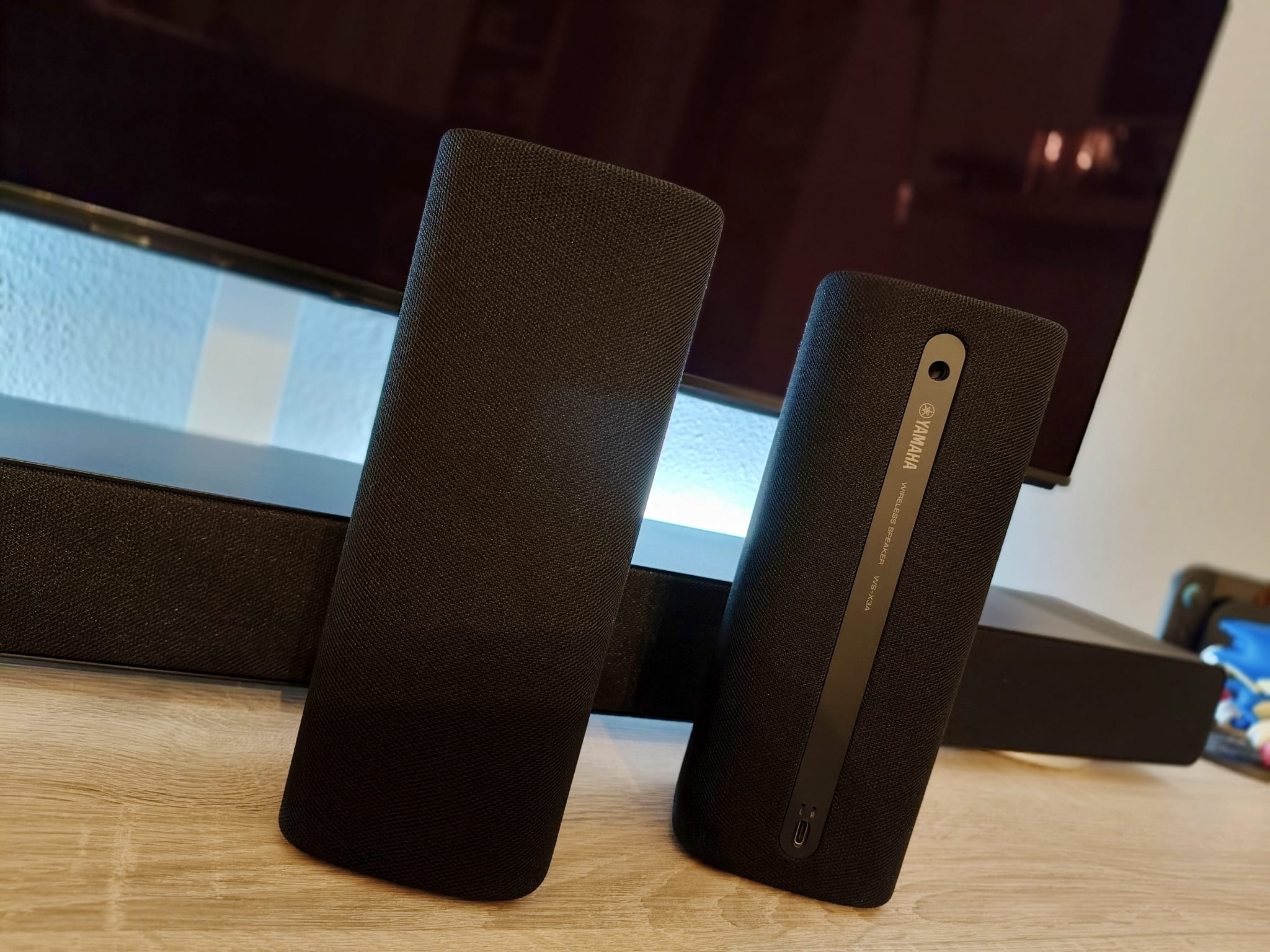
Detachable satellites, when attached to the bar, prolong this monolithic impression. Their density surprises us: we take them in hand, and we immediately feel that they are not just add-on modules. They contain their own amplification, their own battery, their own acoustic architecture. Once detached, they become two autonomous surround speakers, capable of operating wirelessly, without power, without constraint. It is one of the signatures of this system, and one of its most singular strengths. They can also be used as small, stand-alone Bluetooth speakers, capable of directly broadcasting music stored on any compatible device, without depending on the main bar.

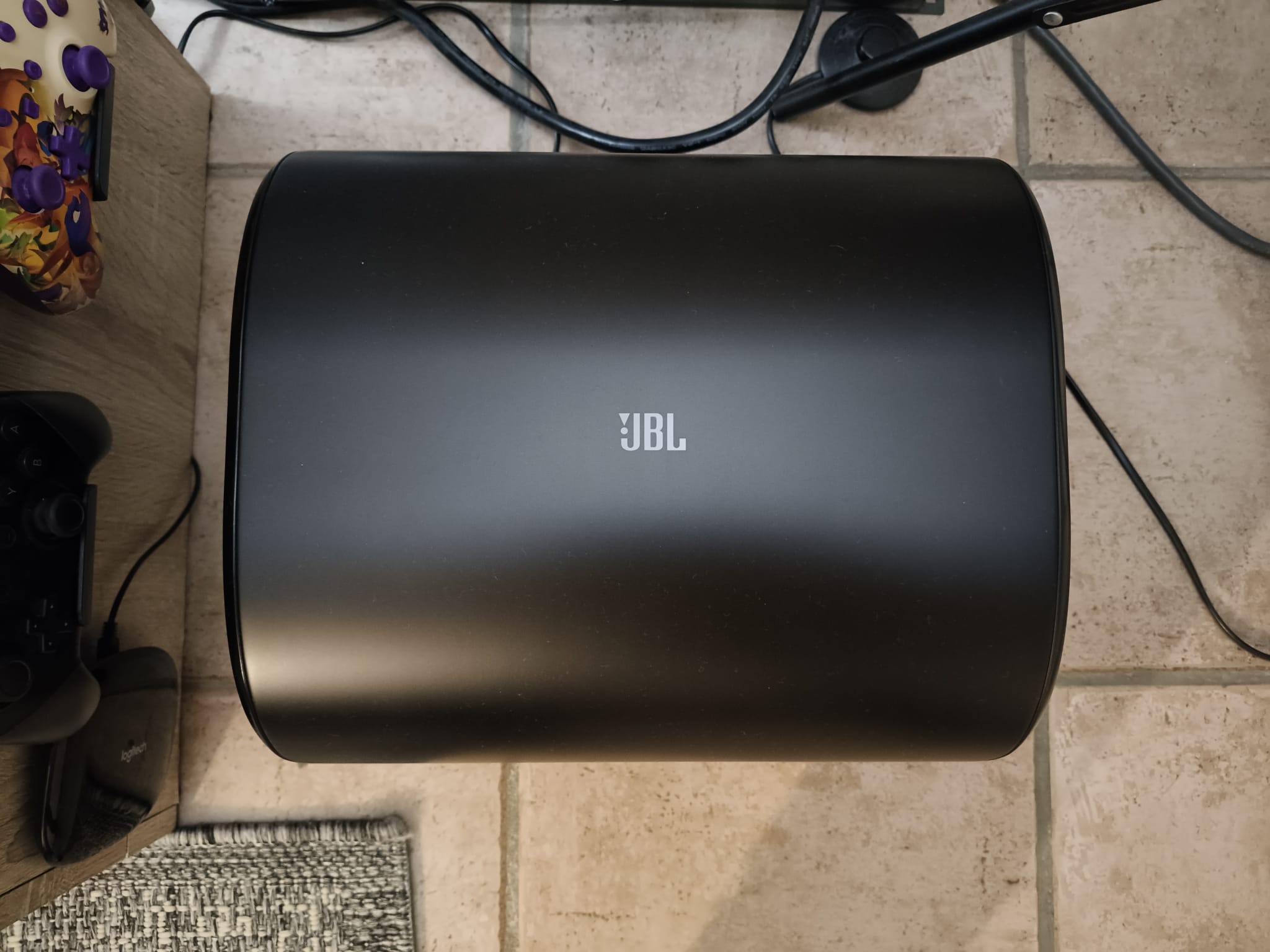
The box is a separate object. His rib softens his lines, but his mass remains impressive. Inside, two 20 cm woofers are mounted in Push-Pull configuration, i.e. back-to-back, striking in perfect opposition to cancel mechanical vibrations while maximizing acoustic pressure. It is an architecture that is found in high-end cabinets, rarely in all-in-one systems. It allows to obtain a deep, clean, powerful grave, without the caisson starting to dance on the ground. It is an ambitious technical choice, and it bears fruit.

Installation: simplicity at the service of complexity

One might think that such a sophisticated system requires a tedious installation. It's nothing. The bar connects to HDMI eARC, the box automatically simmers, the satellites synchronize as soon as they are detached. The set gives the impression of having been designed to mask its own complexity. We plug in, turn on, and everything works.

ApplicationJBL Oneplays a central role in this fluidity. As soon as you throw it, it detects the bar, checks the updates, proposes to calibrate the system. CalibrationMultiBeamtakes place in two stages: a first measurement with the satellites placed on the sofa, a second with the satellites placed behind the sofa. This double measurement allows the bar to understand the geometry of the room, the distance of the walls, the position of the listener, and to adjust the dispersion of the vertical and lateral channels.

The application also indicates the battery level of the satellites, which avoids bad surprises. Because yes, you have to recharge them. This is the price to pay for the total freedom they offer. They can be left attached to the bar to recharge them, or use a USB-C charger. Their autonomy is sufficient for three or four films, but intensive users will have to integrate this into their routine.

JBL One application: a true control centre

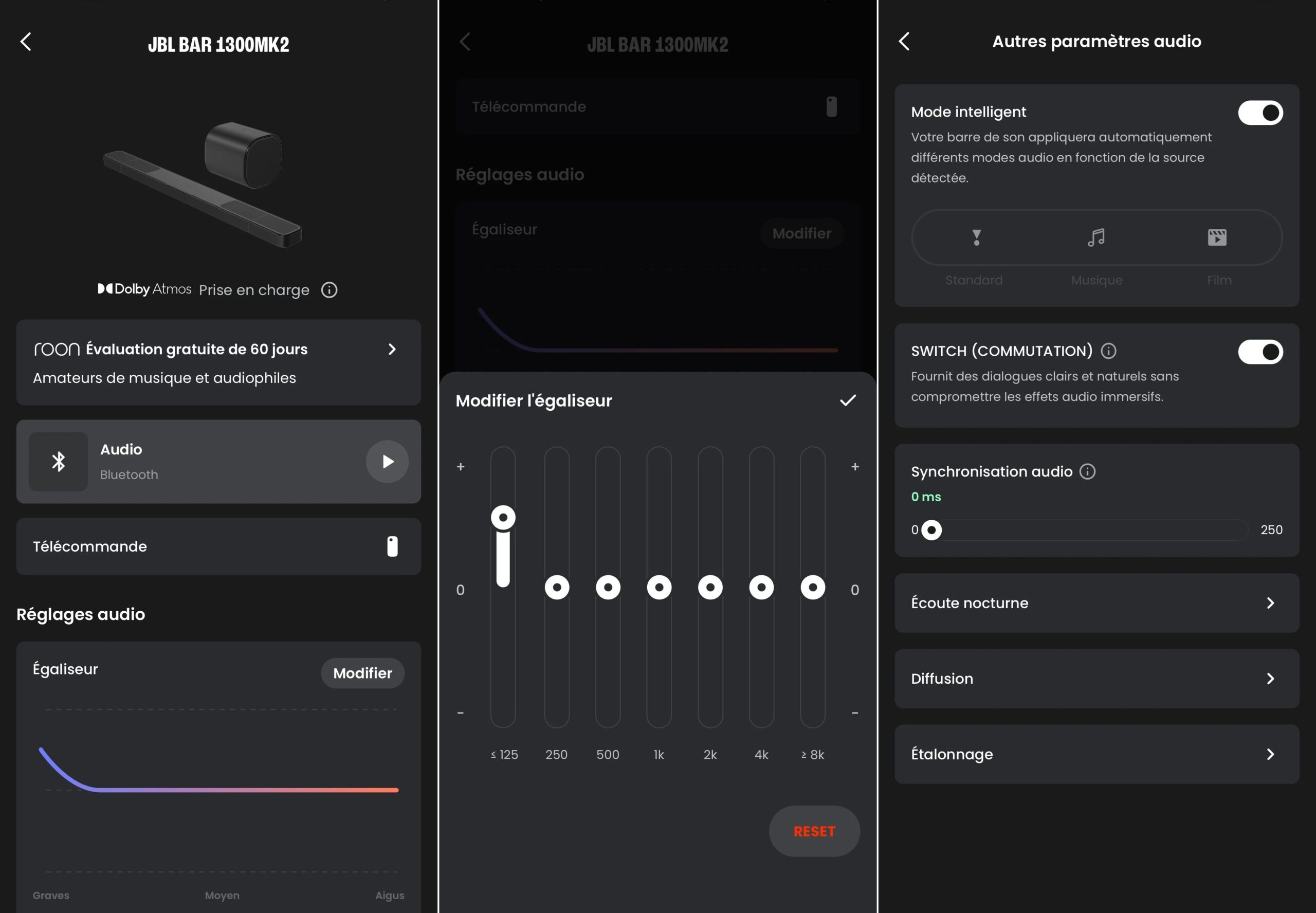
ApplicationJBL Oneis not a mere accessory. It is the dashboard of the system. It follows the philosophy of applicationHarman Kardon One, with which it shares much of its architecture, but it goes further in settings.

There is a seven-band equalizer, precise enough to sculpt the sound signature according to his preferences. The overall level of the satellites can be adjusted, thus strengthening or softening the surround effect depending on the size of the room. Three audio modes are available: Standard, Music and Film. Each changes the sound scene, dynamics, width, verticality. Strengthening dialogues (innovation)PureVoice 2.0appointedSWITCHin the parameters) is also present, useful for films where voices are drowned in mixing.

Two separate settings allow to adjust the level of the elevation effects and that of the bass box. These two parameters are essential to adapt the bar to the room. In a living room with low ceilings, vertical channels can be reduced to avoid artificial sensation. In a large open room, on the contrary, we can push them to expand the scene.

The application does not just offer direct access to servicesAmazon Music, Tidal(with Dolby Atmos Music support),QobuzorTuneInIt transforms the bar into a real universal platform. The1300 MK2dialogue with everything, accept everything, open up to everything. She lets herself fly viaAirPlay 2, melts in the ecosystemGoogle Cast, responds to the multiroom environments ofAlexa MRMand integrates even into the universe demandingRoon, now owned byHarman. This total compatibility is not a marketing argument: it is felt daily, in the way the bar accepts without any source, any protocol, any flow.

FunctionsSpotify Connect, Qobuz ConnectandTidal Connectallow music to stream directly from native applications, without going through an intermediary, while the functionMomentsallows to broadcast pre-recorded sound ambiences (Forest, Rain, Ocean, City, Custom List), useful to relax or sleep.

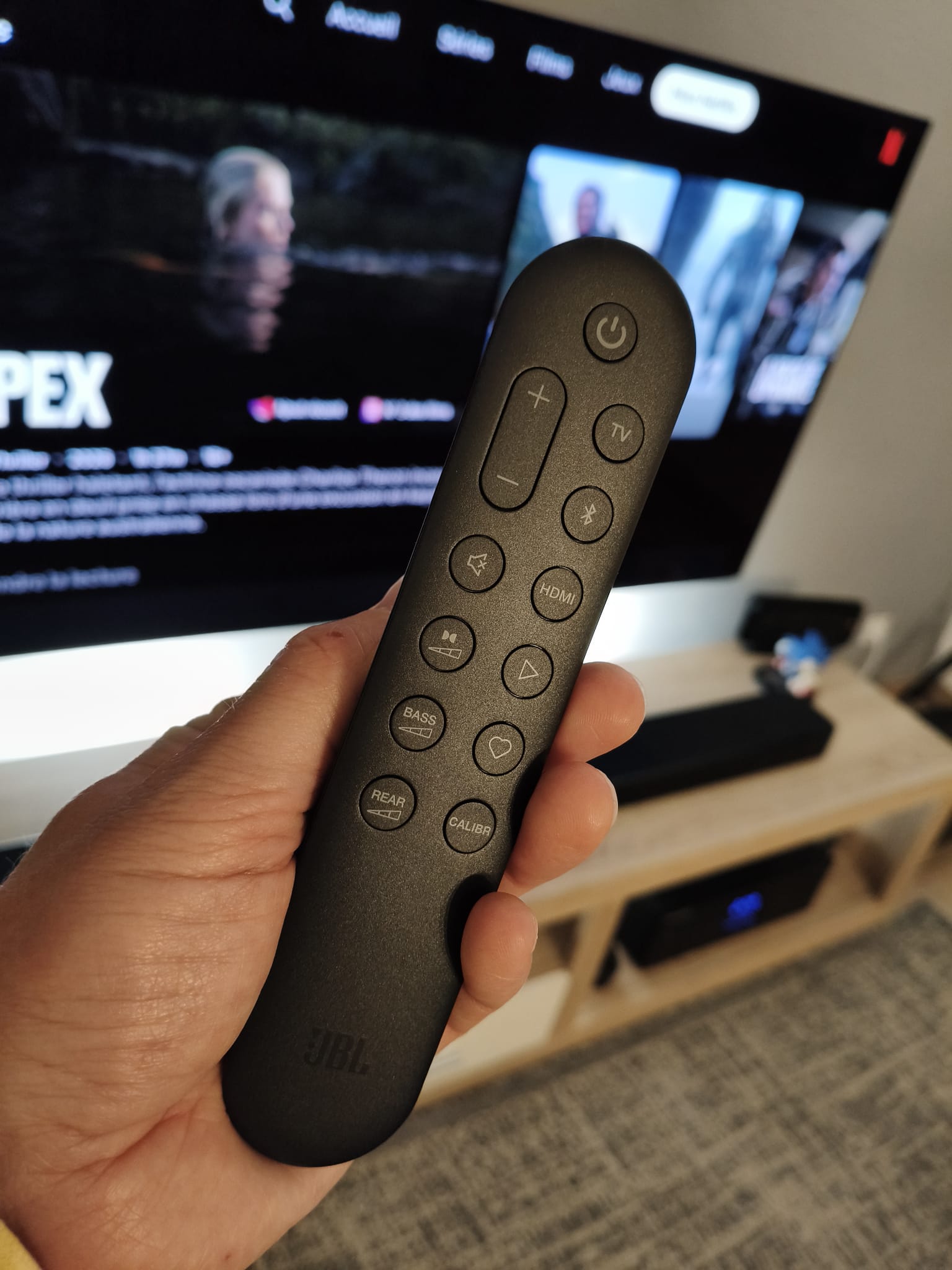
The remote control provided also deserves to be mentioned. Compact, slightly curved, it naturally holds in hand and takes over most of the controls without ever overloading its interface. The keys are spaced enough to be found blindly, and their short stroke gives a frank, almost mechanical return. It includes volume control, source management, as well as surround level settings, elevation effects, and caisson. Nothing useful, almost nothing absent (if not direct access to sound modes): it is a remote control designed for everyday use, simple, immediate, without detour. It perfectly completes the application, offering a physical alternative always available, even when the smartphone is not at hand. One can simply deplore the lack of backlight, a detail that is felt as soon as the light drops and the keys disappear in the shadow.

Connectic, the discreet nerve of war

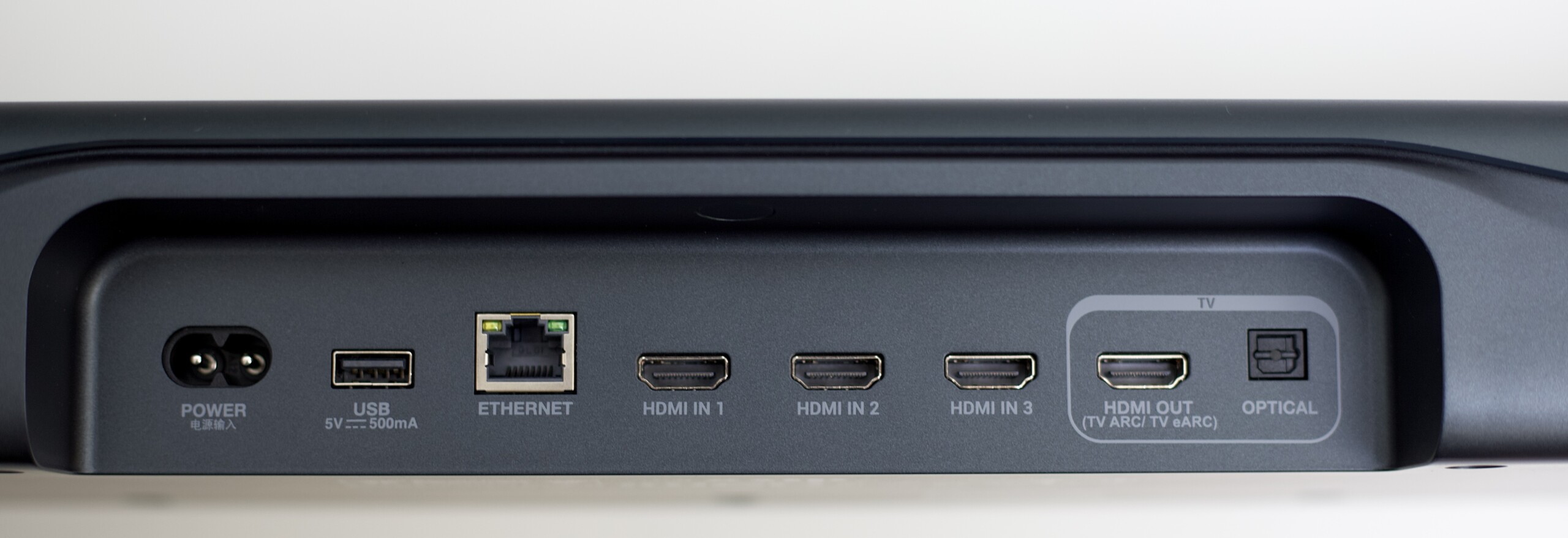
Behind its monolithic facade, theJBL Bar 1300 MK2hides a connector that immediately betrays its ambitions as a central system, not just an audio accessory. HDCP 2.3-compatible eARC HDMI socket is the heart of the device: it is through it that Dolby Atmos and DTS:X streams flow from the TV, without compression, without DIY, with this quiet evidence of well-thought out things.

At its side, three additional HDMI inputs (capable of delivering a 4K image enriched with HDR10+ or Dolby Vision treatments) allow direct connection of sources such as a game console (VRR and ALLM supported, but not the 4K/120 Hz, with inputs limited to 4K/60 Hz), a 4K Ultra HD and/or Blu-ray player, as well as a multimedia enclosure, completely bypassing the audio part of the TV. The bar then becomes the real hub of the living room, the one through which everything passes, the one that dictates the level, the dynamics, the sound consistency. An S/PDIF optical input is also present, such as a bridge to older TV sets or simpler installations, while the USB-A port can be used for maintenance and updates.

The Wi‐Fi 6 Dual Band, which ensures exemplary stability, even in saturated environments, and Bluetooth 5.3 complete this picture by opening the door to more spontaneous uses: a smartphone that is connected in seconds, a tablet that sends a video, a computer that broadcasts a playlist. It can even be controlled by voice, not by built-in microphones, which it does not have, but via a speakerAmazon EchoorGoogle Home, which then becomes its natural voice interface. In a modern living room, this flexibility changes everything: it is able to adapt to all listening habits.

Nothing is left to chance. The connector has nothing spectacular in appearance, but it is complete enough, modern enough, flexible enough that the bar can impose itself as the nerve center of the installation, without ever giving the impression of missing a socket, a port, a possibility.

Listening modes: three distinct personalities

In everyday use, the different sound modes of theJBL Bar 1300 MK2are not mere cosmetic variations. They actually change the personality of the bar, as if we were changing the listening system rather than just setting.

Film mode, for example, is the one that best reveals the deep ambition of the1300 MK2. As soon as you activate, the scene expands, unfolds, opens like a curtain that would be pulled out of a wide gesture. The vertical effects increase in height, the laterals increase in magnitude, and the whole adopts this wide respiration which gives the impression that the walls of the room retreat slightly. It is a spectacular, assumed, almost theatrical mode, which does not seek restraint but total immersion. It literally turns the bar into a movie machine.

Music mode tightens the focus. It voluntarily abandons a part of the demeasurement to return to a more direct, more frontal, more coherent listening. The basses are better contained, less expansive, as if the caisson agreed to stand a little back to let the voices settle in the centre of the stage. Instruments gain in presence, precision, density. We feel that this mode was designed for long listening, those where we do not seek to be impressed but accompanied.

The Standard mode is the most neutral, the wisest, the one that fades away to allow the soundtrack to express itself without artifice. He does not seek to expand or densify the scene. He simply reproduces what he is given, with an almost disarming honesty. It's a useful mode for TV content, documentaries, everything that doesn't require sound staging.

As for intelligent mode, it is intended to adapt, able to read the content and adjust the sound scene accordingly. In fact, it works properly, but sometimes it lacks discernment. It is quickly understood that it is better to choose the appropriate mode yourself, as one would choose a lens on a camera. The bar offers enough personality in each of its settings to make it fun to select them manually.

It should be noted that the bar manages a complete set of native audio codecs (Dolby Atmos, DTS:X, Dolby TrueHD, DTS‐HD, Dolby Digital, DTS, LPCM) and that it relies, when the source is not in three dimensions, on Dolby Surround and DTS Neural:X ascending mixing modes to expand the scene. As for the (rare) tracks encoded in Auro‐3D, they are processed as a DTS‐HD MA stream and then extended via DTS Neural:X.

MultiBeam, the secret geometry of sound

IfJBL Bar 1300 MK2manages to create such a vast sound scene, as wide as it is, as surprisingly three-dimensional, it is not only thanks to the raw power of its speakers or to the precision of its vertical channels. It is also, and perhaps most importantly, thanks to technology.MultiBeam, an invention house signedHarmanHere available in version 3.0, thought to push the physical limits of a soundbar. The principle is simple to state, but fearlessly complex to master: it is a matter of projecting the sound not only towards the listener, but also towards the walls, angles, surfaces of the room, in order to use their reflections as acoustic relays. The bar is no longer just broadcasting: it sculpts space.

To achieve this, the1300 MK2presses two pairs of side speakers, oriented at different angles, such as audible projectors that would try to hang the walls to better return them to the centre of the room. These transducers are not there to artificially enlarge the scene: they actually deploy it, exploiting the geometry of the place. It is sometimes felt that the bar knows the piece better than we do, that it guesses volumes, resonances, areas of reflection, and that it uses it to extend its sound territory.

Verticality, too, benefits from this approach. On the top of the bar, two pairs of loudspeakers dedicated to the elevation effects are positioned at different angles, like two duos d'archers targeting different points of the ceiling. They don't shoot straight up: they aim, calculate, anticipate how the sound will bounce before falling back on the listener. It is this combination of crossfire, controlled reflections, controlled dispersion that gives the1300 MK2this rare ability to create a real feeling of height, without ever giving the impression of a fireworks.

On the facade, eleven main speakers work together: three tweeters for accuracy, combined with eight elliptical woofers that ensure the density of the medium and the coherence of the bottom of the spectrum. This is not a simple addition of transducers: it's an architecture thought like a miniature orchestra, where each element plays a precise score to build a homogeneous, broad, without breaking sound front.

The detachable surround enclosures add an additional dimension to this architecture. Each sets up four speakers oriented in three different directions, such as small acoustic sculptures capable of broadcasting sound in a fan. Depending on whether they are standing or lying down, dispersion subtly changes, changing the way the effects unfold in the room. Standing, they favor a more pronounced vertical and lateral diffusion, ideal for high parts. They lie down and widen the sound horizon further, as if they were trying to wrap the listener in a more horizontal halo. This modularity, discreet but real, allows to adapt the system to the configuration of the living room without ever having to dive into complex settings.

The ensemble forms a kind of invisible acoustic mechanics, where each speaker, each angle, each reflection participates in a sound construction that far exceeds the physical size of the bar. TheMultiBeamis not a gadget: it is a way of twisting space, reshaping it, reinventing it. And it is this technology, more than any other, that allows theJBL Bar 1300 MK2to give the impression that the room expands, that the walls disappear, that the sound circulates freely in a volume that did not exist before being pressed on Play.

SmartDetail: a treatment designed to refine the sound definition

TheSmartDetailis not a simple audio processing among others; It's a kind of invisible focus, a gesture of precision that polishes the sound message like a silver print to reveal the grain. It was conceived as a goldsmith tool, an algorithm that does not seek to shine for itself, but to let the details breathe, to make them emerge without ever overexposing them.

In practice,SmartDetailacts like a razing light on the soundtrack. It reveals the microtextures of the mix, whether they are textures, reverberations or small elements of ambience often drowned in the sound message. Dialogues gain in legibility, not by artificial reinforcement of the sharps, but by a subtle clarification of the medium, the register where consonants, inflections, breaths are housed. The effects of Atmos and DTS:X tracks, on the other hand, detach themselves with a little more relief, as if the bar redesigned the contours of the scene without ever betraying its intention.

In short, a discreet but perceptible "detail enhancement" that pulls the top of the spectrum without hardening it, which refines without sharpening, which illuminates without dazzling. It is neither an surround mode, nor an upmixer, nor a technological demonstration: it is a finishing work, a master-glass gesture that polishes the surface to allow the light to pass.

SmartDetaildoes not impress by the extent of its action, but by its accuracy. It does not transform the sound signature: it refines, raises it, it gives it this additional transparency which makes the difference between a simply clean rendering and a really controlled restitution.

Audio performance: an immersion that exceeds expectations

TheJBL Bar 1300 MK2is a sound bar that does not seek absolute neutrality. She's looking for immersion, density, presence. She wants the viewer to feel the film as much as he hears. And on this field, she excels.

From the first few minutes, it imposes its signature: a sound scene that is not content with being wide, but that seems to open up as an additional space in the room, an invisible volume that unfolds beyond the walls. Height is no longer an abstraction: sounds really take place above yourself, as suspended in an upper floor that was not suspected. The depth stretches forward, backwards, as if the sound image gained perspective. And above all, all this breathes, moves, lives with a dynamic that surprises from the first seconds.

The « sound objects » actually take body in the room: they exist, appear where they must be and are palpable. The sounds ascend, descend, bypass, pass through the room with an ease that gives the impression that the air itself becomes a narrative vector. Detachable satellites play a decisive role here: they do not simulate a rear, they materialise it. You don't know their presence, you feel it. They create an autonomous, coherent space that wraps the listener like an acoustic bubble.

The caisson has a special treatment: it is associated with theAI Sound Boost, a DSP that controls membrane displacement in real time to avoid audible distortion. It is a discreet technology, invisible to the user, but which contributes to the cleanliness of the grave, even with high volume. The Push-Pull, with its two 20 cm woofers mounted back to back, is not only an elegant technical architecture: it is a way to tame the violence of the grave, channel raw energy to transform it into a controlled impact. The caisson does not simply descend: it pushes air like a piston, it moves the part, it imposes its physical presence. It is felt in the plexus, like a dense breath that passes through the body before reaching the ear. It vibrates the walls, shivers the ground, moves the small objects not fixed on the shelves, as if each low wave carried with it a mechanical impulse. It's not subtle. It's not felt. It's spectacular, almost primal, and that's exactly whatJBLseeks to offer: a serious one that is not content to be heard, but that feels, lives, imposes itself as a physical force as much as acoustic. Explosions, impacts, low frequencies... Everything is physical.

It should be noted that the high-grave area, around 80 to 150 Hz, is mostly supported by the bar, whose rear bass-reflex vents diffuse a large but discreet energy. As a result, the caisson intervenes less in this sensitive area and blends perfectly in the listening room, without attracting the ear.

TheJBL Bar 1300 MK2Is it one of the most powerful bars in the market? The question seems almost rhetorical once it has been pushed into its entrenchments. Yes, it is, not just in numbers. It is a power that expresses itself in the very matter of sound, in its ability to fill space without ever cracking. The volume can be raised very high, far beyond what most bars tolerate, and the1300 MK2remains surprisingly stable. The distortion does not come, or so late that it seems more related to the part than to the system itself. The dynamics, above all, impress: the transitions between a suspended silence and a sudden explosion are frank, clear, almost brutal, as if the bar had a reserve of energy always ready to spring. The system never gives the impression of forcing, and seems to be able to continue in this way indefinitely, as if it had a margin of security that the user will never really manage to achieve.

Top Gun: Maverick (4K Ultra HD), the demonstration of strength
The opening scene ofTop Gun: Maverickis a perfect test to measure the dynamics of a system. As soon as the Darkstar engine lights up, the bar deploys impressive acoustic pressure. The LFE channel gives the impression that air is compressed in the room. Detachable satellites create a remarkablely accurate rear. When Maverick passes the sound wall, the room seems to be dilating. The vertical effects are clear, credible, perfectly integrated. One feels the breath of the jet passing over oneself, as if the room had just been moved to the open air.

Gravity (Blu-ray), verticality as a physical sensation
InGravity, theJBL Bar 1300 MK2reveals another aspect: its ability to create credible verticality. Sandra Bullock's breathings, alarms, debris around the space station, everything seems to float in the air. The vertical channels do not simply project sounds towards the ceiling: they create a feeling of space, height, vacuum. It seems to be suspended, surrounded by sounds that no longer have fixed direction. It is one of the few all-in-one systems able to reproduce this feeling without fireworks.

Mad Max: Fury Road (4K Ultra HD), controlled brutality
Mad Max: Fury Roadis a film that does not forgive audio systems. His soundtrack is a flood of engines, percussion, screams, and metal. TheJBL Bar 1300 MK2cash everything without weakening. The box strikes with surgical precision, without dragging, without dragging. The voices remain clear despite the chaos. Side effects are of rare magnitude. When the War Boys surrounded the convoy, it really felt like we were caught in a mechanical whirlpool. The bar does not just reproduce the film: it throws it in the room.

Avatar: The Waterway (4K Ultra HD), finesse in measurement
Yes,Avatar: The Waterwayis a film where subtlety counts as much as power. The aquatic atmospheres, the songs Nasavi, the marine creatures, all require great finesse. TheJBL Bar 1300 MK2surprises here by his ability to be delicate. The mediums are clean, the sharps shoot high without aggressiveness. Vertical effects give an impression of total immersion in underwater environments. When creatures emerge from the water, the transition between submerged and emerging sounds is of remarkable fluidity. The bar shows that it is not just a brute: it also knows how to be nuanced.


Music: a communicative energy

TheJBL Bar 1300 MK2is not an audiophile bar. It does not attempt to reproduce a string quartet with the precision of a monitoring enclosure. But she knows how to be alive, energetic, generous. On pop, electro, hip-hop, it is jubilatory. The grave is deep, large, but controlled by theAI Sound Boostand Push-Pull. The voices are put forward, the sharps are clear without being aggressive. On jazz or classical, it remains pleasant, but you feel that it prefers modern music, those that require impact.

Competition: Yamaha True X Surround 90A, the other vision of home-cinema modular

Facing theJBL Bar 1300 MK2, theYamaha True X Surround 90Aembodies a different approach to evolutionary home cinema. WhereJBLfocus on channel debauchery, detachable modules and a spectacular sound scene,Yamahafavours a more compact, wiser architecture, but driven by its historical know-how in DSP processing. Its True X system, based on autonomous and versatile surround speakers, coupled with a virtual expansion of the sound field, draws an immersive bubble that is more felted, more controlled.

The90Adoes not offer the same magnitude or physical impact as the1300 MK2, but she seduces by an almost audiophile restitution in her intention and stands out by an unprecedented argument: the compatibility Auro‐3D, never seen so far on a soundbar, which opens her an immersive alternative to the Dolby Atmos and DTS:X. Two philosophies, two ways of designing an immersive system, and a choice that will depend as much on the room as the user's expectations.

Conclusion: a bar that assumes its demeasurement

TheJBL Bar 1300 MK2is a sound bar that does not seek to please everyone. It is intended for those who want a total cinema, a spectacular immersion, a sound presence that goes beyond the screen frame. She's not the most subtle, the most neutral, the most audiophile. But it is one of the most exciting, the most immersive, the most physical.

She turns the living room into a dark room. It gives films a new dimension. She's vibrating, shaking, shivering. It does not seek absolute technical perfection. She's looking for emotion. And she finds it.

My recommendations to listen: the scene in its full scope

🎬 Films
• Listening modes : Film
• SWITCH (COMMUTATION): ON
• ATMOS: MID
• BASS: LVL 4
• REAR: High volume

🎵 Music
• Listening modes : Music
• SWITCH (COMMUTATION): OFF
• ATMOS: MID
• BASS: LVL 2
• Detachable rear speakers: Joint (source 2.0)
• REAR: High volume (multichannel source)

Specifications : technical portrait

• Audio system: 11.1.4
• Number of speakers: 29
• Output power: 950 W (sound bar) + 2 x 160 W (satellites) + 1200 W ( bass box)
• Frequency response: 33 Hz – 20 kHz (-6 dB)
• Detachable satellite autonomy: up to 10 hours
• Connector: 1x HDMI 2.1 (eARC), 3x HDMI 2.0b inputs, 1x digital optical input
• Native audio codecs : Dolby Atmos, DTS:X, Dolby TrueHD, DTS-HD, Dolby Digital, DTS, LPCM
• Upstream mixing simulation: Dolby Surround, DTS Neural:X
• HDR Intercommunication: HDR10+, Dolby Vision
• Dimensions/weight sound bar only (W x H x D): 1 030 x 58 x 136 mm / 5.93 kg
• Dimensions / satellite (W x H x D): 202 x 58 x 136 mm / 1.3 kg
• Dimensions / box (W x H x D): 315 x 277 x 275 mm / 12 kg
• Price: 1499 €

Nyctalope like Riddick and with a very good hearing, I am ready to jump on physical editions and SVOD platforms. But if the quality isn't on the rendezvous, stop at the bite! #WeLovePhysicalMedia

5 1 voting
Evaluation of Article
Subscribe
Notify of
guest
0Remarks
oldest
most recent Most popular
0
We would like your opinion, please leave a comment.x