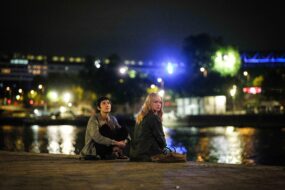
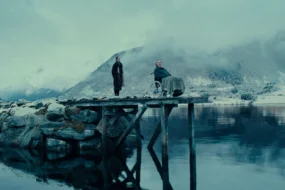
The 33rd edition of Gérardmer's International Fantastic Film Festival took place in a deliciously strange atmosphere, from Tuesday 27 January to Sunday 1 February 2026. Always followed by KillerS7ven and the celest wolf, this new occult chapter did not derogate from its reputation: a joyful pack of festivalgoers, a mountain air that stings the cheeks, unlikely encounters in queues, generous plates and these passionate discussions that stretch until the bar of the Grand Hotel finally decides to close. Once again, all Gérardmer vibrated at the pace of the fantastic.

And to open the hostilities, or should I say the conjuration, it's the celest wolf who draws his brand new onboard grimoire. A new format, freshly ripped from the claws of the night, where each page seems to breathe, shudder... and sometimes growl when you turn it too fast.

Armed with his feather soaked in the mist of the lake, our canis lupus of the Pyrenees s'adventure behind the scenes of the festival, notes what moves, which roams, which screams (sometimes himself), and turns every moment into a little reading spell. It is even said that its grimoire attracts the curious as a capricious projector attracts creatures who do not like the light too much.

Anyway, if you thought you'd start quietly... bad pick. This aboard grimoire is not there to tell: it is there to bite. And once you put the snout in it, it's impossible to come out unharmed. Come on, courage. The first scream just fell. The fantastic is waiting for you.

Contents

🌧️ Day 1: Weather attack, festival response

The 33rd edition of the Gérardmer Festival opens in a setting that only the Vosges can offer: a continuous rain, not violent enough to discourage, but insistent enough to transform each trip into a micro-shipment. Between the umbrellas that clash, the wet badges and the improvised discussions under the marqueses, the city regains its rhythm at the end of January: that of a small mountain port where the cinephiles dock, flowing but delighted.

After a stop at the Grand Hotel, where the familiar atmosphere serves as a decompression airlock after the swallowed kilometers, the aperitif simmers in front of Godin Marc, far too busy to be disturbed, while some members of the jury discuss at ear. Barely the time to dry out that already the Opening Ceremony is announced, ready to launch hostilities in a saturated atmosphere of humidity.

Opening ceremony, held on Tuesday 27 January, which confirms what was being anticipated: Gérardmer lost nothing of his sense of ritual. Speech, presentation of the jury, reminder of the challenges of this 33rd edition... All in a room where one would almost hear the coats dry. The festival starts in order of march, with this solemnity a little cabossed that makes its charm: we are there to shiver, laugh, debate... and, if possible, forget that we have wet socks.

Send Help

Send Help
When satire bites, the cartoon bleeds.

The pitch is simple: two colleagues, Linda Liddle and Bradley Preston, are propelled out of their routine after a plane crash that leaves them stranded on a deserted island. Cut off from the world, deprived of their well-oiled roles, they see their hierarchy crack faster than an Excel spreadsheet on Monday morning. The survival then turns into a psychological duel, where everyone tries to take his hand... or just keep the knife.

In this stripped decor, Sam Raimi gives heartily joy to dynamit the codes of the corporate world. The boss convinced of being a visionary, the undervalued employee who makes the shop run, the tiny but daily humiliations: all this little theatre of the office suddenly finds itself exposed, without costume or facade. A perfect echo to the theme of this 33rd edition, « Get off the masks. », so Send Help fun to rip off those you carry to work. Professional frustrations become sparks here: it crackles, it smokes, and it inevitably burns something.

Raimi finds his favorite playground. One feels the pleasure of the filmmaker who reconnects with his reflexes of the grotesque and the gore: visual gags that degenerate in carnage, slapstick dripping, camera that veers as if she had swallowed an espresso too tight. It's outraged, deliberately excessive, sometimes almost childish... and that's exactly what gives this B series its bite. Raimi does not seek the likelihood: he seeks the gesture, the shock, the jubilation of the « too much », this raw energy which already made the salt of its Evil Dead.

Send Help Finally acts as a deformative mirror of the world of work: we recognize attitudes, faults, power relations ... but passed through the filter of a sadistic cartoon. Rachel McAdams found a role commensurate with her talent, oscillating between fragility and anger, while Dylan O的Brien composed a boss so unbearable that one would almost thank the island for having isolated her.

In the end, Raimi signs an opening film that shakes spectators like a wet tree. A gesture of lively, wicked, rejoicing cinema, which reminds us that one of the few to know how to marry social satire and great-guignol with so much deplomb. A start to a festival that falls by peak: masks fall, rain too, and Gérardmer can start to shiver...

Gérardometer : 🎭🎭🎭🎭

❄️ Day 2: Snow imposes its decor, the festival responds with its rhythm

The rain, weary dampening the festivalgoers, passed the relay to a compact, determined, almost administrative snow. The kind of snow that doesn't fall: it settles down. Gérardmer then turns into a soft survival decor, where each sidewalk becomes a scene cut off from The Thing and every climb to LAC Space a test of loyalty to genre cinema. Umbrellas have made life, cups have taken power, and badges, already martyred the day before, now look like archaeological relics.

Fortunately, a landmark remains: David Rault , faithful to the post, smile in shoulder strap, sharpened diction, able to revive a room like an old 35 mm projector. He launches hostilities, reinvigorates the public... and the selection can begin to reveal his faces.

Welcome Home Baby

Welcome Home Baby
When maternity turns into a ritual.

Andreas Prochaska signs a domestic nightmare that summons the shadow of Rosemary, not by quotation but by this way of letting the occult infiltrate into the most ordinary gestures. The film looks at motherhood as a space where domination, heritage and buried beliefs replay, and where every family ritual becomes another mask to bring down.

The staging, dry and methodical, tightens the space around her heroine like an insider circle that closes. The main actress, of fragile intensity, navigates between lucidity and vertigo, embodying a woman who discovers that her own body may no longer be her own.

In this 33rd edition under the sign of « Get off the masks. », Welcome Home Baby finds an immediate resonance: here, it is the lines, traditions and bodies themselves that reveal what they were hiding.

Gérardometer : 🎭🎭🎭

Planets

Planets
When visual poetry comes off its orbit.

In a world that has already paid the price of our choices, Momoko Seto proposes an ecological fable to the height of ambitious dandelions, where nature breathes, struggles and organizes like a miniature people. But anthropomorphism, movements « intentional » behaviour « Dramatized », supposed to open a sensitive door, seemed superfluous, almost decorative. Macro textures, timelapse assembly, digitally reworked images make up a hypnotic ballet that, paradoxically, never hit.

The film talks about survival, plant resistance, the end of the world. Yet, by refusing any readable narrative, he ends up dissolving his own discourse. You feel the desire to be carried by the wind, but this float becomes a drift, a distance.

The result: a sensory experience that is intended to be immersive, but which seemed opaque, distant, hermetic. A visual odyssey that levites without ever actually carrying.

Gérardometer : 🎭🎭

Ribs

Ribs
The bio body horror that grows between the roots.

Raymond St-Jean weaves a story where the forest is not a setting, but an organism that absorbs, transforms, contaminates. The film navigates between family drama, turbulent investigation and bio body horror, with sometimes brilliant visual ideas, as when flesh and plant respond, mix, parasite.

But Ribs hesitating: sometimes clear, sometimes opaque, sometimes fascinating, sometimes rough. The staging captures the density of the forest, but the narrative is lost in its ramifications, as if the film refused to choose between realism and mutation.

An unequal object, but through moments when the organic takes over its rights. Besides, if he does not fit in front of the festival theme, he embraces the spirit out of capillaryness. Here, the mask is not a hidden face: it is a layer of plant that infiltrates, a skin that changes, an organism that grafts.

What is going on under the surface, in those areas where identity cracks and the body becomes a ground of mutation? A moving biological mask that fits perfectly with this edition without ever claiming it.

Gérardometer : 🎭🎭

Donate Leave the Kids Alone

Donate Leave the Kids Alone
Mom, I missed exorcism!

Emilio Portes signs a playful, nervous domestic thriller, which plays with the codes of haunted home movie and family drama... while slipping a wink d'oeil assumed to Mom, I missed the plane!, evil version, obviously.

The film addresses tensioned parenting, guilt, solitude of children and how fear distorts brotherly ties. The staging is lively, precise, always in motion, and the young actors are impeccable in their progressive climb towards paranoia.

And under his malicious entertainment airs, the film focuses on revealing what is hidden behind the roles that everyone takes on: the certainty of adults, the bravades of children, the false-likers of a home that cracks as soon as fear invites itself. A discreet but clear way to remember that, in this festival, appearances never hold long.

An effective, malicious proposal that assumes its pleasure of twisting daily until the breakup.

Gérardometer : 🎭🎭🎭🎭

I Live Here Now

I Live Here Now
Lynch, but in fluorescent highlight mode.

Julie Pacino, daughter of, claims a lynchian vein... but here, with big hoofs: supported symbols, abrupt transitions, nightmare visions that do not seek subtlety.

And yet... it works. The film explores the interiority of a woman in crisis, the pain, the reconstruction, the upset motherhood, with a sincerity that goes beyond her awkwardness. The atmosphere (sometimes captured in 16 mm) is dense, enveloping, almost hypnotic, and the isolated hotel becomes a character that reveals what the protagonist tries to hide.

In his own way, I Live Here Now dialogue also with the theme of the festival: not by a game of fakes, but by the frontal exhibition of an inner, psychic, almost visceral mask. Pacino does not seek to hide: she exposes, sometimes with insistence, what works under the skin of her character.

A fragile, excessive, but deeply inhabited work... and, in my view, far more accomplished than his welcome suggests.

Gérardometer : 🎭🎭🎭

🧣 One festival, two climates, three layers of clothing

Over the course of the screenings, an atmosphere emerges: the films reveal their masks, the audience adjusts their own, and the Gérardmer Festival regains its special balance between chill and cold bite. Barely out of a session the reality resumes its icy breath: conversations continue under the awnings, gloves circulate like essential goods, and festivalgoers advance in the snow with the determination of a casting of The Return Caffeine.

This second day stretches between dark rooms and flakes of flakes, between cinematic visions and snow gusts that sting the air. The weather becomes a secondary character, sometimes invasive, sometimes complicit, but always faithful to the spirit of the place. Each film adds its stratum, each release its cloud of steam, and the ensemble composes this January fresco that only Gérardmer knows how to offer.

When the evening falls, the cheeks are red, the shoes soaked, but the spirit boils. The competition is launched, the debates are underway, and the snow continues to fall as if it wanted to participate in the programming.

A frosty atmosphere, a festival that begins to heat: everything is in place for the 3rd day...

Day 3: The fog is advancing, the festivalgoers also

The third day opens in a strange atmosphere, almost suspended: the snow stopped, the rain fell, and the city drowned in a thick mist, soft as a veil but dense enough to transform each silhouette into an appearance. Gérardmer is no longer quite a survival setting or a wet mountain port: it has become a spectral landscape where festivalgoers slide from one session to the next like hungry ghosts... sometimes cinema, sometimes tartiflette.

In this silent wadding, the needs become very concrete again: warm, fill, keep pace. The restaurants turn into cheese bunkers where the batteries are recharged before diving back into the dark of the rooms. Raclettes, flambé munster, gratins capable of knocking a bear: a short, greasy, vital ritual that keeps the festivalist in a state of operation.

And once sustened, they all return to the mist, where queues become hot spots of social warmth. The program is redone, the films of the day before are disassembled, the ones that we haven't seen are encenseed, the state of badges already fossilized is compared. It talks, it laughs, it shares a burning tea: in these corridors of human steam, the festival finds its real pulse.

Then there are the snowmen, out of the snow piled up the day before like a silent army. The most players, or the most awakened at questionable times, planted them everywhere: near the lake, in front of the LAC Space, at the turn of an alley. Some wear a bonnet of the festival, when others show a smile too wide to be honest. Frozen in the fog, they give the impression of judging queues, waiting for the midnight session or participating in the competition. Ghost jurors, still, perfectly in the tone of this third day.

And while they watch, impassive, the day unfolds its program: the rooms open, the lights turn off, and the films of the selection, or not, begin to demand their share of attention. The fog can swallow the city, it is now on the screens that the clearest visions will emerge.

Mother

Mother
Maternity as an area of mental non-right.

Johanna Moder signs a film that starts as a late dream of parenting before turning into an identity nightmare. Between the clinic too smooth, the doctor too perfect and this baby with whom the bond refuses to weave, everything breathes the felted discomfort. Mother auscultes motherhood as a role that one puts on a woman, even denying what she really feels.

Under his intimate drama, the story slides towards a domestic thriller where visions, paranoia and guilt intertwine until blurring the boundary between instinct and delusion.

In this edition, the link is clear: the mask is that of the « good mother », this imposed role that she tries to end up to the crack. When suspicion settles (is it really his child?), the film becomes dry, tense, almost clinical, dissipating conflicting injunctions and social pressure that infiltrates in every gesture.

Not revolutionary in its form, but carried by remarkable visual intimacy*, the film unfolds a chilling precision in its way of showing how a social mask can close up until it becomes a real psychic cell. And when this imposed role, that of the ideal mother, begins to crack, Mother reveals what he really says: the slow suffocation of a woman who is asked to love before even understanding what she is living.

Gérardometer : 🎭🎭🎭🎭🎭
* Between the precision of the Super 35 sensor of the Alexa 35, the mastered sharpness of the Ultra Prime, the flexibility of the Alura zooms and the assumed organicity of the Petzval, Mother's Baby regains the density and breathing of the 35 mm in a digital box.

The Ultra Prime sculpt a clean and contrasting image, the Aluras ensure unbroken focal variations, and the Petzvals infuse living matter.

The chief operator plays these textures with an almost visceral intuition. He lets the Alexa 35 open in its dynamics, modulates the optical softness or roughness according to the emotion, and summons the Petzvals when the image must palpitate, breathe, exist.

Each plane then seems to be born with the fragility and strength of a first breath... that of Mother, which finds in this technical alchemy its most intimate identity.

The Weed Eaters

The Weed Eaters
Cannabis carnivorous and British phlegm on the menu.

Transforming weed into a vector of cannibalism and fully assuming its barred concept, The Weed Eaters condenses his smoking idea into a small black irony bomb... as if Ken Loach had put himself in the lead of shooting an episode of Master Chief anthropophagic version.

The staging, dry like a throat after a bad joint, plays on the contrast between social realism and carnivorous slippages. And in the midst of this chaos, British humor, the real, the one who keeps the phlegm even when someone loses a piece, infuses every scene. The film treats absurd as a formality, cannibalism as a mere setback, and lets the spectator laugh despite himself, caught in this so British shift where no one seems to find the situation so strange.

Touched by the theme « Get off the masks. » of this 33rd Gérardmer Festival, The Weed Eaters reveals what lies behind the facades: a society that devours itself, a country where social appetite ends up becoming literal, and where horror reveals what everyone preferred to keep sealed.

The result has something of a poorly dosed trip* It's low, it bites hard, and it leaves a taste of satire in the mouth.

In short, a small British UFO who rolls his shovel with absurdity and crucifies society with full teeth. A B series that knows where she goes, even when her characters don't know what they eat anymore.

Gérardometer : 🎭🎭🎭
* In The Weed Eaters, the weed whispers in your ear that salad is terribly common and that steak has never done its cake.

A taffe, and here you are to contemplate a rib with the fervor of a gentleman who discovers a late vocation for the slaughter.

They say: « Meat is strength; vegetables, it's the decoration ». Here, it is especially the weed that explains very calmly that everything that breathes is a culinary opportunity.

So yes, « Against drugs, everyone can act »... Especially when the next breath risks turning you into a culinary explorer of the neighborhood with the politeness of a hungry butler.

In The Weed EatersThe real threat is not the plant... This is this very British moment when you realize that you are salivating and that you are already apologizing for the arm you are about to taste.

The Thing With Feathers

The Thing With Feathers
When mourning is stronger than fear.

Preferring deaf tension to the effects, Dylan Southern refuses to be abhorrent to his drama of mourning. The film observes a family fractured by loss, and how this absence infiltrates every gesture, every silence, until it becomes almost palpable. We're thinking about Mr. Babaook for this way to materialize pain in space, but here the fear is evacuated: remains only a mild, persistent malaise, which tightens the throat without ever screaming.

Benedict Cumberbatch carries the film with a magnetic restraint. He embodies a man who advances as if he were afraid of awakening something within him, a being whose apparent mastery allows to filter out brilliance of fragility. His play, all in microtensions, gives the narrative an emotional density that the staging accompanies without ever highlighting it.

The choice of the 1.33 ratio reinforces this impression of interior choking. The square frame acts like a box too narrow, a visual mask that forces the character to confront what he tries to hide. In the context of « Get off the masks. », this device finds an obvious resonance: the film does not seek to tear off the mask, but to show how it cracks.

In the end, The Thing With Feathers impose as an intimate, tense drama, where pain never manifests frontally but permeates every plane. A narrow, precise film that prefers the truth of emotions to the mechanics of thrill.

Gérardometer : 🎭🎭🎭

Silence

Silence
Vampires have more balls than society.

With Silence, which is part of the continuity of Skins and The PietàEduardo Casanova continues his cinema of bodies exposed, sometimes literally, always symbolically. The film examines social exclusion and AIDS not as subjects, but as visible scars, stigmas that society would like to cover with a varnish of modesty. Casanova rips off this varnish. Put off the masks, really.

His vampires, central figures of the narrative, embody this radical nude. Being condemned to live on the margins, eternal bearers of a difference that one fantasizes as much as one fears, they become the perfect metaphors of the identities that one stigmatizes. Their immortality is nothing glorious: it is a survival under surveillance, an existence assigned to shadow. At Casanova, the vampire is not a predator, but an excluded among the excluded.

Its pink aesthetic, coming out of a pastry nightmare, always as corrosive, functions here as a revealing: under the soft fake, all screams marginalization. Characters, like echo chambers, make everything sound, even what is not said... for silence becomes a protest.

The film thus finds an obvious echo with the theme of the festival, since this is precisely what Casanova does by exposing the faces that society prefers to hide... HIV-positive, excluded, « inadequate »And here vampires reduced to their otherness. In him, monstrosity is never in the bodies, but in the eyes that judge them. The mask falls, and what appears is not horror, but truth.

In less time than it takes to get used to its baroque universe, Silence imposes an obvious: Casanova does not film marginals, he filmes those that the world has tried to mask. And he reveals them with fierce tenderness.

Gérardometer : 🎭🎭🎭🎭

🌫️ Parenthesis in mist: the returning and the freezing

After this salve of visions, it is time to breathe again. The rooms are empty, the discussions continue on the frozen sidewalks, and familiar faces reappear as if the mist had simply put them on a break. Gérardmer has this talent: re-emerging old knowledge at the turn of a queue, a heated hall or an improvised glass. A few words exchanged, a memory of past edition, and everything reacts as if nothing had moved.

It also reminds me of Joko Anwar: between two sessions, a parenthesis opened, almost softly, as a refuge in the middle of the tumult. The retrospective paid tribute to him with this intensity peculiar to Gérardmer, where family secrets, derailed traditions and homes that breathe stronger than their inhabitants find an immediate echo. A brief but busy stop, which recalled how naturally his cinema interacts with the DNA of the festival... And why he keeps haunting the rooms long after the credits.

And when you come out at night, you already feel that the festival is preparing a new trap: ice. A fine sneaky film that turns each sidewalk into a rink and promises one day 4 slippery, unpredictable, perhaps a little cruel. Anyway, pure Gérardmer juice.

🌱 Day 4: Under the snow coat, the talents still grow

The fourth day of the Gérardmer Festival opens without any weather breaks... progress. The cold remains there, faithful as an over-motivated figure, and the piled snow still borders the sidewalks like a decor that no one has thought to disassemble. But for once, Gérardmer does not try to test the thermal resistance of festivalgoers: he simply reminds them, discreetly, that winter did not sign a truce.

And so much the better, because this Friday marks the beginning of the Competition Short Films, this moment when the festival changes pace not by accelerating, but by densifying itself. We feel the day tightened, as if the films themselves were on guard: short format, long ideas, and a room that fills with the enthusiasm of an audience who knows that everything can happen in about twenty minutes.

🧪 Competition Short Films — The pot of the shorts: it already ends

A session that the regulars would not miss for nothing in the world: this moment when Gérardmer becomes a launching ramp, a test ground, a laboratory where often the first gestures of filmmakers that will count tomorrow are revealed.

This year, the selection had high-voltage nursery appearances: varied, sharpened, surprisingly mature. There were voices that looked for, that dared, that already claimed a leg. The narrative mastery strikes from the outset, the visual proposals show disconcerting assurance, and the worlds, sometimes already very marked, announce filmmakers who do not intend to remain in the shadows.

The audience loves this session: it's a dry debate, it laughs nervously, it applauds loudly, and it comes out comparing the favourites like Panini cards. A real edition barometer, and this year, the needle clearly points to a generation that arrives with the hooks.

Tribute to Olga Kurylenko — When emotion pierces the varnish

Very moved on stage, Olga Kurylenko offered Gérardmer a rare suspended moment of those who recall that behind the icons of cinema there are trajectories, ripples, deep fidelities. She speaks of France as a « my country », with a sincerity that crosses the room like a hot wave in this month of January refrigerated.

The ceremony, elegant without being crushed, unfolds the speech of Neil Marshall, which had directed him in Centurion, and a series of extracts that the actress welcomes with light modesty. We feel a real gratitude, almost palpable, for this festival that celebrates both monsters and artists who embody them.

And in this edition placed under the sign of « Get off the masks. », difficult to imagine a fairer tribute : Kurylenko does not play, she reveals herself. No posture, no distance, just an actress who claims her journey, her choices, and this intimate bond with a country that saw her grow as an artist.

And as if that wasn't enough, she stays to present Alter Ego, surrounded by his two directors, Nicolas & Bruno. A perfect transition to talk about today's film programming.

Junk World

Junk World
It's all about the world.

There are films that come to the theater like wandering dogs: barking, noisy, not really polite, but with an energy that forces respect. Junk World belongs to this family, one that prefers inventiveness to varnish, chaos to comfort, and that transforms debug into aesthetics.

The carbide film has a logic of total recovery: DIY decorations, ideas thrown like bolts in a machine too fast, characters that seem to come out of a post-apocalyptic vacuum. And yet, it holds. Better: it lives. We feel behind each plan a desire for cinema that far exceeds the means, an almost childish pleasure to assemble pieces of nothing to make a whole world.

It's not always elegant, sometimes even frankly blond, but it's precisely what makes it so charming: Junk World advances with the conviction of a film that has nothing to lose and everything to prove. And in a competition where many seek mastery, chooses brute daring, instinctive gesture, poetry of waste.

And if we really had to look for a connection to the theme « Get off the masks. », it would be there: in this refusal of makeup, in this way to assume every apparent seam, every rafistolage, as if the film claimed its own vulnerability. Nothing to hide, everything to show.

A little dirty wind... And it feels good. Now I'm gonna have to find out. Junk Head.

Gérardometer : 🎭🎭🎭

Redux Redux

Redux Redux
The pleasure of the B series, without filter.

There are films that claim their B-series status as others brand a banner, and Redux Redux is clearly one of those. No cynicism, no second degree forced: just a frank pleasure of the genre, held by a director who knows exactly where she is going. Where so many productions Netflix appear to come out of an industrial mould (same light, same cutting, same vacuum playaturgy), Redux Redux breathes singularity, human hand, decided gesture.

The film advances with an almost old-school precision: sharp framing, tense rhythm, assumed practical effects, and this way of building a universe without apologizing for its limits. You feel the director in love with his references, but never prisoner of them. It's a B series of SF that doesn't try to pretend to be more than she is... and this is precisely what makes it better than many productions « premium » that are exhausting to look important.

And if we want to see an echo to the theme « Get off the masks. », it is there: in this total transparency, this refusal of varnish, this way of assuming its identity without seeking to disguise itself as blockbuster. Redux Redux Don't hide anything, don't make up anything, and it is in this honesty that the film finds its strength.

A work that recalls that the B series, when held, thought and loved, can still slam many of the so-called more prestigious productions.

Gérardometer : 🎭🎭🎭🎭

Alter Ego

Alter Ego
No one escapes themselves.

Some comedies simply align situations, others take the risk of looking their characters straight into their eyes. Alter Ego clearly belongs to the second category. The film plays with absurd, but never for free: every comic slip reveals a small piece of truth, a dead angle that characters preferred to leave in the shadow. This is what had already seduced Alpe d'Huez: a finer writing than it looks, a sense of rhythm, and this ability to make laugh without sacrificing the human.

Casting is one of the engines of the film. Actors have fun, and it can be seen: everyone finds their register (quiet irony, the excess perfectly controlled, the sincerity a little left) and the whole works like a well regulated comic mechanics. No overplays, no blinks leaning: just performers who understand that humor works better when it rests on characters, not on numbers.

And then there is this central idea, simple but fearlessly effective: to be faced with a version of self that we never wanted to face. Not a mix of genres, but a game on registers, between soft satire, psychological mirror and comedy with concept. This is where the film naturally finds its place in the theme « Get off the masks. ». Here, masks fall without a break, sometimes despite the characters, sometimes with relief, but always with a sincerity that surprises.

Alter Ego makes you laugh, laugh a lot, but above all, he observes. And in a landscape where comedy too often just ticks boxes, that look makes all the difference.

Gérardometer : 🎭🎭🎭🎭

🌙 End of day — When the night takes over the frame

The night falls on Gérardmer and, with her, this familiar feeling of having crossed several worlds in a few hours. We laughed, we startled, we raised an eyebrow, sometimes all three at the same time. Alter Ego brought his thoughtful lightness, Redux Redux its series B energy held like a banded arc, and Junk World his poetic chaos that still sticks to the soles. Three films, three gestures, three ways to recall that genre cinema is never as alive as when it assumes what it is... and the ever more audacious Short Film Competition just confirms it.

And I go into the night, the heart still vibrant.
Under the watchful moon, another day waits.

To the one who will recognize himself, thank you for the challenge launched softly: dragging an Alexandrian in a festival report might not be necessary... But admit it's always more fun when I'm pushed a little bit. For the penalty, you even had two for the price of one.

☀️ Day 5: Discovered in the light, the festival holds its breath

The fifth day opens under a clear sun, almost too frank for a festival that had become accustomed to talking to us in precipitation. The snow retreats in silence, leaving behind damp edges and sidewalks that shine like freshly developed film. Gérardmer finally breathes, and festivalgoers with: walk slower, look up, even surprise yourself to enjoy the light. The terraces, suddenly full as halls at the first session, rustle with an enthusiasm found: chairs scraping the ground, open coats, faces facing the sun like a projector.

This lull gives the day a special tone. We are no longer in climate survival, nor in the euphoria of the beginnings: this is the moment when everyone takes stock. Conversations get tighter, opinions become clearer, certainties sometimes crack. We compare, we re-evaluate, we defend our favourites with a conviction that is no longer hypothetic. And this year, a rare luxury, the Gérardmer Festival does not stop tonight: an extra day awaits the most enduring, a last window to catch up with the missed films, to see a heartbeat, or simply prolong the pleasure.

For the time being, the city slowly slides towards the Palmarès ceremony. We talk about it everywhere, but without fever: a calm, almost elegant tension, as if the sun had polished the nerves. The queues look like improvised editorial rooms where everyone tries to guess what the jury has retained, or forgotten. I'll come back later, once the winners are announced.

Meanwhile, the day runs its last sessions with an unexpected sweetness. We take advantage, we complete, we refine. The festival enters this strange area where everything is still possible, but where you already feel the swing.

And now, place for today's movies... Those who have accompanied this light and who also deserve their moment of light.

Cadet

Cadet
The factory of lost boys.

Adilkhan Yerzhanov continues with Cadet his exploration of the shadow zones where authority is lost and where men turn into workings of a system that crushes them. The film clearly convokes the old Soviet spectra: absurd discipline, authoritarian verticality, archaic belief in violence as a training tool. Nothing really disappeared, everything just fossilized. Yerzhanov filmes this contamination of the present in the past as a slow radioactivity, embedded in walls and bodies.

The result is a theatre of degenerate masculinity where the boys, barely out of childhood, are trained as war dogs. They can be seen sliding, almost mechanically, from the status of students to soldiers, then soldiers to monsters. Yerzhanov observes this process with a clinical coldness, without emphasis or pathos, which sometimes gives the impression of attending a real-time autopsy. But this drought, which could be a force, ends up turning empty: the darkness becomes monotonous, the hammered word loses its impact, and one surprises himself to hope that the film also removes its mask to reveal something other than an already known finding.

Under the theme « Get off the masks. », Cadet Check all the boxes: it rips off that of heroic manhood, that of the protective institution, that of glorious patriotism. It shows what's behind it, and it's not good to see. But Yerzhanov sometimes seems so fascinated by the ugliness that he exposes that he forgets to question her. We come out of the film with the impression of having crossed a long disciplinary corridor where each door leads to the same room.

In short, Cadet is a coherent, rigorous, haunted film... but also hermetic, repetitive, and too satisfied with its own darkness. The ghosts he summons are there, but they end up out there. And this is precisely where an involuntary parallel arises: it is often said that the past never dies, but Cadet reminds above all that he can come back haunting the living with a heaviness that any literal spectrum would envy them. In this game, the J-Horror of the early 2000s did much better: at Nakata or Kurosawa, the curse was crawling, insinuating, contaminating. At Yerzhanov, it falls like an administrative file forgotten since the USSR: heavy, grey, inevitable.

Gérardometer : 🎭🎭

Cold Storage

Cold Storage
Microbes on probation.

Cold Storage is part of these films that look at each other with immediate pleasure, almost guilty, but leave behind them a diffuse impression of product too well packed. We feel the oiled mechanics, the narrative designed to work on the quarter turn, as if each scene had been calibrated to keep the spectator in permanent comfort. Even the promising biological threat seems to be constantly on the leash.

The film plays with horror, but never agrees to pay the price. At each rise in tension, a trait of mind comes to defuse the moment, as if the work feared to become truly disturbing. The humor works, of course, but it acts as a circuit breaker: it protects, it reassures, it prevents emotional contamination. As a result, you often smile, you rarely shudder.

There is an effective, rhythmic B-series entertainment carried by an endearing duo (Joe Keery de Stranger Things), but it lacks boldness. The film touches on exciting themes (scientific responsibility, fragility of human infrastructures, fear of the invisible) without ever sinking into them. Everything stays on the surface, as if Cold Storage preferred foam to deep current.

The presence of Liam Neeson introduces a striking shift: it brings a raw intensity that the film, lighter in its DNA, never really absorbs. In a few scenes, he installs a gravity that seems to belong to another Cold Storage, darker, more tense, almost fantasized. This density creates a friction of tone, most certainly assumed, and it is regretted that it does not spread more in the rest of the story.

As for David Koepp, who here adapts his own novel, we recognize his narrative effectiveness and his sense of concept, but also some caution. He polishes his material to the point of erasing what could have made it a rougher, more dangerous, more memorable work.

One might say that the film resembles its mutant organism: fascinating to observe, but contained in an airtight box. Nothing overflows, nothing really contaminates.

In the end, a good film, nice, well tied, but never looking to get out of its safe area. A microbiological thriller that prefers the wink of the eye to the thrill, and which, by wanting to please, ends up not really scoring.

Gérardometer : 🎭🎭🎭

Back to Silent Hill

Back to Silent Hill
A flawless maze where to get lost.

Adapt Silent Hill 2 In the cinema, it was to attack a monument whose strength rests precisely on what escapes, on what guesses rather than on what appears. The game is a psychological gulf, a labyrinth of guilt where every silence weighs heavier than a dialogue. Back to Silent Hill treats this material with respect, but without achieving its depth. The film seems animated by a sincere desire to do well, while encountering a form of caution that prevents it from fully embracing the darkness and ambiguity of its model.

Ce qui frappe d’abord, c’est la manière dont la narration se fragmente. Les flashbacks, omniprésents, interrompent constamment la progression du récit. Ils surgissent comme des béquilles explicatives, cherchant à éclairer ce que le jeu laissait volontairement dans l’ombre. Au lieu d’épaissir le mystère, ils le dissipent. Au lieu de creuser la psyché du personnage, ils la commentent. Cette mécanique finit par casser l’élan dramatique, par empêcher l’immersion, comme si le film craignait que le spectateur ne comprenne pas les enjeux sans qu’on les lui répète. On se retrouve alors face à une œuvre qui explique trop ce qu’elle devrait laisser infuser.

Pourtant, l’univers visuel possède une certaine tenue. La ville, ses silhouettes déformées, sa brume presque vivante, tout cela est restitué avec sérieux. On sent un désir de renouer avec l’imaginaire du jeu, de retrouver cette atmosphère poisseuse où chaque recoin semble respirer la menace. Mais cette fidélité reste en surface. Elle reproduit sans réinventer. Elle convoque les symboles sans leur redonner la charge émotionnelle ou symbolique qui les rendait si puissants. L’angoisse affleure, mais ne s’installe jamais durablement, comme si le film hésitait à s’abandonner à la lenteur, au malaise, à l’inconfort.

La mise en scène, elle aussi, oscille entre application et retenue. Certains plans témoignent d’une vraie compréhension des codes du récit psychologique, mais l’ensemble manque d’audace. On devine ce que le film voudrait provoquer, un vertige intérieur, une descente progressive dans la culpabilité, sans que cela ne prenne réellement corps. Le résultat est propre, parfois même élégant, mais rarement habité.

Quant aux personnages, ils existent davantage comme des fonctions que comme des présences. L’acteur principal parvient à transmettre une forme de lassitude hantée, mais son parcours émotionnel se voit constamment interrompu par les ruptures de rythme imposées par le scénario. Les figures secondaires, elles, semblent flotter autour de lui sans jamais trouver leur place, comme si le film n’osait pas leur accorder une véritable densité.

Thus, Back to Silent Hill laisse une impression mitigée. Le film n’est pas dénué de qualités, et l’on sent à chaque instant le respect porté à l’œuvre d’origine. Mais cette révérence se transforme en frein. En cherchant à rendre limpide ce qui, dans le jeu, relevait du trouble et du non-dit, le film perd une part essentielle de son âme. Il reste une adaptation honnête, parfois touchante, mais qui ne parvient jamais à atteindre l’abîme émotionnel du jeu dont elle s’inspire. Une descente, oui, mais trop balisée pour véritablement nous engloutir.

Et lorsque l’on en ressort, presque malgré soi, on repense au premier Silent Hill, déjà signé Christophe Gans, à cette adaptation qui osait l’opacité, l’étrangeté, la lenteur hypnotique. Un film qui ne craignait pas de perdre le spectateur pour mieux le posséder. Peut‑être est‑ce là qu’il faut retourner : à cette porte d’entrée plus rugueuse, plus viscérale, où l’on acceptait de se perdre sans qu’on nous tienne la main.

Gérardometer : 🎭🎭

Dolly

Dolly
L’amour maternel, version redneck.

On croise parfois des films qui ne frappent pas à la porte : ils la défoncent, caméra à l’épaule et forte granularité en embuscade. Dolly est de ceux‑là. Dès les premières secondes, on comprend qu’il ne cherche pas à moderniser l’horreur, mais à la ré‑incarner : en 16 mm, en sueur, en poussière, en chair. Le grain n’est pas un effet de style, c’est une déclaration d’intention. On retrouve cette texture râpeuse, presque abrasive, qui évoque immédiatement les seventies et l’ombre immense de Massacre with chainsaw. Non pas un hommage timide, mais un geste frontal : Dolly ne cite pas, il respire le cinéma craspec.

L’histoire, pourtant simple (une jeune femme enlevée par une créature qui veut l’élever comme son enfant) devient sous la caméra de Rod Blackhurst un rituel de tension pure. Le film ne cherche jamais à intellectualiser son dispositif : il l’assume, le serre, le tord, jusqu’à ce qu’il devienne une expérience sensorielle. Là où tant de productions contemporaines se perdent dans l’ironie ou la sur‑explication, Dolly avance avec une sincérité brutale, presque primitive. On n’est pas là pour comprendre : on est là pour survivre.

La mise en scène, d’une précision presque animale, joue constamment sur la proximité : des cadres serrés, des mouvements nerveux, une caméra qui semble respirer au rythme de Macy. Le 16 mm amplifie tout : les pores, les ombres, les tremblements, les silences. On a l’impression que chaque plan pourrait s’effriter entre les doigts. Cette fragilité apparente donne au film une force rare : Dolly n’a pas peur d’être laid, d’être grotesque, d’être excessif. Il sait que l’horreur naît souvent de ce qui déborde.

Et puis il y a Dolly elle‑même, figure monstrueuse mais étrangement touchante, incarnée avec une intensité déstabilisante. Pas un(e) simple boogey(wo)man, mais une présence. Une masse de contradictions : maternelle et terrifiante, grotesque et tragique, presque mythologique. Le film ne cherche jamais à la psychologiser, et c’est précisément ce qui la rend fascinante. Elle existe comme un bloc d’instinct, un archétype qui aurait pris vie dans un cauchemar de celluloïd.

À vrai dire, difficile d’imaginer un film qui dialogue plus frontalement avec l’idée de tomber le masque. Dolly trouve une résonance presque troublante. Le film ne se contente pas de dévoiler un visage monstrueux : il expose la mécanique même du mensonge affectif. La créature se fabrique un rôle, celui de mère, comme on enfile un masque trop serré, et tout le film consiste à regarder ce masque se fissurer, se déformer, puis tomber. Ce qui surprend, c’est la manière dont Dolly parvient à être outrancier sans devenir gratuit. Le film pousse les curseurs, oui, mais toujours avec une forme de cohérence interne, une logique de conte noir. On sent l’influence de la New French Extremity (coucou James Quandt), de Martyrs to Border(s) passing through Inside, mais filtrée à travers une sensibilité américaine plus narrative, plus structurée. Le résultat est un hybride étrange, viscéral, qui ne ressemble à rien d’autre dans le paysage actuel.

On ressort de Dolly avec l’impression d’avoir vu un film qui ose : oser la matière, oser la difformité, oser la simplicité, oser la violence émotionnelle. Un film qui ne cherche pas à plaire, mais à marquer… À gifler… À laisser une trace.

Et c’est peut‑être ça, la plus grande réussite de Blackhurst : rappeler que l’horreur n’a pas besoin d’être propre, lisse ou conceptuelle pour être puissante. Il suffit parfois d’un monstre, d’une caméra qui tremble, et d’un cœur qui bat trop fort.

Dolly n’est pas seulement un hommage : c’est un rappel. Un rappel que l’horreur, la vraie, se tourne avec du sang, du grain, et une conviction féroce.

Gérardometer : 🎭🎭🎭🎭

🏆 Cérémonie du Palmarès — Visages nus, paroles franches

Le palmarès de la 33ᵉ édition du Festival de Gérardmer s’est refermé sur une impression de gravité lucide. Mother a décroché le Grand Prix, confirmant l’appétit du festival pour les récits où le fantastique se glisse dans les failles du quotidien. Un film de soupçons, de doubles fonds, de maternité sous tension, qui s’est imposé comme une évidence dans une édition où l’intime n’a cessé de se fissurer sous la pression du monde.

Mais l’image qui restera, celle qui a traversé la cérémonie comme une onde de choc, c’est le discours de Nadège Beausson-Diagne. Sur scène, poing levé, symbole assumé de lutte et de résistance, elle a parlé de racisme, de violences, de la nécessité de « réparer le monde ». Elle a rappelé que le fantastique n’est pas un refuge mais un miroir, et que les monstres que l’on filme ne doivent jamais faire oublier ceux qui existent dehors. La salle s’est levée d’un seul mouvement, comme si l’air lui-même s’était chargé d’électricité. Ce n’était plus un discours : c’était une déflagration morale, un rappel à l’ordre adressé à un milieu qui aime parfois se croire à l’abri derrière ses fictions.

Quelques minutes plus tôt, Philippe Rouyer, fidèle à son élégance critique, a apporté à la cérémonie la clarté et la précision verbale qui caractérisent ses interventions publiques, rappelant combien son regard affûté accompagne depuis longtemps le fantastique à Gérardmer.

Grand Prix : Mother
Jury Prize : The Weed Eaters
Jury Prize : Cadet
Prix de la Critique : Cadet
Prix du Public : Redux Redux
Prix du Jury Jeunes : Donate Leave the Kids Alone
Grand Prix du Court Métrage : Exsanguina

La dernière journée s’ouvrira demain avec cette étrange clarté : le fantastique a parlé, mais le monde aussi. Et il faudra désormais avancer avec les visages nus et les mots qui ne tremblent plus.

🫀 Jour 6 : L’ultime battement, quelque part entre la brume et la scène

Dernier jour, dernier tour de piste. Après cinq journées menées tambour battant, ce dimanche a pris des allures de décélération bienvenue : une seule séance au compteur, comme un sas de décompression avant l’ultime rendez‑vous. Une respiration, presque un luxe, avant que Gérardmer ne referme sa parenthèse fantastique.

Flush

Flush
Le huis clos qui refuse de tirer la chasse.

Flush s’impose comme l’un de ces objets cinématographiques qui semblent naître d’une blague de comptoir avant de révéler une rigueur de mise en scène presque mathématique. Le film repose sur un concept si radical qu’il en devient immédiatement hypnotique : un homme, cocaïnomane, la tête coincée dans une toilette à la turque, condamné à affronter une nuit entière dans le sous-sol déserté d’un bar où chaque bruit, chaque ombre, chaque souvenir remonte comme une bulle d’air dans un siphon bouché. Ce huis clos extrême, qui pourrait n’être qu’un gadget, se transforme en véritable chambre d’écho psychologique. Le décor ne bouge pas, mais tout tremble. Le carrelage devient une arène, la cuvette un piège métaphysique, et le personnage un gladiateur de l’absurde, forcé de négocier avec sa propre déchéance.

La force du film tient à son équilibre improbable entre grotesque et gravité. On rit, oui, mais d’un rire nerveux, presque coupable, comme si l’on assistait à la dégringolade d’un homme qui touche le fond… et découvre qu’il y a encore un étage en dessous. Le high concept n’est jamais traité comme une simple trouvaille : il structure le récit, impose un rythme, crée une tension continue. Le réalisateur exploite chaque centimètre carré du décor avec une inventivité qui surprend constamment. Les variations de lumière transforment les toilettes en purgatoire, les cadrages serrés deviennent des instruments de torture, et les ruptures de ton empêchent toute installation confortable. On croit savoir où l’on va, puis le film pivote, glisse, dérape, comme si la narration elle-même perdait l’équilibre sur un sol trop humide.

Jonathan Lambert livre une performance qui dépasse largement l’exercice de style. Il joue un homme littéralement coincé, mais intérieurement en mouvement perpétuel. Son visage, prisonnier de la céramique, devient un paysage émotionnel : honte, panique, lucidité, rage, tout circule. Il parvient à rendre touchant un personnage qui, sur le papier, aurait pu n’être qu’un clown pathétique. Ici, il devient un Sisyphe de toilettes, un naufragé accroché à une cuvette comme à une bouée de sauvetage.

Sous son humour corrosif, Flush parle de la spirale de l’addiction, de la honte qui colle à la peau, de la famille qu’on a laissée filer, de la possibilité, ou de l’illusion, de remonter à la surface. Le film tire la chasse sur les faux-semblants et expose un homme réduit à l’essentiel, forcé de regarder en face ce qu’il a fui trop longtemps. C’est une comédie, oui, mais une comédie qui fait mal, qui pue, qui laisse une marque. Une comédie où la tête dans la cuvette n’empêche pas d’avoir les idées claires, et où toucher le fond devient paradoxalement une forme de renaissance.

Flush est un geste de cinéma rare : audacieux, nerveux, inventif, et surtout parfaitement assumé. Un huis clos qui ne manque pas de profondeur, un film qui transforme un concept absurde en expérience viscérale, et une preuve éclatante qu’on peut faire du grand cinéma avec un espace minuscule, un acteur déterminé et une idée folle poussée jusqu’au bout.

Gérardometer : 🎭🎭🎭🎭

🏵️ Cérémonie de Clôture : Sous le signe des premières fois

La soirée a pris des allures d’événement historique pour cette 33ᵉ édition. La cérémonie s’est déroulée en présence du ministre délégué à la Ruralité, Michel Fournier, venu saluer l’importance du festival pour les territoires de montagne et la vitalité culturelle locale . Une présence politique remarquée, qui a donné à la soirée un relief particulier… comme si le fantastique, l’espace d’un instant, devenait affaire d’État.

Mais la véritable nouveauté tenait au choix audacieux de conclure non pas par un film, mais par une pièce de théâtre. Pour la première fois depuis la création du festival, le rideau final s’est baissé sur Le Faiseur de monstres, revisité par la compagnie gérômoise Des Corps en Voix (une création montée en un temps record), devant plus de 500 spectateurs à l’Espace LAC.

Un pari scénique relevé haut la main : un geste artistique qui prolonge l’ADN du Festival de Gérardmer tout en l’ouvrant à d’autres formes de narration. Une manière élégante de rappeler que le fantastique ne se limite pas à l’écran, il se glisse partout où l’imaginaire trouve une scène, et n’a pas peur de changer de peau.

🦸🏻‍♂️ Les véritables héros : 600 bénévoles et zéro superpouvoir

Difficile de refermer ce carnet sans saluer celles et ceux qui, dans l’ombre, rendent l’impossible possible : les 600 bénévoles mobilisés pendant six jours. Leur énergie, leur patience et leur capacité à absorber l’imprévu forment la véritable colonne vertébrale du festival. Sans eux, pas de files fluides, pas de salles prêtes à l’heure, pas de magie logistique.

Le fantastique, c’est aussi ça : une armée de mains discrètes qui transforment un chaos potentiel en expérience maîtrisée.

🤱🏻 La maternité, ce monstre magnifique

Aux côtés du motif des masques, impossible d’ignorer la présence insistante, presque hantée, de la maternité dans la programmation, qui explorait ce territoire intime, viscéral, parfois monstrueux, où l’amour et la terreur se confondent. Et le palmarès n’a fait que confirmer cette tendance.

Gérardmer 2026 aura rappelé que le genre sait parler de nos origines, de nos peurs premières, de ce lien primal qui nous façonne… et parfois nous poursuit.

Cette année, le monstre avait un berceau !

🎬 Clap de fin

Cette 33ᵉ édition s’achève comme elle a vécu : avec panache, quelques audaces, et cette atmosphère si particulière où la ville entière semble vibrer au rythme des récits qui la traversent.

Un dernier soir, au restaurant Le Détour où l’on dîne népalais à l’heure de Paddington, un dernier salut, et déjà l’impatience de revenir arpenter les couloirs, les salles, les nuits givrées et les discussions passionnées qui font de Gérardmer un territoire à part.

Le festival s’éteint, mais ses ombres persistent. Sur MaG, elles trouveront encore matière à se déployer : paroles d’artistes, articles de fond, vidéos critiques.

Rendez-vous l’an prochain.

Nyctalope like Riddick and with a very good hearing, I am ready to jump on physical editions and SVOD platforms. But if the quality isn't on the rendezvous, stop at the bite! #WeLovePhysicalMedia

0 0 Votes
Evaluation of Article
Subscribe
Notify of
guest
2 Remarks
oldest
most recent Most popular
Comments on Inline
See all your comments
Ummagumma
1 month

J’ai cliqué sur l’article pour jeter un coup d’oeil rapide au palmarès et j’ai finalement tout lu tant l’ambiance du festival était bien décrite, ça donnait l’impression d’y être à vos côtés.

Définitivement une bien belle plume!

EnglishenEnglishEnglish
2
0
We would like your opinion, please leave a comment.x