The monsters populate our society, reflect it and evolve with it. If you've ever seen a Tim Burton movie, (without necessarily knowing) tasted the black magic of expressionism. But do you know the history of this aesthetic and its characters high in darkness?
Germany, zero year of expressionism
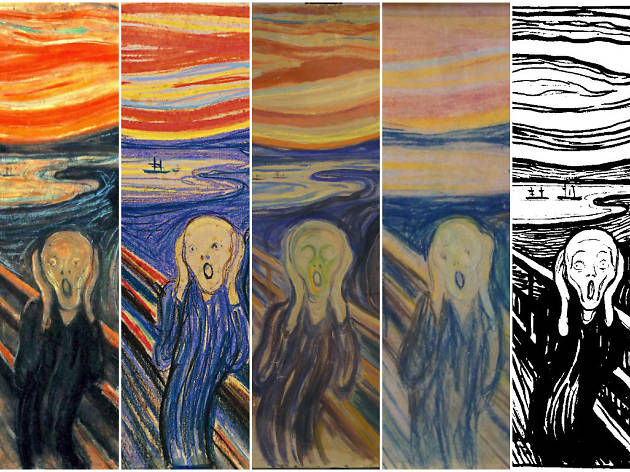
Before his appearance in cinema, expressionism was born through painting in Germany at the end of the XIXe century. This avant-garde projects the horrified and fascinated look of artists on a violent and sick society. The geometry is distorted and has sharp lines, the colors are violent and the faces are scary masks. The principle is not to represent reality, but rather to deform it into anxious visions to achieve expressive intensity. This distance from realism is also linked to the refinement of photography, which upsets the relationship between painting and reality. The main actors of expressionism are Edvard Munch with his famous series The Cree, but also Vincent Van Gogh or James Ensor. Two collectives are formed: « Die Brücke » and « Der Blaue Reiter ». Expressionists see themselves not as a movement, nor even as a school, but rather as a reaction to academicism and society. The First World War and its ravages will then traumatize painters like Otto Dix.
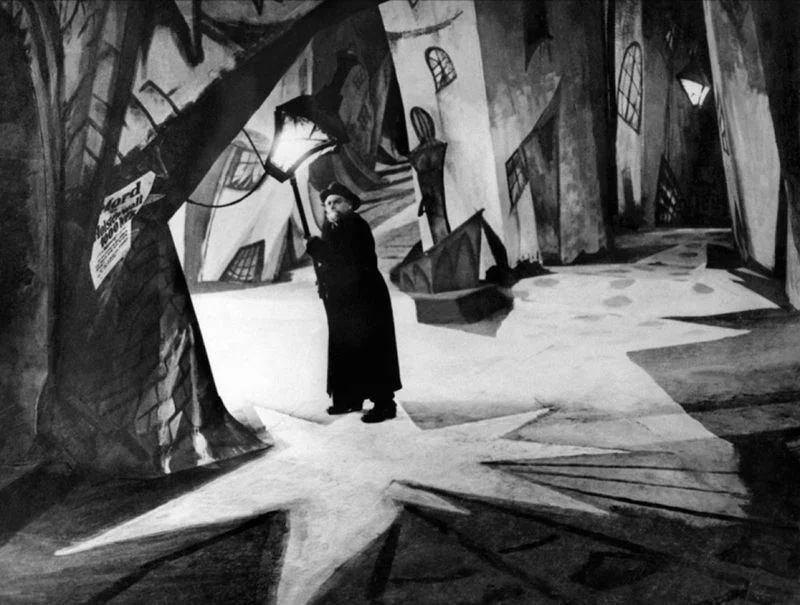
What about the movies in all this? He's still in a bald state when the Great War breaks out. It was in 1920, under the Weimar Republic, that German expressionism appeared: The office of Dr. Caligari Robert Wiene is often regarded as the only totally expressionist film. A Gaussian blur surrounds the so-called expressionist films. Contemporary German filmmakers from Wiene, such as Friedrich Wilhelm Murnau or Fritz Lang, are very close to his codes. These codes are themselves inspired by films like The student from Prague and The Golem by Stellan Rye, as well as authors from German romanticism, like Goethe.
Expressionism, the end of the inter-war period
Le Office of the Doctor Caligari is the nightmare vision of a distorted city, where the murders continue following the arrival of the mysterious Doctor and his somnambul Cesare. We find in this film the dark and disfigured atmosphere of pictorial expressionism. It is shot in studio, to allow total control of the environment and guarantee the creation of a supernatural and artificial world. The decoration is composed of painted backgrounds, but also of relief elements tortured by lines stretched, twisted and with a misguided perspective, drowning in the image the characters by their disproportionate size and the subtle game of cutting angles. The source of light that underscores the exacerbated irreality of these sets can rarely be located. Sometimes it's a window or a lamp, others may be the moon. The reality and its physical conventions are destroyed.
The characters who populate these sets are like them: dark and strange. Again, it is the artificiality of makeup, costume and contrasts (Cesare's white skin, her eyes and lips surrounded by black; The black hair that falls on the victim's white nightgown, the hair and white skin of Dr Caligari on his black top) that reveal this expressiveness. This strange and apocalyptic atmosphere is not unrelated to the historical context: like pictorial expressionism, cinematic expressionism is the outlet of an evil being in a society in crisis. A society caught up in the trauma of the Great War. These dark universes are populated by creatures between this strange world and ours. They are in between: semi-living, semi-human, semi-real. They belong to fiction, but act in our world and reflect the wounds of post-war society. They are both death, fear, violence, madness, sickness.
With Nosferatu, a symphony of Horror, Friedrich Wilhelm Murnau appeals to our existential and ancestral fears, giving shape to the first vampire of cinema (not counting the Mephistophelès of Georges Méliès in the The Devil's Manor). The vampire has haunted folklore since ancient times, but it is with the Gothic novels of the XVIIe century that it reveals itself to the world, with the now famous Dracula Bram Stoker. Murnau also wanted to adapt this novel, but the writer's wife refused to give him the rights. As a result, the latter changed the names of the characters, transposed the action in Germany and modified elements of the narrative. Murnau's vampire is carrying the plague, carrying this plague with him by boat and spreading it on Germany during the landing. As in The office of Dr. Caligari, a mysterious creature comes to settle in town; It destroys the established order by spreading death from within. Here we find the cry of alerting artists to a society broken by war; social and political crises are indeed a propitious ground for the gradual rise of Nazism.
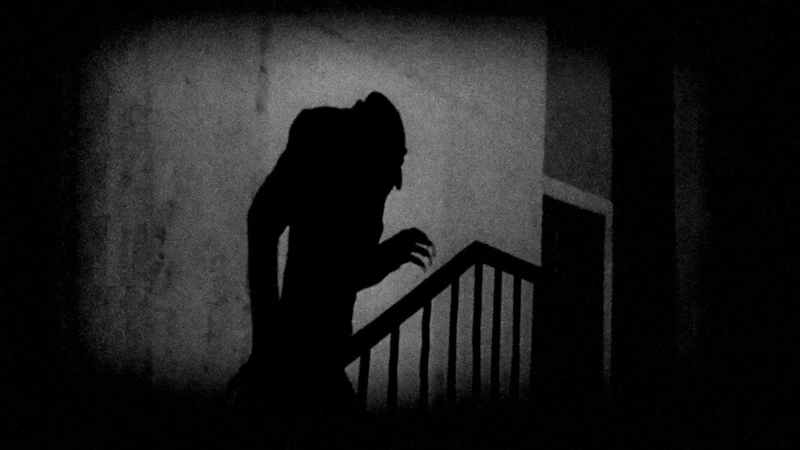
In terms of images, Murnau has a mainly romantic aesthetic. However, NosferatuIt develops visual codes specific to expressionism. It takes over the basics of makeup and costumes of the Office of Doctor Caligari : eyes surrounded by black, hirsute eyebrows, black clothes that only reveal white faces and hands... It accentuates the character of these only visible elements of his monster's body: the Count Orlock has long scratched fingers, sharp teeth and pointed ears. You may not have seen Nosferatu, but you probably have in mind its appearance, especially when it arrives by boat, where claws and claws are exacerbated. This appearance characterizes the character and allows him to model a unique shadow. For Murnau's expressionism rests on the shadow of his creature. It stretches and becomes threatening on the walls. The shadow precedes the action. It stimulates the spectator's imagination, in order to strengthen its monstrous extent and symbolically suggest violence. The shadow of the vampire projects direct power over the real world. It is through her that he strangles the protagonist. The creature can kill without appearing in the field. The shadow thus becomes an even more inhuman and frightening threat to the characters, but especially to the spectator on alert.
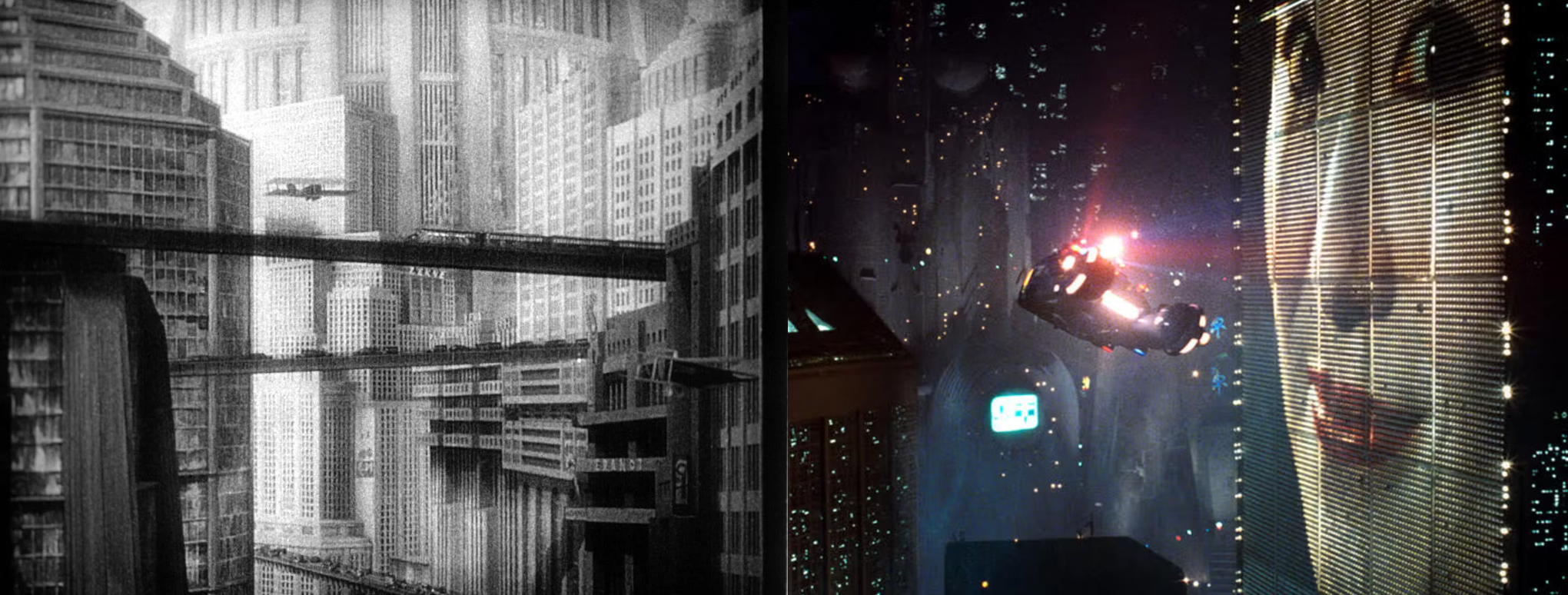
We can also talk about Fritz Lang who, although refusing to be labelled as an expressionist, uses the codes of the genre. In dystopia Metropolis, a humanoid robot, perfect replica of the female main character, sows chaos in a vertical city where the rich live at the peaks and the poor work in the depths. The same applies to M the CurseBlack film about a child killer. Same for Dr. Mabuse where a criminal wants to take control of a city using hypnosis... Doesn't that remind you of another figure of German expressionism? The same goes for his sequel, The Testament of Doctor Mabuse, which criticizes the Nazi regime (and which will therefore be banned in Germany).
Irrealism in which expressionism envelops its productions is like a fog that gives the appearance of bad dreams, but this fog actually allows to deal with very concrete subjects. Indirectly, the fantastic allows filmmakers to outsource the trauma of war. It gives substance to this feeling that the Weimar Republic, threatened by the Nazi regime, will be ephemeral. As the essayist Jean-Michel Palmier writes in Expressionism as a revolt, it's not a current, but « a vision of the world with its hopes, its dreams, its hatreds – a sensitivity ». Expressionists stage evil creatures that aim to take control of the city, and therefore of human society. Whether it is the first mad scientist, vampire or robot of cinema, each of his figures alerts about a real danger despite these deceptive appearances. The monster that will trigger the Second World War is not hypnotizing, it has no crouched fingers, nor pointed ears: it is an ordinary human whose power rests on the cult of personality.
After World War II: towards post-expressionism?
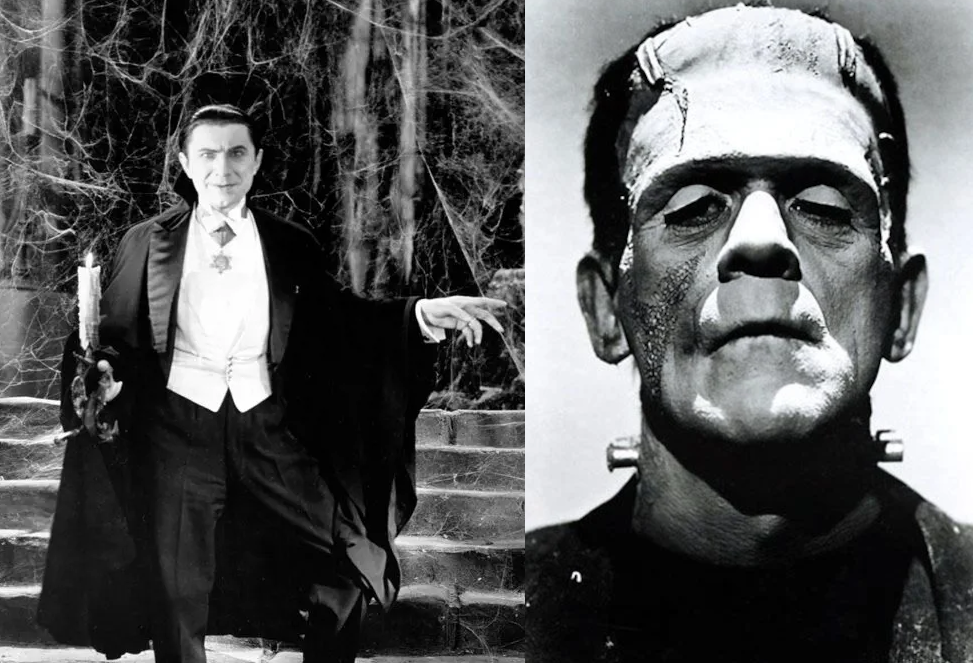
With the rise of Nazism, German filmmakers such as Billy Wilder or Fritz Lang fled Germany to France and the United States, where they began a new career. The monsters made their arrival in Hollywood with series B productions, especially those of Universal. In 1931, Dracula is entitled to his first official adaptation by Tod Browning, and the same applies to Frankenstein by James Whale (which had already been adapted to short film by James Searle Dawley in 1910). The vampire, the creature of Frankenstein and the mad scientist will become the major fantastic figures of decades to come. But these monsters are no longer expressionist: they are marked by a gothic aesthetic in the image of the novels from which they originated, while at the same time bowing to the classic codes of Hollywood cinema.
Following World War II, monsters take time to return to the forefront. Because the human is responsible for the horrors of war, it is he, without any other fantastic fireworks, who threatens human society. In the 1950s and 1960s, Italian filmmakers also took vampires and formed Italian Gothic. The Mask of the Devil Mario Bava, famous director of giallo, genre where monsters will also get a place under the human traits they possess. It is in the UK that monsters earn their titles of nobility, thanks to the Hammer Film Productions, which breathes a new breath to these old creatures. Under the direction of Terence Fisher is the resurrection of Count Dracula, those of Frankenstein's creature, werewolves, mummies and other monsters using special effects and new colors. But expressionism is not dead. Some filmmakers re-use its codes to support their characters, especially when the action of the film involves a period of crisis.
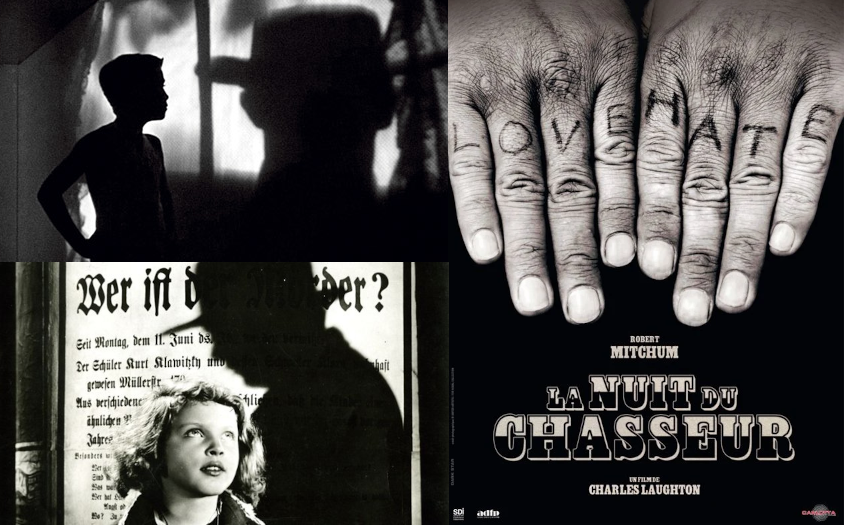
For example, The Night of the Hunter Charles Laughton. Filmed in the mid-1950s, the action was at the time of the Great Depression. Harry Powell is a serial killer who seduces widows before murdering them. He's arrested for car theft; His prison neighbor is a robber who confides to him that only his children know where he hid the stolen money. When he got out of prison, Powell made himself look like a churchman and went, determined, looking for the spoil. The aesthetics of the film are based on expressionist codes. Harry Powell is a modern monster that seduces the day and haunts the night. Filmed like a creature, this monster is a simple man. This character embodies the double figure that is omnipresent in expressionism: a religious man by day, a serial killer at night. This duality is directly marked on his hands with tattoos « LOVE » on the right and « HATE » To the left. As in NosferatuHis hands and face are the only visible elements of his body dressed in black. They are therefore visual markers of his identity: he is wearing a hat, which characterizes his silhouette and the threat he represents; On these hands, you notice tattoos rich in meaning.
The light is also used in an expressionist way: there are many clear obscurs to highlight the physical characteristics of the character by means of shadows similar to that of Nosferatu. But it's no longer a vampire that slips into a young woman's room, this time it's a man who threatens the children's room since the garden fence. In addition, this film reuses the codes used by Fritz Lang in M the Curse. The shadow of a man wearing a hat threatens children, while he starts a melody as soon as he starts hunting... However, the crisis expressed in the film is no longer the fragility of the Weimar Republic, but rather the poverty of the Great Depression. Man no longer hunts out of schizophrenic frustration, but out of greed. As Shakespeare says: « Hell is empty. All demons are here ». They don't have crouched fingers or sharp canines, they wear hats, they sing Learning on the everlasting arms, and are all the more monstrous.
Another similar genre of expressionism that persists in cinema, science fiction passes through films like Blade Runner Ridley Scott. The filmmaker takes up themes and visuals from Metropolis by Fritz Lang. The action takes place in a vertical city, a reflection of a society that is undergoing the social crisis. In Metropolis, the separation between the rich at the top and the ground workers is found in Blade Runner. Overpopulation has forced humans to colonize space, and androids threaten to sow chaos by reversing the established order of this city-state. If in Metropolis Maria's replica embodied the apocalyptic chaos (the many biblical references in the film are similar to the figure of the Prostitute of Babylon), the replicators of Blade Runner ask about the blurred and philosophical boundaries between man and machine. The science fiction becomes the new den of monsters and the outlet of the worries of the time, as the expressionist creatures were. These include: Godzilla of Ishirō Honda, where the kaijū embodies the trauma of the atomic era. It is also the advent of a new monster from the literature: the alien.
monstrosity as a new normality
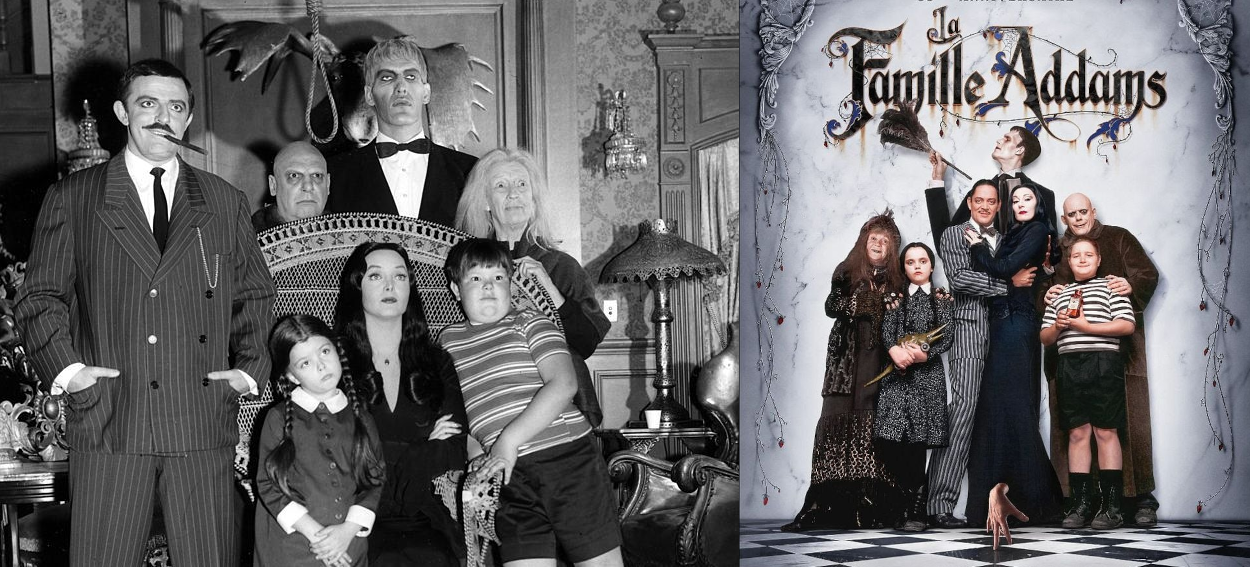
Adapted from the humorous drawings of Charles Addams, the series The Addams Family began on television in 1964, before moving to film format in 1991 under the direction of Barry Sonenfeld. This family with aesthetics and gothic lifestyle appears again on the small screen in 2022, with the series Netflix Wednesday. La famille Addams vit en décalage avec la société. Le microcosme du manoir les protège d’un monde qui ne leur correspond pas. Ce qui est nouveau, c’est le point de vue choisi : au lieu d’adopter le regard des humains sur les monstres, c’est l’inverse ici. On nous montre le regard critique de ces personnages hors-norme sur notre société. Le spectateur adopte le point de vue de personnages systématiquement en décalage, des marginaux en opposition directe au regard dit « mainstream ».
La différence est montrée comme une norme, et la normalité comme un défaut. Ce contraste permet aussi de révéler les vices de notre société : la famille Addams est riche et leur fortune est convoitée par les personnes extérieures, reflets d’une société capitaliste et donc avide. Même si l’oncle Fétide est décrit comme un horrible criminel, les personnes qui nous apparaissent comme terrifiantes sont celles qui le manipulent pour essayer de récupérer la fortune des Addams. L’apparence physique des membres de la famille Addams est purement gothique, sauf pour Fétide qui reprend les codes expressionnistes. Avec le maquillage, les cernes soulignent les yeux et le jeu de Christopher Lloyd. En termes d’esthétique visuelle, les différentes adaptations de The Addams Family sont principalement gothiques et fantastiques, mais elles comportent tout de même quelques références à l’expressionnisme.
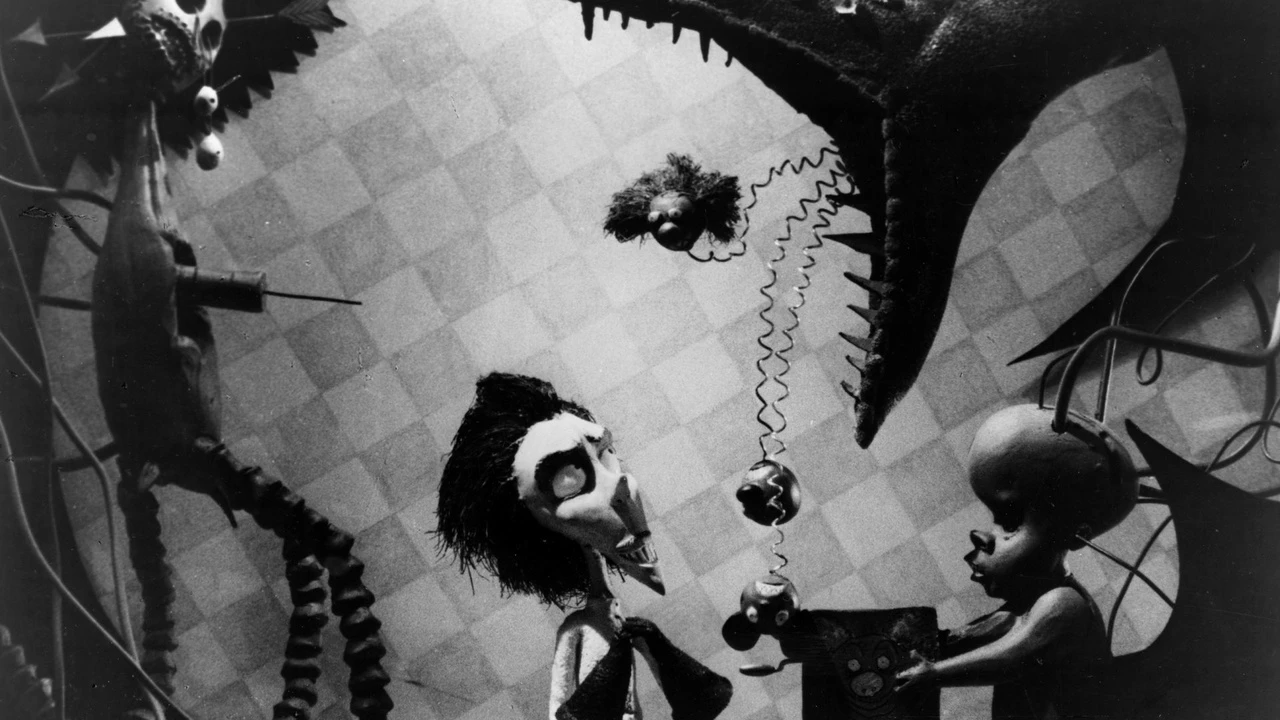
Dans les années 70, un certain cinéaste du nom de Tim Burton réalise ses premiers courts-métrages et parvient à tisser un style unique. Son univers est hanté par des ombres. Son monde est peuplé de personnages blafards aux traits longs et marqués, où humanité et monstruosité se confondent sans distinction. Tim Burton est le réalisateur fantastique qui donne un souffle nouveau à ce genre, aux monstres et à l’expressionnisme, et ce de manière affirmée dès son deuxième long-métrage : Beetlejuice (1988). Le cinéaste associe l’héritage expressionniste à ses propres codes visuels ; il se réapproprie cette esthétique et en fera sa signature. On peut par exemple voir le Pingouin de Batman: The Challenge comme une transposition du Docteur Mabuse de Fritz Lang. Cette similitude est autant visuelle (par le maquillage) que thématique. C’est ce que révèle cette recherche de contrôle de la ville par les médias, comme s’il s’agissait d’une hypnose moderne. Tim Burton redonne une place d’honneur aux créatures et aux marginaux en construisant un univers centré sur eux, à l’instar de la famille Addams (on peut d’ailleurs souligner sa participation à la série Wednesday).
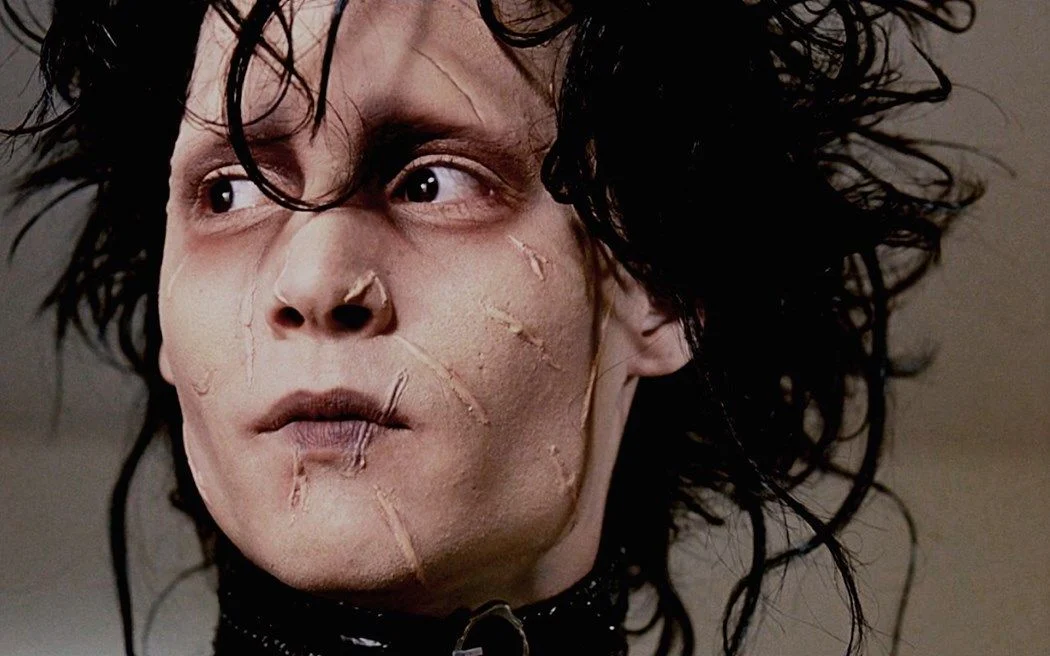
Son personnage le plus emblématique est le héros d’Edward in the hands of silver, troisième long-métrage de Tim Burton qui marqua l’année 1990. Edward a le physique d’un monstre : comme la créature de Frankenstein, il a été créé par un scientifique qui n’a pas pu l’achever et qui, à la place de ses mains, lui a donné des lames de ciseaux. Il vit dans un manoir gothique jusqu’à ce qu’une femme le recueille et l’amène dans une banlieue pavillonnaire. Le physique d’Edward contraste dans ce nouvel univers aux codes esthétiques stricts et normatifs. Il incarne un décalage physique et moral avec cette société : il est effrayant mais il est pur, alors que les habitants de la banlieue qu’il découvre ont une apparence lisse et un cœur sournois. En eux, le vice se manifeste. Edward n’arrive pas à trouver sa place dans cette société artificielle où la différence est mal vue : les habitants semblent l’accepter et tirent profit de sa différence (il devient tailleur de haie et coiffeur/toiletteur) avant de le manipuler en profitant de sa naïveté enfantine. Ces mêmes gens finiront par le chasser.
La banlieue résidentielle et ses habitants sont présentés de manière oppressante et cauchemardesque, ce qui tranche avec le héros du film qui est un monstre innocent, destiné à vivre reclus dans son manoir gothique, loin de cette société maladive qui le rejette. Tim Burton ne cache pas s’être inspiré de sa propre enfance. Le réalisateur a grandi dans une banlieue américaine qu’il détestait. Il a en effet cherché à ce que le quartier qu’on voit dans le film ressemble à celui de son enfance tout en appuyant son caractère fade et oppressant avec des maisons toutes à l’identique. Seule la couleur pastelle change (rose, bleu, verte ou jaune), et les fenêtres sont réduites. Ainsi, on peut voir Edward in the hands of silver comme l’extériorisation d’une crise personnelle : celle de l’artiste lui-même en décalage avec l’univers normatif dans lequel il a grandi, et qui a développé chez lui son propre univers sombre peuplé de monstres. On ressent bien ce décalage avec son court-métrage d’animation Vincent, où un petit garçon s’évade dans son imaginaire. Le petit deviendra d’ailleurs acteur de films d’horreur, et l’on retrouve Vincent Price, qui prêtait déjà sa voix au récit d’Edward.
Il est important de souligner que Tim Burton pose les bases de son univers visuel en passant d’abord par le cinéma d’animation. Cette technique lui permet de donner vie de manière directe à ses personnages et formes esthétiques expressionnistes ; l’animation entretient une relation plus détachée du réel que le cinéma en prise de vues réelles. Le cinéaste peut calquer son imaginaire directement sur son œuvre. Mais ses premiers films sont des films en prises de vue réelles. Tim Burton transpose ses créatures dans un univers réaliste, tout en refusant de les conformer à ce monde. Le cinéma de Tim Burton est celui d’une fuite de la société dans le fantastique. Presque tous ses films suivent un personnage, souvent un.e enfant ou jeune adolescent.e qui fuit la normativité, la dureté ou l’ennui de la société en poussant la porte du fantastique. Ce n’est donc pas une surprise qu’il adapte des œuvres comme Charlie and Chocolate or Alice in Wonderland.
Mais qu'en est-il aujourd'hui, en 2026 ?
L’actualité internationale est marquée par les luttes sociales et les guerres. Ce contexte va‑t‑il engendrer une nouvelle génération de monstres, exutoires d’une société violente ? L’expressionnisme va‑t‑il encore se faire une place et réussir à extérioriser ces crises ? Nous avons bel et bien eu droit à une transcription de Nosferatu par Robert Eggers en 2024, mais, au‑delà du titre et de quelques éléments narratifs, le film ne revendique aucun lien direct avec celui de Murnau. Plus récemment, on peut citer Sinners de Ryan Coogler, qui revisite le mythe du vampire selon le prisme de la ségrégation et du suprémacisme blanc dans les années 1930 (et qui s’est imposé aux Oscars avec le record du plus grand nombre de nominations : seize, dont quatre remportés). On peut aussi noter la réapparition sur nos écrans de la créature de Frankenstein : d’un côté, l’adaptation du roman de Mary Shelley par Guillermo del Toro ; de l’autre, la sortie le mois dernier de The Bride de Maggie Gyllenhaal, qui explore la figure de la fiancée de Frankenstein dans un contexte contemporain en la détachant de son rôle de « femme de… ».
Née un 31 octobre et baptisée par le générique de Legend, j’ai grandi nourrie de fantastique. Depuis les making‑of du Lord of the Rings, je traque chaque film comme une obsession assumée. Aujourd’hui étudiante en licence de Cinéma à la Sorbonne Nouvelle, j’ai déjà signé mon premier court‑métrage.
Categories
Recent Posts
Raw pearl polished with roguelite : Absolute, the
- 24 April 2026
- 14 min. reading
The Mag.7: a selection for the Myceliads
- 15 April 2026
- 25min. readout
Expressionism in cinema: crises and
- 13 April 2026
- 20min reading
South Park: The Stick of Truth,
- 1 April 2026
- 12 min. reading
The 4K Ultra HD Bazaar, volume
- 30 March 2026
- 52 min reading