
• Tested on PC (RTX 3080) on 4K video projector late in the dark night...
  • The game suffers from slowdowns between the different tables, even with a configuration of space on PC.
  • Code transmitted by the publisher
  • Finished in 3h50 on Steam.
  • Screenshots home.

Real meteor on the stage of the independent game, the Danish studio Playdead had managed its double with Limbo, pioneer of the Xbox live arcade and Inside, the stunning work that had succeeded in making the 2010 formula a sketch. Founded by Dino Patti and Arnt Jensen, the two authors, avarous in communication, had announced their frantic separation to try the solo adventure. Somerville is the child of this divorce. The game is only produced by Dino Patti and is actually directed by Chris Olsen, known for his work in animation on films like Skyfall. This new wedding gave the British studio Jumpship, resolutely turned around Chris as Dino expressly recognizes. « There's this false idea that this is my game. » Did he recently confide in Games Industry. Barely out Somerville, the bulimique publisher Thunderful took over the Jumpship studio. Finally, what remains of the fergue and daring of a studio once independent and now amputated from one of its two legs: a stroke of genius or a work of command?

The world war will not take place

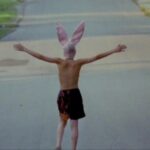
At the start of the game, the regulars of the Danish studio Playdead recognize the graphic paw ofInside. In Somerville, once it is not customary, we control an aphone character. After a sequence plan seen from the sky to the image of Shining's opening, the camera is elegantly drawn to the heart of this little house lost in one of these anonymous campaigns. A couple are asleep in front of the TV with a young child on the couch. We start the adventure with this little baby who jumps like a chip to move. The parents sleep and explore the house in the darkness, while an acidic light casts purple shadows from the outside. After climbing drawers, you go awkwardly to a window that the petiot tries to open before losing balance and falling into a trash can. The parents wake up and we immediately take control of the father, hero despite him of the title.

Somerville is the natural extension of Inside's DA

This first take in hand is in my opinion the best way to represent the essence of Somerville. Every gameplay idea will systematically result in an irremediable slide to the playable trash. This may seem a little rough from the start but Somerville systematically scuttles his own gameplay proposals. Choosing the 3D track, Jumpship jumped on foot in the wolf's mouth, taking all the way through a bench camera and missed spatialization. If the plans remain governed by a constant aesthetic concern, the distant camera too often betrays the player without succeeding in guiding our gaze where he should still be.

Octodad Traveller

These camera worries worsen all the more as the father of the family is a distant cousin ofOctodad. By pressing the A button, the unfortunate grabs like a pot of glue everything that passes under his hand, without that necessarily being wanted by the player. Somerville Also offers chase races at the minced pace, the fault to a difficult reading of depths and frankly annoying collisions. If these details may seem anecdotal, their recurrence can quickly become a purge on an experiment that lasts only a handful of hours. For example, this was the defect of the first Little Nightmares who had managed to correct the shot correctly in his excellent second part.

Little Nightmares II
See our interview with Little Nightmares 2 developers, another game from Playdead School

It's like Jumpship had denied his own inheritance. Where Inside understood that horizontal scrolling could only work if it was flexible, Somerville cumulates the tares in addition to being gangreneated with graphic bugs that question about the finish of the title. I first believed in isolated cases but the few exchanges with other players have convinced me of a phenomenon that is otherwise more persistent. It must be said that from the beginning of the game, the dog was blocked in the coffee table; A few moments later the damned dog went into the decor for no reason, as if Milou had abused catweed. As for our character's companion, she was sadly stuck in a car door before being caught by an alien; Finally my first dive ended up with a Little Gregory as they say in the middle: blocked and condemned to drowning. Ah and I forget my stroboscopic son who flashes and disappears during a kinematic that played the map of forced emotion, with great piano reinforcement. It's too bad, but it's still missed...

Somerville
Fortunately, the game knows how to offer beautiful compositions

You have to take control to figure out how much Somerville is heavy. Turning a simple crank is a cross path, except to consider that I need to review my psychomotor abilities in the doctor. I'm not even talking about some fanciful obstacles that artificially block our way when it's enough to pass by. Still worse, Somerville deceives the player by arbitrarily choosing to slow down or speed up our character's pace arbitrarily, even sometimes making the hero look like a sick Covid at the last stage. It is as if the game was defeated in advance for the mediocrity of its puzzles, which too often rely on adding a handicap.

A ersatz d

It's obvious how much Somerville fails where Inside excelled. I am thinking of this second scene where we were hunted by a pack of dogs and where we were jumping in extremis in the water, with two fingers to be chewed. Same configuration with aliens in Somerville, but without rhythm or fluidity. Our character comes up against an invisible wall or does not understand that it is necessary to interact with an element of the decor as the gameplay is pataud. Fluidity is the key to the genre, without which the gameplay simmers in frustration. The game is not caught up with puzzles too often carbble and with more than questionable fun interest. We alternate between the phases where we clean the environment in a way Haven. With a simple button, you liquefy certain elements of the decor and vice versa. An underexploited idea, unable to generate any link with the player, somewhat distraught in the face of a rhythm that is increasingly limiting to the surf.

Inside
Read our review of Inside, model of the genre!

Not content to be the poor parent of reflection, Somerville separated from the platform and rarely managed to touch the player. The paintings run too fast and we lose everything that made the charm of the previous Playdead productions, namely the claustrophobia and the sudden opening on a whole other part ignored of the world. This defect is accentuated when we discover another piece that has no interest in progress or we continue to solve a puzzle without the game being able to make us understand that we had already achieved it. Cherry on the cake, the game suffers from slowing down and saccades well felt between the different tables.

Other wrong, Somerville lacks almost every opportunity to seize a start. The first times we land in this refugee camp where tents stretch as far as we can see, we think that perhaps the game will seize the opportunity of the migration issue. After all what more about an alien invasion story where everyone becomes mechanically foreign in their own country? And no, it's still missed, Somerville prefers to play a score that is too well-known by escaping behind the cold beauty of its panoramas and the search for our family. As the generic starts, the player asks: between regression and laborious progression, Somerville Did he really have anything to tell us?

If that good old Phil Collins taught us one thing, it's that he would have done better to stay in his Genesis band than to try solo adventure. Dino is a bit of a Phil Collins who doesn't know, we reproduce the same formula as Inside but without panache. We change a yes two guitar riffs and we believe to repeat the original success while all or almost all sounds false. Chess and math for Somerville, who methodically scuttles each of his gameplay proposals, the fault of a lack of finish and a defect of retreat on his own mechanics that he vomits to the player. It is known how separations in pain can sometimes traumatize children. Somerville is of this calibre, a game entangled by the history of his forefathers. Unable to free themselves, unable to match them. Chris Olsen deprives Playdead's bastard child of any committed perspective, probably overwhelmed by the legacy of his producer. Somerville is disincarnated and gives birth to little original, except that a pastiche is a new work. Like an impression that we should have smeared just to see the typography from Inside from the Sommerville title screen. After separation begins mourning.

For
  • A DA with striking panoramas
  • The War Side of the Worlds
  • Variety of environments
  • The rather successful introduction
  • Short game and fortunately
Against
  • Strawberry gameplay and bench rhythm
  • Improper spatialization with 3D
  • Collisions and tiring bugs
  • Lack of overall finish
  • Slowings between tables
  • Flavourless seeds
  • Camera that deceives the player
  • No truly significant moment
  • Impression of playing an Inside ersatz
  • Where is the author's vision?
JV critic and film always ready to lead Interviews at festivals! Amateur of genre films and everything that tends to the strange. Do not hesitate to contact me by consulting my profile.

0 0 Votes
Evaluation of Article
Subscribe
Notify of
guest
2 Remarks
oldest
most recent Most popular
Comments on Inline
See all your comments
trackback

[...] In Plague Tale Requiem and blood TPS Evil West. Then we share our mourning on Somerville. Guillaume comes back to his cute fish, the Dark Picture Anthology games with the latest [...]

trackback

[...] Cocoon is part of this category, which has made us cautious since the disappointing Somerville. Presented as the new game of the father of the gameplay of Limbo and Inside, Cocoon betrays [...]

2
0
We would like your opinion, please leave a comment.x