Work torn between multiple adaptations since the first Pinocchio mute of 1911, the last date, signed Robert Zemeckis, seemed to confirm from his digital ugliness that the Italian puppet did not have much more to tell. It was without counting on Guillermo del Toro who, with the help of his co-director Mark Gustafsonmake it a real stop motion jewel.

A delivery in pain

There are feature films that catch you from their foreground. This is certainly the case with Pinocchio by Guillermo del Toro, who had guided us with his film with red carpets by proudly showing his new hero's wooden puppet. And yet, God knows if his conception was complicated.

The idea is already mentioned by the Mexican director in 2008, but financial and health constraints are needed. It needs $35 million to carry it out and threatens to abandon the project if it fails to bring them together. He then faces the pandemic, while simultaneous shootings of Pinocchio and its Nightmare Alley stop abruptly. During the genesis, several names are put forward, then removed, and it is finally the duo del Toro and Mark Gustafson who assume responsibility for distribution rights purchased by Netflix.

The talent collector

Slow and difficult gesture therefore, but for a perfectly up to date result. Guillermo del Toro is one of the most sharp eyes in the world. He has carved out a career created in lace, unfolding a rich black universe, obviously inspired by Lovecraft and Borges. But over time, he has also proved himself to be a perfect combination of talent. If he recently proved us through his Cabinet of Curiosities, for which he managed to gather the fine flower of the current horror in an anthological series, he repeats with this film.

First his co-director, Mark Gustafson, who has already worked as an animation director at none other than Wes Anderson for his magisterial Fantastic Mr. FoxBut also his vocal casting... He brings together the very recurring in his filmography Ron Perlman, just like Ewan McGregor, Christoph Waltz or Tilda Swinton perfect in its role of« Spirit of the Forest».

Yet the best choice is probably that of the musical composer. Signing his third collaboration with the Mexican director after Troll hunters : The tales of Arcadia and The Water Form, Alexandre Desplat manages to create a musical universe that fits perfectly with the imagery deployed by del Toro. Never hilarious, always rhythmic, the songs that glaze the feature film do not in any case increase, unlike many current musical cartoons (as a contra example, horrible One Piece Film : Red or the last Encanto).

A Pinocchio under influence

By bringing together all these diverse talents and by working on a work that has already been adapted many times (from 1911 and a first silent film, but above all via the iconic drawing-animated Disney of the 1940s), del Toro managed to get totally over it. Far from the digital inconsistency that the Pinocchio by Robert Zemeckis, we feel the foot of the director of the Labyrinth of Pan joint themes, some of which seem to be coming out. Here we find the curious look that he looks at the world of circus, already widely discussed in Nightmare Alley.

Yet, the most obvious wink that del Toro makes us refer to one of his first films, Devil's China. Besides the theme of the war, there is the young Carlos, whose first name is translated into Italian to become the son Geppetto lost at the beginning of the feature film, Carlo. Who is also the name of novelist Carlo Collodi, the father behind The Adventures of Pinocchio, written in 1881.

In short, the director takes us without difficulty in this transposition of the history of Pinocchio in Mussolini's fascist Italy, taking over his most cherished themes: the innocence of childhood in the face of the absurdity of war, praise for difference, mourning... Sometimes heavy themes therefore, in which the director does not hesitate to inject a darkness which would be found in Henry Selick (Mr. Jack's strange Christmas, Coraline, etc.) or in animation of Tim Burton (Frankenweenie).

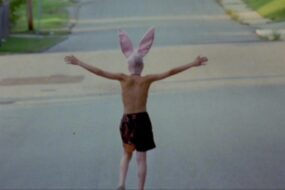
Some sequences are particularly nightmares – especially those toured with rabbits, which are not without reminding the terrifying Rabbits of the David Lynch. Yet this assumed darkness does not make Pinocchio A creepy movie, on the contrary. Besides the pure plastic beauty of the feature film and the aerial flights of its musical parts, we can count on the humorous projections of Sebastian J. Cricket, a small literary cricket. Doubted by McGregor, he will become the main narrator of history and the center of magnificent visual finds.

Truculent ideas, never Manichaean in writing his characters, Pinocchio de del Toro asserts as one of the best (if this is the best) adaptations to the screen of the Italian novel. It is to be discovered on large screen (for the lucky) and soon on Netflix (for others). And God knows if it was worth waiting for!

Drinking the Stephen Kings as the apricot syrup of my native country, I first discovered cinema through its (often bad) adaptations. I'm married to Mrs. Wilkes as much as a persistent Stockholm syndrome, I am gradually opening up to videoclub films and B-series peasers.Today, I wander between my favorite cinemas, film festivals and the edges of Helvetic lakes much less calm than they look.


0 0 Votes
Evaluation of Article
Subscribe
Notify of
guest
1 Commentary
oldest
most recent Most popular
Comments on Inline
See all your comments
trackback

[...] Even Guillermo Del Toro got caught up in the game of stop-motion by offering his own reading of Pinocchio. There is no doubt that with Playing God, puppeteer Matteo Burani is seeking to register in [...]

EnglishenEnglishEnglish
1
0
We would like your opinion, please leave a comment.x