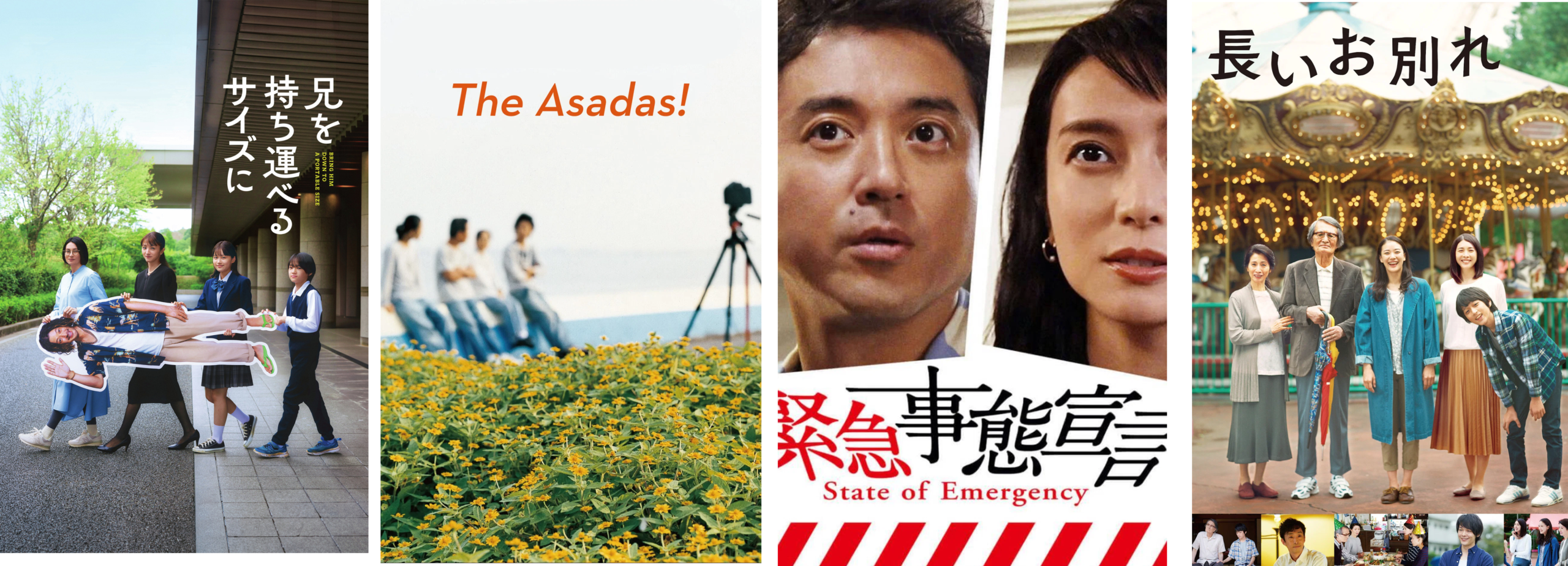
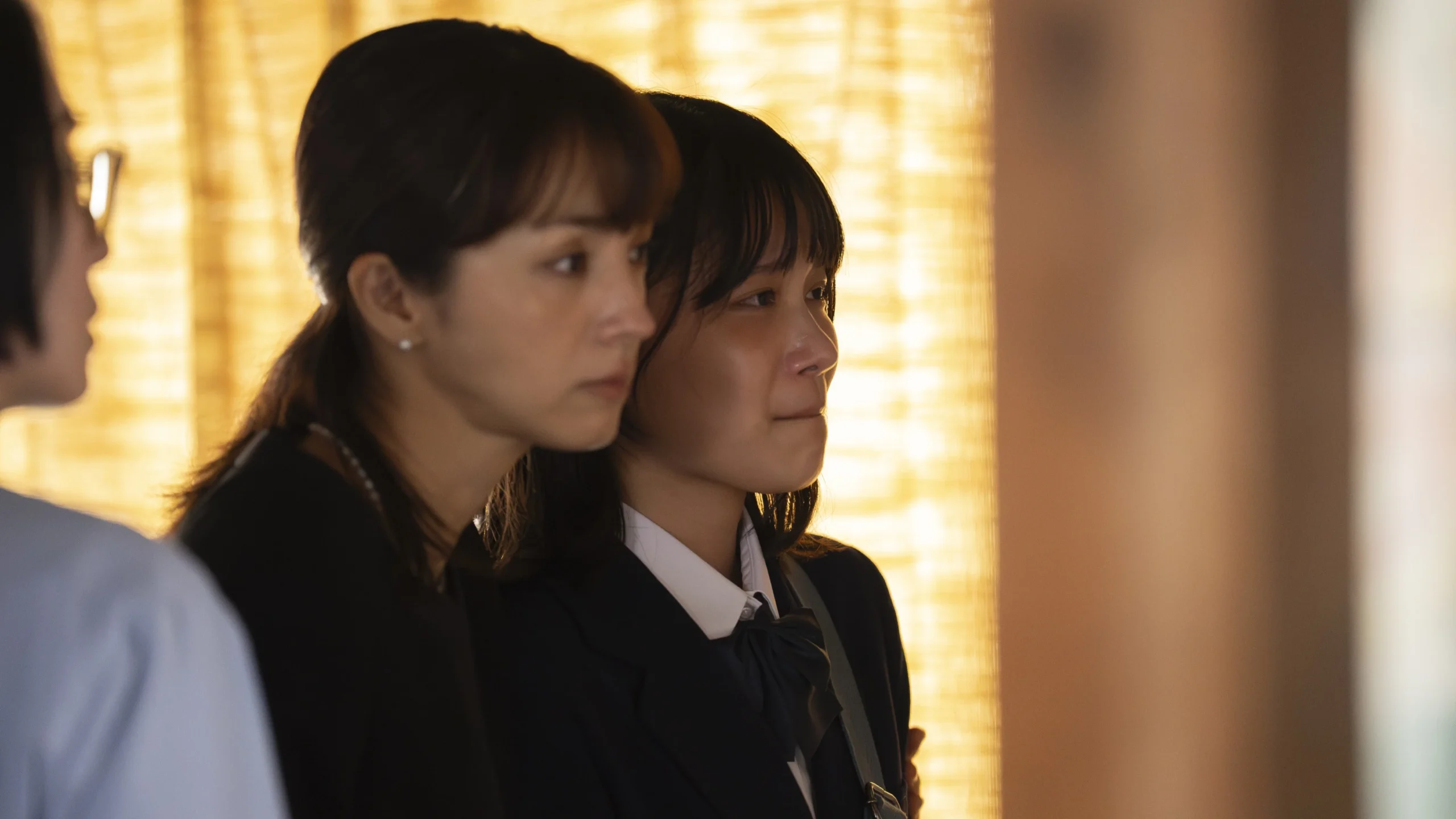
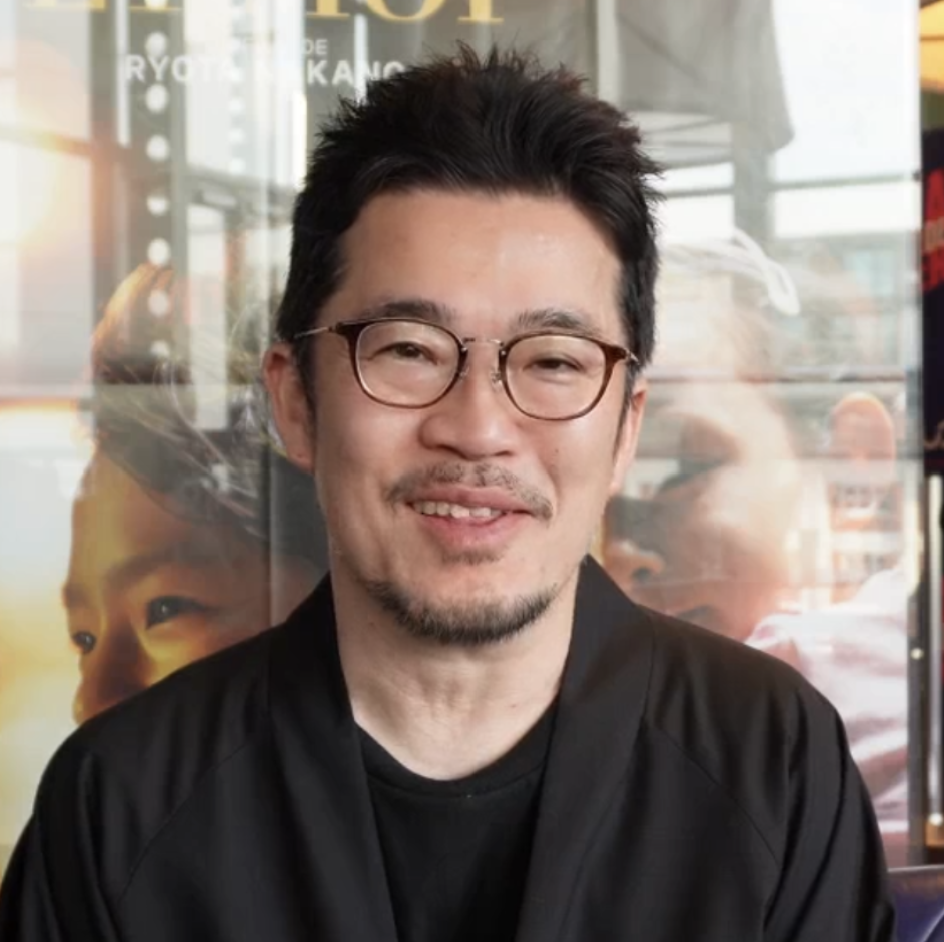
Between Riko and his older brother, nothing has ever been simple. Even after his death, he continues to complicate his life. Adapted from Riko Murai's autobiographical essay, the filmMy big brother and Iadopts a singular balance to treat with modesty, humour and gentleness the loss of the one we thought knew. Ryôta Nakano, a preview at the UGC in Strasbourg, was pleased to discuss his latest feature film with us.

Interview with Ryōta Nakano

K7:You lost your father when you were a child. What led you to address this intimate subject? Did this have an impact on the genesis ofMy big brother and I ?

That's not the only reason I'm making family movies. I lost my father when I was six. I grew up with my mother and my older brother, and I always wondered what the family meant. This question has been with me since my childhood. That's probably why I wanted to deal with this issue today.

K7:There is a very poetic phrase that is spoken by one of the protagonists of the film. «The family is primarily a refuge and not a burden». How did you manage to write characters so accurately?

This film is adapted from a true story. I first met the author in person, so she could tell me her story. I have long worked on family issues through my films. And yet, I remain convinced that there is no single answer to the question of what the family really is. Each family, ultimately, has its own definition. In the case of the Murayi family, Riko Murayi's family, I felt that a sentence was particularly good: « It's not a burden, it's a refuge. » That's why I took him.

K7:Between humor notes and more dramatic scenes caught up in emotion, how did you manage this marriage of genres to find the right balance?

I have the feeling that the human being is the most touching when he struggles, when he is absorbed by something, when he tries without always achieving it. In these situations, it can be both a bit clumsy, almost crazy, and at the same time very moving. That's what I wanted to film. The loss of a loved one is precisely one of the situations where one finds himself confronted with contradictory feelings, which overwhelm us and overcome us. And it is in those moments, I think, that one is the most touching. I wanted to film each character in all its richness and complexity.

K7: Can we say that it is primarily about a film about forgiveness?

I think it is very difficult to live in resentment towards a deceased person. This sourness drains deeply. Forgiveing, on the contrary, can also help us to live. It seems to me that it does not waste its energy and that it can devote it to the pursuit of its life.

K7:Remarkable detail, you choose an OST in withdrawal with a few simple piano notes that subtly recall the deceased. How did you design the music part? It seems that all the noises around them disappear when the brother appears.

One of the main difficulties, or at least one of the key issues, was how to make the big brother appear in the film. The older brother is absolutely not a ghost. The heroine is a writer, and I started from the principle that she had a very fertile imagination. So I thought to myself that, since she is convoking her brother's memory, I could simply make this brother appear as she imagines him in her head. That's why I chose a very natural form: there is no special effect around its appearance. It is simply his mental image that takes shape.

K7: The fantastic emerges in a very natural way to treat a mourning on several levels: that of the brother, the father and the husband. How do you conceive this dimension between symbolism and fantasy?

At the end of my films, there's always a little bit of fantastic. But I want this fantastic to remain credible. For this to work, the film must remain sober and realistic from beginning to end, so that this fantastic dimension appears natural. It's something I've been very careful about. For music, it was the same principle. I didn't want anything too strong, too demonstrative over emotion. So I chose the most natural music possible.

K7:When Riko learns of her brother's death, she does not want to leave work immediately. It is the funeral that resigns her to respond to the emergency. The work also occupies an important place in your characters. Was that also something you wanted to talk about about Japanese society?

The importance of work, I believe, is quite universal. It's not unique to Japan. For me, this was not so much the question of the trade or even the work itself. What was interesting was rather, as I said earlier, to show how those who remain continue to live. Living is also about supporting her. It's doing everything we can to live well. And to live well, you have to eat. And to eat, you have to make money. It was these efforts, those that each of us deployed to live to the best, that were interested. That's what I wanted to film in each of the characters in the film.

Ryōta Nakano, director

Born in 1973 in Kyoto, Ryōta Nakano studied at the Japan Institute of the Moving Image, a school founded by the famous Shohei Imamura. He began his career on television before turning to the cinema where he began as a screenwriter, editor and director withCapturing Dad(2012). The family occupies a central place in its work.The Asada family(2020) was his first feature film.

Trailer ofMy brother and I

JV critic and film always ready to leadInterviews at festivals! Amateur of genre films and everything that tends to the strange. Do not hesitate to contact me by consulting myprofile.

0 0 Votes
Evaluation of Article
Subscribe
Notify of
guest
0Remarks
oldest
most recent Most popular
0
We would like your opinion, please leave a comment.x