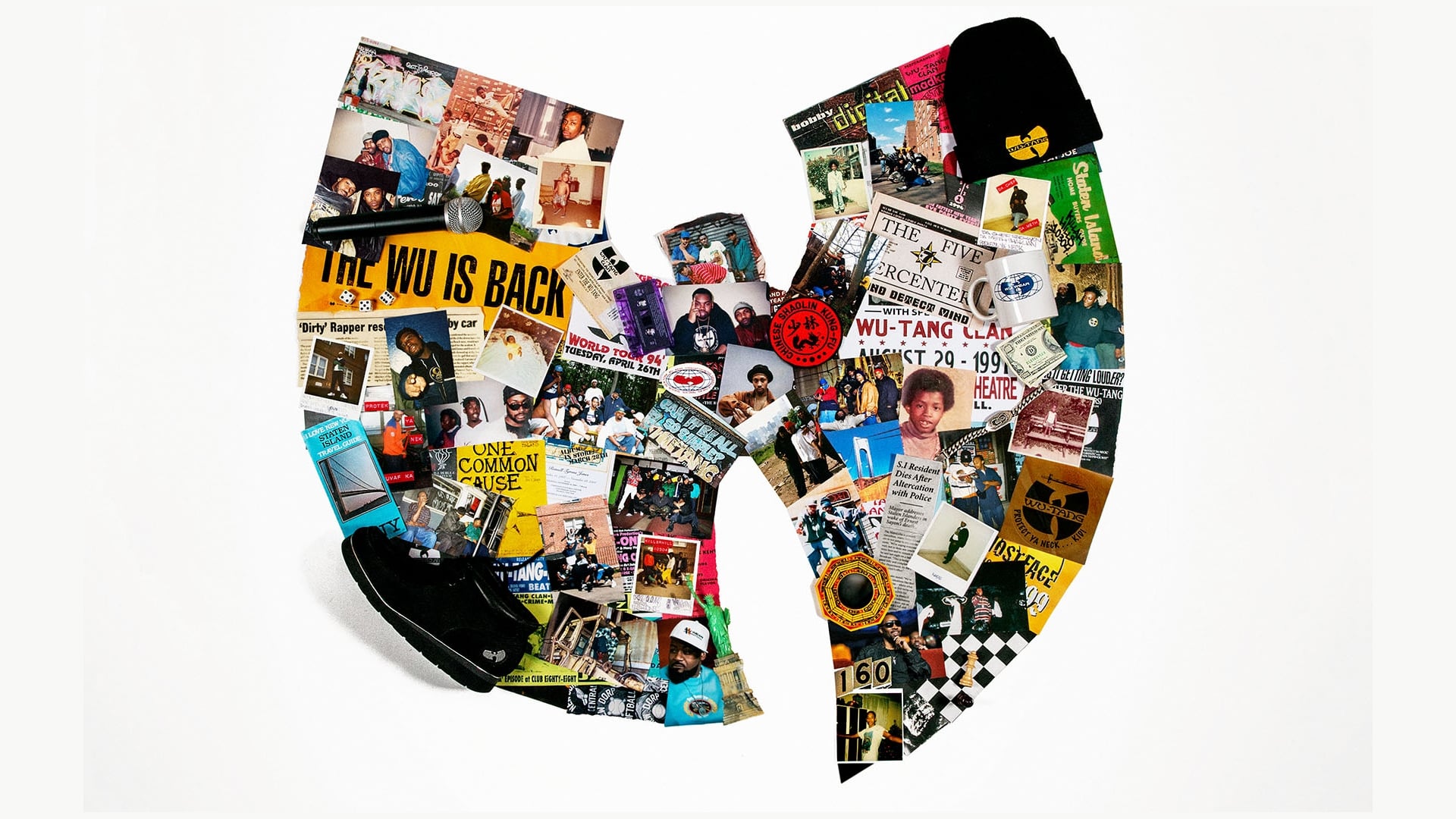
Before we begin this journey of a particular genre in the heart of Shaolin, let us address a crucial point, the raison d'être of this paper: the serial dimension of the Wu-Tang Clan. During these next minutes of reading, which you are invited to read with a suitable sound background, we will talk about one of the unusual characteristics of the group, fortiori in the hip-hop context of the 1990s. A group that seems to be built, imposed, in popular consciences and culture, partly because of its seriality. That is, through the links and motives – in the broad sense of the term – that are recurring in their achievements. A finely woven canvas, firmly connected, and at the center of which meet two worlds. Hip-hop and martial arts. However, the Wu is not confined to music, nor to a succession of times, via samples or animal references. A narrative develops, stories are told according to the projects. It would not be thanks to this artistic unity, translated by the seriality of the group's work, that the Wu-Tang Clan Could have touched and influenced so many generations? Beyond even the borders of hip-hop while guaranteeing its sustainability? Partly without doubt, this is at least what we shall humbly try to highlight along these lines.
Enter the Wu
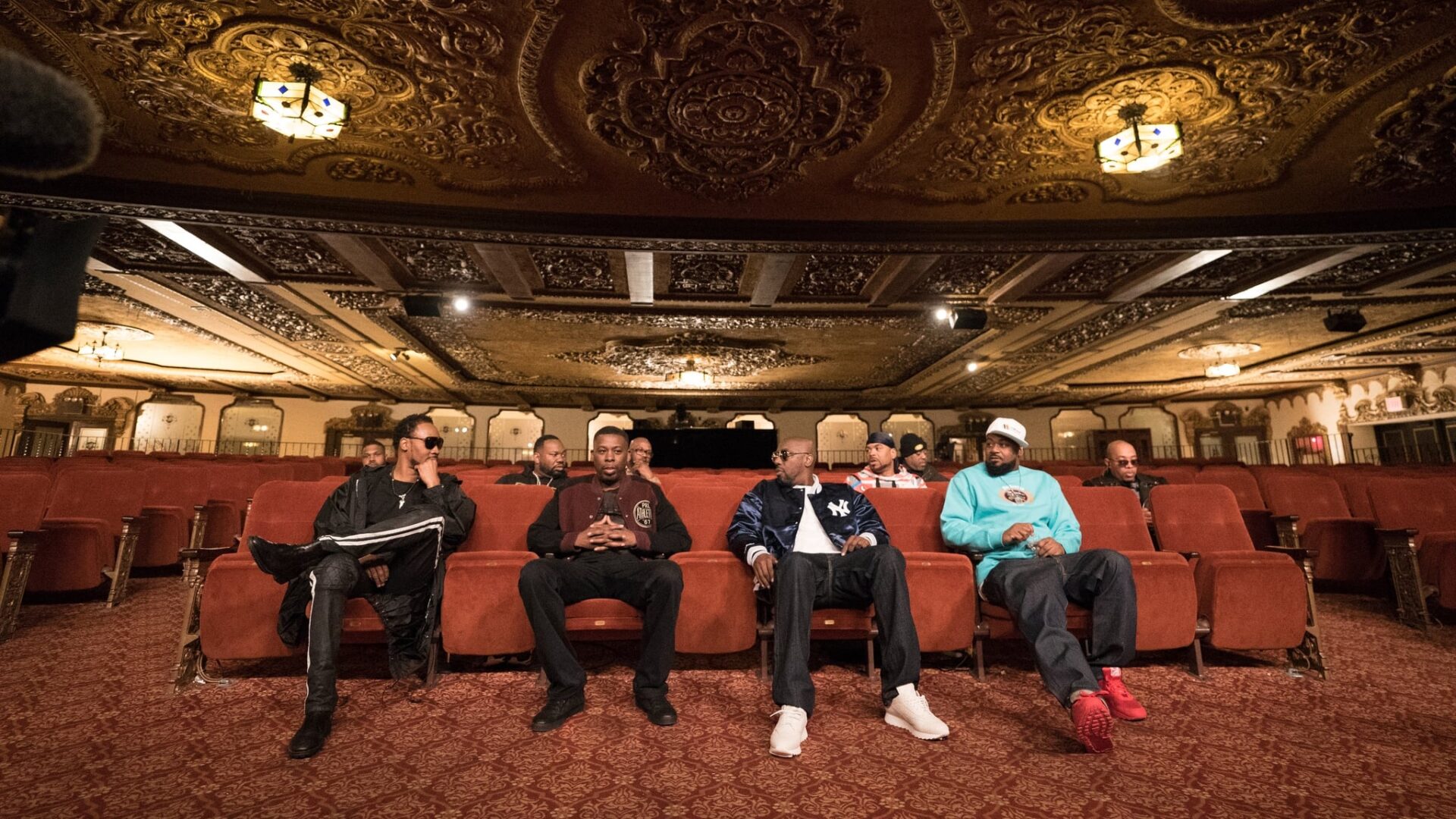
The Wu-Tang Clan is an American hip-hop/rap band originally composed of nine members; RZA (Robert Diggs), GZA (Gary Grice), Method Man (Clifford Smith), Ol-Dirty Bastard/ODB (Russel Jones), Raekwon (Corey Woods), Ghostface Killah (Dennis Coles), Masta Killa (Eglin Turner), Inspectah Deck (Jason Hunter) and U-God (Lamont Hawkins). Important names will gravitate around the group like Mathematics, DJ and illustrator to whom it owes the iconic logo or, later, Redman the faithful collaborator of Method Man and apartment to the group Def Squad. We also note Cappadonna (Daryl Hill), a somewhat full member of the Clan, a tenth member who was to be an integral part of the group. His contributions, as well as his absences, are far from negligible. In addition, his talents are in line with the Clan and he honours his place as ninth warriors who will become more meaningful after the death of ODB in 2004.
Among the pioneers of independent rap on the east coast of the USA, the Wu-Tang Clan is now unanimously regarded as the most influential hip-hop band in history. The road was sown, however, but not enough to shake the Wu. The Clan formed after Robert Diggs' misadventure, called Prince Rakeem at the time, with the label Tommy Boy Records. Proud samurai, grudge, but also lucid, he then nourishes a desire to « Revenge ». And the plan is simple: bringing together the best warriors, the best word handlers, to form a formidable clan. Ronins gathering around a common goal. Helped by his cousins, they also influenced by the martial arts films ubiquitous at the time, as well as by the readings of theSupreme Alphabet and Supreme Mathematics, popular in the organization Nation of Gods and Earths, future ODB and GZA implement the RZA plan.
Cinema, in the broad sense – including films viewed at home – is an important source of inspiration in building the identity of the group, also in its spiritual construction. The name Wu-Tang Clan inspired by the film Shaolin and Wu Tang (1983) directed by Gordon Liu, in addition to referring to the Wudang Mountains in Hubei Province (also known as Wutang), one of the cradles of Taoist martial arts. Most of the nine members borrow their pseudonym of a character from the Hong Kong martial arts of the 1970s, produced by the famous Shaw Brothers, as a rule. If the stage name does not refer directly to a film (U-God for example), others of their aliases, because they have several, do. It is therefore bathed in this universe, in this hybrid culture, that the band's first studio album was produced and broadcast. We are in 1993, the piece Protect Ya Neck had already announced the tone and made it talk, but it was nothing compared to the wave worthy of Hokusai who was about to break: Enter The 36 Chambers.
An explicit reference to the film directed by Liu Lia-Chiang, 36th Chamber of Shaolin : Master Killer. Like the Shaw film, the album will become over the years a classic of the genre, crowning the majority of official and non-official tops, and becoming the symbol of a new era for industry. The Clan will therefore establish its domination with a unique discography, carried by a universe of at first unlikely, but inevitably transforming the musical landscape. Creating at the same time what one can call the « Hip-Hop Kung-fu ». The Wu-Tang Clan It is also a tour de force, that of implanting in popular culture as well as in collective consciousness. Influence many artists, diverse and varied.
Shaolin Island
Called at the moment, the Wu-Tang Clan is distinguished by the omnipresence of references to pointy and philosophical readings – among other comics – to a violent African-American daily, popular or non-American films. A dog with gun cartridges and katanas, nunchakus and shurikens, Taoist martial arts and hip hop. After you've dropped Enter The 36 Chambers In the face of the world, the group, led by a Robert Diggs renamed RZA, will beat the iron while it is still hot with a well oiled strategy. The industry was a shogun that nine samurai, now forming a unified clan, had to remove from his throne in order to subtil him. So the albums will be released Wu-Tang Forever (1997), The W (2000), Iron Flag (2001) and 8 Diagrams (2007). Follow A Better Tomorrow (2014) – multi-member amputated project – as well as The Saga Continues (2017). That said, for various artistic reasons the latter project is actually not in the same continuity, partly because of the change of producer and the absence of U-God. Similar approach to the latest album, again supervised by Mathematics: Black Samsons, The Bastard Swordsman.
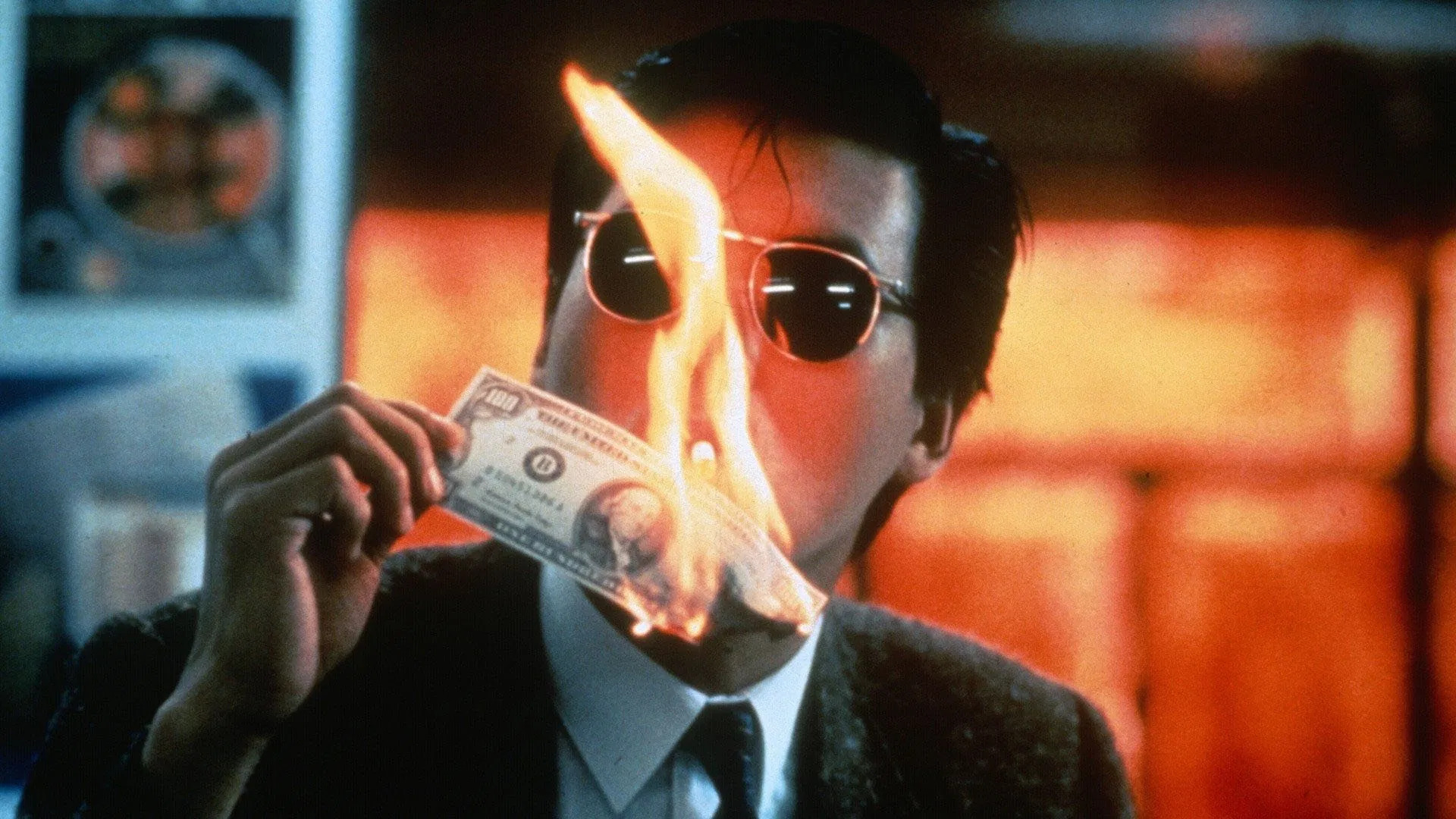
If the names chosen do not all quote a Shaw Brothers movie, there is always a reference to Hong Kong cinema, as well as to the group's own seriality throughout the projects. The 8 Diagram Pole Fighter (1984) of Liu Chia-Liang for 8 Diagram while Iron Flag refers to Chang Cheh's movie, The Flag of Iron (1980). However, A Better Tomorrow sets the kung fu aside to recover the title of the 1993 film by John Woo and Tsui Hark The Crime Union By home. As regards Wu Tang Forever and The WuThis is obviously reported to the group itself. However, it is difficult not to see a nod to the Wudang Mountains and the Chinese martial culture simply, via the Wu character referring to martial practice. The Saga Continues is evocative, but supports the serial aspect of the musical work by speaking of « saga », convoking the idea of a narrative and an existing narrative.
Moreover, knowing that the album serves as a meeting after the previous rather chaotic project in its realization. A transition is also occurring, RZA abandons production to the benefit of Mathematics, a close to the Clan since their beginnings. Listening to The Saga Continues, despite the absence of the guarantor of coherence as was generally the case – RZA produced the first solo albums of the members and those of the group – , the essence is there and the universe of the Wu-Tang Clan Don't sound wrong. There is not betrayal, only a different leg, but guided by the same creative intentions, the same vision and common precepts. Black Samson, The Bastard Swordsman It came out only in April 2025, and it still follows the movement. It is the seriality, when the band re-uses sample films from one song to another, from one album to another, setting out a kind of narrative continuity – both through martial arts and blaxploitation. A comic in which the boxes and drawings, if not on an album cover, are replaced by the instruments, by the musical compositions on which the words flow.
All albums have their share of cinematographic samples – musical samples are deliberately excluded from our reflection – without exception. Dialogues as noises elsewhere. The Gong resonating in The Executioners of Shaolin (1977), For example. The samples frequently used contribute to immersion, they systematically refer us to these films of the Shaw Brothers or Golden Harvest, diving immediately the listener into this matrix. While aware that at that time, in the 1980s and 1990s, this type of content was widely disseminated and the impact of martial arts was significant, especially in disadvantaged neighbourhoods. These works came elsewhere and offered a different look at the world, disseminating strength and values. Like Bruce Lee, a foreigner partly ridiculed and despised in Hollywood, but who is « avenge » Once back in his country. He will take his revenge by becoming the mythical figure he has become, influencing the world for several decades. His legacy is still alive today.
True C.R.E.A.M.
Between two signed outputs Wu-Tang Clan, solo projects appear in turn, following the strategy thought by RZA. Albums are carefully placed chess pieces. The blows continue until they destabilize the queen industry. Each solo performance, carried by the personality of his parolier, never ceases to enchant the audience. Because, more than creating a dreamlike universe that complements and enriches album after album, the solo productions of the members, receptive to their often multiple personalities – as evidenced by the plethora of alter ego used – and their singular style, will serve as episodes of an anthology. One shot taking place in the same « universe » musical. We listen to the lyrical adventures of the crazy ODB, the great wise RZA, the scholar GZA, the ninja Masta Killa, etc. The vaguely biographical fictional series, Wu-Tang An American Saga, transcribes clothing creative work and the place given to personal expression on solo albums via several thematic episodes of the last season.
The result is a widely diversified discography, but it never denies its origins or its allegiance to Wu-Tang Clan. The sets, implied by musical productions, guarantee coherence and affiliation. After all, the real neighborhood of Staten Island is openly named Shaolin, all these rappers considering themselves as warriors armed with words. Sometimes they imagine themselves as a superhero, creating serial bonds here too. Variations are present, size « kung-fu » can tend to become less ubiquitous, this is the case with Ghostface Killah's first solo album as for Raekwon's. However, one as well as the other, Tical (1994) to No Said Date (2005), passing through U-God and his references to The Kid with the Golden Arms (1979) of Chang Cheh, still associated with Asian martial arts, Japan being regularly summoned.
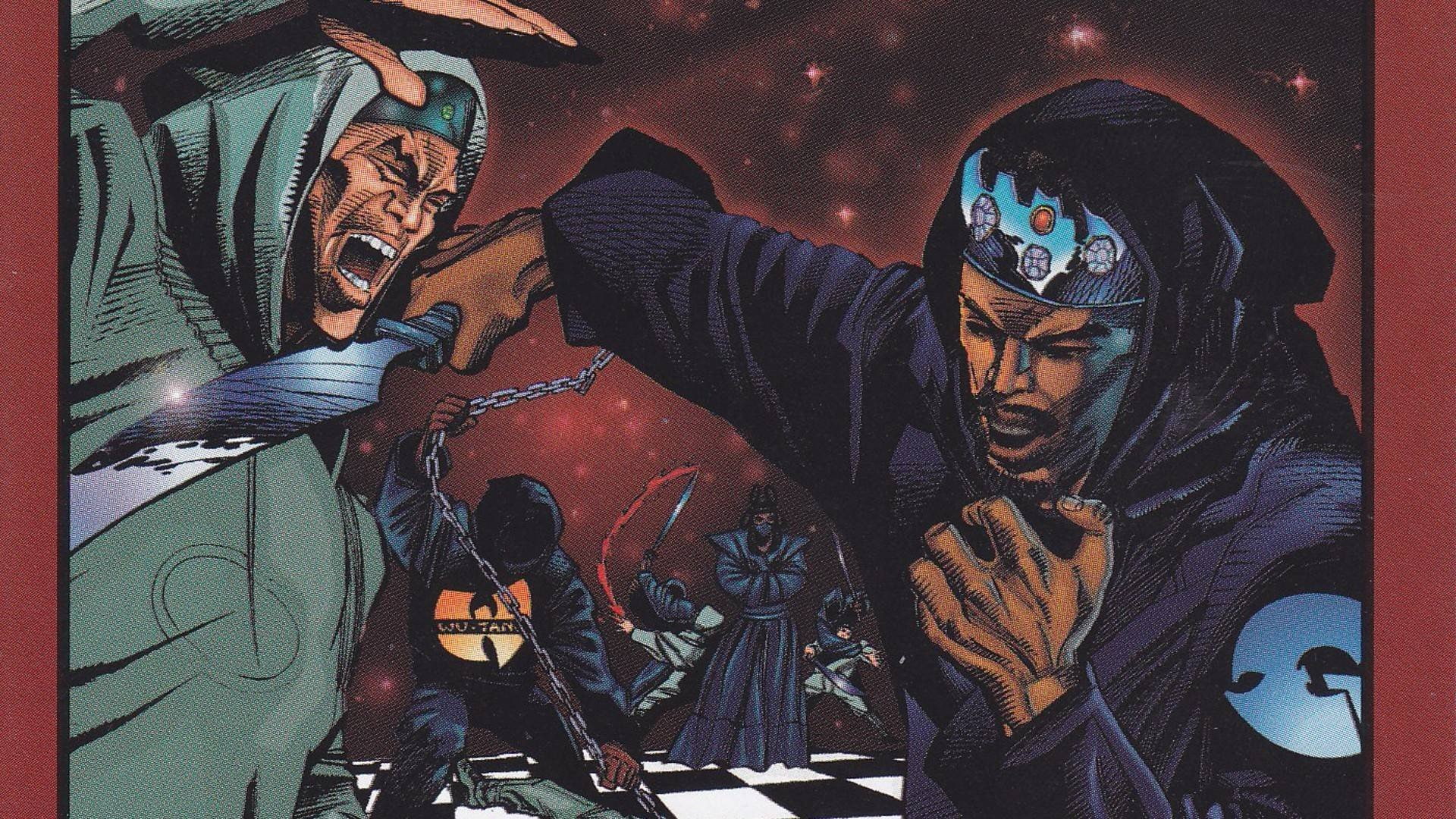
The Pillage (1998) Cappadonna, not to mention the Liquid Swords (1993) of GZA which bathe almost entirely in the atmosphere of the dark and mystical feature film, Shogun Assassin (1980), co-directed by Robert Houston with Kenji Misumi, don't steal it. This desire to sample, most often the universe of Taoist martial arts, the Jiang Hu in a certain way – a parallel martial society very popular in Chinese literature – can give to discover much of the richness of martial art cinema from the 1970s to the 2000s, among other cinematic genres. If we take the time to trace the references. An effective way to consolidate the universe and the singularity of the Clan, to make a synthesis between two cultures also. The presence of martial culture, especially Chinese, is not new in music, nor in hip-hop. Nevertheless, they are the first to have such a power of influence.
Influence not only delivered through music. It is a state of mind, a philosophy, a way of life that each member, at least, cultivates. Even the uncontrollable and unpredictable ODB was forced to discipline itself. At least. Maintaining consistency in work, attitude, and/or artistic values adds more consistency to all that is, to all that is represented by the Wu-Tang Clan. Unlike other groups, where the realization of solo projects is rather a pretext for emancipation, individualisation, in the Clan the notion of individual does not exist literally. Not in the common sense of the word anyway. This influence, this evocative power, which some might call inspiring, will go so far as to touch individuals from all walks of life, both children and adults.
Mantis Style
In 1999, Jim Jarmusch directed Ghost Dog : The Way of the Samurai, tribute to the film The Samurai (1967) Jean-Pierre Melville – with the late Alain Delon – and Seijun Suzuki's, The Mark of the Killer (1967). That said, The director's admission, his feature film also celebrates the Wu-Tang Clan. A kind of sounding and image of what works transmit to him. It is not for nothing that RZA appears briefly at the end of the film and that musical credits mention it. Moreover, note that before passing behind the camera to realize The Man With the Iron Fists (2013), strongly supported by Quentin Tarantino and Eli Roth, the Clan leader participated in the soundtrack of Kill Bill (2003). Tarantino admitted that the rapper was the person on the stage who best understood his vision and references to Asian martial arts.
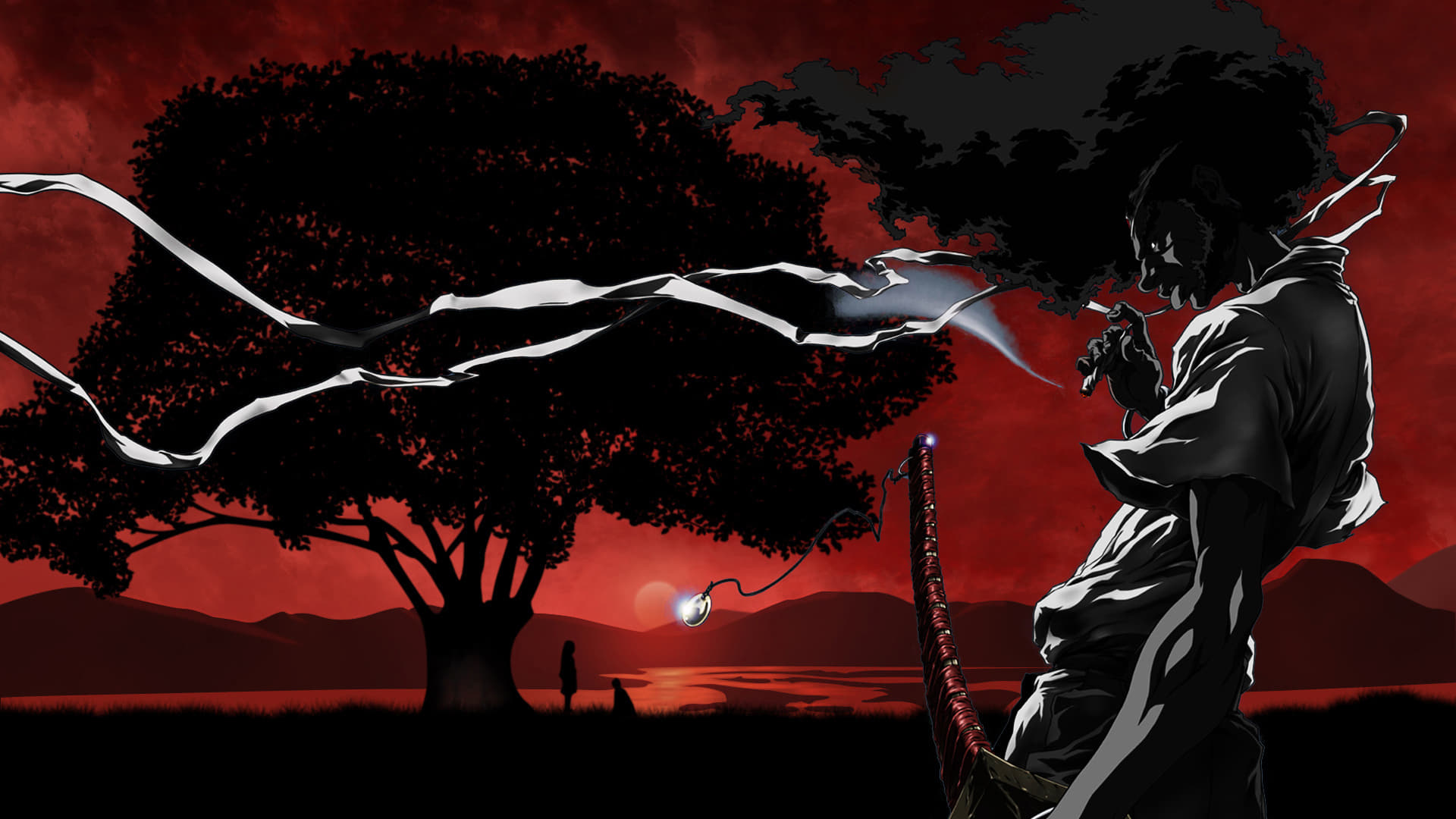
As far as Jarmusch is concerned, one could almost say that the latter, in the same way as Tarantino with Kill Bill finally, participates in broadcasting the Wu-Tang Clan. As much as love is sincere, other members of the Wu not hesitating to pass during a scene in Coffee and Cigarettes (2003) then in Paterson (2016) The same director. But the Wu, especially RZA, do not hesitate to be seen and heard here and there. How not to mention the short series of animation that became cult, Afro Samurai (2007) – who will be entitled to a suite via an animated feature film as well as a videoludic adaptation – there also carried by RZA music. The latter also plays in The Honor of the Dragon 2 (2013) next to Tony Jaa, while Method Man will be leading the poster How High (2001) and will have a role in the series The Wire (2002) and The Deuce (2017) David Simon. It is to be wondered whether, through these means, the seriality of the group n'en has not reached an immaterial stage, taking life and spreading through visual contact through the logo (or by the cameo of the members), as well as by the sound contact with the samples and the musical signature.
A quick aside to mention a voluntarily omitted album, atypical to more than one title, Once Upon a Time in Shaolin (2015). An existing album when only one copy. Without going back to all the peregrinations around this object, let's just note that he had something to insert coherently into the musical universe. If his listening is not allowed, excerpts from a few songs broadcast on the internet confirm once again the presence of samples of martial arts films. Not surprising given the explicit title of the work, referring as much to Sergio Leone's trilogy as to the saga Once Upon a Time in China (1991-1997) by Tsui Hark, centered on a historical character, Wong Fei Hung, descendant of Shaolin and regularly represented in works.
A rather mysterious album, pompous, will say some, but without a doubt fascinating even if it is actually a doubtful unofficial project. A dark affair which raised interesting questions about the status of a work of art that one likes to afuble, or debate about its legitimation whatever the field. At a time not so far away, perhaps this same still subject to virulent debates, the name « Artwork » , and by extension the status, was only allowed to a single work. It was the uniqueness of a work that allowed him to be considered an art. A necessary condition in order to obtain permission to wear this label proudly, which, regardless of its relevance, remains a significant symbol in the collective imagination. For a group that started at a time when rap and hip-hop were only countercultures destined to disappear, this had to reinforce a certain symbolism.
Lyrics Swords
RZA also cited the example of the Mona Lisa to illustrate this subject, and by extension to justify the existence of the unwanted Once Upon a Time in Shaolin. Would the painting also be cult and also used as an example of what a « Artwork » If several copies existed? We don't know. On the other hand, as the gentleman asserts, the magic of the unique work is that to experience it, to contemplate the painting of the Mona Lisa and breathe the same air, you must go to the Louvre. Only in these places is it technically possible to contemplate it, to consume its eyes. To make her exist. A work that only makes sense when confronted with the judgments of others. There is no doubt that the displayed creation will be clothed despite it of a particular aura.
But let's go back to us. The Wu-Tang Clan also operates in the transmedia as already briefly mentioned. Their presence is not restricted to screens and audio devices. That wasn't enough to satisfy their ambitions. Sit on the throne of the « game » should not be the purpose, not according to their values. One of their mission is the sharing and dissemination of knowledge. Hear pieces of Wu in the four corners of Shaolin – Staten Island – was only the beginning. Once the summit is reached, we must fear the fall. It is therefore imperative to start a controlled landing, to hover until it falls on its feet. The air is getting scarce up there, it's not good to vegetate there. The Clan knew it..
If the RZA film will not come soon, it is the video game and fashion that will be invested quite quickly. On the clothing side, the Wu Wear quickly imposed and will boost the diffusion of the iconic logo to the international, while bailing out the crates of the Clan. A strategy to anchor the group symbol in the landscape. So that every person dressed in the brand can recognize himself on the street. An effective way to generate a sense of belonging to a band for fans who, however fine, connect with the Clan. And the band knows how to get noticed when it's necessary. As a big consumer of culture, whether philosophical or not, everything was used to feed their grey matter, video games and the comic strip of superhero did not fail.
It's not surprising to learn that in 1999, Sony's PS1 saw a funny, soberly-titled fighting game landing, Wu-Tang : Shaolin Style. If the soft did not mark the minds or probably known of the mirobolant sales to be regularly quoted, it must be noted that it is similar to a prototype to what will become liconic Def Jam Fight for New York. A quality soft in which a myriad of rappers from the eponymous label hits the face. Once again, this incursion goes further than mere opportunism, it is more a kind of creative egotrip, with an artistic constant: Via the logo, the music of the game, but also the lore and the characters, the atmosphere and the artistic direction. We are well in the universe of Wu. Recently, it was a new game that had been teased. Name Wu-Tang : Rise of the Deceiver, The project is supported by Ghostface Killah and must be linked to a film, Angel of Dust.Â
Once Upon a Time in Earth
With the support of the publisher Ground Zero, dvd labeled Wu-Tang Clan Go see the light. These DVDs are in fact a gathering of several martial art films, not always as memorable as the best known, but rich in creativity for some. A kind of preservation and sharing of cultural heritage too often forgotten or even neglected. Heritage that deeply influenced them. We find this contribution in a somewhat informal way on Youtube with the chain Wu Tang Collection which are swarming with dark films in the English version. The most curious and attentive will find many references as well as various samples used in the albums.
These actions reinforce the idea that Wu-Tang Clan constantly nourishes its seriality in order to survive through time. Like a martial art that great masters teach with the hope that knowledge leads its way in the body and spirit of a multitude of generations. Because this is what will remain at the end, sharing and transmission. That being said, there is a kind of mirror effect between on one side the Clan which refers to martial arts films, and on the other side these same films which now end up resonating with the band and their music. What is increasingly palpable as the decades pass and as we plunge into these works of the past.
This presence on various fronts, this eclecticism in the choice of creative supports, undeniably influences castes of various people and artists. At the cinema with Jim Jarmusch, we said it, but also in music with, for example, the two musical projects of the group El Michels Affair: Enter the 37th Chamber (2009), reappropriation of the name and productions of the band's first album, and the rest, Return to the 37th Chamber (2017), echo this time to ODB. In addition, it is difficult not to think about trilogy 36th Chamber director Liu Chia-Liang. The opening of an exhibition by Olivier Annet N Wu LabIn Paris, in particular, a museum in which various objects are made by artists inspired by the Wu. A direct testimony of their influence.
Wu-Tang Clan, whether we like it or not, still remains a unique band, both on the hip-hop stage and the music in general, and beyond. Consuming their music, or other affiliated creations, allows us to see their indecent influence, the wealth that irrigates their works. By knowingly building its seriality, as its singularity, begins by re-appropriating Taoist martial philosophy, by sampling the filmic works also claiming, the Clan was able to maintain its artistic and quasi-narrative coherence within its works. Building an impressive connected canvas that we are invited to join.
Once piqued by the bee and saved by the web woven by the Wu, difficult to hope to get out. We meet music, we feel a pleasant venom flowing through our veins. It will then only be enough to look at the logo so that the dreamy magic of their music will be invited. There will always be an echo, a resonance phenomenon to come to support the flame. And if one still thinks that works are only fictions that do not deserve so much consideration, it is to forget that fiction and imagination are no less other realities. Realities that sometimes intertwine and impact our world, as in 2018, on Staten Island, when the date of November 9 became officially the « Wu-Tang Clan Day ». Or Wu-Tang Clan District. An accomplishment for the original nine members, celebrating at the same time the first quarter century of the album Enter the 36th Chamber. The future will tell us, when all have joined the earth in the form of dust, if the Wu-Tang Clan Will last.
Scribe ninja escaped from the island of Shang Tsung and now living under perfusion of films, it is possible to see me on Falkor's back as I travel through imaginary worlds in search of a catharsis or inspiration. I am told that I am constantly guided by the martial values inherited from my youth in Jiang Hu.

Categories
Recent Posts
The 4K Ultra HD Bazaar, volume
- 30 April 2026
- 50min. readout
Raw pearl polished with roguelite : Absolute, the
- 24 April 2026
- 14 min. reading
The Mag.7: a selection for the Myceliads
- 15 April 2026
- 25min. readout
Expressionism in cinema: crises and
- 13 April 2026
- 20min reading
South Park: The Stick of Truth,
- 1 April 2026
- 12 min. reading