

• Tested on Xbox Series
  • About 30 hours of metering
  • About 80% of collectibles recovered
  • No disclosures to expect from this article

Third game developed by Tango Gameworks, Shinji Mikami's famous studio to whom it also owes memorable The Evil Within and Hi-Fi Rush, Ghostwire Tokyo did not fail to intrigue at his announcement, before totally falling into oblivion a few weeks after his release. The original proposal using the codes of the Open World and the First Person Shooter, while using and abusing Japanese folklore, yet the title has a quite remarkable amount of qualities, and a willingness to do well that is obvious. So what happened? But, above all, must we give our chance to Ghostwire Tokyo ?

As long as we existed

We no longer introduce Shinji Mikami. Prodigy child whose career at Capcom has left indelible traces on the video industry, still well visible today, through licences such as Resident Evil, Dino Crisis, Viewtiful Joe, Phoenix Wright or Killer 7. A rather fabulous collection, for whom these works knew at the time of their release, or how to observe their impact on more recent publications. Without Shinji Mikami, no Onimusha, for example, and probably no camera on the shoulder for Dead Space and its sequels, if so much so that the disappeared franchise of Electronic Arts was born, moreover. Very much on the Japanese model, operating on a transfer of knowledge and, eventually, of stick, Mikami nevertheless continues his career relatively in the shadows since the release of The Evil Within, first title directed by Tango Gameworks. As with Resident EvilHe entrusted the reindeer to a rising star for the remainder, remaining in the vicinity in the form of an executive producer.

It is also the place it occupies on Ghostwire Tokyo, moreover, contrary to what a clumsy communication suggested. One would have liked to believe that this open world taking place in a contemporary Tokyo with such a remarkable thinking head as Mikami, but it is finally Keiji Kimura, already credited on God Handwho runs the operations. On the programme, a little dreadful, with a surprising bestiary poaching in a relatively unknown part of Japanese folklore; from the Open World borrowing from recipes that are beginning to get used to, especially that ofKillers Creed (read our review of AC Origins) ; and an original vision of the gunfights, using the hands of the protagonist to send various projectiles. A recipe that finally reminds us, on paper at least, of everything we have seen in recent years in terms of open worlds, both at Ubisoft and Sony.

Fortunately, the title of Tango Gameworks draws its pin from the game by encircling a lot of small things that break or blunt the well-known flaws of these turbulent recipes. There's a system of towers like at home. Far Cry or Killers Creed, taking here the form of Toriis (these very typical wooden doors that you have already seen in many Japanese works). But these are necessary for progress in adventure (up to a certain point), since literally unlock access to new areas. The map is indeed covered by a deadly mist, through which it is impossible to navigate without taking damage. One no longer unlocks a myriad of useless little points of interest. Moreover, the said points of interest are fewer, more subtle, even though the map offers a lot of things to discover. One of the strengths of the title is to leave us the choice in our approach to the annex content, while imposing a certain linearity in the progression of history and the exploration of his depopulated Tokyo.

However, since one area is unlocked after another in Ghostwire Tokyo, and with the content associated with it, then we're more tempted to deal with quests and other items to recover before moving on to the rest of the story. A way of doing things which imposes a slower pace is undeniable, but in return allows us to enjoy an environment which, although urban and contemporary, is much more displaceable than many of those found in competition. Forget Assassins Creed Shadows and its feudal Japan, since the game of Tango Gameworks will give you ten times more the impression of traveling with its very current environment. What it owes as much to a very real aspect, finally, very realistic also, to a certain extent, than to a very vertical Level Design, allowing us to wander as much in deserted streets as on the roofs of various buildings. An approach that recalls, in a certain way, and in a much wider way, what Arkane studio offers with its Dishonored (or Preyof which: Here's our test).

End of night travel

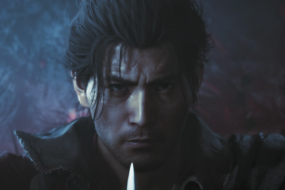
Ghostwire Tokyo, it is the very boating story of Akito Izuki, trapped in the heart of Tokyo while a mysterious group of masked individuals spread a mist making simply disappear any man and woman coming into contact with her. He's going to have to bond with the soul of a paranormal detective, KK, who gives him some magical powers, but especially who is well aware of what's going on and how to stop him. The sequel is a predictable frame, with a great villain very bad, and a nice very nice, helped respectively by perfectly forgetable acolytes. If we had to name the most significant defect of this Ghostwire Tokyo, then it would no doubt be his scenario, which does not really help the player to engage sustainably in his adventure, until an end that I have personally forgotten. Fortunately, the title benefits from a rather catchy universe, which catches up with this serious failure.

Ghostwire Tokyo

Because, as said earlier, Ghostwire Tokyo do not hesitate to use and abuse Japanese folklore, orienting its auxiliary quests around well-known urban legends, but above all by convening a nice casting of Yokai. All the while not forgetting a bestiary that surprises, in the right sense of the word, with often rather icy aspects. For those who have bathed in Japanese culture, whether through animation, video game or horror film, Ghostwire Tokyo is a real candy. Add to this his contemporary Tokyo, certainly not reproduced accurately but quite credible, and you get a total change of scenery. Certainly more valid for those who, like me, never set foot on the archipelago. An aspect which, to a certain extent, strongly recalls the frankness Yakuza, or Like a Dragon, which is not the last in terms of making us travel to Japan without leaving our couch; or Spider-Man From Insomniac Games, which plunged us brilliantly into a plausible Manhattan.

Exploration in Ghostwire Tokyo is more organic than in many contemporary open worlds, which guarantee freedom of action and discovery on gigantic maps, without questioning how to guide the player to maintain his interest. Here we progress according to history, allowing us to discover new neighborhoods, composing with beautiful visual ideas and a game of shadows and very effective lights. The title will never forget the night, moreover, at the heart of which its monsters take on an even more threatening aspect. Impression that the sound design, tinted with recognizable yet subtle noises, corroborates. Losing yourself in the dark alleys, then hearing a distinctive cry not far away, although this is the kind of little things that we often find in horrific games, it works perfectly well.

But what I personally enjoyed most in this open world is his way of managing his collectibles. Of course, we find some shit to pick up to check a useless box in a huge binder. But also minds and other files that give experience and points of competence. Thus, where the search for collectibles is, in most Open Worlds, a simple way to artificially increase a lifetime that, most often, does not need this, in Ghostwire Tokyo It allows in parallel to become more powerful. As a result, one quickly falls into the trap of addiction, to search all the corners to make sure that nothing is left to chance, and in the hope of being able to acquire new and powerful powers coming to reverse the vapor in future confrontations (a little as in the case of the Breath of the Wild A few years earlier, in short). Addiction that can quickly turn into obsession when, after a certain stage of adventure, we get items that allow us to guess more easily the location of the minds and files that interest us. Furthermore, if the game abuses a vision way Batman Arkham allowing everything to be highlighted in a given area (enemies, items, collectibles), it finds its meaning here, and never makes a stain.

Shrine of the Heart

A rather phenomenal amount of fighting remains, some preventable, some impossible to jump, which would have earned to be less invasive. These confrontations do not lack qualities, it is true, and they prove to be fun for a time. But it must be recognized that, despite a true will of variety, between the various powers and the talismans allowing to shape his approach (furtive, remote, or contact), one quickly acquires the tenacious sensation of always doing the same thing. On the other hand, if one appreciates the challenge sometimes raised, especially due to a wise choice of enemies placed in the same place forcing us to reflect on our approach or to stay in motion, it must be recognized that this strange choice to make many adversaries of real PV bags surprises and disappoints. In the end, besides, even if you have searched the areas well in search of experience and points of competence, you will not fail to hit on some fighting, sometimes taking a little too long to resolve. What we find only too little in the case of the bosses who, for their part, may lack a bit of challenge, and will not grow into your memory for long.

Ghostwire Tokyo

The sensations are good, and it must also be said that the use of our protagonist's hands to launch different powers (which ultimately resembles an arsenal way Call of Duty but disguised) brings a little something more. It is possible to highlight the « heart » adversaries by means of projectiles or well-placed blows (and later by a talisman), and to destroy it by the force of the fist or by carrying out a small manipulation from a distance, which is particularly enjoyable. However, the Ghostwire Tokyo suffers from a few deplorable things, starting with an impression of floating in travel. Impression to which one is made to use, of course, but which still fails. But not as much as the camera, strangely saccaded, less fluid than most of the First Person Shooter market. A bias that we understand quite poorly, controller in hand, since it does not help to target, in particular, and can then be a source of frustration.

Especially as the game is not avarous in inaccuracies. Some blows don't carry, without it being really understandable why, and sometimes we'll ruin some precious « ammunition » (each power running on a charger system) by shooting at often particularly perennial opponents. In the same way, a bug (at least this is to be assumed) sometimes prevents the lid from being lifted from a trash can (in which to recover money) while the contextual action logo was being posted shortly before it approached. The point of detail, of course, but which does not fail to irritate a certain stage. It must be said that with its massive amount of enemies on the map, or simply intervening in the scripted missions, any resource is good to take, even a few pieces that will allow to redeem talismans or items of care. Of course we develop a feeling of power as we acquire new skills, facilitating confrontations, but we are far from the peak curve of a Bethesda game, for example. Even at the end of the adventure, fighting is approached with a certain distrust.

Remains a technical aspect in half-tone. It would be bad faith to say that Ghostwire Tokyo is ugly, of course, and the images you will find in this article are there to get you acquiesced. Nevertheless, it must be recognized that the game is far from being qualified as a standard. For example, there are disgracious blurring effects, with which one is obliged to compose, and in enforcement the title fishing by certain failings. The effects of particles will be appreciated when an opponent is carpeted, but explosions, rain, or some textures are hard to see. Some slowdowns also invite to the party at times. Nothing dramatic, of course, but Ghostwire Tokyo remains quite weak compared to the other triple A in Open World of his generation. In many ways, the title seems to have been designed for PlayStation 4. As for her soundtrack, she simply makes one without fault, and her Japanese dubbings are irreproachable.

Imperfect, especially through his fights that take too much place in the adventure and tend to elongate a bit, or his anecdotal scenario, Ghostwire Tokyo is however a memorable experience. What it owes to a rather effective adaptation of Japanese folklore, but above all to its strangely displacing urban environment, coupled with a level design approach giving a real sense of freedom. To all this, we must also add a vision of the refreshing collectible. So many arguments that might rebuff the blasé with the highly codified genre of the Open World.

For
  • Very exotic
  • The Japanese Flolklore in Honour
  • Bestiary cold in the back
  • Vast map we like to explore
  • Visually very pleasant
  • Useful collectors, for once
  • Bande sound irreproachable
Against
  • Half-tone technique
  • Anecdotal scenario
  • Fight too many...
  • ... and a little too long on the end
  • Some gameplay inaccuracies

Hermite becoming, for a long time the mind lost in old books, I failed in these columns in the hope of sharing around my monstrous Backlog, or on the occasion of my great loves that are Biohazard and the J-RPG.

0 0 Votes
Evaluation of Article
Subscribe
Notify of
guest
0 Remarks
oldest
most recent Most popular
Comments on Inline
See all your comments
EnglishenEnglishEnglish
0
We would like your opinion, please leave a comment.x