Presented this summer at the fifteen filmmakers and released in September in the French theatres, Deserts finally entered Belgian territory on the occasion of the 23e Cinemamed edition, Brussels festival celebrating Mediterranean productions. Fable astray in the Moroccan desert, where nothing remains but dust, breathtaking landscapes and the stories that are still told at the corner of the fire, the film of Faouzi Bensaïdi gives a painful statement about the situation in his country.

Cinemamed

Off-road recovery agents

Mehdi and Hamid are two recovery agents from Casablanca. Every day, they travel through the desert to demand debts from overindebted people. A badly-equipped duo, sort of Laurel and Hardy Tragi-comic, dressed in dirty and cracked costumes, riding with a car from another time. Two very different characters, forced to work together by imperatives that go beyond them. And yet, over the course of nights in old hotels, winding driving hours in the middle of the hills, a relationship is created. For, beyond the first appearances, they are the same in the eyes of this ultraliberal Moroccan society. Caught between those at the top and those at the bottom, they seek both well and hard to support themselves.

DESERTS
Our duo isn't at the end of their surprises...

A country up to the marrow

These two protagonists serve as a guide to the first part of the film, where there is a noticeable lack of red thread. It is a succession of paintings, alternating between their encounters with bad payers and their hassle in these abandoned territories. The camera puts a distance with the situation, trying to grasp it in a global way, to make an observation that even exceeds our main characters. That of a country that is slowly destroyed by an extreme neoliberal policy. Mehdi's and Hamid's interventions followed, without ever changing the situation. Each time, families forced to borrow to survive find themselves tied feet and fists when it comes to paying back. The arid scenery of the desert reinforces this feeling of emptiness, as if everything had already been taken. That we come to find the last riches in the steepest villages, the most remote places, because everything has already been taken away.

Yellow laugh like sand

A heavy situation, but not presented without humour. Again, the staging device often puts the characters in absurd and grotesque situations that contrast with the licked and geometric frames in which they take place. A failed car start or the meeting of the recovery agency, with its multicolor composition of the employees' costumes provokes the bitter laughs of the room. A camera that watches the world shake in front of it, in an almost shot down observation. The situation is catastrophic, but the characters seem ankylosed, unconscious of what happens to them and create a lag that helps pass the painful pill.

Conte gigogne

After taking the time to install this sorry situation, the film finally takes a different turn and thus avoids the redundancy proper to the process of its first act. The film gets back on track with the codes of the western (at least in appearance) with the appearance of a new character. A man wrongly imprisoned, on the run. A man who seeks revenge and finds his wife whom another took from him. By appropriating the car of Hamid and Mehdi, the allegory of the cowboy horse in this contemporary western, it becomes the engine of the story. We're now following his ride.

deserts
Hamid and Mehdi, driving their loyal vehicle.

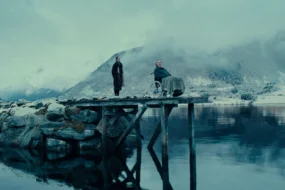
A story that has something ancient, like a return to an original matrix. It stands in the brink of the current situation in Morocco so far. After showing a present that leaves no room for any enviable future, the director decides to turn to the past and the stories they possess. This parallel narration lets doubt about its veracity, like the ancient tales, told by our two other protagonists at the corner of the fire, causing a troubled abyss. Here is delivered a tale that surpasses them and will stand, again and again.

Conclusion in mirage

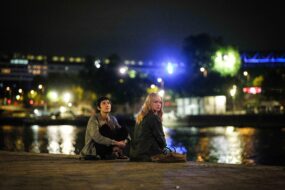
An alternation of points of view that tangles despite all the brushes. As the film approaches its conclusion, the mell-melo unfortunately weakens the strength of the emotions felt so far and the redundancy of the plans becomes counterproductive. It's a shame, because the paradigm shift in the narrative allows the staging to take a completely different turn and bring a wind of freshness. The grandiose and empty mountains then take a poetic tint free from all melancholy before the eyes of this man and this woman.

Still small fret in the ocean of cinema, I swim between the classics and the latest novelties. Sometimes armed with a pencil, sometimes with a camera, I observe and learn big fish, ancient coelacanth bicolor, great white oscarized shark and thousands of sardines so well preserved.


0 0 Votes
Evaluation of Article
Subscribe
Notify of
guest
0 Remarks
oldest
most recent Most popular
Comments on Inline
See all your comments
EnglishenEnglishEnglish
0
We would like your opinion, please leave a comment.x