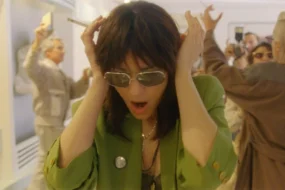
Karim, an emeritus pianist, has the opportunity to leave his country to take an audition in Vienna. But the war in Syria rages and public freedoms are bleeded and hunted down into the most intimate space: Art. In the Islamic State, in Syria as in Iraq, music was long banned by Daesh and other jihadist groups long before the emergence of this new hydra. Religious obscurantism requires the control of any plot of expression. The Islamic State is an umpteenth iteration of totalitarianism that maps bodies and minds to better link them to a deadly ideology. In the face of the regime's impasse, Karim risks his life in a vain attempt to recompose his piano piece by piece!

The music or the germ of the rupture

Music has always been a political object and a space to govern. It escapes from anyone that it creates social bond and carries powerful emotions. So many vectors of the autonomy of individuals that the Islamic State seeks to destroy and many others before it. It is the social cement that exceeds the writings by its accessibility and its ability to assemble unique, in the image of the concert. The ban on music is therefore intimately linked to the fear of losing control.

« Know that God grants you His mercy, that stringed instruments and songs are forbidden in Islam because they turn away from the evocation of God and the Qur'an, and are a source of trouble and corruption for the heart. »

We are thinking of the traditional Buddhist songs that had to be reproduced identically before they were subverted by the popular Noo theatre (read our critical of Inu-Oh). Or the baroque movement which pejoratively referred to irregular pearls (barroco) while classicism felt threatened by this new school. In the twentieth century, rock-roll, too, marked a break this time between adults and American youth in a context of religious segregation and puritanism that sought to maintain control. Rocking roll was for them the devil's music! Later the skinhead movement will embody the rejection of a certain bourgeois society by the proletarians of England and their ostentatious refusal to dress differently during leisure and at work.

Karim, driven by his mission: repair his piano!

If « poetry is a cry », music is his voice. The blues, abbreviation of « blue devil » was the song of black workers who expressed their love and desire for decades after the abolition of slavery. Music, when it's not « learned » or religious, tends to be regarded as carrying various risks: from revolt against the established order to pure and simple perversion of the soul. The common point of all these musical genres for these detractors: the transgression that would bring us closer to the demon. Music is an attempt to subvert the mind, a permanent escape from our daily life.

« The Islamic State in Iraq and the Levant has made a decision prohibiting the sale of songs on records and musical instruments, as well as entertainment songs [...] anywhere. Every transgressor will expose himself to the consequences required by the sharia. »

Ephemeral encounter with a resistant

Is it not said today that one is in trance in the middle of a teknival, moreover systematically subject to repression? In view of the history of music, what more explicit finally than the abolition of any form of musical expression by the Islamic State? The denial of all constitutes the acme of totalitarian control by the sharia and a logical continuation for a misguided Islamism. To remove cultural expression is to remove the ability to express itself as a representation of the individual, a well-known mechanism of authoritarian regimes and propaganda which, without surprise, reserves a certain monopoly of music.

« When we filmed there, the fighting ended a little more than a year ago. There was always the smell of corpses under the rubble. Not everything had been cleared and much of the city was still in ruins.»

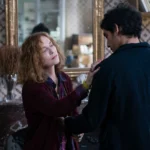
The last piano, an allegory of Art as a resistance to world turpitudes and obscurantism, embodies freedom and a fight that never really ceased to exist. Jimmy Keyrouz's film is partly based on a true story: that of a pianist, Akram, who became a symbol of hope as he played the piano to challenge the power in place. Inspired by his short film Noctune In Black), this new feature film is a solid budget American-Lebanese production.

A piano and a car on the side : a scene not like the others

A film between Lebanon and Iraq

Air plans show a war-ravaged city. Beyond Syria, which has been chosen as a framework, the last piano has a universal reach. It's all the more true when we know that the film was mostly shot at its neighbour, Lebanon, another country ravaged by internal wars and today ironically sheltered millions of Syrian refugees, once brothers and enemies. The director still managed to shoot five days in Mosul, an Iraqi city martyred by the Islamic State for years. Like an act of resistance and a flag planted in this ancient sacred fief of Daesh.

« There you feel a lot of sadness. But there is also beauty because life continues. In these rubble, there are always children playing. There's always a woman cooking for her family.»

The views of the sky are particularly evocative of the horror of the conflict. The destruction alone bears witness to the systematic destruction of all forms of life. The young director does not hesitate to plunge us into a maze of rubble where the Ariane thread would be woven from the piano strings. Despite its symbolic scope and elegance of photography, however, a last piano remains a little too academic at times. Even the killing is carried out with a certain modesty which seems far enough from the blood shed on the battlefields of Aleppo.

His enemy built as a negative would have deserved a more subtle writing

A drop of hope in a glass of hate

If it is conceived as a note of optimism in a global landscape governed by ever more pronounced folds of universalism, the last piano would have gained to further support its epilogue and perhaps represent Daesh in a more raw way. Some characters such as his enemy (and negative) would probably have deserved more consistent writing. Even in darkness, the director is still looking for a point of humanity in the executioner, which may sometimes seem a bit candid when one knows the unbearable stories that escaped from these areas of lawlessness.

« There is a form of responsibility to show the sadness, the absurdity of war. And the importance of always keeping hope. Because for me there is always light, even in darkness. »

The last piano just released on DVD. If the point is interesting, the narrative is finally quite agreed despite a careful photograph and realization. To be reserved for those who want to take a breath of fresh air in a media landscape that darkens day by day.

JV critic and film always ready to lead Interviews at festivals! Amateur of genre films and everything that tends to the strange. Do not hesitate to contact me by consulting my profile.

0 0 Votes
Evaluation of Article
Subscribe
Notify of
guest
0 Remarks
oldest
most recent Most popular
Comments on Inline
See all your comments
EnglishenEnglishEnglish
0
We would like your opinion, please leave a comment.x