As Russia slides a little more each day towards a war of distant peace and takes the rest of the world in the forga towards the possibility of a nuclear winter, director and dissident Kirill Serebrennikov, now exiled to Berlin, has just released his latest film entitled Tchaikovsky's Woman. Dived into the 19th-century Great Russia where he was at the loss of Antonina Miliukova, a young woman from the illustrious Tchaikovsky (1840-1883). This project was presented in 2013 by a draft short film that had not been supported by the expert council of the Russian Film Foundation. It came to life ten years later in the form of a tragic opera or a « tragicomedia » announced as the composer says from the beginning?
Tchaikovsky, the glass child
Since Leto, each of Serebrennikov's films has found a good place in Cannes, where it is a source of enthusiasm. A la « symphonic narration » of the Petrov fever (read our critical), the Russian director responds this time with a more classical form (d-like) in two distinct movements. The first traces the prelude of the union of a young woman with Pyotr Tchaikovsky then on the roads of glory; the second lets dementia take the realization away. Who knows the composer's story knows how tormented his life has been with eternal darkness to the point of his work. In the songs of Maldoror, Lautréamont's account wrote « I often wondered what was the easiest thing to recognize: the depth of the ocean or the depth of the human heart. » In many ways Tchaikovsky's wife illustrates how heart wounds are a bottomless well.
On the brink of ruin when he met Antonina in 1877, Pyotr gave way to the epistolic advances of the one who presented himself as « an honest woman » who has nothing to do with « Admiring eccentric ». The composer is indeed not in his first relationship by letters interposed, since a year earlier he exchanged more than 1200 letters with an admirer soon benefactor: Nadejda von Mec. The latter will provide for almost thirteen years with alimony of 6000 rubles, even though they had never met. Moreover, it is to the latter that he will sign his fourth symphony, unlike Antonina who will console himself by thinking that his first works were dedicated to him.
« It would seem inappropriate to tell you the wonder in which your works plunge me. »
Letter from Nadejda von Mec to Tchaikovsky, 1876
Unlike Nadejda, Pyotr this time gives way to the advances of Antonina whom he decides to meet in his modest apartment. In love at the depths of his flesh, Antonia is in permanent denial. The composer's relationship and his promise to any contract condemned to resolution. The composer refuses him a passionate relationship and proposes a « love like that of a brother » to the one who will be willing to accept any concession for as long as she obtains the marriage. A premeditated act as evidenced by these letters to his brother Modeste two years earlier: « I would like to silence certain despicable creatures through a marriage or at least through a declared affair with a woman. » To build up his dowry, Antonina will not hesitate to liquidate the family's national forest as well as to borrow his sister's savings.
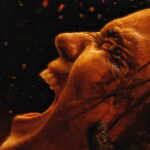
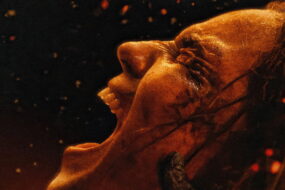
Since the foreground sequence of Tchaikovsky's funeral which inaugurates the opening of the film as a prolepse, it is a smell of death that emerges in each plane. From the streets where it is just not possible to get a pot of room filled with excrement, it is a pestilential smell that radically contrasts with the felted light that emanates from each plane. From their formalized union, already a fly rises on the face of the future husband. Throughout the film, the metaphor of death combined with madness will harass the poor woman.
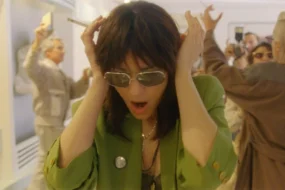
« Where it smells like shit, it smells like being », scanned Artaud. Hardly bound by the ties of marriage that their union already seems unilateral. « Funny dinner, it looked like a funeral. » notes one of the guests, while Pyotr, drunk dead, is taken back to his apartments, leaving his wife alone. A warning sign that contrasts with the fascist of a traditional religious ceremony that should have resulted in the physical union of the two brides. Even so, Antonina bathes in a blissful beatitude that limits to the alternative reality proper to the possessed. Whether it is the magnificent scene of the dinner where surrounded by men, Antonina does not seem realized how promiscuity, if not the concupiscence of the guests, should make her guess the unfavorable inclinations of her husband.
« I find that our tendencies are for us the greatest and most impassable obstacle to happiness. »
Letter from Pyotr to his young brother Modeste, himself homosexual
How could an ordinary woman share the life of someone who is readily assimilated to « sun », his peers expressly recognizing the emptiness of their lives in the face of his genius? One can only witness a genius slip these admirers, those facing whom Antonina will sadly abdicate. « [Genies] will crush their magnificence. ». It is primarily about preserving his work and not altering his legacy to Russia and soon to the world that will be forever grateful to him. Antonina always seems caught up in the pestilential smell that has been watching since the opening of the film. That she covers herself with perfume will change nothing, there are always those flies that pop out of nowhere to remind us that madness is looking.
A few months after their marriage, Pyotr already irretrievably abandoned the home under a false pretext, he who from the beginning warned her of his « irritability ». He refuses him any marks of physical and psychological affection when he is not simply heinous with her. It is only in society (and in the presence of his court) that he sometimes lets escape a smile of courtesy rather than sympathy. In one of his letters to his brother, the composer reportedly told him that he could no longer stand his wife's sight. It is these words that enshrine Antonia in dementia at the funeral where Pyotr, dead, straightens and manifests to the widow how he always hated him. One of the rare moments of truth as in a sadly postmortem dream...
« I can only be calm and truly happy when I am alone. »
Pyotr, Letter to Jurgenson, 1879
As soon as the reality of divorce arises in the face of Antonina, the poor woman will never see her husband again and will only have relations with intermediaries: lawyers or her brothers who will do everything to keep Antonina away from Pyotr, which is almost as animated by black ideas. It is said that he would have fed an inclination to suicide and that he would have tried to put an end to his days by diving into Moskova to try to get pneumonia. Imprisoned in denial, Antonina invents so many lives where she would deceive her husband, systematically refusing to sign a divorce that will never happen. It is at asylum that Antonina will end her days, decades after the death of Tchaikovsky. Throughout the film, Antonina slides towards a passion Maldives where a form of sadism takes the step of possession, his refusal to divorce allowing him to keep a last space of control over his life.
« No one will take you from me, you're my husband. »
Antonina in a final aborted marriage attempt.
Serebrennikov once again offers us a cinema lesson with an always very theatrical form. The editing and cutting of the film is ridiculous. The journeyings break out by playing on the light to make up the melts and transitions of a master hand. The film continues a permanent movement, which will find its apotheosis, as often at the director's, in its last concluding ballet. The camera regularly operates 360 degree progressives which, at each ride tower, reveal new situations. Intelligent way to reveal how Antonina turns in circles while gradually moving away from the realism of the first movement and views of the sky.
In the biography of Tchaikovsky, written by his brother Modeste, the latter reportedly wrote in the transcribed terms of Pyotr that his wife Antonina Miliukova « behaved honestly and sincerely », without intentionally trying to deceive him, and that she was the unconscious cause of his profound misfortune. As for the composer, he would also have behaved « honestly, openly, without deceiving her in anything ».
They're both getting married, « realized with horror... that between them there was a gulf of mutual incomprehension, which could never be filled, [...] A complete break was the only way not only to regain their inner well-being, but also to save Piotr Ilitch's life. ». Would this indignation of exoneratory testimony have the sole purpose of preserving Tchaikovsky's reputation? His homosexuality was a secret of Polichinelle in his entourage as well as in his family, despite relations that remained always platonic to believe his biography.
« I warned her that she could only rely on brotherly love. Physically, my wife now inspires total repulsion. »
Letter from Pyotr to Modeste, 1877
However, this profound incomprehension, which already existed in their union where one hoped for a love like a brother and the other a burning passion, also reveals itself fairly in the rare moments of fantasies or not between Antonina and her husband, caught up in the guilt of the coward. Magnificent scene of a stolen kiss between the widow who is recognized by her veil and the appearance of Tchaikovsky as the ultimate hallucination to better reconcile two beings who « were behaved as in a dream, and [who] were unconsciously deceived in all » to take up the biography of the Damné composer. The wife of Tchaikovsky is a new stage in the filmography of Kirill Serebrennikov who finds a balance between the fergue of Petrov fever and the classicism of biography.
JV critic and film always ready to lead Interviews at festivals! Amateur of genre films and everything that tends to the strange. Do not hesitate to contact me by consulting my profile.
Categories
Recent Posts
Raw pearl polished with roguelite : Absolute, the
- 24 April 2026
- 14 min. reading
The Mag.7: a selection for the Myceliads
- 15 April 2026
- 25min. readout
Expressionism in cinema: crises and
- 13 April 2026
- 20min reading
South Park: The Stick of Truth,
- 1 April 2026
- 12 min. reading
The 4K Ultra HD Bazaar, volume
- 30 March 2026
- 52 min reading


Finally a beautiful review of the film! Thanks for this fine analysis, it was necessary to search the internet to find an analysis that was neither too evasive nor too hard with the filmmaker.
Thank you for the comment, it was good morning. The director had already scored with Petrov fever on which I had written a smaller paper. Don't hesitate to follow us, we have lots of interesting content that will soon arrive on the site like Youtube.
[...] In A Silence, secrets burst. Silence and its consequences swallow the film, defile the characters, maculate the image. The result is a greenish night photography, filmed through muddy water, disturbed by suspended particles. An aesthetic choice that is particularly well suited to the gently venomous atmosphere of the feature film, to bring closer to the image of the last Kirill Serebrennikov: The Woman of Tchaikovsky. [...]
[...] producer, Leto's director, Petrov's fever or Tchaikovsky's Woman had disappointed us for the first time in the previous edition of the Cannes Film Festival. He [...]