« Rousseau was a people too, and he said: When the people have nothing to eat, they will eat the rich ». It is in these appetizing terms that Pierre Gaspard Chaumette, figure of the without-culottes and leader of the « exaggerated », called the toothless to revolt. Submitted to NIFFFthe retrospective Eat The Rich It echoes by highlighting the representations of elites in genre films. It is therefore the ideal opportunity to return to a theme that goes through the history of cinema. MaG tradedon this tempting subject with Judith Beauvallet, journalist and creator of the channel Girls of horror.
Discussion with Judith Beauvallet (Damies of Horror)
Presented at Neuchâtel to participate in a round table on the theme of this gourmet retrospective, Judith Beauvallet has kindly answered our questions. An exchange that naturally overflows on politics and the relationship to women's bodies in the seventh Art, its favourite subject as it itself recognizes. Judith also made her own short films, in which she was also an actress. She regularly acts as a film critic on RTS radio and on the website Large screen. Feel free to go discover and support his work on his YouTube channel Girls of horror.
A rich mustard please
When the poor have the crocs, the rich are always a first-rate food supplement for a balanced diet. Since the reign of Terror, this idea has reappeared two centuries later under the hashtag Eat the rich, In particular, during revolutionary social movements. All over the world, the slogan has become viral. Cynical response to Marie-Antoinette's famous address, « They don't have bread? Well, let them eat brioche! », Eating the Rich has gone through times.
A common denominator of the popular grunt, this slogan was always meant to denounce a privileged caste wishing to leave us only crumbs. For example, we find traces of this slogan during the Yellow Gilets revolt, when the Champs-Elysées became the window of a movement that many enlightened commentators claimed to have no claims. Even later chorus during the sumptuous dinners made in Versailles by a president who thought he was Jupiter. The class struggle has become an unwavering feature of everyday life and has become central to film production. Reality and fiction feed one another the imagination of a sensibly great night to beat the cards and replay the great story.
On the seventh Art side, just this last decade, works like The Square (2017), Parasite (2019) or Triangle Of Sadness (2022) were rewarded by the Golden Palm. Each one in their own way, these films disprove the image of the bourgeoisie and denounce the predatory system of capitalism and its few right-holders, who take an increasingly indecent share of the wealth produced collectively on the globe. In Parasite, everyone remembers the sequence where the father of the family goes from the beautiful neighborhoods to the overflowing toilets of the ghetto where his family lives. A queen image par excellence of the profoundly unworthy character of this social segregation.
From factory exit to invisibilisation
Ironically, if the workers were the first subjects in the history of cinema when they were immortalized by the Light Brothers with The release of the Lumière factory in Lyon (1895), they were later long erased from the film field, or reduced for ideological purposes by two antagonistic blocs carried by the USSR and the USA. During the Second World War, for example, Soviet propaganda films and their American equivalent promoted by Roosevelt to illustrate the epic New Deal and its effects on the redevelopment of the territory.
Under the iron hand of Hollywood, the trusts also ensured that the working world stood wise, even censoring films with fiber « seditious » as was the case for Salt of the Earth (1954). For this outrage, Herbert Biberman was imprisoned in the witch hunt for describing a miners' strike in New Mexico; This means the degree of freedom of expression left to the authors at the time. Above all, fiction must not detract from reality.
The real massacre of Ludlow, perpetrated in 1914 against minors on strike by the American National Guard (recruited among the Rockefeller's handmen) was still rooted in memory and most certainly that of the censors. This bloodbath at the service of the private – and with the help and means of the state – demonstrated a few decades earlier the long hand of the first capitalists, determined to establish their physical and moral authority over the masses. The same was naturally true for Hollywood, an ideal tool for censoring too adventurous productions. On the German side, on the other hand, proletarian cinema between two wars had been given a second youth from the 1960s, when, after years of propaganda, it took the back of previous productions by opting for a new solidarity angle for the working class.
From the Enlightenment brothers to the present day, the resentment of the popular classes towards the social, political and intellectual elites is still topical. This gulf that separates them is all the more legitimate as differences in wealth become unsustainable, both materially and ethically. The growing gap between the affluent social classes and the last of the ropes today permeates society. The monumental success of a Netflix series as Squid Games or film The Platform Attests to this, recalling the public's appetite for social revenge. If one cannot do it in real life, fiction acts as a nihilist catharsis. cruel allegory of inequality, The Platform of the Galder Gaztelu-Urrutia detriculates the mechanics of revolt by commuting from the top to the bottoms of society. Eating then becomes the fruit of an obscene struggle and the theatre of all interclass cruelty.
A retrospective that does not lack salt
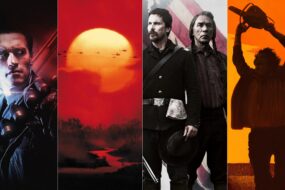
Presented to NIFFF, this wide selection Eat The Rich seeks to highlight systemic oppressions, those that weigh us and threaten the balance of societies that are more precarious than ever. This is the fight of the heroic figure drawn in the film Aelita (1924) where one speaks conquest of Mars and liberation of the luxenproletariat to found the Union of Martian Socialist Republics. It is still the class struggle presented metaphorically in Snowpiercer (2013), where each compartment of this fast-start train is segmented according to the social origin of the passengers. A jubilatory film that reverses the vapor between privileged and mischievous.
Michel Franco, director of New Order (2020), he exposes us to a deluge of visceral violence, the scene of a bloody popular insurrection against the corrupt Mexican elites (read our critical). A film we don't leave unharmed. Finally when the rich do not secede as in Ghost In The Shell (1995) or Land of The Dead (2005), is to better hate the poor like the psychopathAmerican Psycho (2000).
Engaged and engaging selection of about twenty films, the retrospective Eat The Rich NIFFF reminds us of the urgency to (re)see these cinema monuments. Images are weapons as the Dadaist artist understood John Heartfield ; cinema is the continuity and the most perfect form to light the powder box. Dear gourmets, isn't it time to brandish our forks? What if the people finally put back the cover with their revolutionary past? From fiction to reality and vice and versa.
Beyond genre films: Benoît Delépine
Whatever distanced from genre films, Benoît Delépine's punk poetry work could have completed this selection. Do not hesitate to read our retrospective and review our Interview of this polymorphic director and essential to social cinema. Killing the boss, over and over again, Louise Michel (2008) played by Yolande Moreau, textile worker, who, overnight, loses his job following the relocation of his factory, to Jean-Pierre Bonzini (Dupontel), who, with a ravenous impulse, mimics the killing of his leader. The test of work is a test of resilience as the foam of the mattress which, systematically, returns to its form of departure in The Great Evening (2012). Delépine's entire work is a condensed black humour and class struggle. Movies to consume without moderation!
JV critic and film always ready to lead Interviews at festivals! Amateur of genre films and everything that tends to the strange. Do not hesitate to contact me by consulting my profile.
Categories
Recent Posts
Raw pearl polished with roguelite : Absolute, the
- 24 April 2026
- 14 min. reading
The Mag.7: a selection for the Myceliads
- 15 April 2026
- 25min. readout
Expressionism in cinema: crises and
- 13 April 2026
- 20min reading
South Park: The Stick of Truth,
- 1 April 2026
- 12 min. reading
The 4K Ultra HD Bazaar, volume
- 30 March 2026
- 52 min reading


Thanks for this article "rich" in cinematographic references, for the humor of some passages 🙂 I have learned a lot throughout my reading and I take note of all the films to see on this very interesting topic.
Good continuation to MaG !!!
[...] a panel of films from all over the world, retrospectives such as the Eat The Rich selection (see our discussion with Judith Beauvallet of the Damoiselles d'horror) and [...]